Seeing so many people on social media share the miraculous results of electric cleaning brushes, are you tempted to buy one too, yet worried that it is only a passing fad you will regret? An electric cleaning brush really can save a great deal of effort and raise efficiency, but it is not a cure-all, and it has clear drawbacks and limits. Whether it is worth the investment depends entirely on how you would use it, what you need to clean and your budget.
Based on hands-on testing, this article gives a full analysis of the 7 advantages and 5 drawbacks of electric cleaning brushes, and tells you which situations suit one and which do not need one at all, so that you can make the smartest decision before buying and not waste your money. (This article was written for readers in Taiwan: the brands and home sizes it cites describe the Taiwan market.)
If you are still comparing brands, see our Electric cleaning brush recommendations 2026, a comparison of the official specifications of popular brands.
Summary of our hands-on test: are electric cleaning brushes any good?
The short answer: good for most people, but not everyone needs one.
We tested mainstream electric cleaning brushes on the market, using them for 2 months in different settings such as the bathroom, kitchen and balcony. Our conclusions are as follows:
People for whom it is worth buying (about 70-80%)
- Larger homes (25 ping or more; ping is the Taiwanese unit of floor area) with a large area to clean
- People with back pain, people with limited stamina, and seniors
- Frequent cleaning (once a week or more)
- Homes with stubborn dirt that is hard to clean (bathroom limescale, kitchen grease)
- A sufficient budget (comfortable with mid-to-high prices)
People who do not need to buy one (about 20-30%)
- Small studio apartments (15 ping or less) with a small area to clean
- Very infrequent cleaning (once a month or less)
- An extremely limited budget (even entry-level prices feel expensive)
- Only a specific small area to clean (such as a single washbasin)
The key lesson: the greatest value of an electric cleaning brush is "saving effort", not "saving time". For a bathroom of the same size, an electric brush saves about 30-50% of the time, but it saves as much as 70-80% of the effort. If cleaning often leaves you with an aching back, an electric cleaning brush is definitely worth the investment.
Want to know more about choosing cleaning brushes? See our complete buying guide to cleaning brushes, which covers straw brushes, tube brushes, electric brushes and more.
7 advantages of electric cleaning brushes | Real benefits confirmed by testing
Advantage 1: Saves effort and time, raising cleaning efficiency 3-5 times
Test data:
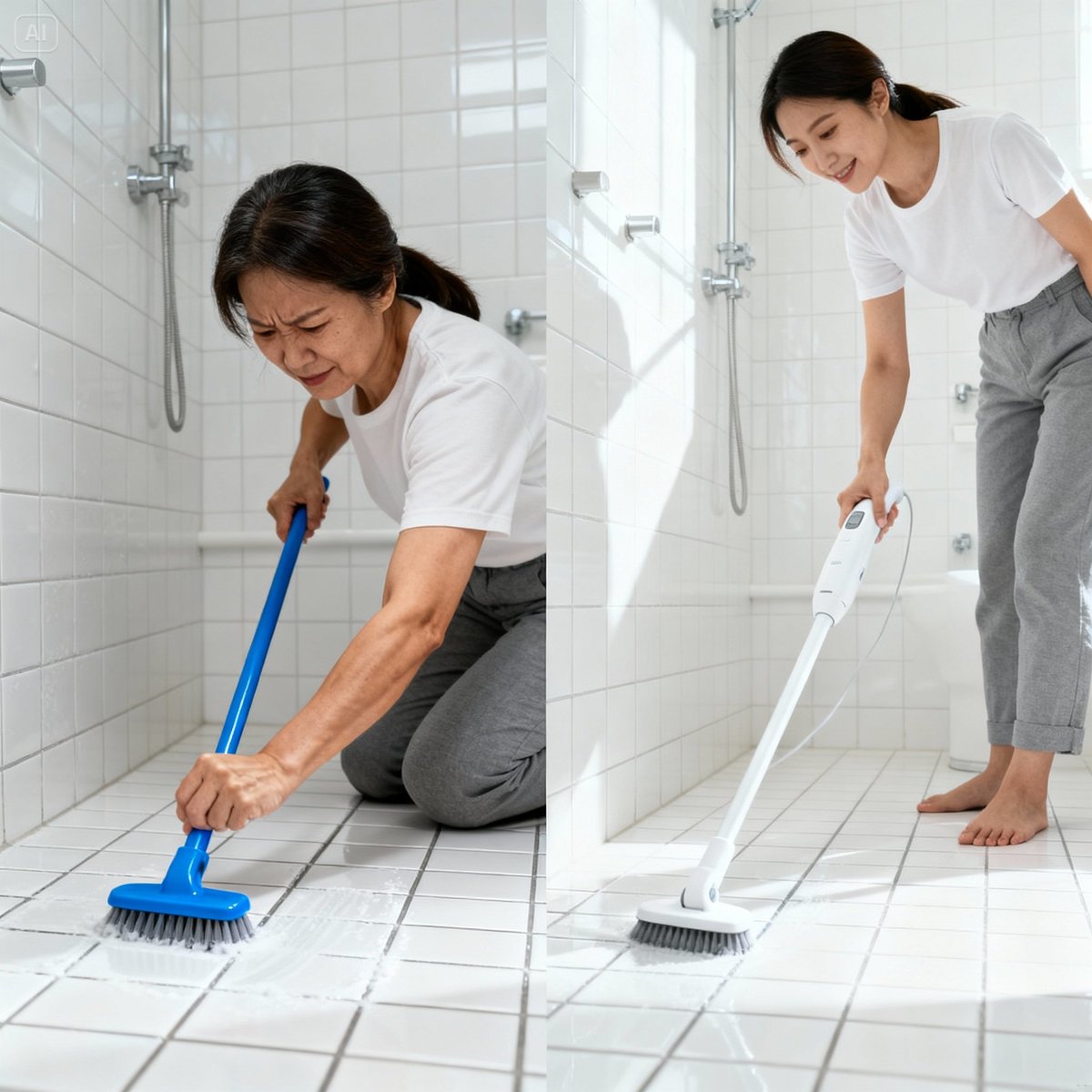
- Manual scrubbing: cleaning a 3-ping bathroom takes about 25-30 minutes, with obvious arm soreness
- Electric cleaning brush: cleaning the same area takes about 10-15 minutes, with almost no strain on the arm
An electric cleaning brush replaces back-and-forth scrubbing by hand with high-speed rotation (200-300 revolutions per minute). It is like turning your arm into a perpetual motion machine, greatly reducing both the physical effort and the time required.
Advantage 2: More thorough cleaning, with stubborn dirt removed in one go
The cleaning power of manual scrubbing depends on the strength of your arm, and it easily varies from strong to weak. An electric cleaning brush has a steady motor output, so every spot receives the same cleaning force and the result is more even and thorough.
Where it is especially effective:
- Limescale in bathroom tile grout: by hand it takes 5-10 passes; an electric brush removes it in 2-3
- Grease around the kitchen gas stove: stubborn grease that is hard to remove by hand comes off easily with an electric brush and a cleaner
- Moss on the balcony floor: manual scrubbing has limited effect, while an electric brush reaches into the gaps and removes the moss at the root
Test comparison: for stubborn limescale on the same tile, manual scrubbing takes 3-5 minutes while the electric brush takes only 30-60 seconds, with the same or even better cleaning result.
Advantage 3: Multiple brush heads, so one tool handles every cleaning job
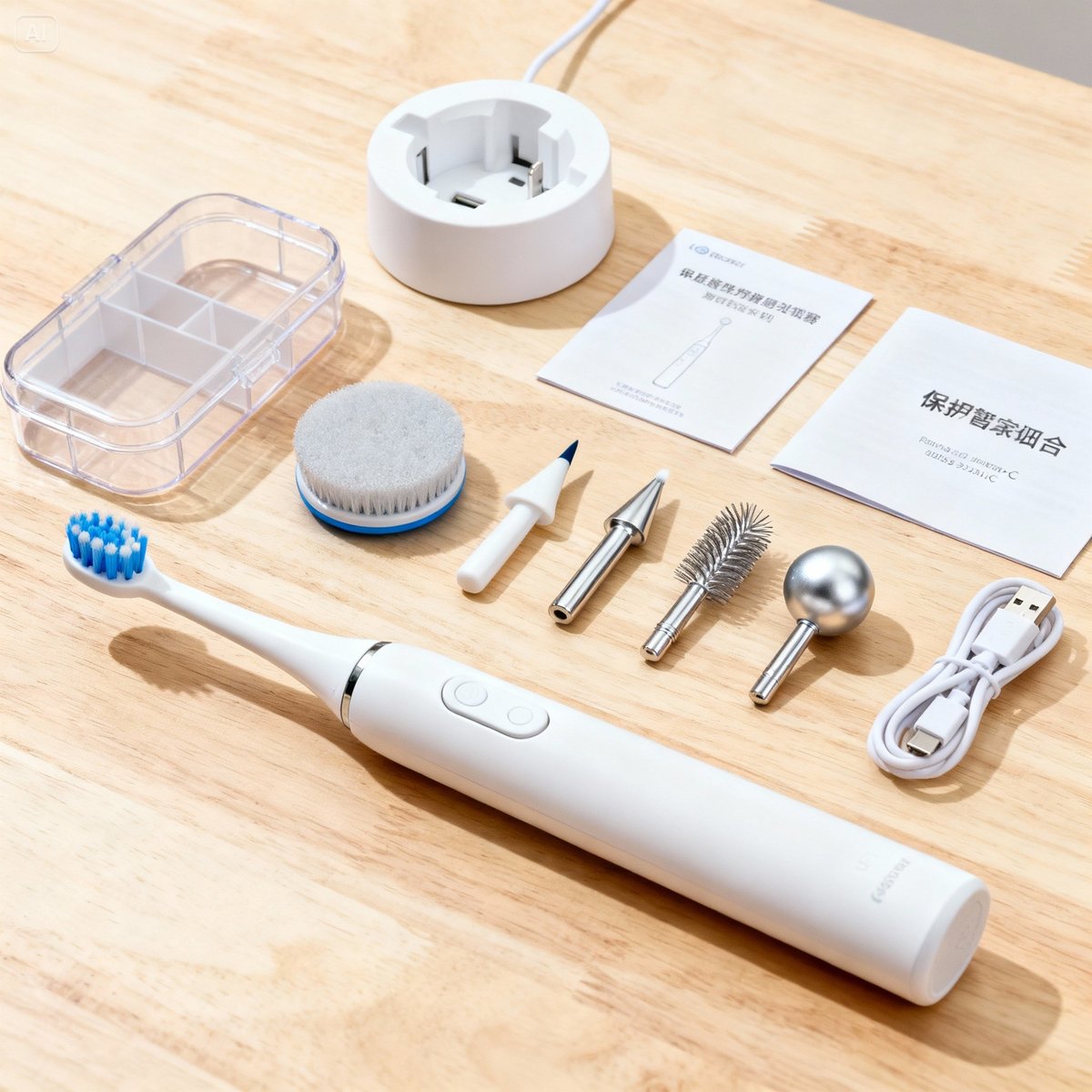
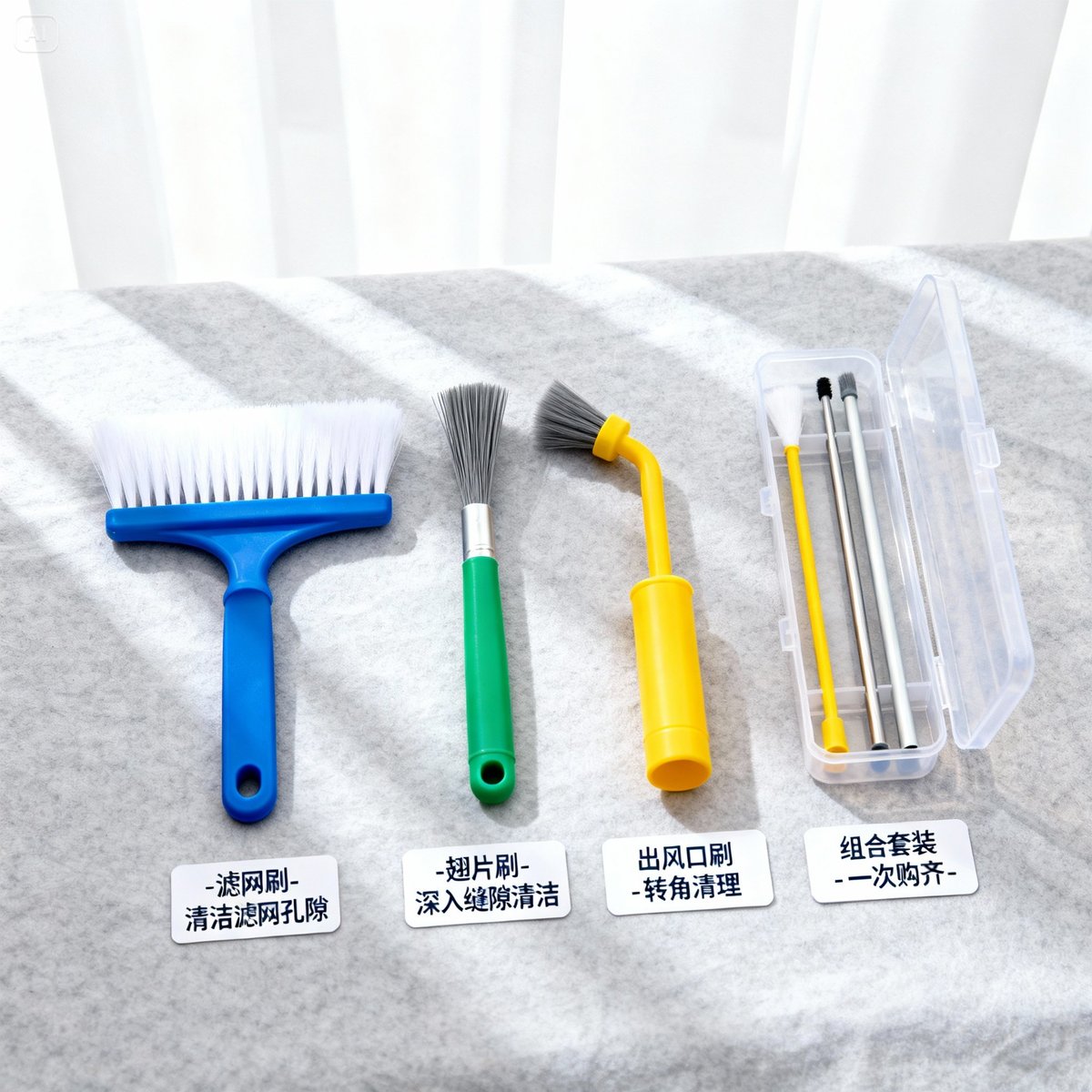
Modern electric cleaning brushes usually come with 4-6 different brush heads for different materials and cleaning needs:
| Brush head type | Where it is used | Traditional tool it replaces |
|---|---|---|
| Round flat brush | Large areas of floor and wall | Long-handled brush, mop |
| Pointed brush | Window tracks, gaps, corners | Toothbrush, gap brush |
| Sponge head | Glass, mirrors, cars | Sponge, cloth |
| Steel wire head | Limescale, rust stains, barbecue grills | Steel wool, stiff brush |
| Ball-shaped head | Curved surfaces of toilets and bathtubs | Toilet brush |
Economic benefit: an electric cleaning brush (with brush heads) can be bought at a mid-range price and replaces 5-6 traditional cleaning tools. Over the long term it is better value, and it also saves storage space.
Advantage 4: Reaches blind spots and gaps that a manual brush cannot
Blind spots such as bathroom tile grout, the corners of window tracks and the bottom of baseboards are often not cleaned properly by hand because of the awkward angle. The pointed brush and rotating action of an electric cleaning brush get into tight spaces easily.
Tested settings:
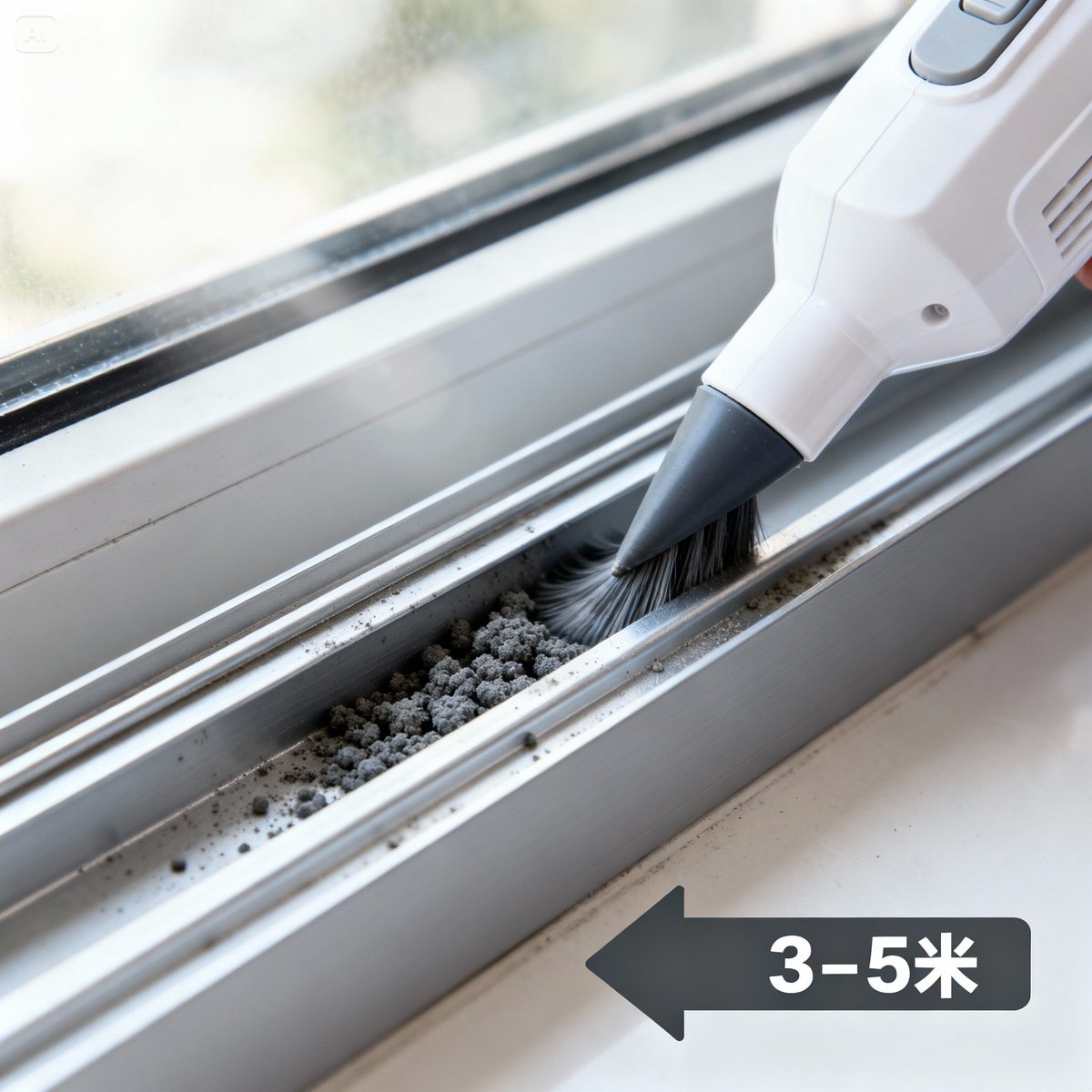
- Window tracks: with the pointed brush, it reaches into narrow gaps of 0.5 cm and removes accumulated dust and dirt
- Tile grout: the rotating filaments reach into the grout lines and remove black mold
- Where the baseboard meets the wall: an angle where it is hard to apply force with a manual brush, handled easily by an electric brush
Advantage 5: Less back pain, protecting your health
Traditional cleaning requires long periods of bending, kneeling and squatting, which strain the lower back, knees and arms. The long handle of an electric cleaning brush lets the user stay standing or only slightly bent, greatly reducing harm to the body.
Especially suited to:
- Seniors and people with limited stamina
- People with old injuries to the lower back or knees
- Pregnant women (no need to bend or kneel)
- People who clean for long hours (cleaning companies, food service)
Advantage 6: Suited to long cleaning sessions, with steady power that does not fade
The biggest problem with manual scrubbing is that your strength drops in the second half. You start out working carefully, then scrub with less and less force, and the cleaning quality becomes inconsistent. The motor output of an electric cleaning brush is steady: whether you use it for 5 minutes or 50 minutes, the power is the same.
Where this applies:
- Major house cleaning (cleaning the whole home for 1-2 hours)
- Commercial premises (restaurant kitchens, guesthouse bathrooms)
- Cleaning companies (long daily use)
Advantage 7: No technique to learn; anyone can use it right away
Manual scrubbing calls for skills such as the angle of force, the scrubbing rhythm and the amount of cleaner, and beginners often fail to get things clean. An electric cleaning brush has no learning curve: just hold it, switch it on and rest it lightly on the dirt, and the motor does the cleaning.
Especially suited to:
- Beginners at cleaning and people who are not good at housework
- Family members helping to share the cleaning
- A quick clean at short notice (guests are about to arrive)
5 drawbacks of electric cleaning brushes | Real limits to know before buying
Drawback 1: A higher price and a considerable initial investment
Prices of electric cleaning brushes vary widely by model, and they are clearly more expensive than traditional manual brushes.
Price tiers:
- Entry-level: bare-bones features
- Mid-range: Artisan, VOAR and others, with a full set of features; the Bosch UniversalBrush is a compact handheld model in the same price range
Additional costs:
- Brush head consumables: replaced every 3-6 months, at a price that varies by brand
- Cleaner consumption: an electric brush works better with a cleaner, which is a long-term running cost
Is it worth it? If you clean once a week or more and use it for 2 years or more, the amortized cost per cleaning is not high. If you clean very rarely (once a month or less), the return on investment really is low.
Drawback 2: It needs charging or a power outlet, so you have to prepare before use
Cordless models: you have to check the battery level before each use; run time and charging time vary by model Corded models: the range of movement is limited, an extension cord is needed, and the cord tangles easily
Solutions:
- Cordless models: make a habit of charging right after use, or buy a model with a run time of 60 minutes or more
- Corded models: use a 5-10 meter extension cord to increase your range
Drawback 3: It is heavier, so your hand gets sore over long use
Because it carries a motor and (in cordless models) a battery, an electric cleaning brush feels clearly heavier in the hand than a traditional manual brush.
What it feels like in practice:
- The first 10-15 minutes: hardly noticeable, easy to use
- 15-30 minutes: the arm starts to feel the weight, but it is still far easier than manual scrubbing
- More than 30 minutes: the arm is clearly sore and needs a rest
Advice: women, older people and those with limited stamina should choose a lighter model for a better experience.
Drawback 4: Noise, which may disturb others late at night
An electric cleaning brush makes a noticeable motor sound when running. That is within an acceptable range, but it is not completely quiet.
Actual impact:
- Daytime use: almost no impact; family and neighbors will not be bothered
- Night-time use (after 22:00): may disturb the family's sleep and is best avoided
- Apartment buildings: with the bathroom door closed the impact is small, but daytime use is still recommended
Reducing noise: choose the low speed setting, or schedule cleaning for the daytime.
Drawback 5: Brush heads need regular replacement, so there is a long-term consumables cost
The brush heads of an electric cleaning brush are consumables. After 3-6 months of use the filaments wear and deform and the head needs replacing, otherwise the cleaning result drops sharply.
Replacement cost:
- Brand-name brush head sets: mid-range price (usually 3-5 heads to a set)
- Third-party brush heads: lower price (quality is uneven and they are not always compatible)
The long-term cost picture (2 years of use):
- The cost of the main unit plus the consumables cost of replacing brush heads regularly
- Spread over the two years of use
- Averaged out per month, the burden is in fact not heavy
Ways to save money:
- Wash the brush head right after use to extend its life
- Use different heads for different jobs to reduce wear on any single head
- When buying, choose a brand whose consumables are easy to get and reasonably priced
💡 Do you need an industrial-grade cleaning brush solution?
Contact YC Brushes now and let over 40 years of manufacturing experience help you find the most suitable professional cleaning brush product or custom solution. Whether you are in food service, run a cleaning company or operate a hotel or guesthouse, we have professional advice to match.
When an electric cleaning brush is suitable and when it is not
✅ Very well suited to an electric cleaning brush
Situation 1: Larger homes (25 ping or more)
- A large area to clean, where manual scrubbing takes time and effort
- An electric brush saves a great deal of time and energy
- A cordless model with a run time of 60 minutes or more is recommended
Situation 2: Stubborn dirt at home that is hard to clean
- Limescale and black mold in bathroom tile grout
- Grease around the kitchen gas stove
- Moss and cement stains on the balcony floor
- An electric brush cleans far better than doing it by hand
Situation 3: People with limited stamina or back pain
- Seniors, pregnant women, people with lower back injuries
- Long periods of bending and kneeling put a strain on the body
- An electric brush can be operated standing up, protecting your health
Situation 4: Frequent cleaning (once a week or more)
- Long-term use spreads the cost, so the return on investment is high
- Effort is saved every time you clean, and the benefit adds up
Situation 5: Commercial premises and professional cleaning
- Restaurant kitchens, hotel bathrooms, cleaning companies
- With long hours of cleaning every day, an electric brush is an essential tool
- Compact handheld household models (such as the Bosch UniversalBrush) are mainly for small areas such as sinks, stovetops and tile grout; large areas and long sessions need to be assessed separately
❌ Not suited to an electric cleaning brush
Situation 1: Small studio apartments (15 ping or less)
- A small area to clean; manual scrubbing is finished in 10-15 minutes
- Buying an electric brush gives a low return on investment
- Advice: a traditional manual brush is enough
Situation 2: Very infrequent cleaning (once a month or less)
- Left unused for long periods, the battery ages easily
- The amortized cost is too high to be worthwhile
- Advice: clean by hand or hire a cleaning company
Situation 3: An extremely limited budget (even entry-level prices feel expensive)
- An electric cleaning brush needs a certain budget to reach basic quality
- Very cheap models are unreliable and break down easily
- Advice: save up for a mid-range model, or keep using a manual brush
Situation 4: Only a specific small area to clean
- Cleaning only a single washbasin or a small stretch of window track
- A manual brush finishes the job in 5 minutes
- An electric brush would be overkill
Situation 5: Renters and people who move often
- An electric brush is bulky and inconvenient to move
- With a short lease (1 year or less), it may not be used often
- Advice: buy a lightweight model or a manual brush
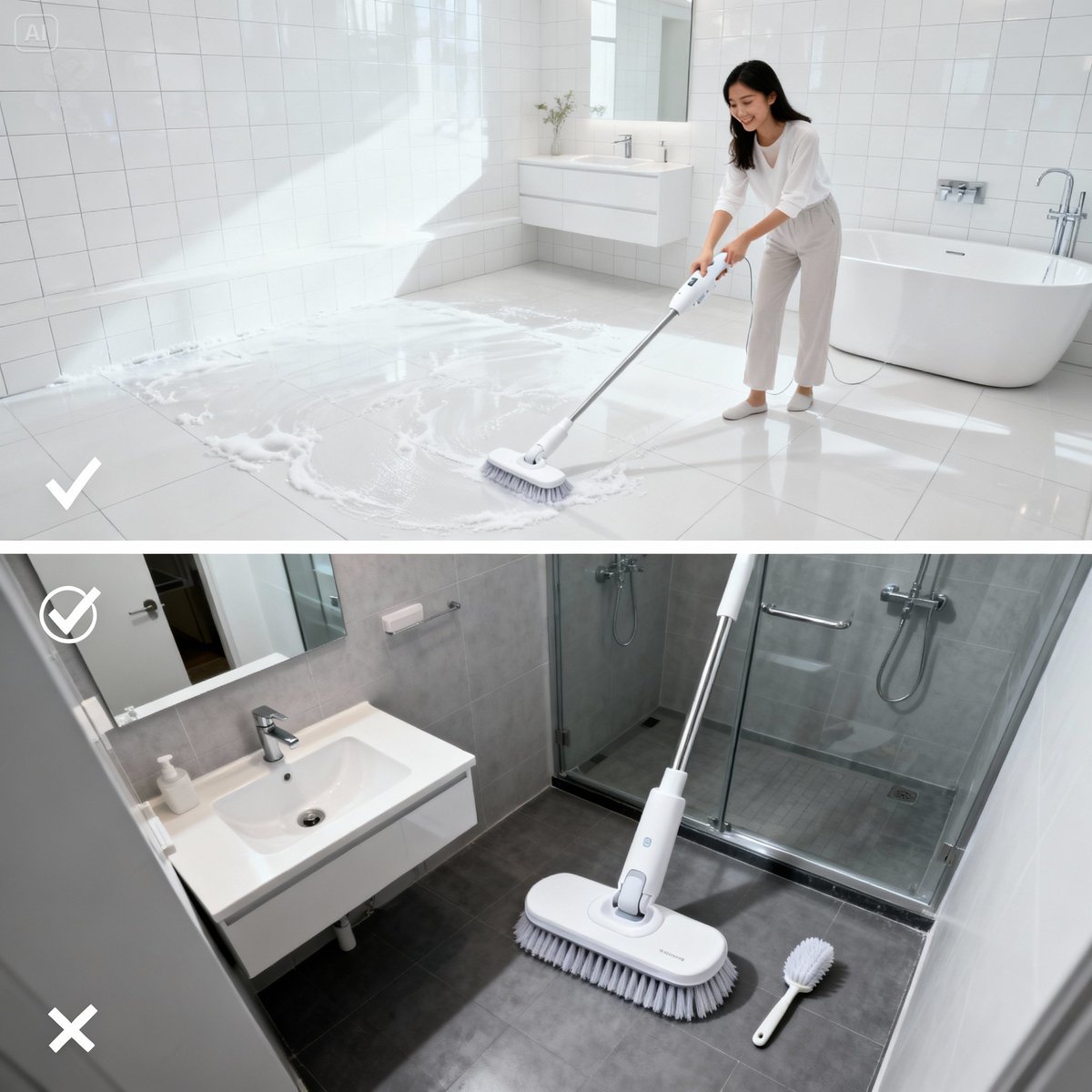
Electric vs manual cleaning brushes: full comparison table
| Item compared | Electric cleaning brush | Manual cleaning brush | The difference |
|---|---|---|---|
| Price | Mid-range to high | Entry-level | The electric brush is clearly more expensive |
| Cleaning time | 10-15 minutes (3-ping bathroom) | 25-30 minutes | The electric brush saves 50-60% of the time |
| Physical effort | ★☆☆☆☆ (very low) | ★★★★☆ (high) | The electric brush saves 70-80% of the effort |
| Cleaning result | ★★★★★ (excellent) | ★★★☆☆ (medium) | The electric brush is more thorough |
| Difficulty of use | ★☆☆☆☆ (very easy) | ★★★☆☆ (medium) | The electric brush has no learning curve |
| Weight | Heavier (motor and battery) | Lighter | The electric brush is heavier |
| Run time / use | Varies by model (cordless), unlimited (corded) | Unlimited | Cordless models need charging |
| Noise | Motor running sound | Almost silent | The electric brush makes noise |
| Versatility | 4-6 brush heads | Single function | The electric brush has wider uses |
| Consumables cost | Mid-range / every 3-6 months | Entry-level / every 6-12 months | Electric brush consumables cost more |
| Service life | 2-5 years | 1-3 years | The electric brush lasts longer |
| Where it fits | Larger homes, stubborn dirt, long cleaning sessions | Small areas, light dirt, occasional cleaning | Choose according to need |
Summary advice:
- For efficiency and less effort: choose an electric cleaning brush
- On a limited budget, cleaning small areas: choose a manual cleaning brush
- A middle path: buy a mid-range electric brush and keep a manual brush for the details
Want to know which electric cleaning brush brands are most worth buying? See our Electric cleaning brush recommendations 2026, a full comparison of brands including Artisan and Bosch.
8 things to note when using an electric cleaning brush
1. Charge it fully before the first use (cordless models)
The battery of a newly bought electric cleaning brush usually holds only a 30-50% charge. Before the first use we recommend charging it for 4-5 hours to 100%, which helps condition the battery and extends its service life.
2. Pair it with a suitable cleaner to double the effect
An electric cleaning brush can be used dry, but it works better with a cleaner:
- Bathroom tiles: bathroom cleaner or diluted bleach
- Kitchen grease: kitchen cleaner or baking soda solution
- Floor cleaning: diluted floor cleaner
- Glass and mirrors: glass cleaner or white vinegar solution
Steps: spray the cleaner first → wait 1-2 minutes for the dirt to soften → scrub with the electric brush → rinse with clean water
3. Use different brush heads for different jobs
The wrong way: one brush head for everything, the same one for the toilet, the floor and the kitchen The right way:
- Bathroom floor/walls: round flat brush
- Toilet: dedicated ball-shaped head
- Kitchen: dedicated flat brush (kept separate from the bathroom one)
- Glass/mirrors: sponge head
- Gaps/window tracks: pointed brush
4. Avoid staying in one spot for too long
An electric brush rotates at high speed. Staying in the same spot for more than 10 seconds may cause:
- Surface wear (wooden floors, painted finishes)
- Filaments overheating and deforming
- Too much cleaner residue
Correct use: move the electric brush slowly; 2-5 seconds in each spot is enough.
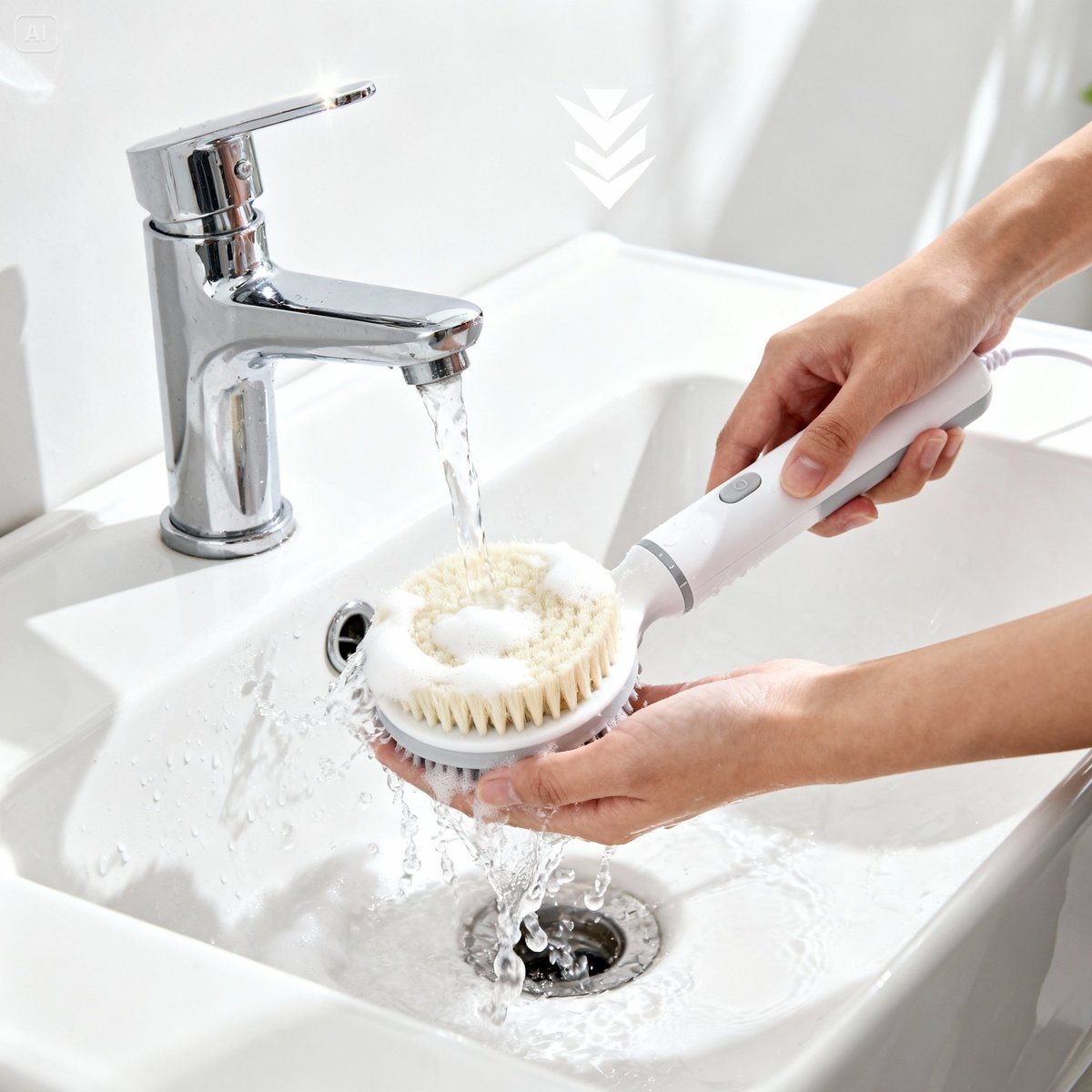
5. Wash the brush head right after use
The wrong way: putting it away straight after use, with dirt left on the filaments The right way:
- Remove the brush head
- Rinse the filaments with clean water to remove dirt and cleaner
- Shake off the water or wipe with a dry cloth
- Leave it in a ventilated place to dry naturally
- Store it only when it is completely dry
Benefit: brush head life can be extended by 50-100%, from 3 months to 4-6 months.
6. Check the battery condition regularly (cordless models)
The battery is the key component of a cordless electric cleaning brush, and its performance declines after 1-2 years of use:
- Run time when new: 60 minutes
- After 1 year of use: about 50 minutes (normal aging)
- After 2 years of use: about 35-40 minutes
Tips for extending battery life:
- Avoid discharging it completely (below 20%)
- Keep it at a 50-80% charge when not in use
- Avoid storing it in a hot environment (above 40 degrees)
7. Choose the right speed setting
Most electric cleaning brushes offer 2-3 speed settings:
- Low speed: suited to light dirt, glass and mirrors, power-saving mode
- Medium speed: suited to everyday cleaning and tiled floors
- High speed: suited to stubborn dirt, limescale and grease
Advice: start at low speed and move up only if it is not strong enough; this extends battery run time and reduces noise.
8. Confirm the waterproof rating before use
IPX4: splash-proof; can be used in the bathroom, the brush head can be rinsed, but the main unit must not be rinsed directly IPX5: the brush head can be rinsed directly; the main unit can be rinsed but not immersed IPX7: can be immersed in water for a short time (within 1 meter, 30 minutes)
Important: confirm the product's waterproof rating before use, to avoid water getting into the main unit and causing a fault; repairs are not cheap.
FAQ
Is an electric cleaning brush really worth buying?
For most people it is, but it depends on how you would use it.
When it is worth buying (about 70-80% of people):
- Larger homes (25 ping or more)
- Frequent cleaning (once a week or more)
- Problems with back pain
- A sufficient budget (comfortable with mid-to-high prices)
- Stubborn dirt at home that needs dealing with
When it is not worth buying:
- Small studio apartments (15 ping or less)
- Very infrequent cleaning (once a month or less)
- An extremely limited budget
- Only a specific small area to clean
The return on investment picture:
- The one-off cost of buying a mid-range model
- Used for 2 years, cleaning once a week = 104 times
- Spread over each use, the cost is in fact not high
- Each time you save 15-20 minutes plus a great deal of effort
If you meet the "worth buying" conditions, the return on investment is high.
Will an electric cleaning brush scratch floors or tiles?
Not when used correctly, but pay attention to matching the head to the material.
Will not scratch at all:
- Tile and stone floors
- Glass and mirrors (with the sponge head)
- Stainless steel surfaces
- Plastic and acrylic (with a soft brush head)
May scratch (take care):
- Wooden floors: use a sponge or soft brush head, and avoid the steel wire brush
- Car paint: use a dedicated soft brush head at low speed
- Antiques and fine furniture: an electric brush is not recommended
Tips for avoiding scratches:
- Test a small area the first time you use it
- Choose a suitable brush head (stiffness)
- Avoid staying in one spot for too long (more than 10 seconds)
- Test at low speed
Which is better, a corded or a cordless electric cleaning brush?
Neither is absolutely better; choose according to how you will use it.
When to choose a corded model:
- ✓ You mainly clean fixed areas (bathroom, kitchen)
- ✓ Your budget is limited (corded models are cheaper)
- ✓ You need long periods of use (more than 1 hour)
- ✓ You do not mind being limited by the cord
When to choose a cordless model:
- ✓ You clean the whole home and move around a lot
- ✓ You clean outdoor areas (balcony, car)
- ✓ You value convenience and do not want to be tied to a cord
- ✓ You have a sufficient budget
Advice for an ordinary household: choose a cordless model. The price is higher, but the experience is much better, and a run time of 45-60 minutes is enough for one complete cleaning session.
Want more tips on choosing a cordless electric cleaning brush? See our cordless electric cleaning brush recommendations.
Are electric cleaning brush heads interchangeable?
Mostly not; you need to buy original or compatible third-party brush heads.
Reasons:
- Different connector designs (snap-fit, threaded, magnetic and so on)
- Different dimensions (diameter, length, connector size)
- Brand-specific designs
Buying advice:
- Prefer original brush heads: stable quality and fully compatible, but more expensive
- Check compatibility for third-party brush heads: cheap, but uneven in quality
- Confirm how easy consumables are to get before buying: avoid buying an obscure brand and then being unable to find brush heads
Consumables for the mainstream brands:
- Artisan: a Taiwanese brand, consumables are easy to get
- Bosch: an international brand; before buying, check whether original brush heads are sold through channels in Taiwan
Can an electric cleaning brush be used every day?
Yes, but using it too frequently is not recommended.
When daily use applies:
- ✓ Commercial premises (restaurants, hotels, cleaning companies)
- ✓ Large homes, cleaning different areas in turn
- ✓ High cleaning standards (people who are very particular about cleanliness, people with allergies)
Recommended frequency for an ordinary household:
- Bathroom: 1-2 times a week
- Kitchen: 1-2 times a week
- Floors: once a week
- Window tracks, gaps: once a month
Drawbacks of overuse:
- Brush heads wear faster and need replacing more often
- The battery ages faster (cordless models)
- The cleaned surfaces wear excessively
A middle path: use the electric brush for stubborn dirt and deep cleaning, and manual tools for simple everyday upkeep.
What can an electric cleaning brush clean?
A very wide range of places, covering most areas indoors and out.
Bathroom (the best fit):
- ✓ Tiled walls and floors
- ✓ Tile grout (mold, limescale)
- ✓ Glass shower doors
- ✓ Washbasins, bathtubs
- ✓ The outside of the toilet (use a dedicated toilet brush for the inside)
Kitchen:
- ✓ Grease around the gas stove
- ✓ Tiled walls
- ✓ Gaps around the countertop
- ✓ Sinks
Living room/bedroom:
- ✓ Floors (tile, wood)
- ✓ Baseboards
- ✓ Window tracks, window screens
Balcony/outdoors:
- ✓ Floors and walls
- ✓ Gutters and drains
- ✓ Car wheel rims and bodywork
- ✓ Outdoor furniture
Not suitable:
- ✗ Delicate furniture surfaces (antiques, fine wood)
- ✗ Fabrics and clothing (which need dedicated cleaning tools)
- ✗ Electronic devices (easily damaged by water)
Conclusion: are electric cleaning brushes any good? Are they worth the investment?
The answer: for most people they are good and worth the investment, provided the way you use one fits.
The people an electric cleaning brush suits best
- Larger homes (25 ping or more): a large area to clean, with a clear saving in time and effort
- Back pain or limited stamina: an electric brush can be operated standing up, reducing strain on the body
- Frequent cleaning (once a week or more): long-term use spreads the cost, so the return on investment is high
- Stubborn dirt: bathroom limescale and kitchen grease, where an electric brush cleans far better than doing it by hand
- Commercial premises: restaurants, hotels and cleaning companies, where an electric brush is an essential tool
Final checklist before buying
- Confirm that your cleaning area and frequency are enough to recoup the cost
- Choose a suitable price level (a mid-range model is recommended)
- Decide between corded and cordless (cordless is generally recommended)
- Confirm that the brush head types meet your needs (at least 4 types)
- Check the waterproof rating (IPX5 or higher recommended)
- Confirm the brand's warranty and how easy consumables are to get
Our advice
A medium budget: choose Artisan (full features, a Taiwanese brand, good customer service) Only small areas to clean: choose the Bosch UniversalBrush (a compact handheld model, suited to sinks, stovetops and tile grout)
Want to know which brand suits you best? See our Electric cleaning brush recommendations 2026, a full comparison of popular brands.
Professional cleaning brush solutions from YC Brushes
If you are a professional user who needs industrial-grade cleaning brushes, such as a food service business, cleaning company, hotel or guesthouse, or factory, the household electric cleaning brushes on the market may not stand up to high-intensity, long-duration use.
YC Brushes has over 40 years of professional brush manufacturing experience and offers:
Custom industrial-grade cleaning brushes
- Filament material, stiffness and shape customized to where the brush will be used
- Industrial-grade brush heads with higher durability
- Dedicated brush heads developed to fit electric cleaning brush brands
Volume purchasing offers
- Volume purchasing offers for cleaning companies and restaurant chains
- Long-term consumables supply contracts to ensure a stable supply
- Professional consultation to help you choose the most suitable cleaning tools
Contact YC Brushes now to discuss your professional cleaning brush needs, or see our full range of services to find the industrial-grade solution that suits you best.
Further reading
Want to know more about cleaning brushes? We recommend:
- The complete buying guide to cleaning brushes | All about straw brushes, tube brushes and electric brushes
- Electric cleaning brush recommendations 2026 | A full comparison of popular brands such as Artisan and Bosch
- Artisan electric cleaning brush review | The CB301 brush head accessories and a spec comparison with Bosch
- Does Xiaomi make an electric cleaning brush? | 3 things to check before buying
- Cordless electric cleaning brush recommendations | Cleaning freedom without the cord
Visit the blog to explore more specialist articles on brushes and cleaning tools.