Introduction: why does cleaning need dedicated brushes?
Have you ever run into these problems: an insulated bottle straw that never comes clean however you scrub it? Mold in the dead corners of the bathroom tile grout that you cannot reach? Window screen dust that only gets dirtier the more you wipe it with a cloth?
All of these point to the same answer: you need a dedicated cleaning brush.
Unlike a sponge or a cloth, a cleaning brush sends its filament into gaps, tubes and other narrow areas and provides stronger mechanical friction, which removes stubborn dirt effectively. From insulated bottle straws and kitchen sink pipes to bathroom tiles and window screens, every situation has a type of cleaning brush that suits it best.
This article explains the types and materials of cleaning brushes, how to choose one, and how to use and maintain it, to help you find the most suitable cleaning tool. The stores, online platforms and price levels it mentions describe the Taiwan market.
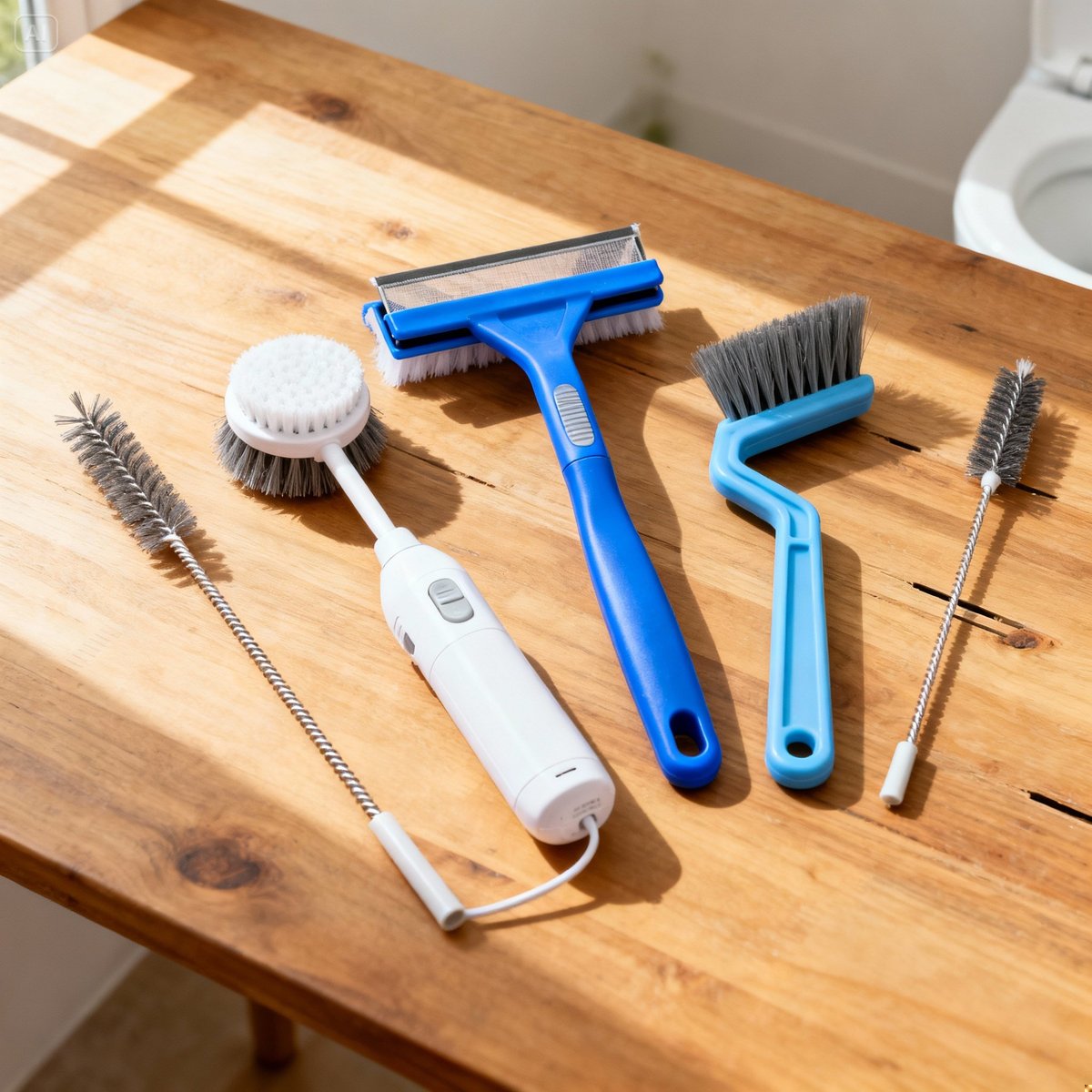
What is a cleaning brush? Why does cleaning need dedicated brushes?
Definition and function of a cleaning brush
A cleaning brush is a specialized tool designed for a specific cleaning need. Its filament reaches into gaps, tubes and other areas that ordinary tools can hardly reach, and uses mechanical friction to remove dirt that has stuck on.
Unlike the absorbing action of a sponge or the wiping action of a cloth, the filament of a cleaning brush can:
- Reach into long narrow tubes of 0.5-2 cm (such as straws and water pipes)
- Scrape stubborn stains off hard surfaces
- Clean uneven gaps and dead corners
- Keep up a steady cleaning force that does not fade
Dedicated brushes vs ordinary sponges and cloths
Many people ask: "Why can't I just clean with a sponge or a cloth?"
The answer lies in a fundamental difference in how they clean and where they can be used:
| Cleaning tool | How it cleans | Where it is used | Limits |
|---|---|---|---|
| Cleaning brush | Mechanical friction | Tubes, gaps, dead corners, rough surfaces | Not suitable for smooth precision surfaces |
| Sponge | Absorption | Flat surfaces, cleaning large areas | Cannot reach into gaps; breeds bacteria easily once it has absorbed dirt |
| Cloth | Surface wiping | Smooth surfaces, everyday cleaning | Cannot deal with stubborn dirt; dirty water spreads |
Real examples:
- Tea stains inside an insulated bottle straw: a cloth cannot get in and a sponge cannot be pushed in; only a straw brush can clean deep inside
- Mold in bathroom tile grout: a cloth only wipes the surface, while a cleaning brush scrubs into the grout line and removes the mold at its root
- Window screen dust: a cloth makes it dirtier the more you wipe, while a dedicated window screen brush clamps the mesh and cleans both sides
The professional view of YC Brushes: choosing the right cleaning tool not only raises efficiency but also avoids damaging the item being cleaned. For example, cleaning the inner wall of a stainless steel insulated bottle with filament that is too stiff may scratch it, while a straw brush made of silicone cleans gently and effectively.
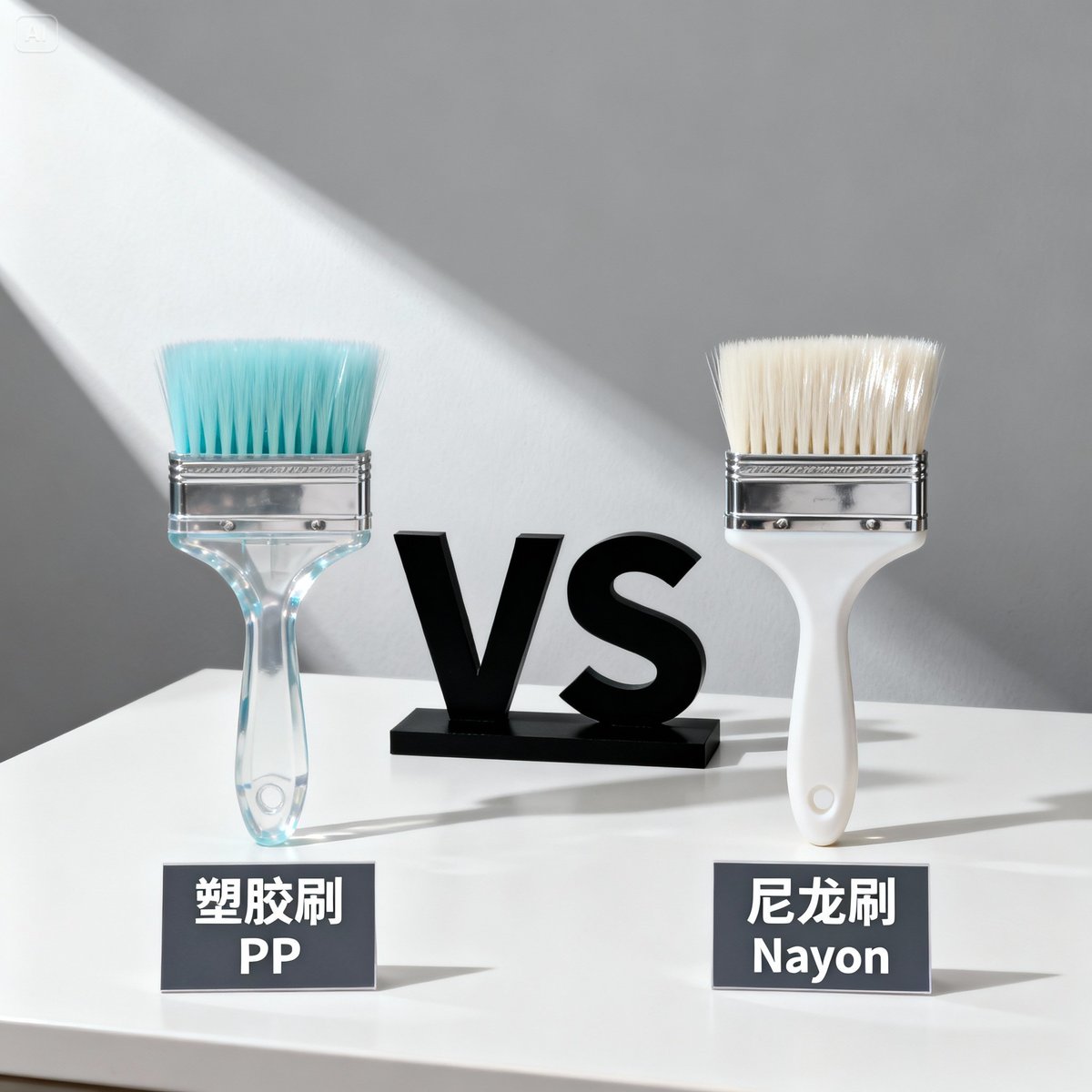
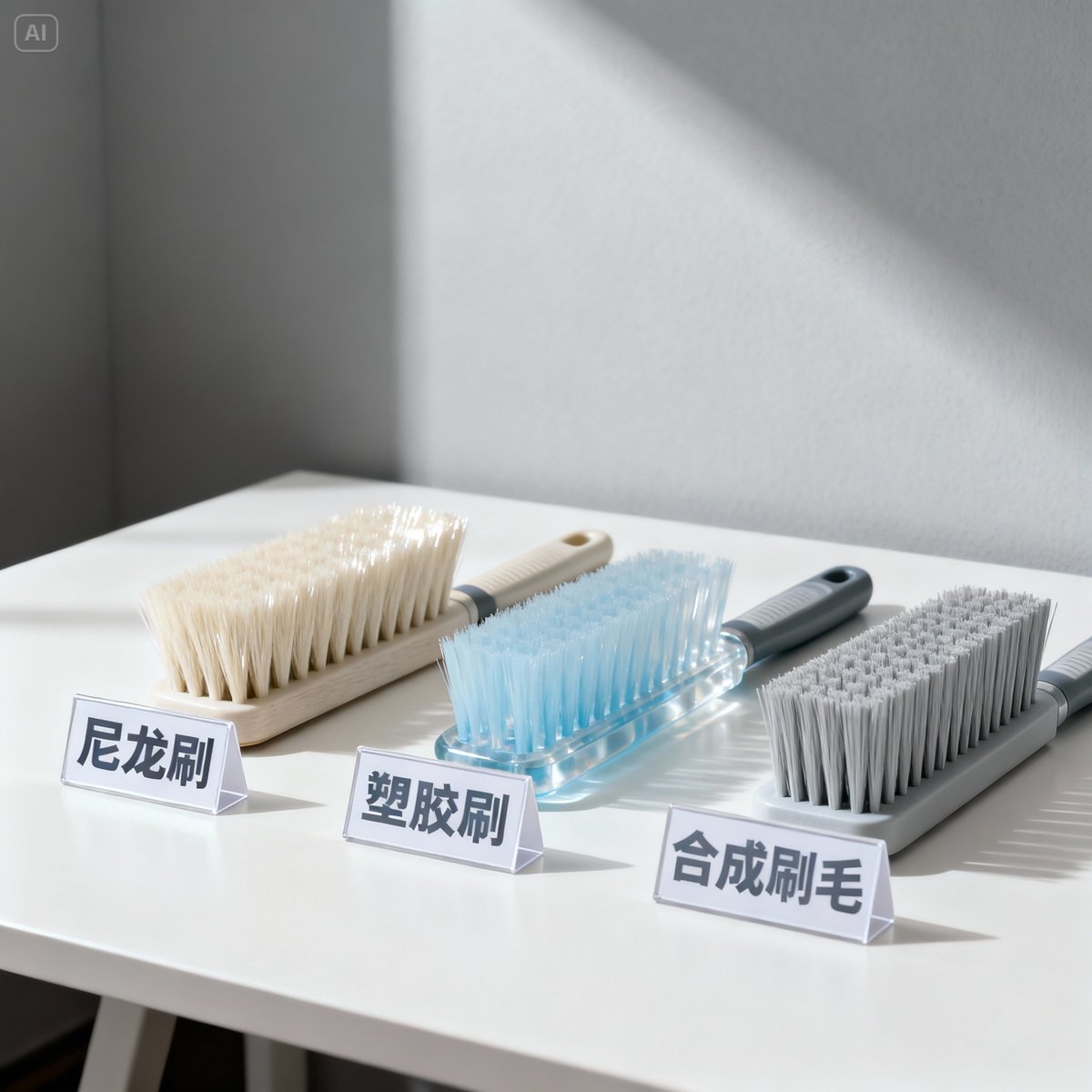
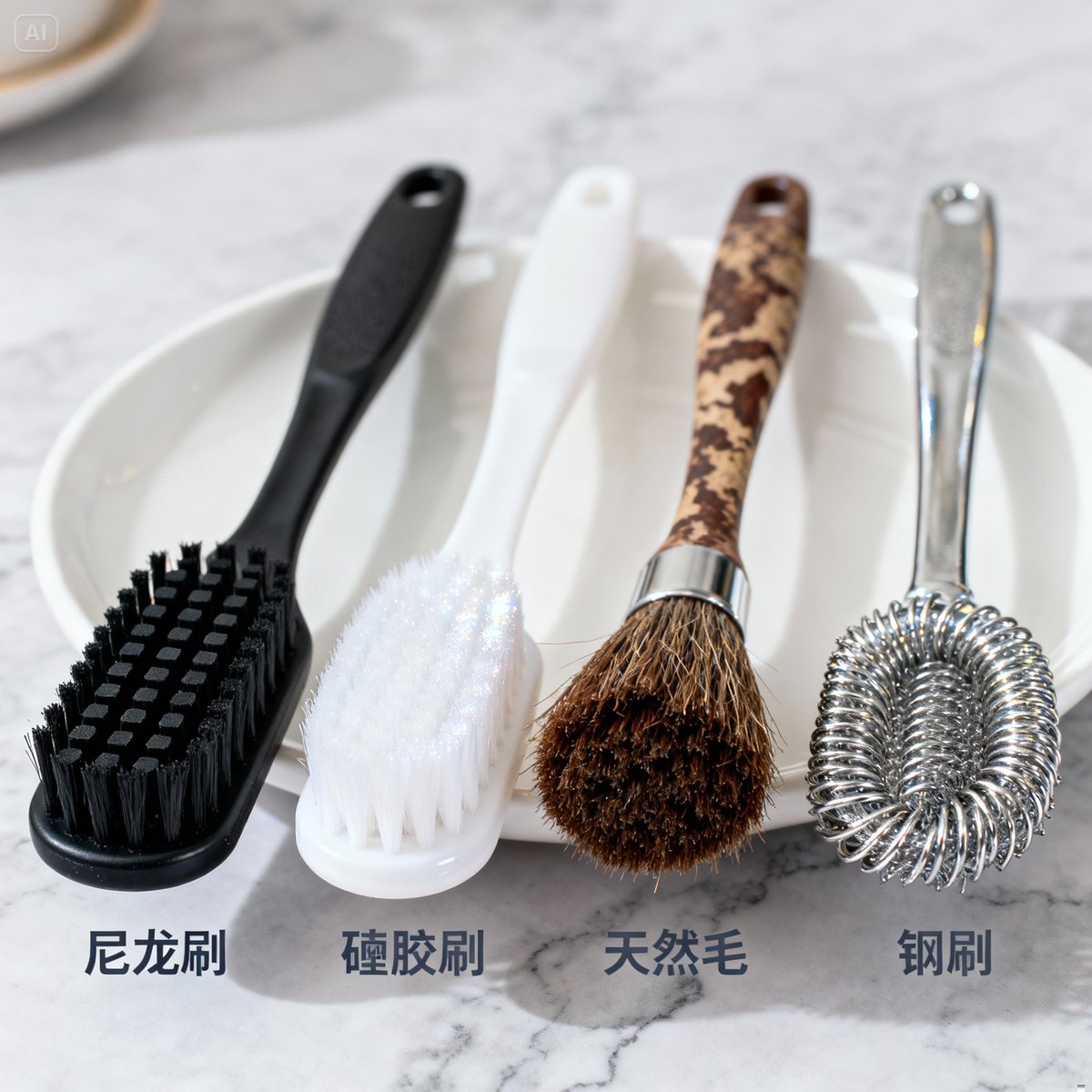
Cleaning brush materials (nylon, silicone, natural bristle, wire)
The filament material of a cleaning brush directly affects the cleaning result and the range of use. The main materials are:
1. Nylon filament
- Properties: medium stiffness, strong cleaning power, high durability, affordable
- Suitable for: plastic containers, ordinary tubes, everyday cleaning
- Note: not resistant to high temperatures (above 80°C); may scratch precision surfaces
- Price band: budget range; for the actual selling price, go by what each sales channel shows
2. Silicone bristles
- Properties: soft and non-scratching, heat resistant (-40°C to 230°C), easy to clean and does not trap dirt
- Suitable for: stainless steel straws, glassware, baby products
- Note: weaker cleaning power; needs repeated scrubbing
- Price band: mid-range; for the actual selling price, go by what each sales channel shows
3. Natural bristle (hog bristle, horsehair)
- Properties: soft, absorbs water well, natural and environmentally friendly
- Suitable for: precision instruments, fine tableware, surfaces that scratch easily
- Note: goes moldy easily, must be kept dry, higher price
- Price band: mid-to-high range; for the actual selling price, go by what each sales channel shows
4. Wire brush (stainless steel, brass wire)
- Properties: extremely strong cleaning power, the highest durability
- Suitable for: burnt residue on baking trays, industrial equipment, stubborn stains
- Note: scratches most surfaces, so its range of use is limited
- Price band: mid-range; for the actual selling price, go by what each sales channel shows
Decision tree for choosing a material:
What is the item being cleaned made of?
├─ Stainless steel / glass → silicone brush (gentle, does not scratch)
├─ Plastic / ceramic → nylon brush (strong cleaning power)
├─ Precision surface → natural bristle brush (soft and protective)
└─ Cast iron / baking tray → wire brush (powerful scale removal)
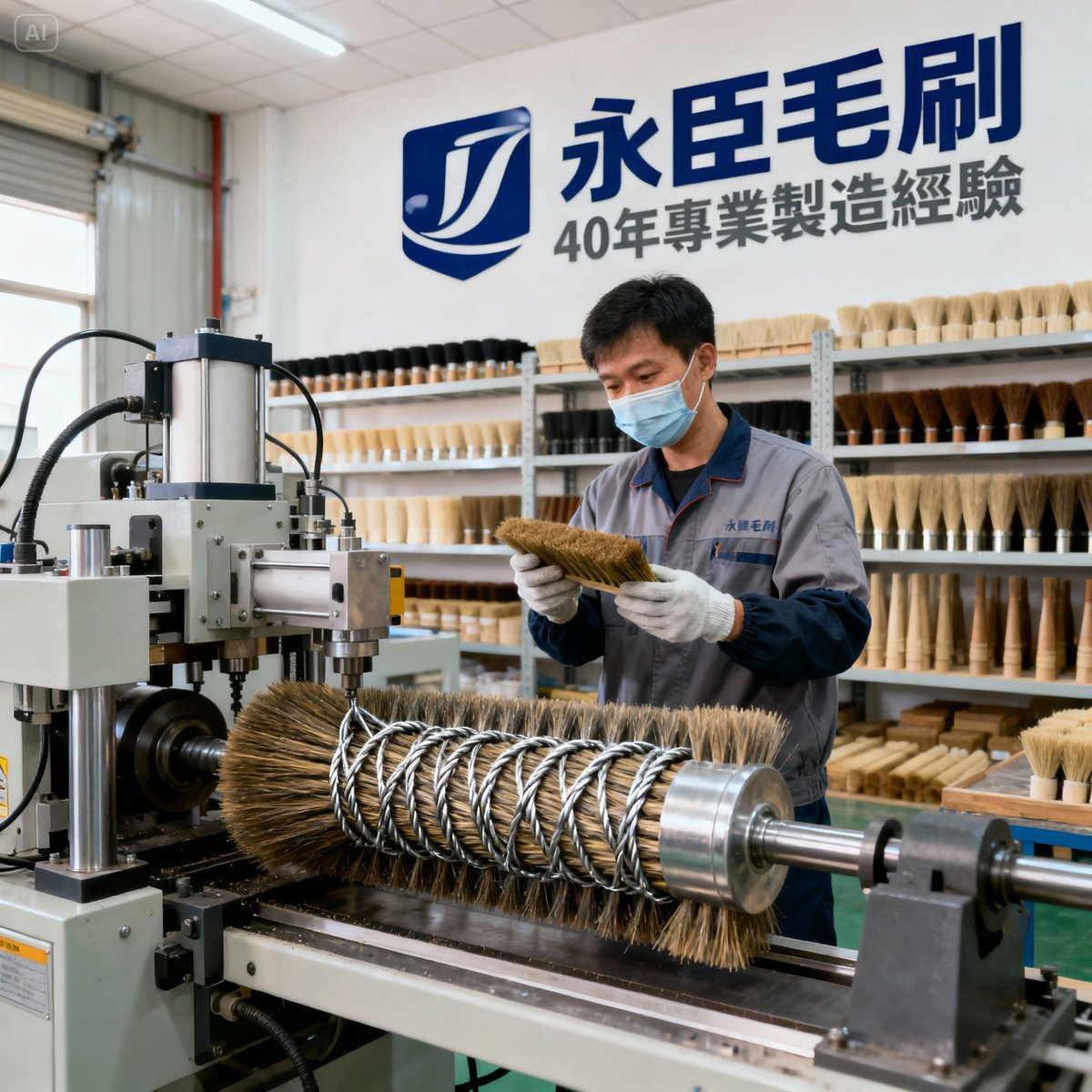
Advice from YC Brushes as a manufacturer: filament density, stiffness and the tufting method all affect the cleaning result and the service life. Industrial-grade cleaning brushes use the twisted-wire fixing method, with a filament shedding rate below 3%, far better than ordinary retail products fixed with adhesive.
Special material requirements or volume purchasing? Contact YC Brushes now: with over 40 years of experience, we offer free material consultation and sample testing.
The main types of cleaning brush and their uses
Straw brushes / tube brushes - the specialists for long narrow tubes
A straw brush (also called a tube brush) is a cleaning tool made specifically for long, narrow tubular items. Its filament is wound in a spiral around a metal wire or plastic rod, and it can reach inside tubes 0.5-2 cm in diameter.
Main uses:
- Insulated bottle straws: stainless steel straws, glass straws, plastic straws
- Baby bottles: the nipple channel, the narrow neck of the bottle
- Water bottles: sports bottle straws, coffee cup straw lids
- Kitchen pipework: faucet outlets, water filter lines
- Other: laboratory test tubes, aquarium tubing, cleaning musical instruments
Material advice:
- Stainless steel / glass straws → silicone straw brush (does not scratch, heat resistant)
- Plastic straws → nylon straw brush (strong cleaning power, affordable)
- Baby products → silicone straw brush (food-grade safety, gentle on the material)
What to look for when buying:
- Matching the size: measure the inner diameter of the straw or tube and choose a brush slightly larger than the inner diameter (so the filament is in full contact with the tube wall)
- Enough length: the brush must be longer than the tube, so that it cleans all the way to the bottom
- Handle design: a non-slip handle is easier to work with, and a bent handle can clean L-shaped tubes
Price band:
- Basic nylon straw brush: budget range
- Silicone straw brush set: mid-range
- Professional-grade straw brush set: mid-to-high range (For the actual selling price, go by what each sales channel shows)
Want to go deeper into buying and using straw brushes? See our complete buying guide to straw brushes.
Electric cleaning brushes - a labor-saving, efficient cleaning tool
An electric cleaning brush uses a motor to rotate the brush head (200-300 rpm) and delivers steady, continuous cleaning force, 3-5 times as efficient as cleaning by hand.
Main uses:
- Bathroom cleaning: tiles, bathtub, glass door, washbasin
- Kitchen cleaning: stove, range hood, sink
- Floor cleaning: tiled floors, gaps in wooden floors
- Car cleaning: wheel rims, interior details
Types:
-
Corded electric cleaning brush
- Advantages: power stays constant, lower price
- Disadvantages: has to be plugged in, so the range of use is limited
- Price band: mid-range
-
Cordless electric cleaning brush
- Advantages: highly mobile, usable in the wet area of the bathroom
- Disadvantages: needs charging, 30-60 minutes of battery life
- Price band: mid-to-high range
(For the actual selling price, go by what each brand's sales channels show)
What the common brands are known for:
- Artisan: a wide range of brush heads
- Bosch: German workmanship, the best durability
5 key points when buying:
- Corded vs cordless: cordless is recommended for the bathroom; corded is an option for the kitchen
- Battery life: at least 45 minutes for a cordless model
- Types of brush head: at least 3 (flat brush, gap brush, sponge brush)
- Waterproof rating: at least IPX5
- Budget: mid-range models offer the best value for money; the actual figure depends on the brand and the sales channel
Drawbacks to keep in mind:
- Fairly heavy (0.8-1.5 kg); the arm gets tired with long use
- Noise of about 60-75 dB; using it early in the morning or late at night may disturb the neighbors
- Brush heads are consumables that need regular replacement (every 3-6 months)
Is an electric cleaning brush really worth buying? Read Are electric cleaning brushes any good? A full analysis of pros and cons, or see Electric cleaning brush recommendations 2026 | Popular brands fully compared.
Special-purpose cleaning brushes (window screens, bathrooms, air conditioners, toilets and more)
Besides straw brushes and electric cleaning brushes, there are many dedicated cleaning brushes designed for specific situations.
1. Window screen cleaning brush
- Design feature: a double-sided brush head that clamps both faces of the window screen and cleans them at the same time
- Efficiency gain: 60-70% faster than the traditional method
- Price band: budget models can be bought at household goods stores such as Daiso; for the actual selling price, go by what the sales channel shows
- More detail: Are window screen cleaning brushes any good? Daiso window screen brush reviews and usage tips
2. Bathroom cleaning brush
- Types: tile brush (long handle, stiff filament), bathtub brush (soft nylon), gap brush (long and narrow), toilet brush
- Material requirement: waterproof, mold-resistant materials
- Price band: from budget to mid-to-high; for the actual selling price, go by what the sales channel shows
- Feature article: Bathroom cleaning brush recommendations | Popular bathroom brushes and electric bathroom brushes compared
3. Toilet cleaning brush
- Traditional type: filament tufted into a base; the brush itself has to be cleaned
- Disposable type: thrown away after use; hygienic but costly
- Silicone type: easy to clean, does not trap dirt, long service life
- Comparison: Toilet cleaning brush recommendations | Disposable vs traditional toilet brushes fully compared
4. Air conditioner cleaning brush
- Use: cleaning air conditioner filters, air outlets and cooling fins
- Design: long, soft filament that reaches into the gaps between the fins
- Price band: mid-range; for the actual selling price, go by what the sales channel shows
- Usage guide: Air conditioner cleaning brush recommendations | A guide to brushes for filters, fins and air outlets
5. Other special cleaning brushes
- Keyboard cleaning brush: dust removal for 3C devices (computers, phones and consumer electronics) → Keyboard cleaning brush recommendations | Where to buy 3C cleaning brushes?
- Gap cleaning brush: dead corners in window frames and door gaps → Gap cleaning brush recommendations | The secret weapon for small gaps and dead corners
- Comb cleaning brush: removes hair and sebum from combs → Comb cleaning brush recommendations | POYA, Cosmed and MUJI store models compared

Cleaning brush buying guide - 5 key considerations
Choosing the right cleaning brush gets the cleaning done with half the effort. Here are the five points that must be considered when buying.
Confirm where it will be used
Different situations need different types of cleaning brush. First ask yourself:
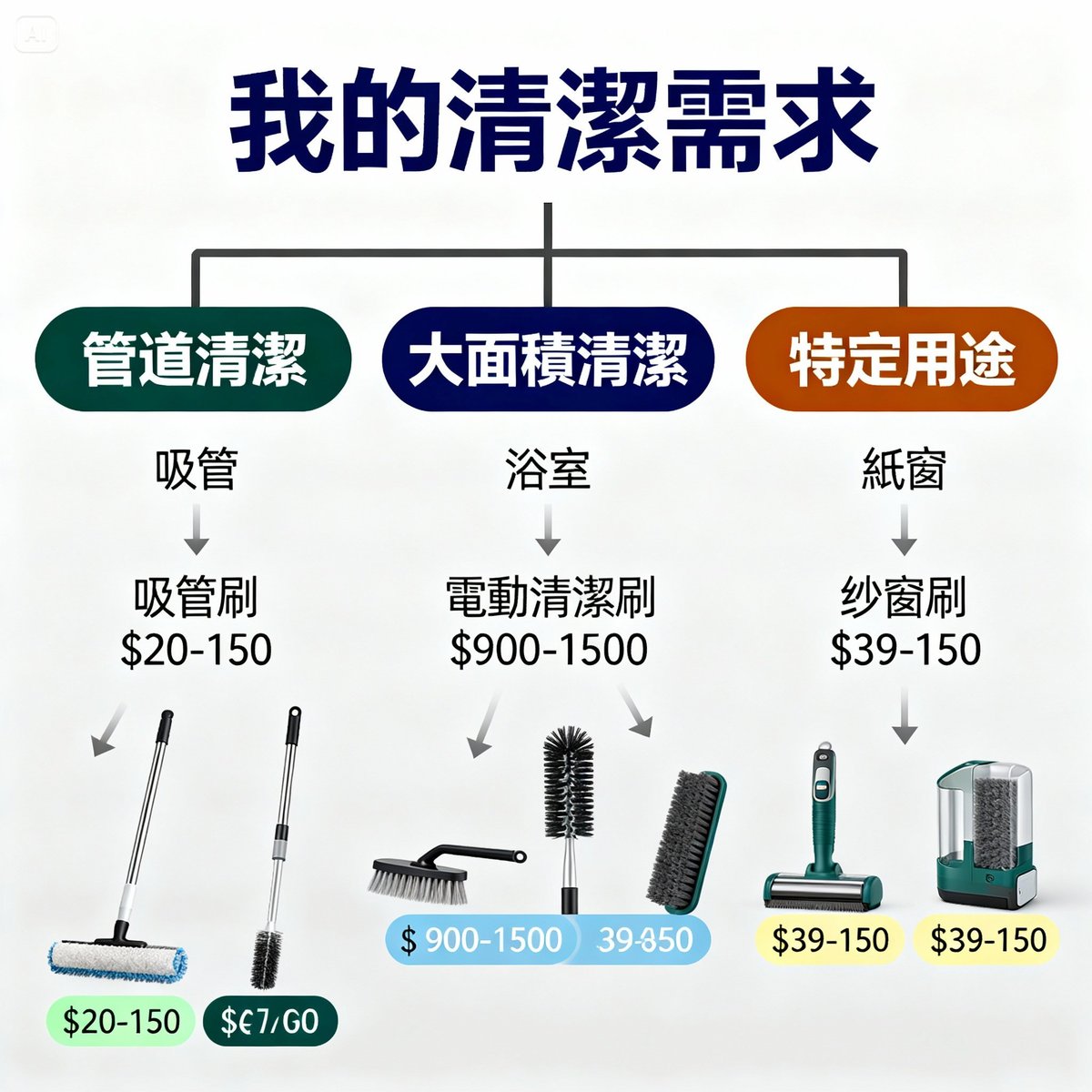
What do I need to clean?
- Long narrow tubes (straws, water pipes) → straw brush / tube brush
- Large surfaces (bathroom, floor) → electric cleaning brush or long-handled brush
- Specific items (window screens, toilets, air conditioners) → dedicated cleaning brush
- Gaps and dead corners (window frames, door gaps) → gap cleaning brush
How often will I clean?
- Every day: choose durable materials (nylon, silicone) and consider an electric model for efficiency
- Occasionally: a basic model is enough; focus on value for money
- Professional use: for volume purchasing by a business, choose industrial-grade quality
Choose the filament material
Choose the filament according to the material of the item being cleaned:
Soft materials (silicone, natural bristle)
- Suitable for: stainless steel, glass, precision instruments, baby products
- Advantages: do not scratch, gentle and safe
- Disadvantages: weaker cleaning power, need repeated scrubbing
- Price band: usually mid-to-high
Hard materials (nylon, wire)
- Suitable for: plastic, ceramic, cast iron, stubborn dirt
- Advantages: strong cleaning power, fast and effective
- Disadvantages: may scratch precision surfaces
- Price band: usually budget
Mixed materials
- Some cleaning brushes combine several materials (such as nylon + silicone) to balance cleaning power and protection
Assess the size and specifications
A brush of the wrong size cleans poorly or cannot be used at all.
Cleaning brushes for tubes (straw brushes)
- Measure the inner diameter and length of the tube
- Choose a brush head slightly larger in diameter than the inner diameter of the tube (by 0.2-0.3 cm)
- The overall length of the brush must be greater than the length of the tube
Long-handled cleaning brushes
- Consider the height of the area to be cleaned (ceiling, floor)
- An adjustable handle is more flexible
- Handle length: 60-120 cm is the common range
Electric cleaning brushes
- Brush head size: a small head (5 cm) suits details, a large head (10 cm+) suits large areas
- Handle length: an extendable handle suits floor cleaning
- Weight: above 1.5 kg it becomes tiring to use for long periods
Check the durability
The durability of a cleaning brush directly affects the cost of use and the result.
How the filament is fixed (a professional focus at YC Brushes):
- Twisted-wire fixing method: the filament is held by tightly twisted metal wire and does not come out easily; used at industrial grade
- Adhesive fixing: bonded with glue; comes loose easily with washing; ordinary retail products
- Hot-melt fixing: fixed by melted plastic; medium durability
Tuft density:
- High tuft density (more than 50 tufts per square centimeter): good cleaning result, long service life
- Low tuft density: sparse filament that deforms easily; not recommended
Durability by material:
- Silicone: heat resistant, does not deform, service life of 1-2 years
- Nylon: wear resistant, service life of 6-12 months
- Natural bristle: goes moldy easily and must be kept dry, service life of 3-6 months
- Wire brush: the most durable, usable for 2-3 years or more
When a brush should be replaced:
- More than 10% of the filament has fallen out
- The filament is clearly deformed or twisted
- Mold or an odor has appeared
- The cleaning result has clearly dropped
Need cleaning brushes in special specifications or with very high durability? Contact YC Brushes now. We offer custom industrial-grade cleaning brushes, and the twisted-wire fixing method keeps the filament shedding rate below 3%.
Ease of cleaning and maintenance
A cleaning brush needs cleaning and maintenance too, or it becomes a breeding ground for bacteria.
Give priority to materials that are easy to clean:
- Silicone: smooth surface that dirt does not stick to easily; a rinse is enough
- Nylon: needs soaking in a cleaning agent and thorough rinsing
- Natural bristle: the hardest to clean, traps dirt easily, needs regular disinfecting
Drying speed:
- Choose a brush holder with a ventilated design
- Hang the brush head downward to avoid standing water
- Silicone dries the fastest
Ease of storage:
- Suction-cup hook: easy to hang, saves space
- Comes with a storage case: keeps it hygienic and free of dust
- Telescopic handle: easy to store once shortened
Suggested cleaning frequency:
- After every use: rinse under running water for 30 seconds
- Once a week: soak in a cleaning agent for 5-15 minutes
- Once a month: deep disinfection (diluted bleach or boiling in hot water)
Want the complete method for cleaning brushes? Read How often should brushes be washed? A complete guide to cleaning brushes, with recommended cleaning liquids.

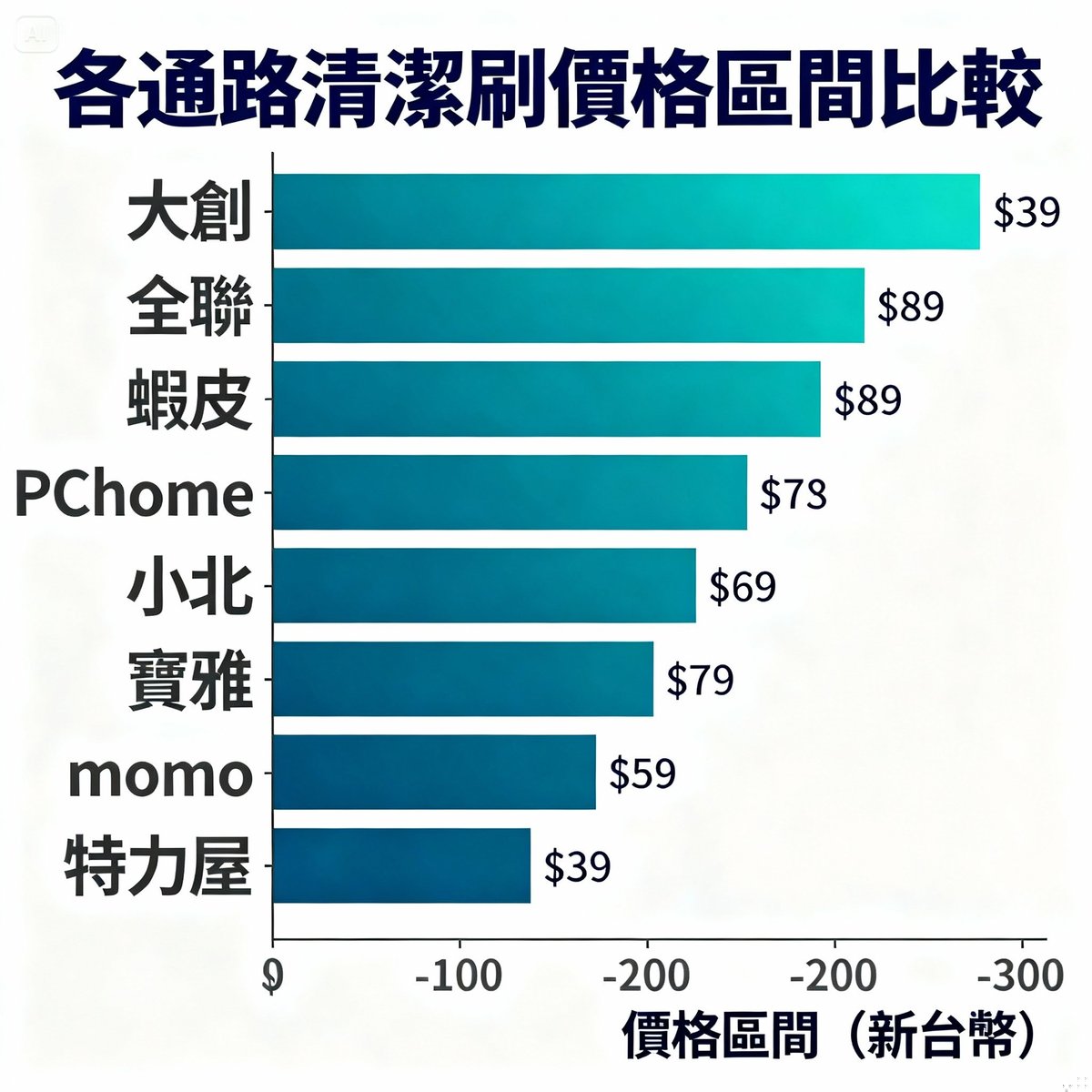
Where to buy cleaning brushes? The main sales channels in Taiwan compared
Physical stores (PX Mart, Daiso, Showba, POYA and others)
The biggest advantage of physical stores is that you can "buy it and use it right away" and can handle the product to check its quality. The chains below are retailers in Taiwan.
PX Mart
- Product range: basic models such as straw brushes, bathroom brushes and toilet brushes
- Price band: budget range
- Advantages: many locations (1,000+ stores across Taiwan), convenient shopping
- Disadvantages: fewer choices, few professional models
- Suitable for: everyday cleaning needs, urgent purchases
Daiso (DAISO)
- Product range: the widest variety of cleaning brushes (10+ types)
- Price band: positioned as budget
- Advantages: the best value for money, many creative designs
- Disadvantages: uneven quality, some items have lower durability
- Suitable for: limited budgets, trying new products
Showba (Xiaobei), a household goods chain
- Product range: highly specialized in cleaning supplies, with many industrial-grade options
- Price band: from budget to mid-to-high
- Advantages: a full range of professional cleaning supplies, stable quality
- Disadvantages: fewer locations in northern Taiwan
- Suitable for: cleaning companies, professional needs
POYA, a beauty and household goods chain
- Product range: household cleaning supplies, beauty cleaning brushes
- Price band: mid-range
- Advantages: many brands to choose from, higher quality
- Disadvantages: slightly higher prices
- Suitable for: those who care about brand and quality
TLW, a home-improvement chain
- Product range: industrial-grade cleaning brushes, electric cleaning brushes
- Price band: from mid-range to high
- Advantages: a full range of professional tools, advice available in store
- Disadvantages: higher prices, few locations
- Suitable for: post-renovation cleaning, industrial use
Order of priority for physical stores:
- Urgent everyday needs: PX Mart (the most convenient)
- Value for money first: Daiso (the lowest prices)
- Professional needs: Showba, TLW (better quality)
- Choice of brands: POYA (mid-to-high-end products)
Advantages of online platforms (Shopee, momo, PChome)
The advantages of online platforms are the widest choice, easy price comparison and home delivery.
Shopee
- Price band: the widest, from budget to high
- Advantages: the cheapest prices, many sellers to compare, frequent discount coupons
- Disadvantages: seller ratings need attention; slower delivery (2-5 days)
- Suitable for: those in no hurry, careful with money and fond of comparing prices
momo
- Price band: mid-range to high
- Advantages: many brands, fast delivery (12h/24h), quality assurance
- Disadvantages: slightly more expensive than Shopee
- Suitable for: those who need fast delivery and value quality assurance
PChome 24h Shopping
- Price band: mid-range to high
- Advantages: delivery within 24 hours, easy returns and exchanges, a printed invoice
- Disadvantages: fewer choices than momo
- Suitable for: office workers (24h delivery is very convenient), those who need a uniform invoice (Taiwan's official receipt)
Yahoo Shopping (Taiwan)
- Price band: mid-range to high
- Advantages: many official brand flagship stores, shopping credit rewards
- Disadvantages: higher prices
- Suitable for: those collecting shopping credit, brand loyalists
Price comparison across e-commerce platforms (taking the Artisan electric cleaning brush as an example):
- Shopee: usually the lowest price, but seller ratings need attention
- momo: slightly higher price, but with quality assurance and fast delivery
- PChome: mid-level price, built around 24h delivery
- Yahoo: mid-level price, with shopping credit rewards (Actual prices and promotions on each platform change at any time; go by what the platform's page shows)
Things to watch when buying online:
- Check the seller's rating: 4.5 stars or above and 100+ reviews are more reliable
- Check the product specifications: size, material, what accessories are included
- Shipping cost: the spending threshold for free shipping
- Return and exchange policy: the 7-day trial period, and who pays the return shipping
Want to know the prices and reviews of straw brushes in each channel? Read Where to buy straw brushes? The latest 2026 comparison of places to buy and prices.
Decision tree for choosing a channel
Not sure where to buy? Use the decision tree below to decide quickly:
What is your purchasing need?
│
├─ Urgent (needed today)
│  └─ Physical stores: PX Mart (most convenient), Daiso (cheapest)
│
├─ Limited budget
│  └─ Daiso (budget), Shopee (cheapest after comparing)
│
├─ Quality first (willing to pay more for something good)
│  └─ Showba, POYA, TLW (physical stores)
│  └─ momo, PChome (online)
│
├─ Professional / volume purchasing (businesses, cleaning companies)
│  └─ Factory-direct: YC Brushes (custom work, wholesale prices)
│
└─ No hurry, want to compare prices slowly
   └─ Shopee (lowest price), momo (fast delivery)
Volume purchasing or custom requirements for a business? A restaurant or drinks shop that needs straw brushes in quantity? A cleaning company that needs a steady supply of professional cleaning brushes? Contact YC Brushes now: factory-direct wholesale prices (order quantities and lead times quoted per specification; please email us with your requirements), and over 40 years of experience to keep quality stable.
Tips for using and maintaining cleaning brushes
Buying the right cleaning brush is only the first step. Correct use and maintenance are what bring out the most benefit and extend the service life.
Preparation before first use
A newly bought cleaning brush should be cleaned before it is used for the first time.
Why clean it first?
- Dust and grease may remain from the manufacturing process
- It picks up dust during transport and packaging
- To ensure hygiene and safety, especially for baby products and food-related cleaning brushes
Steps for the first cleaning:
- Remove the packaging: take off all labels, stickers and ties
- Rinse under running water: rinse for 1-2 minutes to remove surface dust
- Soak in a cleaning agent (optional):
- Food-related cleaning brushes (straw brushes, bottle brushes): soak in neutral dish soap for 5 minutes
- Ordinary cleaning brushes: rinsing with water is enough
- Rinse thoroughly: make sure no cleaning agent remains
- Dry completely: hang with the brush head downward and leave in a ventilated place for 4-8 hours
Notes for particular materials:
- Silicone brushes: can be disinfected with hot water (80-100°C)
- Nylon brushes: avoid hot water (above 60°C), which softens the filament
- Natural bristle brushes: avoid soaking for long (keep it under 10 minutes), as they absorb water and go moldy easily
- Electric cleaning brushes: the brush head can be removed and washed; the body can only be wiped and must not be put in water
Correct cleaning methods
Different types of cleaning brush call for different techniques.
Using a straw brush / tube brush correctly:
- First rinse the inside of the straw with water to flush out most of the residue
- Insert the straw brush into the tube and rotate it 360 degrees while scrubbing
- Move it up and down so the filament touches the whole tube wall
- Rinse clean with water again
- Key point: do not use too much force, so the filament does not get stuck in the tube
Using an electric cleaning brush correctly:
- Choose a suitable brush head (flat brush, gap brush, sponge brush)
- First spray cleaning agent on the area and leave it for 1-2 minutes
- Switch on the electric brush and press it lightly on the surface
- Move slowly so the brush head cleans each area fully
- Key point: do not press too hard; just let the brush head rotate naturally
Using a window screen cleaning brush correctly:
- Clamp the double-sided brush on both sides of the window screen
- Slide it in parallel strokes, up and down or left and right
- Keep moderate pressure and do not push too hard (to avoid tearing the screen)
- Move about 5-10 cm with each stroke
- Key point: keep the movement gentle; window screens are fragile
Using a bathroom cleaning brush correctly:
- Spray bathroom cleaner and wait 3-5 minutes for the dirt to soften
- Use a long-handled brush and scrub the tiles in a circular motion
- Use a gap brush on the grout lines, scrubbing back and forth in a straight line
- Rinse clean with water
- Key point: regular cleaning is more effective than one big clean
Maintenance that extends service life
Correct maintenance can extend the service life of a cleaning brush 2-3 times.
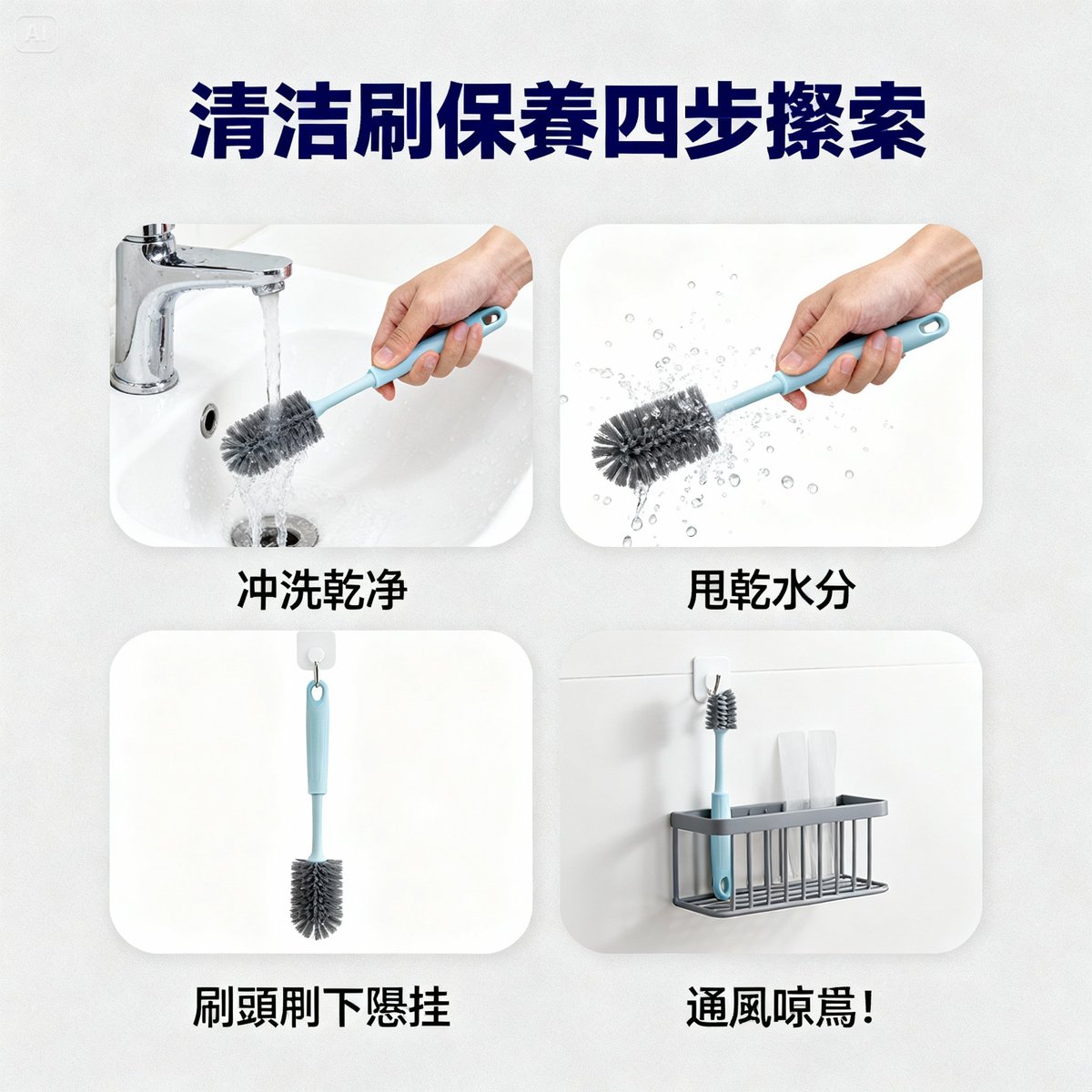
After every use:
- Rinse immediately: rinse under running water for 30 seconds straight after use
- Shake off the water: shake the brush hard to throw off the remaining water
- Brush head downward: hang with the brush head downward so that water does not collect at the root of the filament
- Air dry: keep it in a ventilated place and away from damp
Weekly deep cleaning:
- Soak in a cleaning agent: soak in neutral dish soap or a dedicated brush cleaning liquid for 5-15 minutes
- Rinse thoroughly: rinse until no foam remains
- Disinfect (optional):
- Silicone brushes: boil in hot water for 3-5 minutes
- Nylon brushes: soak in diluted bleach for 5 minutes (must be rinsed thoroughly)
- Natural bristle brushes: disinfect with an alcohol spray
- Dry completely: at least 4-8 hours
Avoid these mistakes:
- ❌ Putting the brush straight into its storage case after use (it will go moldy if not dry)
- ❌ Hanging with the brush head upward (water collects at the root of the filament and causes shedding)
- ❌ Leaving it soaking in water for a long time (the filament deforms and falls out easily)
- ❌ Exposing it to direct sunlight (nylon and silicone age and degrade)
- ❌ Storing it together with other cleaning tools (cross-contamination)
Maintenance focus by material:
- Silicone: heat resistant and can be boiled to disinfect; avoid contact with sharp objects (it is easily cut)
- Nylon: avoid high temperatures; check regularly whether the filament has deformed
- Natural bristle: keeping it dry matters most; disinfect weekly to prevent mold
- Wire brush: always dry after use to prevent rust
Storage advice:
- Hang it on a suction-cup hook
- For brushes that come with a storage case, make sure they are completely dry before putting them in
- Store brushes for different uses separately (to avoid cross-contamination)
- Do not keep bathroom cleaning brushes in a damp, enclosed space
Judging when to replace
Even with proper maintenance, a cleaning brush has a limited service life. The following signs mean it is time to replace it:
Must be replaced:
- ✓ More than 10% of the filament has fallen out
- ✓ The filament is clearly deformed, bent or split
- ✓ Mold or an odor has appeared
- ✓ The cleaning result has clearly dropped
Replacement recommended:
- ✓ Used beyond the recommended life (see the list below)
- ✓ The filament has turned darker or yellow (built-up dirt that cannot be removed)
- ✓ The brush handle is loose or broken
Suggested replacement cycle by type of brush:
- Straw brush: 3-6 months (daily use), 6-12 months (occasional use)
- Electric cleaning brush heads: 3-6 months
- Bathroom cleaning brush: 6-12 months
- Toilet brush: 3-6 months (for hygiene reasons)
- Window screen cleaning brush: 12-24 months
- Gap cleaning brush: 6-12 months
Tips for a longer service life:
- Keep 2-3 brushes and use them in rotation to reduce the wear on each
- Soften the dirt before use (soaking with a cleaning agent) to reduce the scrubbing force needed
- Choose cleaning brushes of industrial-grade quality (twisted-wire fixing method, high durability)
Want the detailed method for cleaning brushes? Read How often should brushes be washed? A complete guide to cleaning brushes, with recommended cleaning liquids.
YC Brushes - professional manufacturing of custom cleaning brushes
Over 40 years of brush manufacturing experience
YC Brushes was founded in 1985 and focuses on the design and manufacture of industrial-grade brushes, with over 40 years of brush manufacturing experience.
From traditional hand tufting to modern automated production lines, YC Brushes has always held to the principle of "quality first" and supplies customers with the most reliable brush products.
Core strengths:
- Over 40 years of accumulated expertise: a deep understanding of different filament materials and tufting processes
- Factory-direct: no middleman costs, so we can offer the most competitive prices
- Quality assurance: the twisted-wire fixing method, with a filament shedding rate below 3%
- Stable supply: long-term customers include a number of well-known companies
Industrial-grade quality assurance
Most ordinary cleaning brushes on the market are fixed with adhesive, and the filament tends to fall out after a period of use. YC Brushes uses the twisted-wire fixing method to make sure the filament is held firmly and does not come out.
Twisted-wire fixing vs adhesive fixing:
- Twisted-wire fixing: the filament is held by tightly twisted metal wire; high durability; the industrial-grade standard
- Adhesive fixing: bonded with glue; low cost but comes loose easily; ordinary retail products
Quality inspection process:
- Raw material inspection: tests of filament material, stiffness and resilience
- In-process inspection: checks of tuft density and fixing strength
- Finished product inspection: pull test, durability test, appearance check
- Pre-shipment inspection: makes sure the quality of every batch is consistent
A complete service from design to volume production
YC Brushes offers a one-stop service from design and sampling to volume production, helping customers develop cleaning brush products of their own.
The custom service process:
- Requirements analysis: understanding the cleaning situation, the material of the item being cleaned and the frequency of use
- Material advice: recommending the most suitable filament material and stiffness for the requirement
- 3D sampling: a quick 3D-printed sample to confirm that the design meets the requirement
- Tooling and volume production: tooling once the sample is confirmed, then formal volume production
- Quality control: inspection throughout, to keep every batch consistent
- Stable supply: long-term cooperation and a steady source of goods
Situations suited to custom work:
- Cleaning tubes of special sizes (industrial equipment, medical devices)
- Special material requirements (food grade, heat resistant, anti-static)
- Volume purchasing (food service, cleaning companies, property management)
- Branded orders (printed logo, custom packaging)
Success stories:
- A drinks chain: custom straw brushes (heat-resistant silicone, printed with the brand logo)
- A cleaning company: an industrial-grade bathroom cleaning brush set (high durability, optimized cost)
- A medical device maker: cleaning brushes for special tubes (meeting medical-grade standards)
Need custom cleaning brushes or volume purchasing? Contact YC Brushes now and let over 40 years of experience help you find the best solution. Or see our full range of services to understand the complete process from design to volume production.
FAQ
Where can I buy a straw brush?
In Taiwan, straw brushes are sold in physical stores such as PX Mart, Daiso, Showba and POYA, at prices from budget to mid-to-high. Online platforms such as Shopee, momo and PChome offer more choice.
Recommended places to buy:
- Urgent needs: PX Mart (the most locations)
- Value for money first: Daiso (budget)
- Quality first: POYA, Showba (many brands to choose from)
- Comparing prices online: Shopee (the cheapest), momo (fast delivery)
For a detailed comparison, see Where to buy straw brushes? The latest 2026 comparison of places to buy and prices.
Does PX Mart sell straw brushes? How much are they?
Yes. PX Mart sells straw brushes in the budget range; for the actual selling price, go by what the store shows.
The straw brushes at PX Mart are mostly basic nylon models, suitable for everyday cleaning. The advantages are the many locations and convenient shopping; the disadvantages are fewer choices and few professional models.
Are electric cleaning brushes any good? Are they worth buying?
Electric cleaning brushes really are useful, but it depends on where you will use one and on your budget.
Advantages:
- Save effort and time, with efficiency raised 3-5 times
- A more thorough cleaning result
- Suited to cleaning large areas (bathroom, floor)
Disadvantages:
- Higher price (mid-to-high range; go by what the sales channel shows)
- Need charging or plugging in
- Fairly heavy (0.8-1.5 kg)
- Noise of about 60-75 dB
When it is worth buying:
- You often need to clean the bathroom, kitchen or floor
- You have back pain or joint problems and cannot clean by hand for long
- You are willing to invest in a mid-to-high price model to raise cleaning efficiency
When it is not recommended:
- Low cleaning needs (fewer than 2 times a month)
- Limited budget
- You only need to clean a small area or specific items (such as straws)
For the full analysis, read Are electric cleaning brushes any good? Pros and cons, user experience and a guide to pitfalls.
Which brand of electric cleaning brush is recommended?
Common electric cleaning brush brands on the market:
Artisan
- A wide range of brush heads
- Suitable for: heavy cleaning needs
Bosch
- German workmanship, the best durability
- The strongest power
- Suitable for: professional cleaning needs (For the actual selling prices of the brands above, go by what each sales channel shows)
For a detailed comparison, see Electric cleaning brush recommendations 2026 | Popular brands fully compared.
Are window screen cleaning brushes any good? Are they really faster?
Window screen cleaning brushes really are useful, raising cleaning efficiency by 60-70%.
Why are they useful?
- A double-sided design that clamps both sides of the window screen and cleans them at once
- No need to take the window screen down, which saves time and effort
- Suited to regular cleaning that keeps the window screen clean
Measured results:
- Traditional method (wiping with a cloth): about 15-20 minutes per window
- Window screen cleaning brush: about 5-8 minutes per window
- Efficiency gain: 60-70%
For full reviews and usage tips, see Are window screen cleaning brushes any good? A complete guide to Daiso window screen brush reviews and usage tips.
What can a straw brush clean?
A straw brush has more uses than you might think:
Drink containers:
- Insulated bottle straws
- Reusable straws (stainless steel, glass, silicone)
- Sports bottle straws
- Coffee cup straw lids
Baby products:
- The narrow neck of a baby bottle
- The nipple channel
- Training cup straws
Kitchen items:
- Faucet outlets
- Water filter lines
- Coffee machine milk frothing tubes
- Narrow tubes in a juicer
Other uses:
- Laboratory test tubes
- Aquarium tubing
- Cleaning musical instruments (saxophone, flute)
- Cleaning fine details of craft items
Key to choosing: measure the inner diameter of the tube and choose a slightly larger brush, so the filament is in full contact with the tube wall.
How often should cleaning brushes be washed?
The cleaning frequency differs by type of cleaning brush:
Must be cleaned after every use:
- Straw brushes, bottle brushes (in contact with food)
- Toilet brushes (in contact with waste)
After use + weekly deep cleaning:
- Electric cleaning brushes (rinse the brush head after use, wipe the body weekly)
- Bathroom cleaning brushes (rinse after use, disinfect weekly)
Monthly deep cleaning:
- Window screen cleaning brushes (used infrequently)
- Gap cleaning brushes
Cleaning methods:
- Simple cleaning: rinse under running water for 30 seconds
- Deep cleaning: soak in a cleaning agent for 5-15 minutes and rinse thoroughly
- Disinfection: silicone brushes can be boiled; use diluted bleach for nylon brushes
Important reminder: always dry the brush completely after use to prevent mold and bacterial growth.
For the detailed cleaning method, see How often should brushes be washed? A complete guide to cleaning brushes, with recommended cleaning liquids.
Silicone straw brush vs nylon straw brush: which is better?
Neither is better in absolute terms; it depends on your needs.
Silicone straw brush:
- Advantages: does not scratch, heat resistant (-40°C to 230°C), easy to clean, durable
- Disadvantages: weaker cleaning power, higher price (mid-range)
- Suitable for: stainless steel straws, glass straws, baby products
Nylon straw brush:
- Advantages: strong cleaning power, affordable (budget range), many models
- Disadvantages: may scratch, filament sheds easily, not resistant to high temperatures (above 80°C)
- Suitable for: plastic straws, ordinary tubes, limited budgets
How to choose:
- Cleaning stainless steel / glass straws → silicone straw brush
- Cleaning plastic straws → nylon straw brush
- Baby products → silicone straw brush (food-grade safety)
- Limited budget → nylon straw brush
For a detailed comparison, see Silicone straw brush vs nylon straw brush | Material differences and a full analysis of pros and cons.
Are disposable toilet cleaning brushes any good?
Disposable toilet cleaning brushes have advantages and disadvantages; it depends on your needs and budget.
Advantages:
- Hygienic: thrown away after use, so the brush itself never needs cleaning
- Convenient: no need to worry about a moldy or smelly brush
- Clean: a new one every time, which feels more comfortable
Disadvantages:
- High cost: over the long term, 3-5 times as expensive as a traditional toilet brush
- Not environmentally friendly: produces more waste
- Cleaning power: may not match a traditional stiff toilet brush
Cost comparison:
- Traditional toilet brush: budget range (usable for 6-12 months)
- Disposable toilet brush: higher unit price, and it has to be bought again and again (about 15-20 uses)
- Worked out over the long term, the yearly spend on the disposable type is usually clearly higher than on the traditional type (the actual figure depends on the selling price and how often it is replaced)
Suitable for:
- Public places, offices (for hygiene reasons)
- Those with the budget who are not concerned about the environment
- Those who care a great deal about hygiene and cannot accept reusing a toilet brush
For a detailed comparison, see Toilet cleaning brush recommendations | Disposable vs traditional toilet brushes fully compared.
How are cordless electric cleaning brushes rated?
Cordless electric cleaning brushes are rated positively overall. The main advantages are high mobility and use in the wet area of the bathroom.
Advantages:
- Not restricted by a power cord, so the cleaning range is wider
- Safe to use in the wet area of the bathroom
- Can be carried to different rooms and floors
Disadvantages:
- Higher price (a good deal more than corded models; the actual figure depends on the brand)
- Need regular charging
- Limited battery life (30-60 minutes)
- The battery degrades with long-term use
What to look for when buying:
- Battery life of at least 45 minutes
- Charging time under 4 hours
- A model with a replaceable battery is better (you can replace a degraded battery yourself)
For recommended models, see Cordless electric cleaning brush recommendations | Cleaning freedom without the cord.
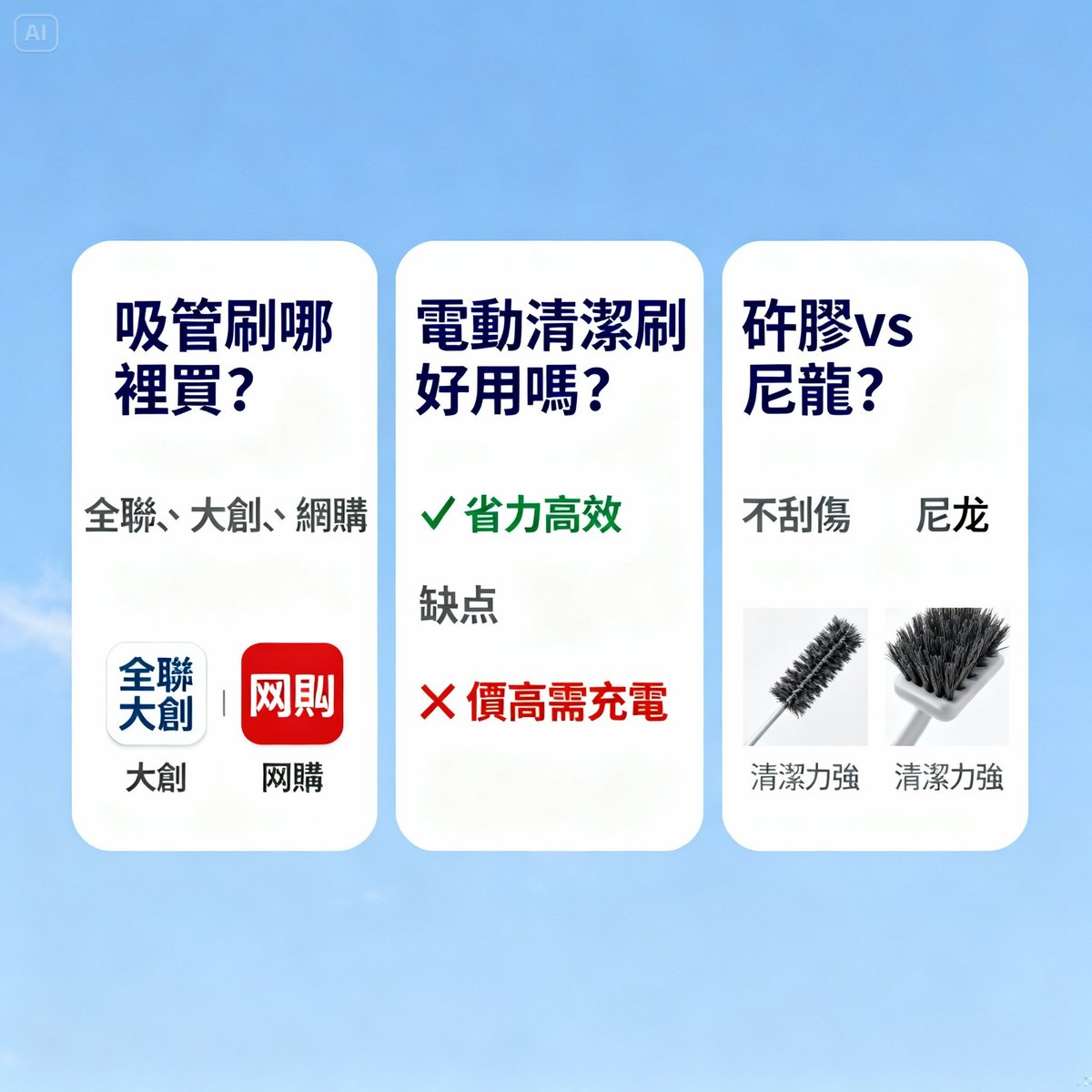
Conclusion: choose the right cleaning brush and double your cleaning efficiency
A cleaning brush looks simple, but choosing the right tool can raise cleaning efficiency 2-3 times and even avoid damage to the item being cleaned.
Key points of this article:
- Know the types of cleaning brush: straw brushes, electric cleaning brushes and special-purpose brushes each have their own uses
- Material decides everything: silicone is gentle and does not scratch, nylon has strong cleaning power, wire brushes suit stubborn dirt
- 5 key buying points: situation, material, size, durability, ease of maintenance
- Comparing channels: PX Mart is convenient, Daiso is cheap, online shopping offers the most choice
- Maintenance extends life: rinse immediately after use, dry with the brush head downward, deep clean regularly
Buying advice:
- Everyday household use: straw brush + window screen brush + bathroom brush, mostly in the budget to mid-range
- Upgraded set: add an electric cleaning brush, a mid-to-high price investment
- Professional needs: industrial-grade cleaning brushes, custom specifications (For the actual selling price, go by what each sales channel shows)
Custom service from YC Brushes: Need special specifications, volume purchasing or custom cleaning brushes? Contact YC Brushes now. With over 40 years of manufacturing experience, we offer:
- Free material consultation and sample testing
- Factory-direct wholesale prices (order quantities quoted per specification; email us with your requirements)
- A complete service from design and 3D sampling to volume production
- Industrial-grade quality, with the twisted-wire fixing method to ensure durability
Or see the full product range to learn about more industrial-grade cleaning brush options.
Want to learn more about cleaning brushes? Go to the blog to explore more specialist articles.