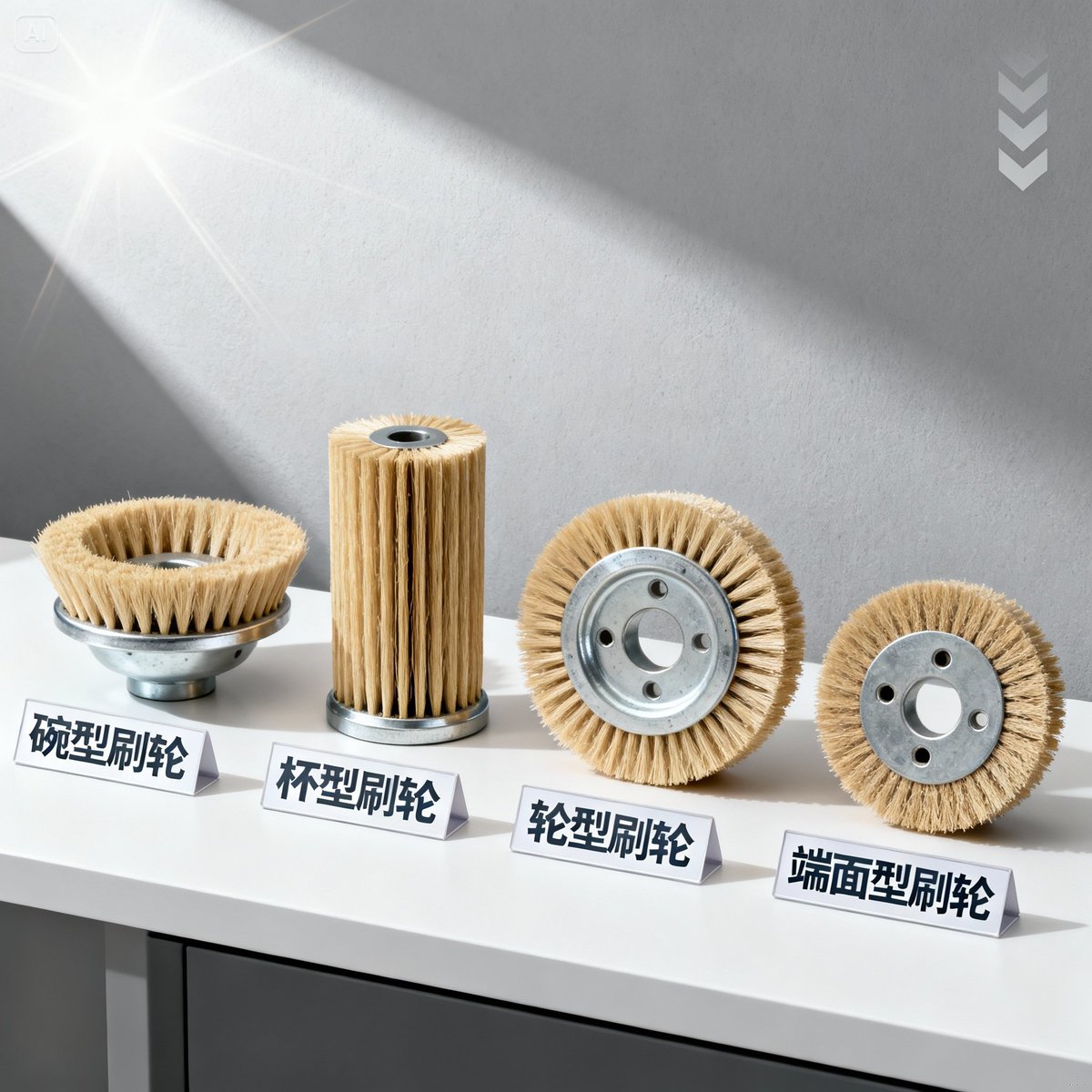
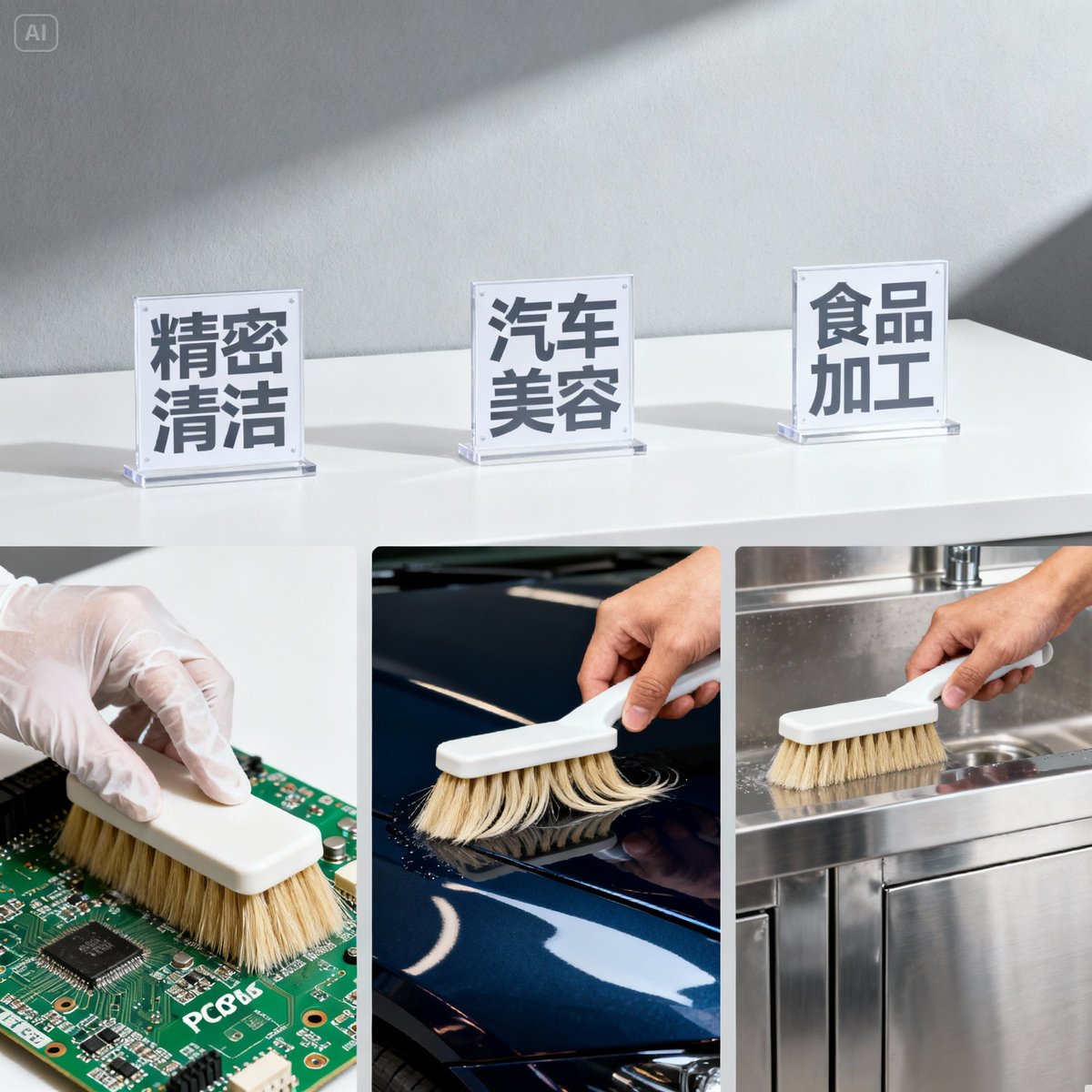
Wool brushes are soft but expensive, sponge brushes are safe but weak at cleaning, and electric brushes are efficient but scratch easily. Every type of car wash brush has pros and cons, so how do you choose one you will not regret? Today YC Brushes draws on more than 40 years of manufacturing experience to explain the differences between them in full!
Introduction: why does the type of car wash brush matter so much?
A car wash brush is not something to pick at random.
With the wrong material, at best the car does not come clean, and at worst the paint is scratched all over. Some car owners have bought a cheap hard nylon brush and, after a single use, found countless fine scratches in their black paint, to their lasting regret.
YC Brushes has been making brushes for more than 40 years and has seen far too many cases of the wrong tool being chosen. This article uses scientific data and test results to give a full comparison of the pros and cons of soft-bristle brushes, sponge brushes, nylon brushes and electric brushes, to help you make the wisest choice. The NT$ prices and car brands mentioned describe the market in Taiwan.
Want the full picture on choosing a car wash brush? Start with our article "The Complete Car Wash Brush Buying Guide 2026 | Types Compared, Recommended Brands, Tips to Avoid Damaging Your Car".
1. The three mainstream car wash brushes in depth
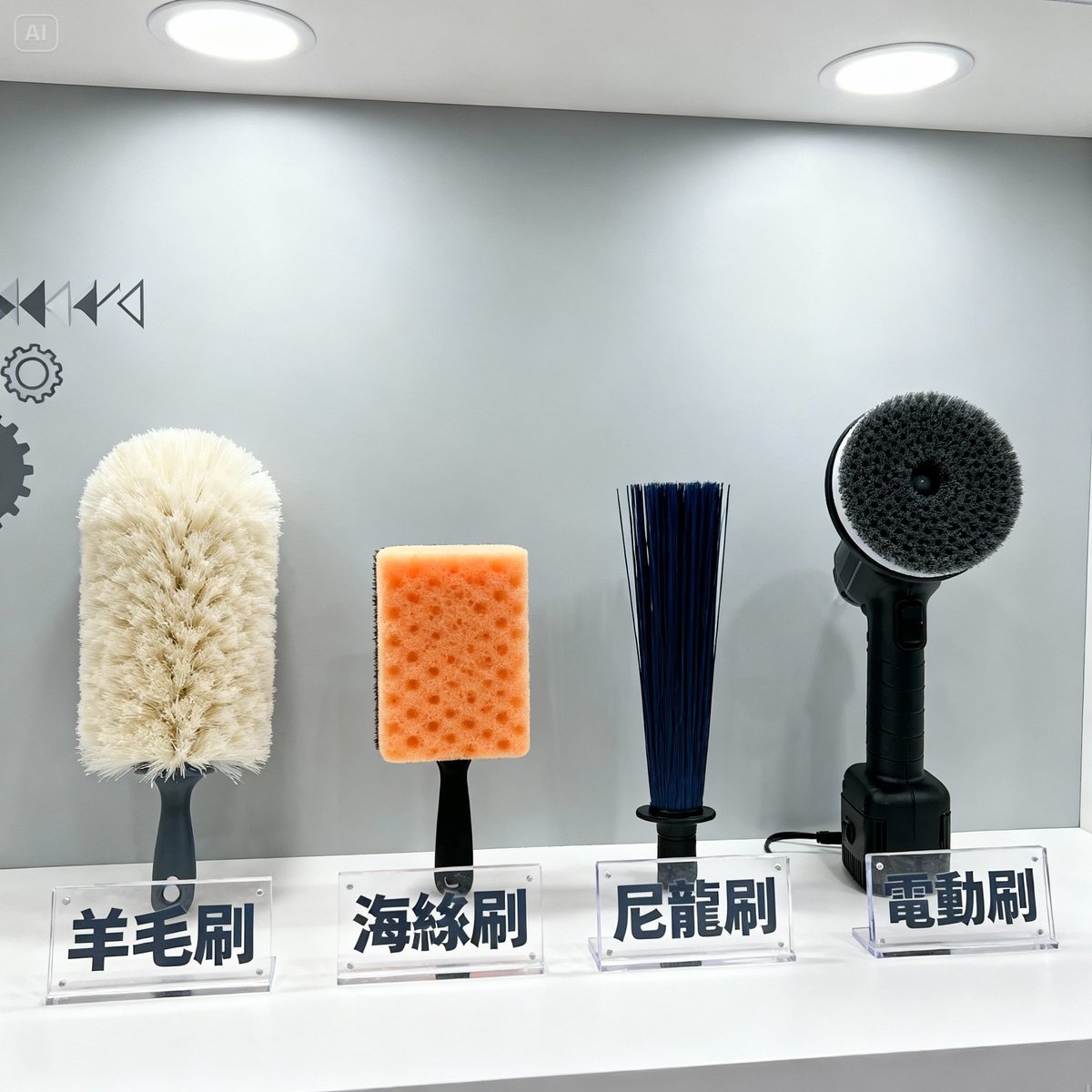
There are many kinds of car wash brush on the market, but these three main categories are the mainstream.
Soft-bristle brushes (wool / horsehair)
Material properties
Natural wool or horsehair, with a fine fiber diameter and very high softness. The Mohs hardness is about 2-2.5, far below that of car paint (3-5), so it almost never scratches the paint.
It absorbs water extremely well and holds a large amount of shampoo solution, forming a thick layer of foam on the car body that reduces friction.
Cleaning power
Very good on everyday dust and light dirt. The soft bristles reach into the tiny recesses of the paint and lift the dirt away.
On stubborn dirt (such as bird droppings, tree sap and insect remains) the cleaning power is a little weaker, and it takes several passes or a dedicated cleaner.
Risk of damaging the paint
The lowest! This is the safest choice among all car wash brushes.
Tests in the YC Brushes laboratory show that, when used correctly (rinsing first, the two-bucket method), a wool brush wears the paint by only 0.01-0.02 microns per wash, which is almost negligible.
Durability
Medium. Natural hair wears easily, and the service life is about 6-12 months. With proper care (thorough rinsing and drying after every use) it can last longer.
Price
Higher. A good wool brush usually costs clearly more than a sponge brush.
The YC Brushes soft wool brush is NT$350 factory-direct, 30-40% cheaper than retail.
Where it fits
- Premium cars, dark-colored cars (black, dark blue, dark red)
- Vehicles that have just been waxed or coated
- Owners with very high demands on paint protection
- Owners who wash regularly and care about details
Sponge brushes
Material properties
Polyurethane sponge or polyethylene sponge, extremely soft and full of pores. The Mohs hardness is about 1-1.5, the softest of all car washing tools.
It absorbs water well but traps grit easily.
Cleaning power
The weakest. It copes with light dirt and dust, but can do nothing about stubborn dirt.
It takes repeated scrubbing or a strong car shampoo.
Risk of damaging the paint
Very low! It is almost impossible for it to scratch the paint.
But there is one trap: the pores on the surface of the sponge trap grit easily. If you do not rinse the sponge often, the trapped grit acts like sandpaper and scratches the paint after all.
So a sponge brush must always be used with the two-bucket method and rinsed often.
Durability
The shortest. Sponge tears and ages easily, and the service life is usually only 3-6 months.
Price
The cheapest. Sponge brushes sold at retail are mostly budget items.
Where it fits
- Beginners washing their own car for the first time
- Owners who are very worried about scratching the paint
- Cars that are not very dirty, with only dust
- Owners on a limited budget
Nylon brushes / synthetic filament
Material properties
Synthetic fiber, in hard nylon and soft synthetic filament. Hard nylon has a Mohs hardness of about 3-4 and may scratch the paint. Soft synthetic filaments such as soft nylon and PBT (polyester) have a hardness of about 2-3 and are relatively safe.
It is extremely durable, is not affected by water and does not go moldy.
Cleaning power
The strongest! The cleaning power of a nylon brush far exceeds that of wool and sponge brushes.
It effectively removes stubborn dirt, bird droppings, tree sap, insect remains and the brake dust on wheel rims.
Risk of damaging the paint
It depends on the material.
- Hard nylon brush: high risk, easily leaves fine scratches
- Soft synthetic brush (soft nylon, PBT polyester): low-to-medium risk, relatively safe when used correctly
YC Brushes tests show that soft PBT filament wears the paint by about 0.03-0.05 microns per wash, slightly more than a wool brush but still acceptable.
Durability
The highest! A nylon brush lasts 12-18 months or even longer.
It is not affected by water, does not go moldy and needs no special care.
Price
Medium. A soft nylon brush is priced between a sponge brush and a wool brush.
Where it fits
- Everyday washing of ordinary vehicles
- Cars that are often very dirty (frequently driven in the countryside or on construction sites)
- Washing wheel rims, the engine bay and other unpainted parts
- Owners on a limited budget who want durability
- Frequent washing, where fast cleaning is needed
Electric car wash brushes
Material properties
Driven by an electric motor, with a brush head usually made of synthetic filament or sponge. The rotation speed is usually 200-600 RPM.
The brush head is replaceable to suit different cleaning needs.
Cleaning power
Very strong! The rotating head removes dirt quickly and is more than 50% more efficient than a manual brush.
It is especially suitable for stubborn dirt and wheel rims.
Risk of damaging the paint
Higher! This is the biggest problem with electric brushes.
A brush head rotating at high speed easily leaves swirl marks and fine scratches if it is used incorrectly (too much pressure, a head material that is too hard, no rinsing first).
YC Brushes tests show that an electric brush wears the paint by about 0.08-0.15 microns per wash, 4-7 times as much as a wool brush.
Durability
It depends on the quality. Low-priced models usually break down within 6-12 months.
The brush head needs replacing regularly (every 3-6 months).
Price
The highest! Prices vary widely, from entry-level models to branded ones.
With the cost of replacement heads added, the total cost is much higher than for a manual brush.
Where it fits
- Frequent washing, once a week or more
- Washing large vehicles, SUVs and tour buses
- Owners who find washing physically demanding, and older owners
- Owners who want efficiency and are willing to invest
- Washing industrial vehicles, where fine scratches matter less
Want to look more closely at electric brushes? See "Is an Electric Car Wash Brush Worth Buying? A Complete Analysis of Pros and Cons".
2. A scientific comparison
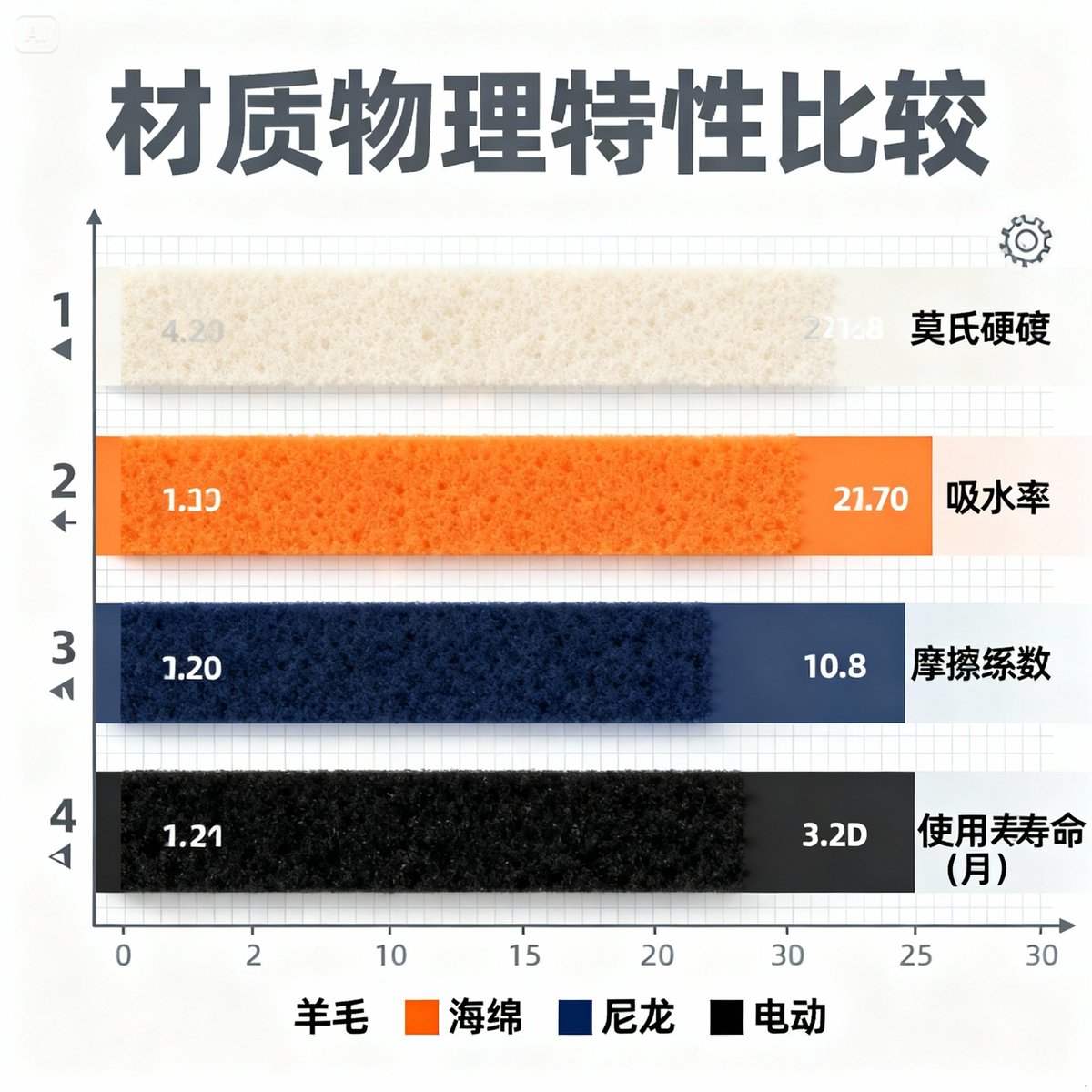
Let the data speak, for an objective comparison of the types of car wash brush.
Physical properties of the materials
| Property | Wool brush | Sponge brush | Soft nylon brush | Electric brush |
|---|---|---|---|---|
| Mohs hardness | 2-2.5 | 1-1.5 | 2-3 | 2.5-4 |
| Water absorption | Very high (400%) | Very high (500%) | Medium (150%) | Medium (150%) |
| Coefficient of friction | 0.15 | 0.10 | 0.25 | 0.30 |
| Service life | 6-12 months | 3-6 months | 12-18 months | 12-24 months |
| Weight | Light (300g) | Very light (200g) | Light (350g) | Heavy (1000-2000g) |
How to read it:
- Mohs hardness: the lower the value, the safer. Car paint has a hardness of about 3-5, and a brush is unlikely to scratch only if it is softer than the paint.
- Water absorption: the higher the value, the more shampoo solution the brush holds to form a protective layer of foam.
- Coefficient of friction: the lower the value, the less friction during scrubbing and the less likely fine scratches are.
- Service life: the number of months of use with proper care.
Measured cleaning performance
The YC Brushes laboratory tested the cleaning performance of the four types of car wash brush (scored 1-10):
| Type of dirt | Wool brush | Sponge brush | Soft nylon brush | Electric brush |
|---|---|---|---|---|
| Everyday dust | 9 | 7 | 9 | 10 |
| Light mud | 8 | 6 | 9 | 10 |
| Bird droppings | 6 | 4 | 8 | 9 |
| Tree sap | 5 | 3 | 7 | 9 |
| Insect remains | 6 | 4 | 8 | 9 |
| Brake dust on wheel rims | 5 | 3 | 9 | 10 |
| Average cleaning power | 6.5 | 4.5 | 8.3 | 9.5 |
Conclusion:
- Everyday cleaning: wool, nylon and electric brushes are all very good; sponge brushes are slightly weaker
- Stubborn dirt: nylon and electric brushes are clearly better than wool and sponge brushes
- Wheel rim cleaning: nylon and electric brushes are the best choice
Assessment of the risk to the paint
The YC Brushes laboratory examined the paint surface under a microscope after washing (test conditions: rinsing first, the two-bucket method, standard pressure):
| Item assessed | Wool brush | Sponge brush | Soft nylon brush | Electric brush |
|---|---|---|---|---|
| Number of scratches (per 10cm²) | 2-5 | 1-3 | 5-10 | 15-30 |
| Depth of deepest scratch (microns) | 0.5 | 0.3 | 1.0 | 2.5 |
| Risk of swirl marks | Very low | Very low | Low | Medium to high |
| Safety rating | ⭐⭐⭐⭐⭐ | ⭐⭐⭐⭐⭐ | ⭐⭐⭐⭐ | ⭐⭐⭐ |
Important reminder:
All the tests assume "correct use". Without rinsing first, with grit hidden in the bristles or with too much pressure, any car wash brush will scratch the paint!
Want to know how to avoid scratches? See "Will a Car Wash Brush Damage Your Car? A Professional Analysis + 5 Key Tips to Avoid Scratches".
Value-for-money analysis
Value-for-money ratings for each type of car wash brush, based on cleaning efficiency and suitable vehicles:
| Item | Wool brush | Sponge brush | Soft nylon brush | Electric brush |
|---|---|---|---|---|
| Cleaning efficiency | Medium | Low | High | Very high |
| Suitable vehicles | Premium cars first | All cars | All cars | All cars |
| Value-for-money rating | ⭐⭐⭐⭐ | ⭐⭐⭐ | ⭐⭐⭐⭐⭐ | ⭐⭐⭐ |
Value-for-money winner: the soft nylon brush
A reasonable price, strong cleaning power and high durability make it the best fit for ordinary car owners.
First choice for premium cars: the wool brush
The price is higher, but it protects the paint best and suits premium cars and dark-colored cars.
First choice for beginners: the sponge brush
The lowest price and the least likely to scratch, it suits beginners washing their own car for the first time.
For those who want efficiency: the electric brush
The most efficient, saving effort and time, but expensive and with a higher risk to the paint. It suits owners who wash frequently.
Want more brand recommendations? See "Top 10 Car Wash Brush Recommendations 2026 | A Complete Brand Review".
YC Brushes offers a complete line of car wash brushes, from wool brushes to nylon brushes, at the best factory-direct prices. See the product catalog to find the car wash brush that suits you best.
3. A guide to choosing by situation
Different situations call for different car wash brushes.
By vehicle type
Premium cars (Mercedes-Benz and BMW, Lexus, Tesla)
Recommended: wool brush > sponge brush > soft nylon brush
The paint on premium cars is usually more delicate, and their owners have little tolerance for fine scratches. A wool brush is the safest bet.
The YC Brushes soft wool brush (NT$350) is a favorite of premium car owners: extremely soft, it almost never scratches the paint.
Ordinary passenger cars (Toyota, Honda, Nissan)
Recommended: soft nylon brush > wool brush > sponge brush
For ordinary passenger cars the aim is value for money, and a soft nylon brush is the best choice: strong cleaning power, durable and reasonably priced.
Dark-colored cars (black, dark blue, dark red)
Recommended: wool brush > sponge brush > soft nylon brush
Dark-colored cars show fine scratches especially easily! Even tiny scratches are clearly visible in sunlight.
We strongly recommend a wool brush, combined with correct washing technique (rinsing first, the two-bucket method, straight-line strokes).
Industrial vehicles (vans, cargo trucks, heavy trucks)
Recommended: nylon brush > electric brush > wool brush
With industrial vehicles, fine scratches usually matter less and cleaning efficiency is the aim. A nylon brush, with its strong cleaning power and durability, is the best choice.
Large vehicles (SUVs, tour buses)
Recommended: long-handle electric brush > long-handle nylon brush > long-handle wool brush
The roof of a large vehicle is hard to reach, so a long-handle brush (100-200cm) is needed. If the budget allows, an electric brush greatly reduces the strain on your arms.
A tour bus company or fleet that needs to buy in bulk? See "Long-Handle Car Wash Brush Recommendations 2026 | A Buying Guide to Cleaning Tools for Tour Buses and Large Vehicles".
By the part being cleaned
Body washing
Recommended: wool brush, sponge brush, soft nylon brush
The body is the most important part, so choose a safe material. Avoid hard nylon brushes.
Wheel rim cleaning
Recommended: nylon brush, electric brush
Brake dust on wheel rims is very stubborn and needs strong cleaning. Wheel rims are also not sensitive to scratches, so a slightly harder brush can be used.
Window glass
Recommended: sponge brush, soft nylon brush
Glass is harder than paint and does not scratch easily. But take care with the rubber seals, and use a detail brush for the gaps.
Interior cleaning
Recommended: detail brush, small soft brush
The dashboard, air vents and gaps around the seats need a small soft brush. Avoid scratching the plastic parts.
Engine bay
Recommended: hard nylon brush
The engine bay is not sensitive to scratches and needs strong cleaning of oil and grime. A hard nylon brush with a strong cleaner can be used.
By how often you wash
Occasional washing (once every 1-2 months)
Recommended: sponge brush, soft nylon brush
For occasional washing there is no need to invest in an expensive wool brush or electric brush. A reasonably priced sponge brush or nylon brush is enough.
Regular washing (once every 2-4 weeks)
Recommended: soft nylon brush, wool brush
For regular washing, a good-quality brush is worth the investment. A soft nylon brush is highly durable, and a wool brush protects the paint best.
Want to know how often it is best to wash a car? See "How Often Should You Wash Your Car? A Complete Guide to Washing Frequency by Season and Environment 2026".
Frequent washing (once a week or more)
Recommended: electric brush, soft nylon brush
For frequent washing, efficiency is the key. An electric brush saves 50% of the time and reduces arm fatigue.
Or choose a durable soft nylon brush, which is better value for money.
Professional car washes
Recommended: nylon brush + bulk purchasing
Car washes want efficiency and durability, and a nylon brush is the best choice.
YC Brushes offers bulk discounts: 15% off (85% of list price) for 10 brushes, 25% off (75% of list price) for 50 and 30% off (70% of list price) for 100. The handle length can also be customized and a logo printed.
Contact YC Brushes for a bulk purchase quote and a custom solution.
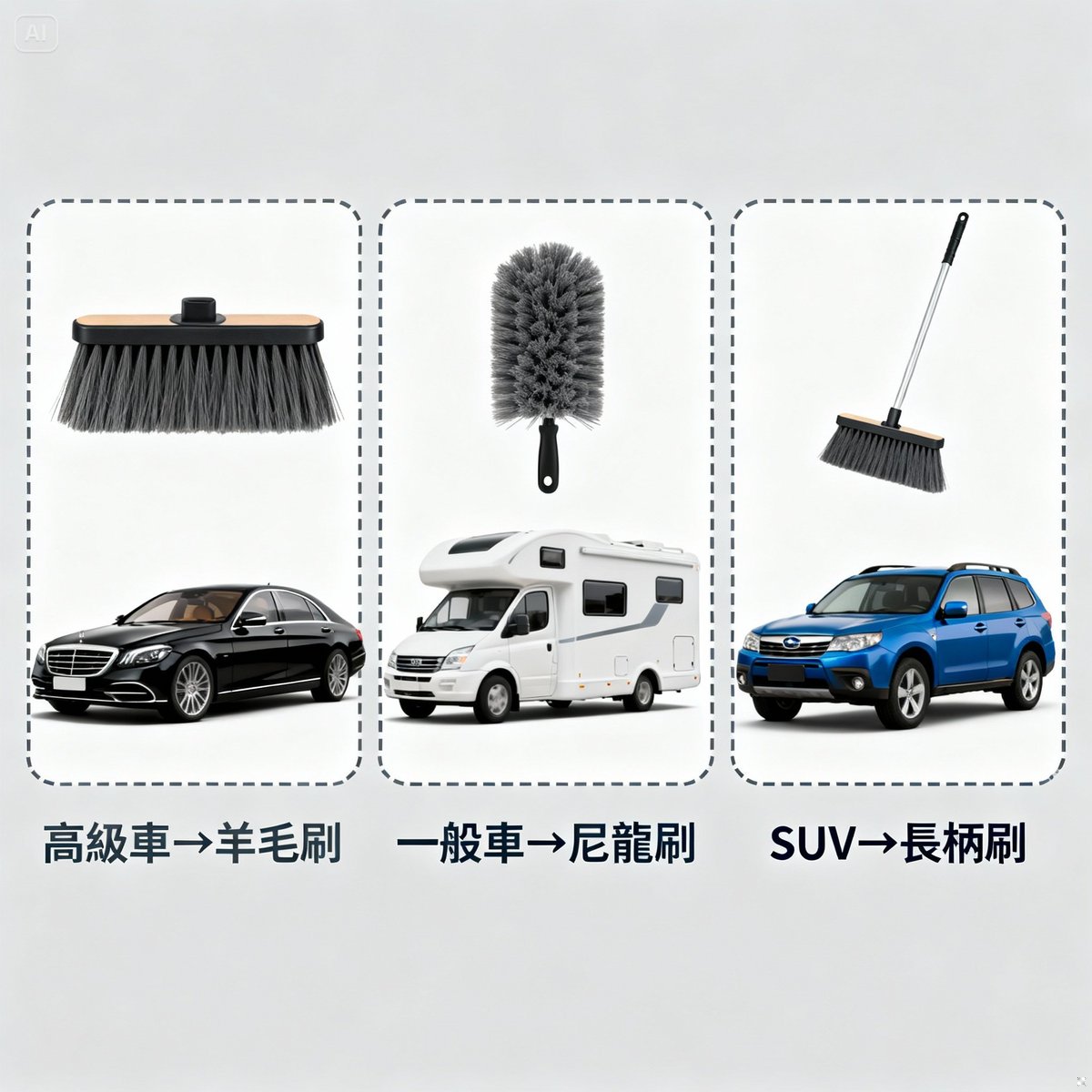
4. Buying decision tree: find the right car wash brush quickly
Still not sure which type to choose? Follow the decision tree and find the answer in 30 seconds!
The decision process
Question 1: Is your car a premium car or a dark-colored car?
- Yes → Question 2A
- No → Question 2B
Question 2A: Is your budget comfortable?
- Yes → Choose: a wool brush (the safest, the best fit for premium cars)
- No → Choose: a sponge brush (cheap and safe, but slightly weaker at cleaning)
Question 2B: Do you wash your car often (once a week or more)?
- Yes → Question 3A
- No → Question 3B
Question 3A: Are you willing to invest in a higher-priced electric brush?
- Yes → Choose: an electric brush (the least effort, the highest efficiency)
- No → Choose: a soft nylon brush (durable, strong cleaning power, the best value for money)
Question 3B: Is your car often very dirty (a lot of bird droppings and tree sap)?
- Yes → Choose: a soft nylon brush (strong cleaning power)
- No → Choose: a sponge brush (cheap, safe, suited to light dirt)
Quick recommendation table
| Your situation | Best choice | Second-best choice |
|---|---|---|
| Premium car, dark-colored car | Wool brush | Sponge brush |
| Ordinary car, limited budget | Soft nylon brush | Sponge brush |
| Frequent washing, want efficiency | Electric brush | Soft nylon brush |
| Beginner, worried about scratches | Sponge brush | Wool brush |
| Large vehicle, SUV | Long-handle nylon brush | Long-handle electric brush |
| Car wash, bulk purchasing | Soft nylon brush | Hard nylon brush |
Found the type that suits you? Go to the YC Brushes product page to see detailed specifications and prices. Factory-direct, at prices 20-40% lower than retail!
💡 Still not sure which type to choose?
Contact YC Brushes and let a professional team with over 40 years of manufacturing experience give you free buying advice!
FAQ
Here are the common questions about the types of car wash brush:
Which is better, a wool brush or a sponge brush?
It depends on your needs.
A wool brush cleans better and absorbs water well, and suits premium cars and dark-colored cars. But the price is higher.
A sponge brush is the safest and is cheap, and suits beginners and owners who worry about scratches. But its cleaning power is weaker.
Will a nylon brush scratch the paint?
It depends on the material.
A hard nylon brush will scratch the paint! A soft synthetic brush, such as soft nylon or PBT (polyester) filament, is relatively safe and is unlikely to scratch when used correctly (rinsing first, the two-bucket method).
When buying, confirm that it is "soft nylon" or "PBT material".
Does an electric car wash brush damage the car?
Yes, but the risk can be lowered.
The high-speed rotation of an electric brush easily leaves fine scratches, but doing the following three things greatly lowers the risk:
- Always rinse before washing
- Choose a soft brush head (sponge or soft bristles)
- Do not press hard; light contact is enough
For an in-depth analysis, see "Is an Electric Car Wash Brush Worth Buying? A Complete Analysis of Pros and Cons".
Which car wash brush is the most durable?
The nylon brush is the most durable!
Service life: nylon brush (12-18 months) > wool brush (6-12 months) > sponge brush (3-6 months)
A nylon brush is not affected by water, does not go moldy and needs no special care, which makes it the most durable choice.
Does a dark-colored car have to be washed with a wool brush?
Not necessarily, but we strongly recommend it.
Dark-colored cars show fine scratches especially easily. A wool brush is the safest choice and almost never scratches the paint.
On a limited budget, a sponge brush is also an option, but its cleaning power is weaker.
Can car wash brushes be shared between parts of the car?
Use separate brushes for separate parts. Do not share them!
The body brush and the wheel rim brush must be kept separate. Brake dust on the wheel rims is very stubborn and coarse, and using the wheel rim brush on the body will scratch the paint.
We suggest having at least two brushes: one for the body only and one for the wheel rims only.
My car is an SUV. Do I need a long-handle brush?
It depends on your height and the height of the vehicle.
If you are not tall (below 165cm) or the vehicle is very tall (a large SUV or a camper van), a long-handle brush saves a lot of effort.
We suggest a telescopic long-handle brush (60-150cm), whose length can be adjusted as needed.
YC Brushes offers long-handle brushes in several lengths. For details, see "Long-Handle Car Wash Brush Recommendations 2026 | A Buying Guide to Cleaning Tools for Tour Buses and Large Vehicles".
Can YC Brushes customize the brush material?
Yes!
YC Brushes offers a complete custom service and can make brushes to your requirements:
- Brush material (wool, horsehair, soft nylon, PBT)
- Handle length (40-200cm)
- Brush head size
- Bulk discounts on large custom orders
Contact us to discuss your custom requirements. Or see the service description to learn about the full custom process.
6. Summary and buying advice
The right car wash brush makes washing your car easier and safer.
Summary of each type
Wool brush: the safest, first choice for premium cars
- Advantages: the gentlest on the car, excellent water absorption
- Disadvantages: higher price, needs care
- Suits: premium cars, dark-colored cars, owners with very high demands on paint protection
Sponge brush: the cheapest, first choice for beginners
- Advantages: extremely soft, cheap, almost never scratches
- Disadvantages: the weakest cleaning power, the lowest durability
- Suits: beginners, limited budgets, cars that are not very dirty
Soft nylon brush: the best value for money, the best choice for ordinary cars
- Advantages: strong cleaning power, high durability, reasonable price
- Disadvantages: slightly less safe than wool and sponge brushes
- Suits: ordinary car owners, value for money, frequent washing
Electric brush: the least effort, first choice for those who want efficiency
- Advantages: the highest efficiency, saves effort and time
- Disadvantages: the highest price, a higher risk to the paint, needs charging
- Suits: frequent washing, large vehicles, efficiency, a comfortable budget
Final buying advice
If you can only buy one car wash brush, we recommend: a soft nylon brush
Strong cleaning power, durable and reasonably priced, it suits the great majority of car owners. The YC Brushes soft nylon brush is NT$300-400 factory-direct, which is excellent value for money.
If your budget allows, we suggest buying a combination:
- Wool brush (body) + nylon brush (wheel rims)
- Or: soft nylon brush (body) + detail brush set (gaps)
Further reading
Want to learn more about car wash brushes? We recommend:
- "The Complete Car Wash Brush Buying Guide 2026 | Types Compared, Recommended Brands, Tips to Avoid Damaging Your Car" (back to the core article)
- "Long-Handle Car Wash Brush Recommendations 2026 | A Buying Guide to Cleaning Tools for Tour Buses and Large Vehicles"
- "Will a Car Wash Brush Damage Your Car? A Professional Analysis + 5 Key Tips to Avoid Scratches"
- "Top 10 Car Wash Brush Recommendations 2026 | A Complete Brand Review"
- "Is an Electric Car Wash Brush Worth Buying? A Complete Analysis of Pros and Cons"
Take action now
YC Brushes offers a complete line of car wash brushes, from wool to nylon and from manual to electric, at the best factory-direct prices.
See the product catalog, or contact us for professional buying advice.
Want to learn more about brushes? Go to the blog to explore more specialist articles.