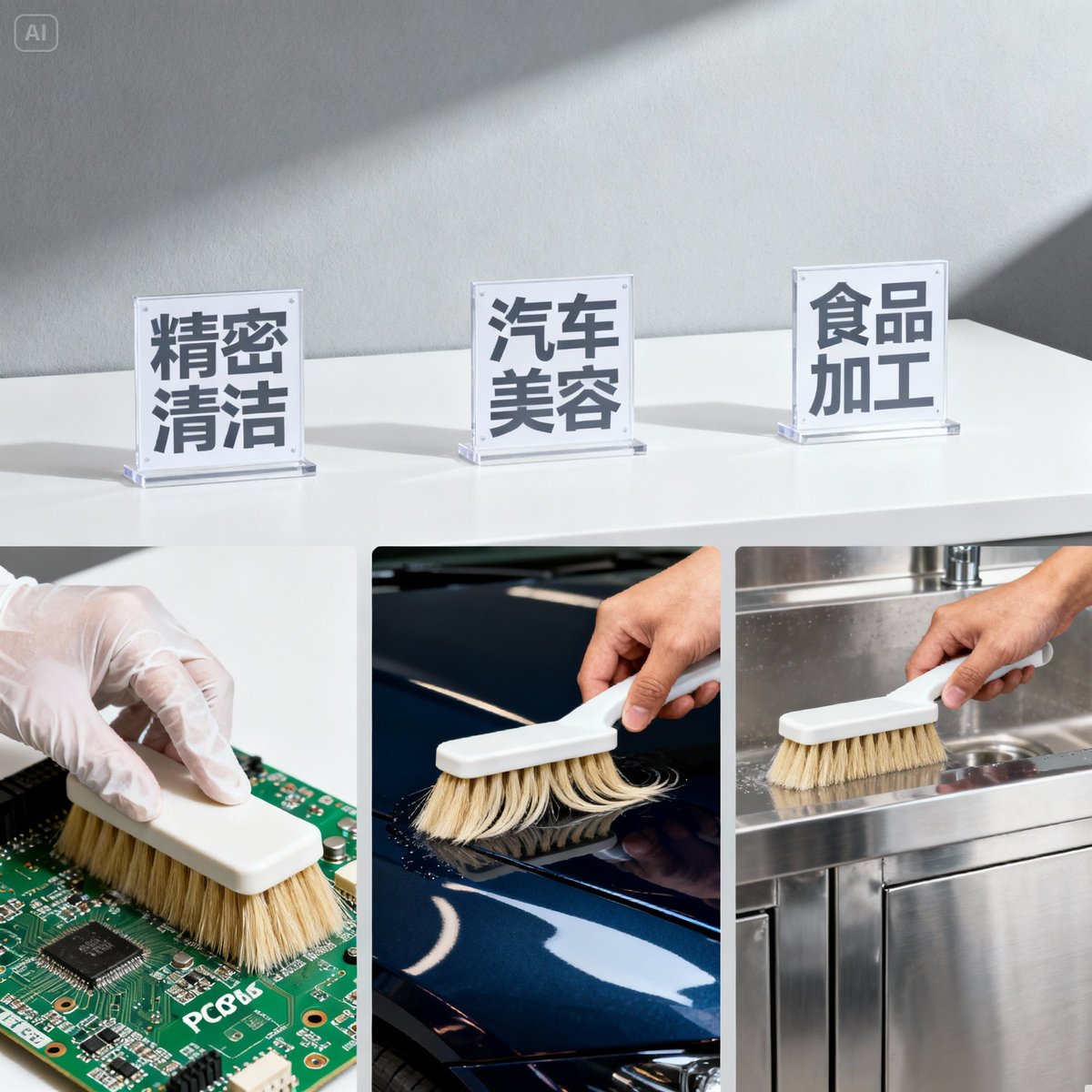
Introduction: why are nylon wheel brushes so popular?
Are you still using a steel wire wheel brush on your grinder? Then you may be missing a better choice.
In metalworking, woodworking, automotive repair and other industries, the nylon wheel brush has become the tool of choice for surface treatment. Compared with a traditional steel wire wheel brush, a nylon wheel brush does not scratch the base material, produces no sparks and lasts longer.
But the nylon wheel brushes on the market come in a bewildering range of specifications: bowl type, cup type, wheel type, end-face type... Diameters run from 50 mm to 300 mm, and filament diameters range from 0.3 mm to 1.0 mm. How do you choose?
This article was written by the professional manufacturing team at YC Brushes, with over 40 years of experience, and gives a full account of the types, specifications, applications and buying tips for nylon wheel brushes. After reading it you will know which wheel brush to choose in which situation, how to match it to your equipment, and how to use it safely and efficiently.
Whether you work in metalworking, are a woodworker or an automotive repair technician, this article will help you choose the right wheel brush and work more efficiently.
What is a nylon wheel brush? Definition and structure
Before buying, first understand what a nylon wheel brush actually is.
Basic definition of a nylon wheel brush
A nylon wheel brush is a rotating brush in which nylon filament is fixed to a metal hub.
It is mainly used on power tools such as grinders, electric drills and sanders for surface treatment, deburring, polishing and similar work.
Basic structure:
- Metal hub: usually steel plate or aluminum alloy, 2-5 mm thick
- Mounting hole: a center bore of 22.2 mm or 25.4 mm (to match grinder specifications)
- Nylon filament: polyamide fiber (PA6 or PA66), 0.3-1.0 mm in diameter
- Fixing method: mechanical clamping or chemical bonding
Nylon wheel brush vs steel wire wheel brush: the key differences
Many people ask: why not use a cheap steel wire wheel brush?
Let me show you the differences directly in a table:
| Item compared | Nylon wheel brush | Steel wire wheel brush |
|---|---|---|
| Scratches the base material? | ✓ No | ✗ Scratches easily |
| Sparks | ✓ No sparks | ✗ Produces sparks (dangerous) |
| Service life | Long (2,000-3,000 uses) | Short (500-1,000 uses) |
| Price | Medium | Cheap |
| Suitable materials | Aluminum, stainless steel, wood, plastic | Hard metals only |
| Safety | High (filaments do not break off and fly out) | Low (broken steel wires are dangerous) |
Why choose a nylon wheel brush?
- Does not damage the base material: suited to softer metals such as aluminum alloy and stainless steel
- No sparks: can be used in flammable environments
- A long service life: more expensive, but with a lower total cost
- High safety: no risk of broken steel wires injuring people
If you need to treat aluminum alloy, stainless steel or painted surfaces, a nylon wheel brush is definitely the first choice.
Want to know more about the properties of nylon brushes? See our complete guide to nylon brushes, plastic brushes and synthetic filaments.
Types and specifications of nylon wheel brushes
There are many kinds of nylon wheel brush on the market, and choosing the wrong type greatly reduces the result.
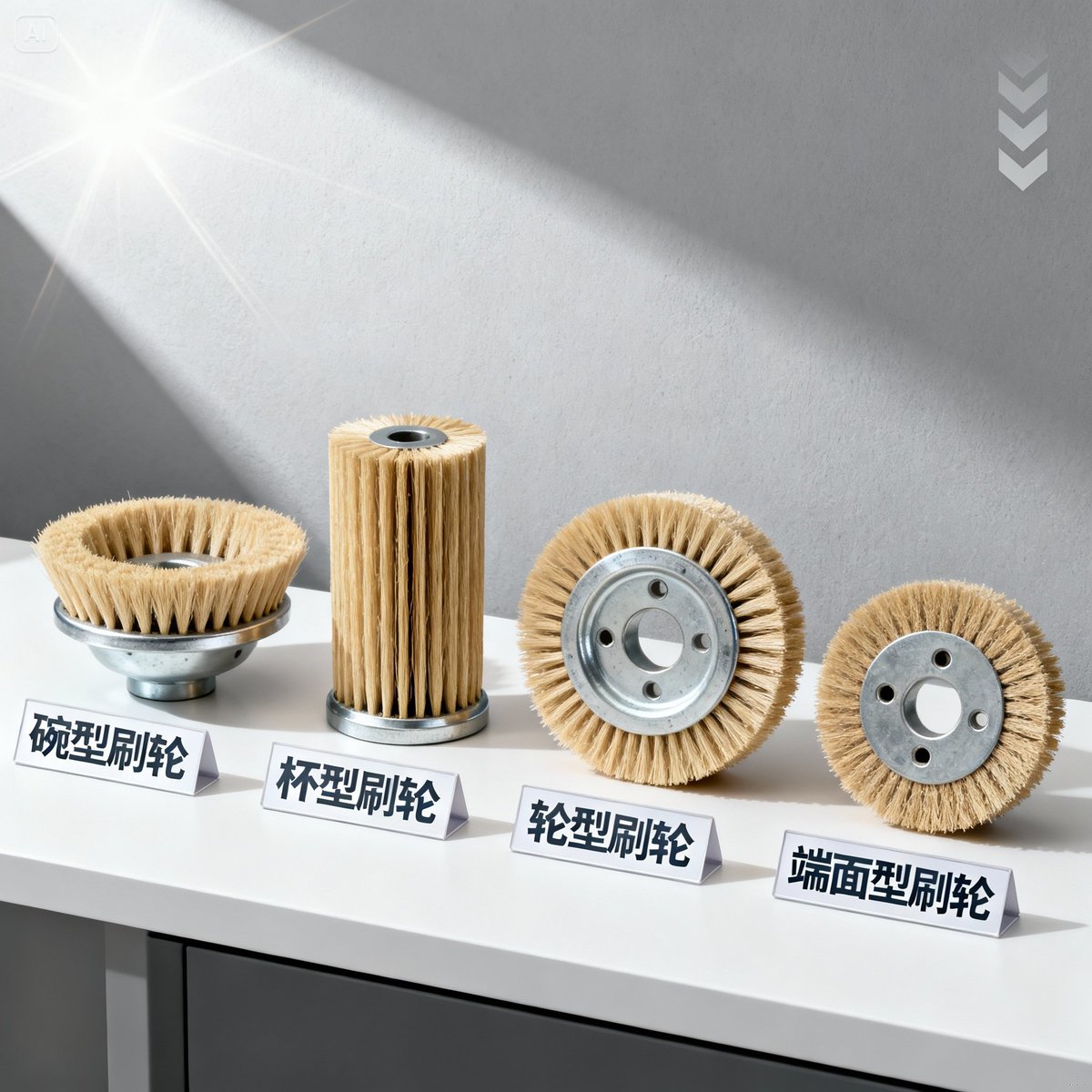
The four types of nylon wheel brush
By structure and purpose, nylon wheel brushes fall into four main types:
1. Bowl-type wheel brush (Cup Brush)
Structural features:
- The filament is arranged in a bowl shape, flaring outward at the rim
- A large contact area and high cleaning efficiency
Suitable for:
- Deburring large areas
- Removing rust from metal surfaces
- Cleaning weld seams
- Polishing floors
Specification range:
- Diameter: 75-150 mm
- Trim length: 20-40 mm
- Common bore: 22.2 mm
Pros: a large contact area and high efficiency Cons: not suited to narrow spaces
2. Cup-type wheel brush (End Brush)
Structural features:
- The filament is arranged vertically, in a cup shape
- Contact is at the side, suited to work on flat surfaces
Suitable for:
- Deburring flat surfaces
- Surface polishing
- Cleaning flat surfaces
- Treating wood grain
Specification range:
- Diameter: 50-100 mm
- Trim length: 15-30 mm
- Common bore: 22.2 mm
Pros: suited to flat surfaces, with even force Cons: a smaller contact area
3. Wheel-type wheel brush (Wheel Brush)
Structural features:
- Disc-shaped, with the filament arranged around the outer edge
- The most common type
Suitable for:
- Deburring
- Polishing
- Rust removal
- Surface treatment
Specification range:
- Diameter: 100-300 mm
- Face width: 20-50 mm
- Common bore: 22.2 mm or 25.4 mm
Pros: the widest range of applications and an affordable price Cons: no special advantage; an all-purpose type
4. End-face wheel brush (Face Brush)
Structural features:
- The filament is arranged on the end face
- Suited to work with perpendicular contact
Suitable for:
- Deburring in narrow spaces
- Cleaning the inner walls of holes
- Polishing grooves
- Detail work
Specification range:
- Diameter: 50-150 mm
- Trim length: 10-25 mm
- Common bore: 22.2 mm
Pros: suited to detail work and highly flexible Cons: a small contact area and lower efficiency
Wheel brush specification parameters in detail
To buy a nylon wheel brush you need to understand these specification parameters:
1. Diameter (D)
- Range: 50 mm-300 mm
- Common for grinders: 100 mm, 125 mm, 150 mm, 180 mm
- Common for electric drills: 50 mm, 75 mm
How to choose:
- Choose according to the equipment specification
- The larger the diameter, the larger the contact area and the higher the efficiency
- But the rotation speed drops and more torque is needed
2. Bore size (Bore Size)
- Common in Taiwan: 22.2 mm
- Common in Europe and the United States: 25.4 mm (1 inch)
- Special sizes: 16 mm, 20 mm
An important reminder: the bore must match the grinder spindle, or the brush cannot be mounted!
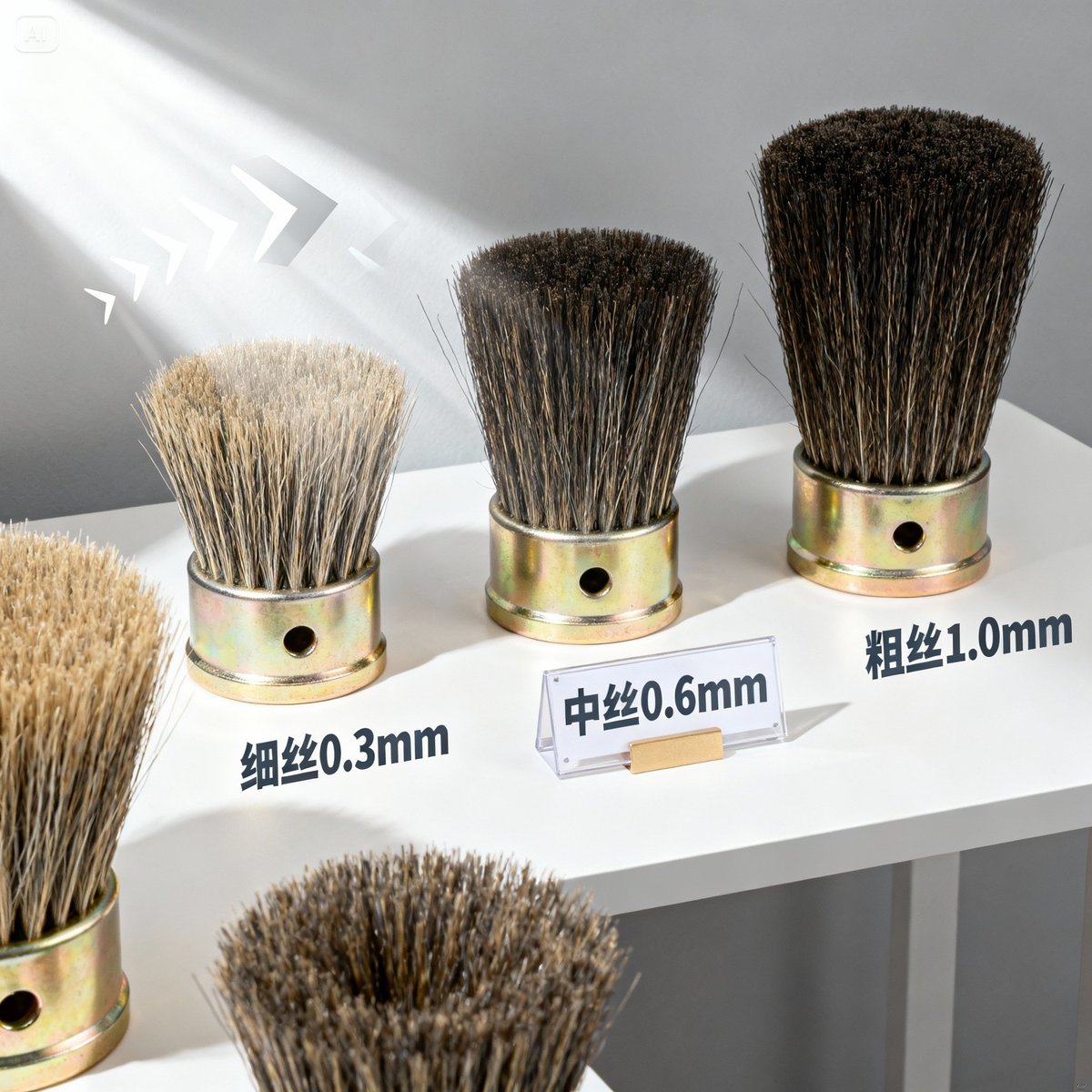
3. Filament diameter (Wire Diameter)
- Range: 0.3 mm-1.0 mm
- Fine (0.3-0.5 mm): for polishing, soft
- Medium (0.5-0.7 mm): general deburring
- Coarse (0.7-1.0 mm): heavy rust removal
How to choose:
- Polishing → 0.3-0.5 mm
- Deburring → 0.5-0.8 mm
- Rust removal → 0.8-1.0 mm
4. Maximum speed (Max RPM)
- General specification: 3,000-8,000 RPM
- Industrial specification: 10,000 RPM or more
Safety reminder: never exceed the maximum speed of the wheel brush, or it may break apart and fly off!
To see the full nylon brush product catalog, visit the YC Brushes product page.
Applications and selection guide
Different applications need different types of nylon wheel brush. The selection advice for each is given below.
Application 1: Deburring metal
What the job requires:
Metal parts that have been CNC machined, laser cut or stamped have burrs along the edges that need to be removed.
Wheel brush selection:
- Type: bowl type or wheel type
- Filament diameter: 0.5-0.8 mm (medium stiffness)
- Material: nylon 6 or nylon 66
- Speed: 3,000-5,000 RPM
Operating tips:
- Contact the workpiece at an angle of 30-45 degrees
- Move evenly and avoid staying in one place too long
- Use moderate force; there is no need to press hard
Result: burrs are removed and edges are smooth and rounded, with no scratches on the base material
Application 2: Surface polishing
What the job requires:
Polishing stainless steel and aluminum alloy surfaces to raise the gloss.
Wheel brush selection:
- Type: cup type or wheel type
- Filament diameter: 0.3-0.5 mm (fine, soft)
- Material: nylon 66 (good wear resistance)
- Speed: 4,000-6,000 RPM
- Abrasive nylon is optional (Abrasive Nylon, containing silicon carbide abrasive grit)
Operating tips:
- Touch the surface lightly at an angle of 15-20 degrees
- Move evenly and keep a steady speed
- A polishing compound can be used to improve the result
Result: a bright surface with a fine, smooth finish
Want more polishing tips? See Soft bristle brush recommendations: where to buy?, which covers the uses of soft brushes.
Application 3: Removing rust and oxide layers
What the job requires:
Removing rust and oxide layers from metal surfaces to restore the original color of the metal.
Wheel brush selection:
- Type: bowl type (large contact area)
- Filament diameter: 0.8-1.0 mm (coarse, high stiffness)
- Material: abrasive nylon (Abrasive Nylon)
- Speed: 3,000-4,000 RPM
Operating tips:
- Contact perpendicularly or at a 45-degree angle
- Use more force and move evenly
- Work in several passes to avoid overheating
Result: rust is removed and the original color of the metal shows through
Note: abrasive nylon wears the base material slightly and is not suited to precision parts.
Application 4: Wood surface treatment
What the job requires:
Treating wood grain, polishing surfaces, restoring antiques.
Wheel brush selection:
- Type: cup type or end-face type
- Filament diameter: 0.4-0.6 mm (medium stiffness)
- Material: nylon 6 (soft, does not damage wood)
- Speed: 2,000-3,000 RPM (a lower speed)
Operating tips:
- Move along the grain of the wood
- Touch lightly to avoid excessive wear
- Can be used for an antique finish (bringing out the grain)
Result: the wood grain stands out and the surface is smooth
Selection decision tree
Still not sure which to choose? Use this decision tree:
Step 1: Confirm the type of work
- Deburring → bowl type or wheel type
- Polishing → cup type or wheel type (fine filament)
- Rust removal → bowl type (abrasive nylon)
- Wood treatment → cup type or end-face type
Step 2: Confirm the hardness of the material
- Soft metals (aluminum, copper) → fine filament, 0.3-0.5 mm
- Medium hardness (stainless steel) → medium filament, 0.5-0.7 mm
- Hard metals (steel and iron) → coarse filament, 0.7-1.0 mm
Step 3: Confirm the equipment specification
- Grinder → bore of 22.2 mm or 25.4 mm
- Electric drill → bore of 6 mm or shank diameter of 6 mm
Step 4: Confirm the budget
- A generous budget → nylon 66 (durable)
- A limited budget → nylon 6 (economical)
If you are still unsure, you are welcome to contact YC Brushes; we offer free selection advice.
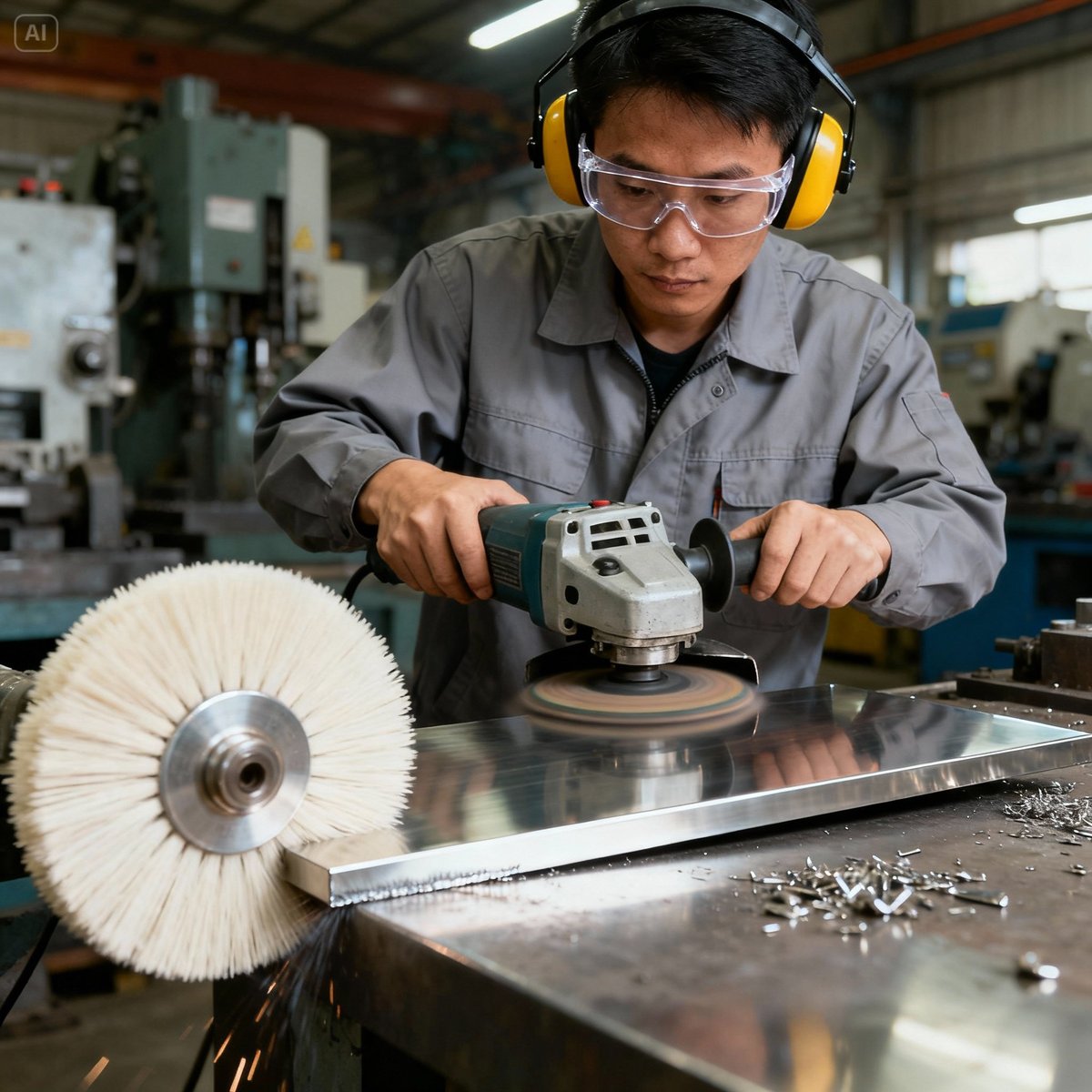
How do you choose a suitable nylon wheel brush?
When buying a nylon wheel brush, three factors must be considered: the equipment, the material and the requirement.
Choosing by equipment
1. Grinders
Specifications to confirm:
- Spindle bore: 22.2 mm or 25.4 mm
- Rated speed: usually 3,000-8,000 RPM
- Power: at least 500 W
Recommended wheel brushes:
- Bowl type: diameter 100-150 mm
- Wheel type: diameter 100-180 mm
- Bore: must match the spindle
2. Electric drills / power tools
Specifications to confirm:
- Chuck size: 6 mm or 13 mm
- Speed: usually 2,000-5,000 RPM
- Power: 300 W or more
Recommended wheel brushes:
- End-face type: diameter 50-75 mm
- Cup type: diameter 50-100 mm
- Shank diameter: 6 mm, or a shank-mounted design
3. Sanders / polishers
Specifications to confirm:
- Spindle bore: usually 22.2 mm
- Speed: 5,000-10,000 RPM
- Purpose: mainly polishing
Recommended wheel brushes:
- Cup type: diameter 75-125 mm
- Fine nylon filament: 0.3-0.5 mm
- Abrasive nylon is optional
Choosing by material
1. Aluminum alloy
- Hardness: a soft metal, easily scratched
- Wheel brush choice: fine filament 0.3-0.5 mm, nylon 6
- Speed: 3,000-4,000 RPM
- Note: avoid coarse filament, which scratches the surface
2. Stainless steel
- Hardness: medium hardness
- Wheel brush choice: medium filament 0.5-0.7 mm, nylon 66
- Speed: 4,000-5,000 RPM
- Note: abrasive nylon can be used to raise efficiency
3. Carbon steel / iron
- Hardness: a hard metal
- Wheel brush choice: coarse filament 0.7-1.0 mm, nylon 66 or abrasive nylon
- Speed: 3,000-4,000 RPM
- Note: good rust removal results
4. Wood
- Hardness: a soft material
- Wheel brush choice: fine filament 0.4-0.6 mm, nylon 6
- Speed: 2,000-3,000 RPM (low speed)
- Note: work along the grain and avoid excessive wear
Choosing by requirement
Requirement 1: Efficiency
→ Choose a bowl-type wheel brush (large contact area) → Choose coarse filament, 0.7-1.0 mm (strong cleaning power) → Choose a larger diameter (150 mm or more)
Requirement 2: Fine work
→ Choose a cup-type or end-face wheel brush → Choose fine filament, 0.3-0.5 mm → Choose a smaller diameter (75 mm or less)
Requirement 3: Durability
→ Choose nylon 66 → Choose medium filament, 0.5-0.7 mm (does not break easily) → Choose a brand-name wheel brush (stable quality)
Requirement 4: A limited budget
→ Choose nylon 6 → Choose a wheel-type wheel brush (the most economical) → Choose one made in Taiwan (good value for money)
Want to know the detailed differences between nylon 6 and nylon 66? See the explanation of material grades in the complete guide to nylon brushes, plastic brushes and synthetic filaments.
💡 Not sure which nylon wheel brush suits your application?
Contact YC Brushes now and let a professional team with over 40 years of manufacturing experience help you choose. We offer free sample testing, so you can make sure the result meets your needs before ordering. Factory-direct, with transparent prices.
Tips for use and safety precautions
Choosing the right wheel brush is only the first step; it has to be used correctly to give its best.
Checks before mounting
Before using a nylon wheel brush, be sure to check the following:
1. Confirm the bore
- The bore of the wheel brush must match the grinder spindle exactly
- Do not force it on with shims (dangerous!)
- Looseness will cause the wheel brush to fly off
2. Confirm the speed
- The maximum speed marked on the wheel brush (Max RPM)
- The rated speed of the equipment
- Never exceed the maximum speed!
3. Inspect the appearance
- Whether the wheel brush has cracks or deformation
- Whether a large amount of filament has come out
- Whether the metal hub is rusted
4. Confirm it is tight
- Tighten with the dedicated wrench
- Make sure the wheel brush cannot work loose
- Check regularly whether the nut has loosened
Correct technique
1. Working angle
- Deburring: contact the workpiece at an angle of 30-45 degrees
- Polishing: touch the surface lightly at an angle of 15-20 degrees
- Rust removal: perpendicular or at a 45-degree angle, with more force
2. Applying force
- There is no need to press hard; let the wheel brush make contact naturally
- Too much force speeds up wear
- Move evenly and avoid staying in one place too long
3. Speed of movement
- Keep a steady speed, not fast one moment and slow the next
- Moving too slowly over-grinds the surface
- Moving too fast gives a poor result
4. Cooling
- Continuous use generates heat, so take breaks as needed
- Compressed air can be used for cooling
- Avoid contact with water (nylon absorbs water and softens)
Safety precautions
Safety must always come first when using power tools. These are the rules that must be followed:
✓ What you must do:
-
Wear full protective equipment
- Safety goggles (against flying debris)
- Ear defenders (to reduce noise)
- A mask (against dust)
- Gloves (against cuts)
- Long-sleeved work clothing
-
Make sure the environment is safe
- A tidy work area with no clutter
- Adequate lighting
- Good ventilation
- Away from flammable materials (there are no sparks, but heat is still generated)
-
Use the correct working posture
- Hold the tool with both hands and stand firmly
- The wheel brush should rotate away from your body
- Do not stand in the plane of rotation of the wheel brush (in case it flies off and injures someone)
-
Inspect regularly
- Check the condition of the wheel brush before every use
- Replace it when more than 50% of the filament is worn away
- Stop using it immediately if the metal hub is deformed
✗ Strictly forbidden:
-
Overspeed use
- Never exceed the maximum speed of the wheel brush
- It will break apart and fly off, which is extremely dangerous!
-
Sideways force
- Do not twist the wheel brush sideways with force
- It will deform or break the wheel brush
-
Using a damaged wheel brush
- A cracked or deformed wheel brush must never be used
- If a large amount of filament has come out, replace it immediately
-
Working without protection
- Never leave out the safety goggles
- Flying debris injures the eyes
In an emergency:
If the wheel brush vibrates or sounds abnormal during use, stop the machine immediately and inspect it. Do not force it to keep going.
Price analysis and purchasing advice
Now that the tips for use are clear, let us turn to price and purchasing.
Market price reference (2025)
The following are reference prices for the Taiwan market:
Disclaimer: prices are for reference only and vary by brand, specification and quantity
| Wheel brush type | Material | Specification | Reference price level |
|---|---|---|---|
| Wheel type | Nylon 6 | Diameter 100 mm | Budget |
| Wheel type | Nylon 66 | Diameter 125 mm | Mid-price |
| Bowl type | Nylon 6 | Diameter 100 mm | Budget |
| Bowl type | Nylon 66 | Diameter 125 mm | Mid-price |
| Cup type | Nylon 6 | Diameter 75 mm | Budget |
| Abrasive nylon wheel brush | Contains silicon carbide | Diameter 100 mm | Mid-to-high price |
| End-face type | Nylon 6 | Diameter 50 mm | Budget |
Reasons for the price differences:
- Material grade: nylon 66 usually costs more than nylon 6
- Filament diameter: fine filament (0.3 mm) costs more than coarse filament (1.0 mm)
- Brand: imported brands usually cost more than those made in Taiwan
- Abrasive or not: abrasive nylon costs more
Factors that affect the price
1. Filament material
- Nylon 6: the economy type
- Nylon 66: the premium type, at a higher price
- Abrasive nylon: the special type, at a clearly higher price
2. Manufacturing process
- Mechanical fixing: the economy type
- Chemical bonding: more secure, slightly more expensive
- Combined: the most secure and the most expensive
3. Brand and origin
- Made in Taiwan: good value for money, stable quality
- Made in China: the cheapest, with uneven quality
- Imported from Europe and the United States: the best quality and the highest price
4. Purchase quantity
- Single-piece retail: full price
- 10 pieces or more: about 10% off (90% of the full price)
- 50 pieces or more: about 20% off (80% of the full price)
- 100 pieces or more: negotiable
Purchasing advice
✓ Buying smart:
-
Assess the total cost
- Do not look only at the unit price
- Calculate total cost = unit price × number of replacements
- Nylon 66 costs more but lasts longer, so the total cost may be lower
-
Choose factory-direct
- YC Brushes sells factory-direct, saving the middleman's cost
- Transparent prices and assured quality
- Order quantities and lead times are quoted per specification; please email us with your requirements
-
Ask for a sample to test
- Confirm the result with a real test
- Avoid finding out after a batch purchase that it is not suitable
- Request a free sample
-
Confirm material certification
- ISO certification (quality)
- Material certificate (nylon 6 or 66)
- Safety certification (compliance with standards)
✗ Pitfalls to avoid:
-
Looking only at the price
- A cheap wheel brush may be of poor quality
- The filament comes out easily
- The metal hub deforms easily
-
Ignoring the specification
- With the wrong bore it cannot be mounted
- With the wrong speed rating it is dangerous
- With the wrong filament diameter the result is poor
-
Not testing
- Always test before a batch purchase
- Confirm that the result meets your needs
To see the full wheel brush product specifications, visit the YC Brushes product catalog.
FAQ
How long does a nylon wheel brush last?
The service life of a nylon wheel brush depends on the material, the purpose and how often it is used.
Typical service life:
- Nylon 6 wheel brush: 500-1,000 uses
- Nylon 66 wheel brush: 1,000-2,000 uses
- Abrasive nylon wheel brush: 300-500 uses (it wears faster)
Factors that affect service life:
-
Intensity of use
- Light use (occasional deburring): a longer life
- Heavy use (long periods of rust removal): a shorter life
-
Hardness of the material
- Working on soft metals (aluminum): a long life
- Working on hard metals (steel and iron): a short life
-
How it is operated
- Correct operation: a long life
- Excessive force or overspeed: a short life
When to replace:
- More than 50% of the filament is worn away
- A large amount of filament has come out
- The metal hub is deformed
- The cleaning result is clearly worse
Ways to extend service life:
- Avoid excessive force
- Do not run it over speed
- Take breaks to let it cool
- Store it correctly (in a dry environment)
Which is better, a nylon wheel brush or a steel wire wheel brush?
It depends on the application; each has its advantages.
Choose a nylon wheel brush if:
- You are working on softer metals such as aluminum alloy and stainless steel
- You need to avoid scratching the base material
- You are working in a flammable environment (no sparks)
- Safety matters to you (filaments do not fly out and injure people)
- You will use it long term and want a low total cost
Choose a steel wire wheel brush if:
- You are working on hard steel and iron
- You need very strong cleaning power
- The job is heavy rust removal
- Your budget is very limited (the unit price is cheap)
Summary:
A nylon wheel brush is safer and gentler and suits most applications.
A steel wire wheel brush has stronger cleaning power, but carries a risk of scratching and is more dangerous.
Want to know more about the differences between materials? See Plastic brush vs nylon brush | 5 differences compared.
What is an abrasive nylon wheel brush, and when is it used?
An abrasive nylon wheel brush has silicon carbide (SiC) abrasive grit added to the nylon filament.
Properties:
- Stronger cleaning power
- Removes a little of the base material
- Suited to removing rust and oxide layers
- A shorter service life (the abrasive grit comes off)
Suitable for:
- Heavy rust removal
- Removing oxide layers
- Cleaning weld seams
- Removing old paint
Not suitable for:
- Precision parts (it wears the base material)
- Polishing (too coarse)
- Aluminum alloy (easily scratched)
Price:
Abrasive nylon costs more than ordinary nylon, but it is more efficient.
Advice:
If you need strong cleaning and do not mind slight wear to the base material, abrasive nylon is a good choice.
Can a nylon wheel brush be used on an electric drill?
Yes, but choose a wheel brush with a shank-mounted design.
Features of wheel brushes for electric drills:
-
Shank-mounted design
- Shank diameter: 6 mm or 13 mm (to fit the drill chuck)
- Not a center-bore design
-
A smaller diameter
- Usually 50-75 mm
- Suited to the speed of an electric drill (2,000-5,000 RPM)
-
Common types
- Cup type
- End-face type
- Wheel type (small)
Advice on use:
- The drill should have a power of at least 300 W
- Do not run it too fast (3,000-4,000 RPM)
- Suited to small areas and detail work
- For large areas a grinder is still recommended
Safety reminder:
Make sure the drill chuck grips the wheel brush tightly, so it does not come off during use.
Does a nylon wheel brush produce sparks in use?
It does not produce sparks. This is an important advantage of the nylon wheel brush.
Reason:
Nylon is a non-metallic material and does not produce sparks when it rubs against metal.
A steel wire wheel brush, by contrast, produces a lot of sparks (metal rubbing on metal).
Advantages:
-
Can be used in flammable environments
- Factories with oil vapor
- Woodworking environments
- Chemical plants
-
Safer
- Will not ignite combustible materials
- Will not cause burns
-
A clear view
- No sparks to obstruct your view
- More precise operation
Note:
Although there are no sparks, long periods of use still generate heat, so take breaks to let it cool.
Conclusion: choose the right wheel brush and double your efficiency
After reading this article, you should have a clear idea of how to choose a nylon wheel brush.
Quick summary
Three steps to buying:
-
Confirm the equipment specification
- Bore: 22.2 mm or 25.4 mm
- Speed: must not exceed the maximum speed of the wheel brush
- Power: at least 500 W
-
Confirm what the job requires
- Deburring → bowl type or wheel type, medium filament 0.5-0.8 mm
- Polishing → cup type, fine filament 0.3-0.5 mm
- Rust removal → bowl type, coarse filament 0.8-1.0 mm or abrasive nylon
-
Confirm the material and budget
- Durability → nylon 66
- A limited budget → nylon 6
- Soft metals → fine filament
- Hard metals → coarse filament
Final reminders before purchasing
-
Safety first
- Always wear protective equipment
- Never run over speed
- Check the condition of the wheel brush regularly
-
Choose a reliable manufacturer
- YC Brushes has over 40 years of experience
- Factory-direct, with transparent prices
- Free selection advice and sample testing
-
Assess the total cost
- Do not look only at the unit price
- Calculate total cost = unit price × number of replacements
- Choose the option with the best value for money
Start your purchase
If you need to buy nylon wheel brushes, contact YC Brushes now. We offer:
- Free selection advice
- Free sample testing
- Factory-direct prices
- Order quantities quoted per specification
- Lead times quoted per specification; please email us with your requirements
Or see the full product catalog to learn about more brush options.
Want to learn more about brushes? Explore these related articles: