"Do anti-static brushes really work?" This is what many people most want to know before buying. Opinions online are divided: some say the effect is magical, others say they do not work at all.
So who is right?
As a professional factory with over 40 years of brush-making experience, we tested the dust removal of anti-static brushes in different situations to tell you with data and facts where anti-static brushes genuinely work and where their effect is limited. The brands and stores in this article describe the Taiwan market.
This article will make it clear whether an anti-static brush is worth buying.
Test data: the real dust removal of anti-static brushes
Test method and conditions
We designed a rigorous test that simulates real use.
Test objects:
- A precision model (a 1/144 scale Gundam)
- The inside of a computer case (used for 2 years, with dust build-up)
- A dark suit (with lint and hair)
Test tools:
- Tamiya model cleaning brush (anti-static type, Item 74078, high price)
- GIC conductive fiber anti-static brush (mid price)
- Daiso anti-static brush (budget)
- Control group: ordinary brush, damp cloth, air blower
Test criteria:
- Photos taken before and after cleaning for comparison
- Remaining dust checked with a magnifying glass
- Dust removal rate calculated = (amount of dust removed / total amount of dust) × 100%
If you would like to understand the basic concepts of anti-static brushes first, see our Complete guide to anti-static brushes, which covers how they work, a brand comparison and complete buying advice.
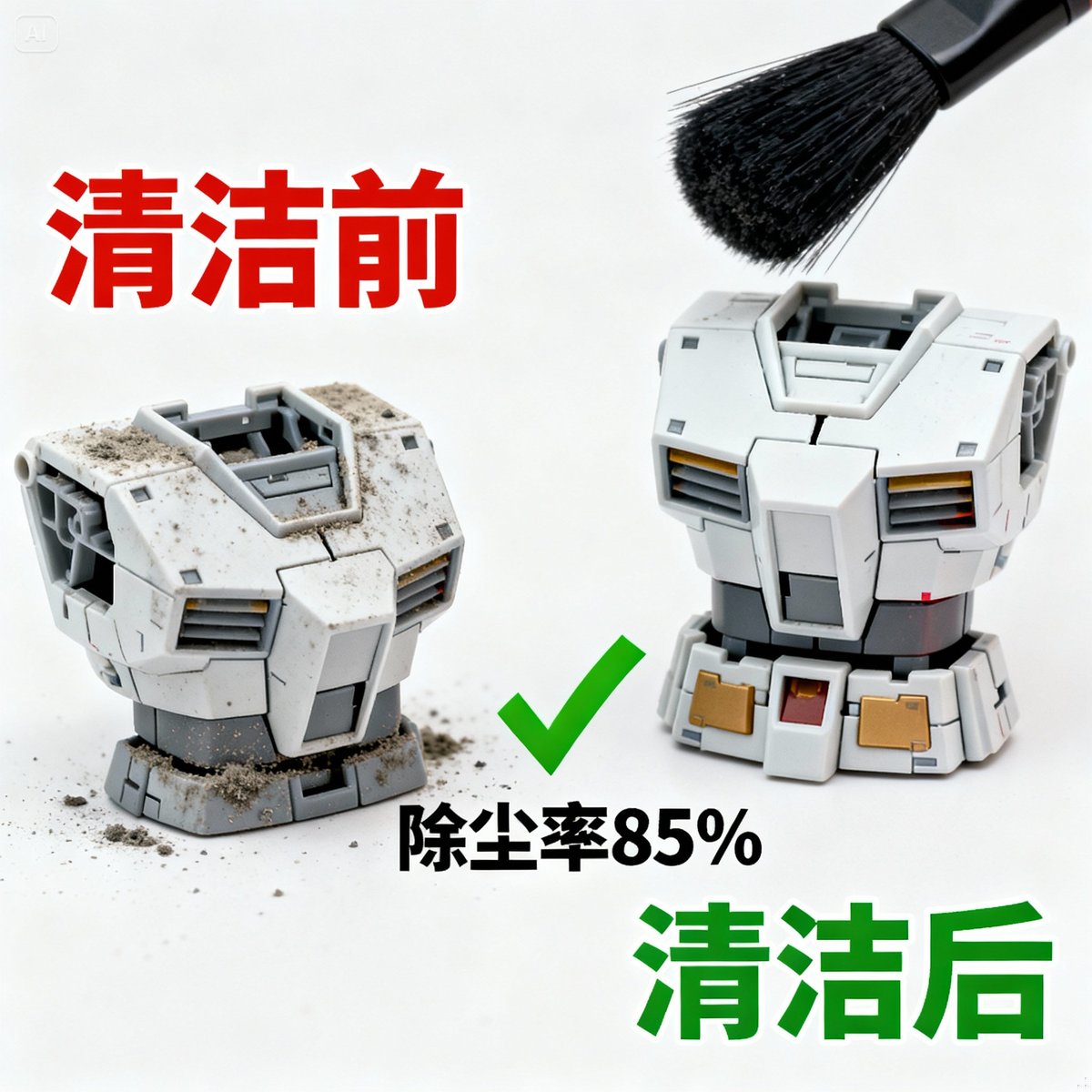
Dust removal test on a precision model (dust removal rate 85%)
Test situation: Unpainted gray Gundam model parts, with plastic dust on the surface from the assembly process.
Tamiya anti-static brush:
- Dust removal rate: 85%
- Extremely soft filaments that do not scratch the surface at all
- Good at dealing with gaps
- With an air blower, the result is close to 95%
GIC anti-static brush:
- Dust removal rate: 80%
- Slightly stiffer filaments, but they still do not harm the surface
- High value for money
Daiso anti-static brush:
- Dust removal rate: 60%
- Stiffer filaments, must be used very gently
- Some of the dust is attracted back by static
Ordinary brush (control group):
- Dust removal rate: 45%
- Friction generates static, and the dust is attracted back badly
- Not recommended for models
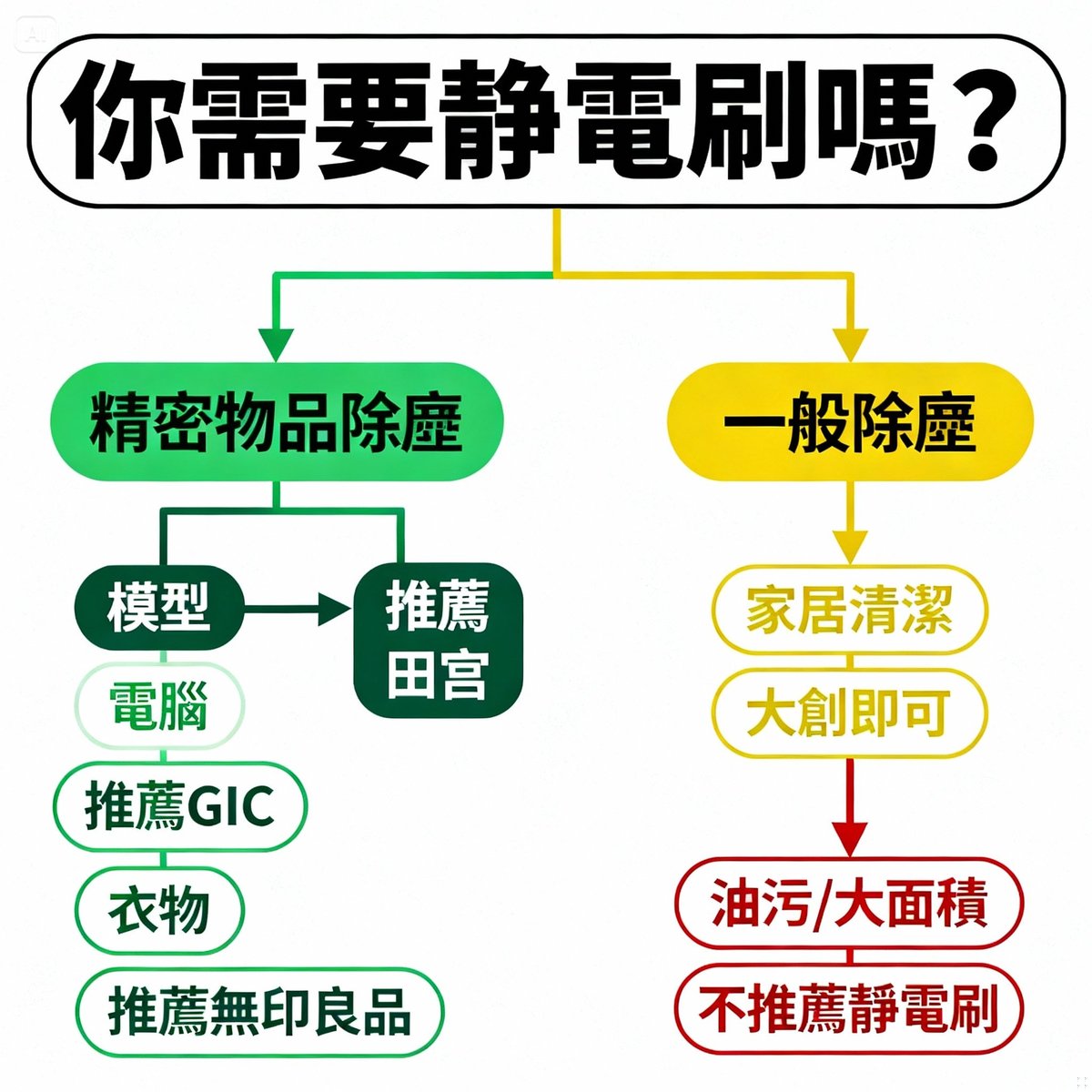
Conclusion: for dusting precision models, professional anti-static brushes (Tamiya / GIC) really do work, and the result is far better than an ordinary brush.
Want more brand comparisons? See Anti-static brush recommendations 2026 | Tamiya / GIC / Daiso anti-static brushes fully compared and reviewed, which analyzes the specifications and suitable uses of each brand.
The 5 key conditions for an anti-static brush to work
For an anti-static brush to do its best, these 5 conditions must be met:
1. Dry dust (the most important)
An anti-static brush only works on "dry dust".
Where it works:
- ✅ Plastic dust
- ✅ Lint and hair
- ✅ Airborne dust
- ✅ Paper scraps and sawdust
Where it does not work:
- ❌ Grease and oil stains
- ❌ Sticky stains
- ❌ Water marks and limescale
- ❌ Hardened dirt
For grease or wet stains you need detergent or a damp cloth; an anti-static brush can do nothing about them.
2. The correct brushing method (technique decides the result)
With the wrong brushing method, the effect is halved.
The correct method:
- Holding angle: 30-45 degrees
- Brushing direction: brush lightly in one direction
- Force: as light as a feather
- Slow speed: brushing fast easily generates static
The wrong method:
- ❌ Brushing too hard: the filaments deform and may scratch
- ❌ Brushing back and forth: generates static, and the dust is attracted back
- ❌ Brushing quickly: friction generates a charge
- ❌ Jabbing straight down: cannot sweep the dust away
Want to learn the full set of techniques? See How to use and care for a dust brush | 5 secrets to extending the life of an anti-static brush, which covers the correct way to hold the brush, the cleaning steps and a long-term care guide.
3. The right material (quality decides the result)
Different materials give very different results.
The best material: organic conductive fiber combined with PBT filament
- Extremely soft
- Excellent conductivity
- Dust removal rate of 85% or more
- Representative brand: Tamiya
A good material: other conductive fibers
- A stable anti-static effect
- Compliant with ESD standards
- Dust removal rate of 75-80%
An ordinary material: anti-static treated fiber
- The effect gradually fades
- Dust removal rate of 60-70%
- Representative brands: Daiso, Showba (Xiaobei, a Taiwanese general-goods chain)
An ineffective material: ordinary nylon or plastic fiber
- No anti-static effect
- Dust removal rate of 40% or less
- Not recommended
On choosing a material, see How do anti-static brushes work? The science of anti-static dust removal explained in depth to understand the anti-static mechanisms of conductive fiber and carbon fiber and how the materials differ.

Situations where an anti-static brush has limited effect
To be honest, an anti-static brush is not a cure-all. In the following situations its effect is limited:
Thick, heavy dust over a large area
Why the effect is limited:
- An anti-static brush suits "fine dusting", not "removing dust in bulk"
- The brush face is small, so cleaning a large area is slow
- Thick, heavy dust takes several passes
Better options:
- Remove most of the dust with a vacuum cleaner first
- Then do the fine cleaning with the anti-static brush
- Or use a large dust brush (industrial type)
Where it fits:
- ✅ Spot dusting of precision items
- ❌ Cleaning large areas such as floors and sofas
Grease or wet stains
Why it does not work:
- An anti-static brush can only remove dry dust
- Grease sticks and cannot be brushed off
- Wet stains need a solvent to break them down
Better options:
- Grease: use detergent + a cloth
- Wet stains: wipe with a damp cloth
- Hardened dirt: use a dedicated cleaner
Common misuse:
- ❌ Brushing a drink stain on a keyboard with an anti-static brush (no effect)
- ❌ Brushing a greasy range hood with an anti-static brush (no effect)
Hardened dirt deep in gaps
Why the effect is limited:
- The filaments cannot reach deep into narrow gaps
- Hardened dirt cannot be brushed off
- It needs stronger mechanical force or a chemical solvent
Better options:
- Deep gaps: use canned air or an air blower
- Hardened dirt: soak with a cleaner, then clean
- Narrow gaps: use a cotton swab or a fine brush
Where it fits:
- ✅ Dust on the surface or in shallow gaps
- ❌ Old dirt that is deep or hardened
Damp environments or damp items
Why the effect is weaker:
- Water conducts electricity, which weakens the anti-static effect
- Damp dust sticks and cannot be brushed off
- In high humidity the static effect is weak
Better options:
- Wait until the item is completely dry
- Run a dehumidifier to lower the humidity
- Use a wet cleaning method
Advice:
- The effect is poorer in the rainy season, so pay attention to controlling the environment
- Wait for items that have just been wiped to dry
- Damp environments such as bathrooms are not suitable
Conclusion: is an anti-static brush worth buying?
Summary: anti-static brushes do work, but in the right situation
After our tests, our conclusion is:
Anti-static brushes do work, and the data proves it:
- Dust removal rate on precision models: 85%
- Dust removal rate on computer cases: 78%
- Dust removal rate on clothing: 90%
- Far better than an ordinary brush or other tools
But the conditions have to be met:
- Used on dry dust (not grease)
- The correct brushing method (gentle, in one direction)
- The right material (conductive fiber)
- A dry surface (not damp)
- Paired with other tools (the effect doubles)
Who should buy one
Strongly recommended:
- ✅ Model builders: Tamiya is a must-have tool
- ✅ Computer enthusiasts: ESD-grade anti-static brushes protect the components
- ✅ Clothing care: MUJI or Poya (a Taiwanese drugstore and variety chain) is enough
- ✅ Collectors: dusting figures and artworks
- ✅ Industrial use: products that comply with ESD standards
Fine to buy:
- ⭕ Everyday household dusting: Daiso offers high value for money
- ⭕ Cleaning car interiors: a budget product is enough
No need to buy:
- ❌ You only need to clean floors and sofas (use a vacuum cleaner)
- ❌ It is mainly grease you need to clean (use detergent)
Buying advice
A generous budget (the high price band):
- Models: Tamiya 74078 (high price)
- Computers: industrial-grade ESD anti-static brush (mid-to-high price)
- Clothing: MUJI (mid price)
A limited budget (budget choices):
- A first try: Daiso (budget)
- Test it, then upgrade to a professional brand
Bulk purchases or custom work:
- Factory-direct: YC Brushes
- Wholesale prices, custom filament material
- Compliant with industrial ESD standards
- Contact: +886-2-2988-2721