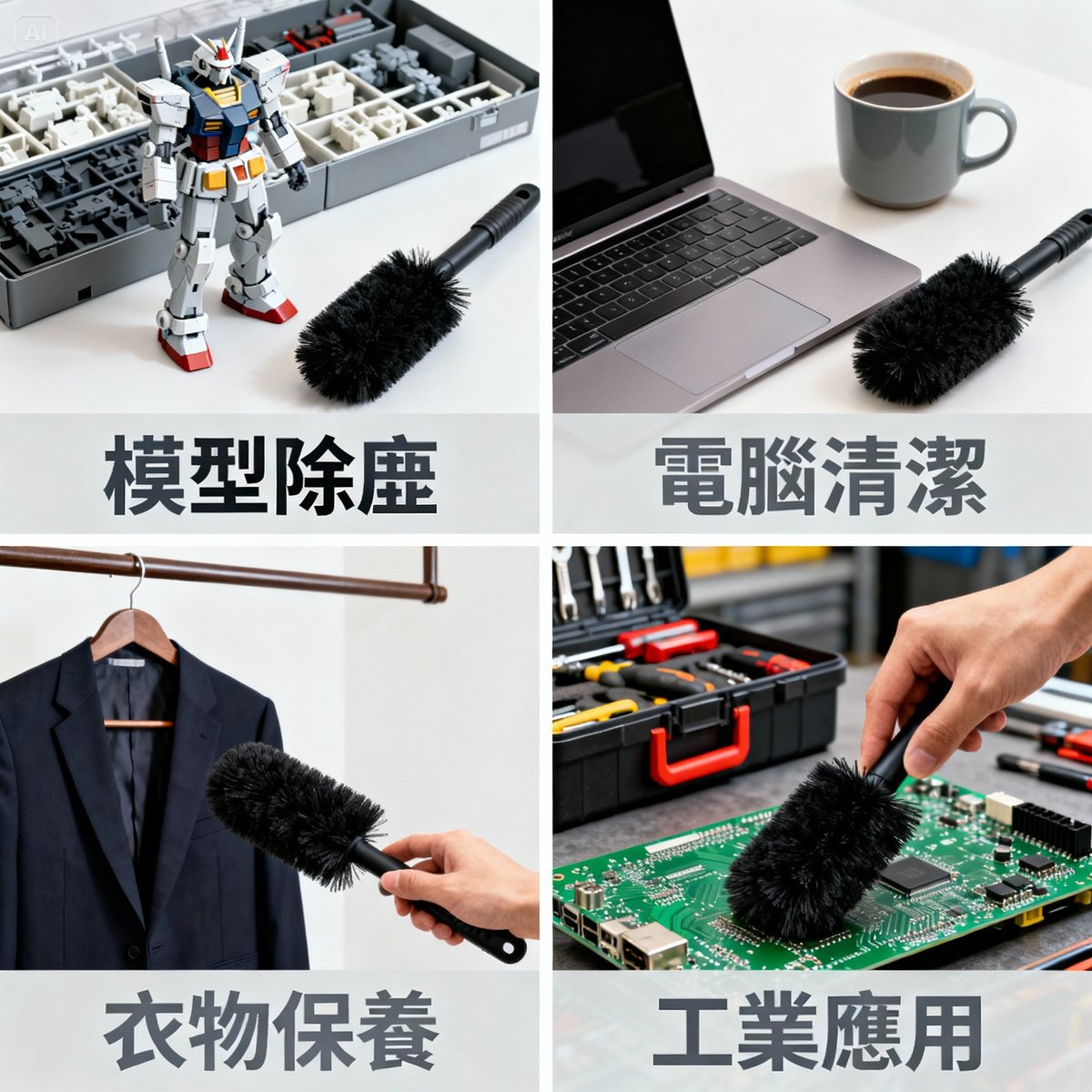
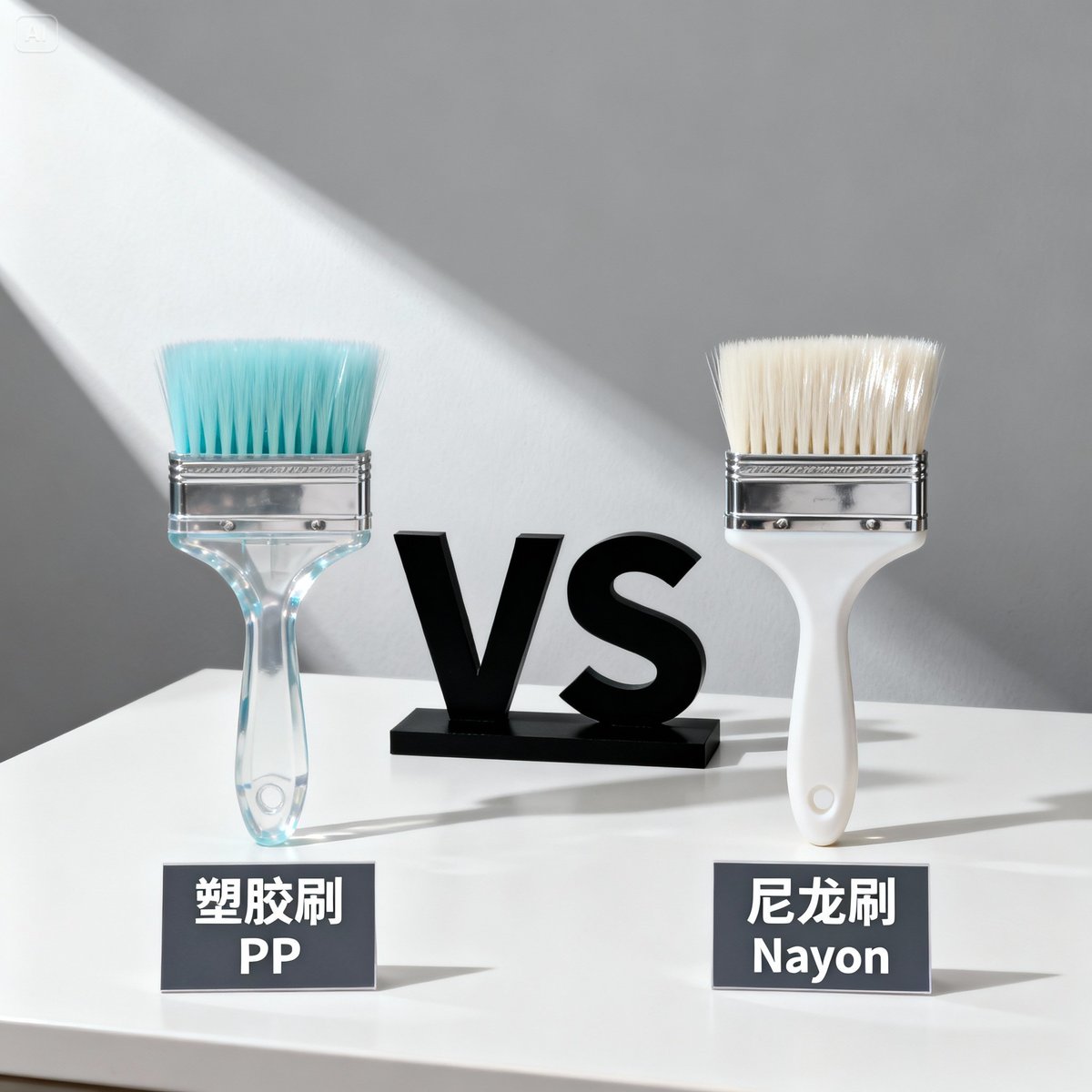
Have you ever worried about the dust on a model but been afraid an ordinary brush would scratch the paint? Is dust building up inside your computer case, while you worry that cleaning it will generate static and damage the components? Or is there lint and hair on a dark suit that will not come off however much you wipe?
The answer to all of these is a good anti-static brush.
As a professional factory with over 40 years of brush-making experience, we know how much an anti-static brush matters when cleaning precision items. This complete guide runs from the principle to practical use, to help you understand anti-static brushes fully, choose the right product and use it the right way, so that cleaning takes half the effort. The brands, stores and prices in this article describe the Taiwan market.
What is an anti-static brush? The basics of anti-static dust brushes
Definition of an anti-static brush
An anti-static brush, also called an ESD brush or an anti-static dust brush, is a tool designed specifically for removing dust.
The biggest difference from an ordinary dust brush is that its filaments have an "anti-static" function.
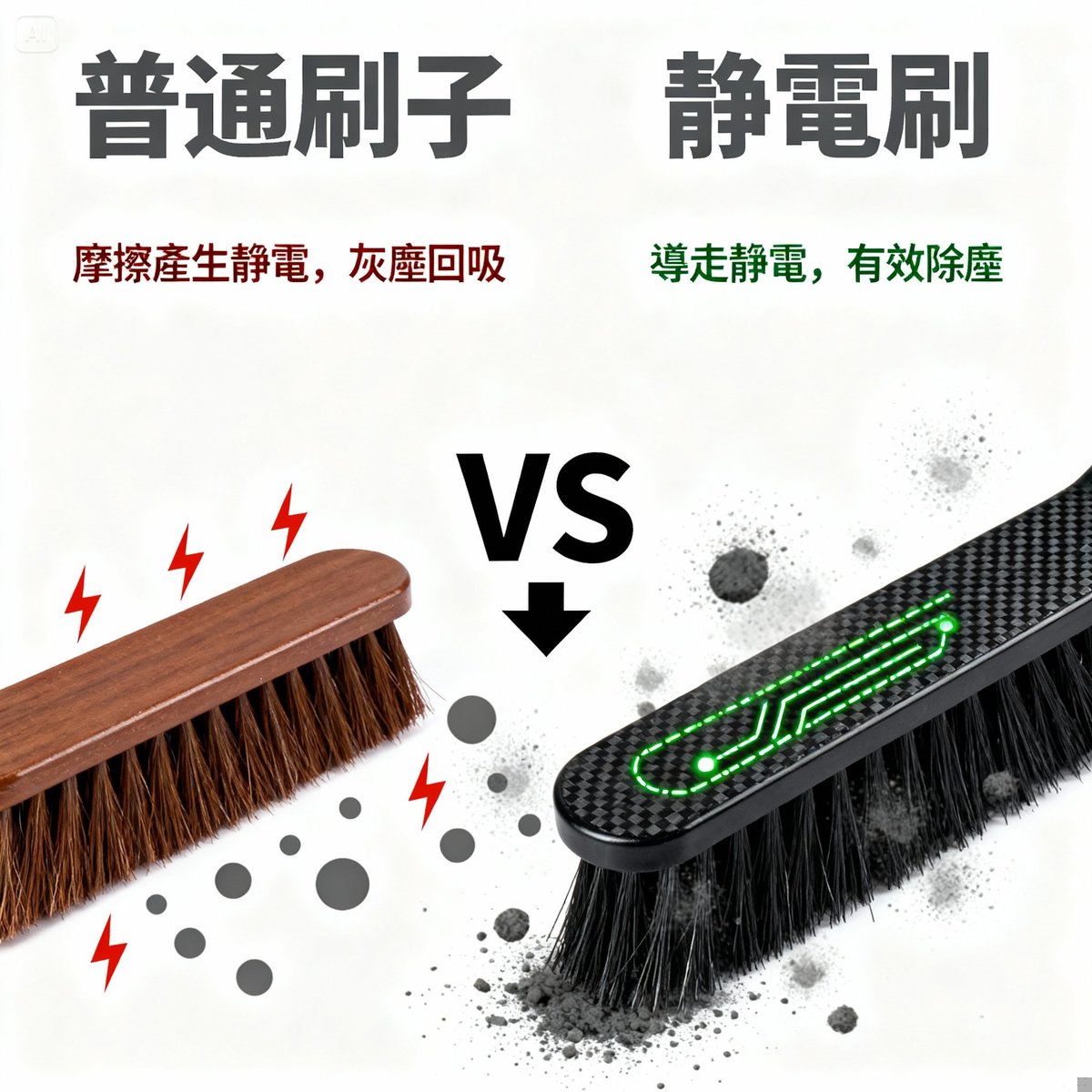
When an ordinary brush sweeps away dust, the friction generates static, which makes it easier for the dust to cling again. An anti-static brush uses special materials to conduct the static away or neutralize it, and so avoids this problem.
Types and classification of anti-static brushes
By purpose and design, anti-static brushes fall into several types:
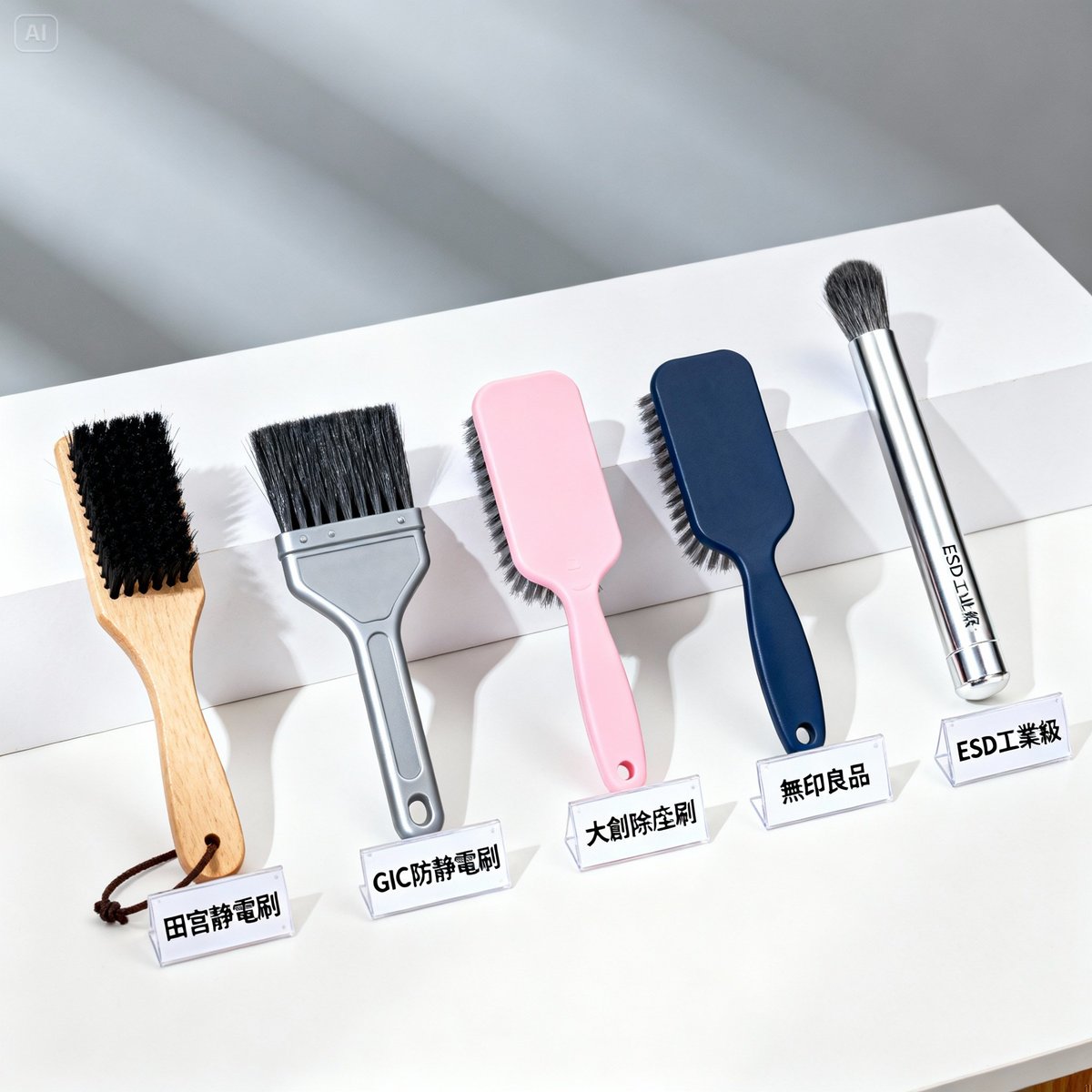
- Anti-static dust brush: the most common type, suited to everyday dusting
- Anti-static (ESD) brush: industrial grade, compliant with ESD standards, used for electronics
- Static-eliminating brush: emphasizes eliminating static, to protect precision parts
- Gap dust brush: finer, longer filaments, made for cleaning keyboards and the gaps in models
By where they are used, they can also be divided into:
- For models (such as the Tamiya anti-static brush)
- For computer cleaning (anti-static brushes with conductive fiber)
- For clothing care (clothes brushes with softer filaments)
- For industrial use (industrial-grade ESD anti-static brushes)
- For everyday household use (such as Daiso's budget dust brush)
How anti-static brushes work: why do they remove dust effectively?
How static attraction works
In daily life, objects generate static when they rub together.
Dust particles carry an electric charge themselves, so when the surface of an object is charged, it attracts dust like a magnet.
When you sweep dust away with an ordinary brush, the friction generates even more static, and the dust comes back as soon as you have brushed it off. This is why it sometimes seems that "the more you brush, the dirtier it gets".
The material science of anti-static brushes
The secret of an anti-static brush lies in the filament material.
Professional anti-static brushes use three main materials:
Carbon fiber:
- The structure of the carbon atoms is naturally conductive
- Extremely soft, does not harm precision surfaces
- Higher price
- The best dust removal
Conductive fiber:
- Blended with stainless steel wire or conductive material
- Excellent conductivity, compliant with industrial ESD standards
- Suited to cleaning electronics
Anti-static treated fiber:
- Ordinary fiber coated with an anti-static agent
- Limited anti-static effect, which gradually fades
- Cheap, used in budget goods such as Daiso's
- Suited to everyday dusting, but the effect is short-lived
What these materials have in common is that they can "conduct away" or "neutralize" static, so the dust is not attracted back.
Want to go deeper into the science behind anti-static brushes? See How anti-static brushes work, explained in depth, which fully explains how static is generated, the ESD standards, and how the three dust-removal mechanisms operate.
Measured dust-removal data
We tested the effect of different dust-removal methods in practice:
- Anti-static brush (carbon fiber): dust removal rate 85%, the best
- Wiping with a damp cloth: dust removal rate 75%, but may harm the item
- Blowing / air blower: dust removal rate 60%, dust scatters everywhere
- Ordinary brush: dust removal rate 45%, static pulls the dust back
The data shows that an anti-static brush really is the most effective dry dust-removal method.
Do anti-static brushes really work? Effect analysis and use cases
Assessing the real effect of an anti-static brush
Anti-static brushes do work, but they are not a cure-all.
They perform very well at removing "dry dust", with a dust removal rate of up to 85%.
In the following situations, however, the effect is limited:
- Grease or sticky stains (these need a solvent)
- Thick, heavy dust over a large area (a vacuum cleaner first is recommended)
- Hardened dirt deep in gaps (this needs a dedicated tool)
- Dust in a damp environment (the static effect is weakened)
Knowing these limits is what lets you use an anti-static brush correctly, without expecting too much of it.
Why do some people feel anti-static brushes "do not work"?
When results with an anti-static brush vary widely, the brush itself is usually not the problem. More often it is one of these situations:
- The wrong method of use (too much force, or a damp surface)
- Expectations that are too high (hoping it will remove grease)
- Buying a poor-quality counterfeit
- Budget anti-static treated fiber has limited effect, and the effect gradually fades
- The filaments harden or fall out with long use and need replacing regularly
- Relying on one brush for all the dust, without pairing it with tools such as an air blower
The 8 situations where an anti-static brush fits best
An anti-static brush is best suited to the following:
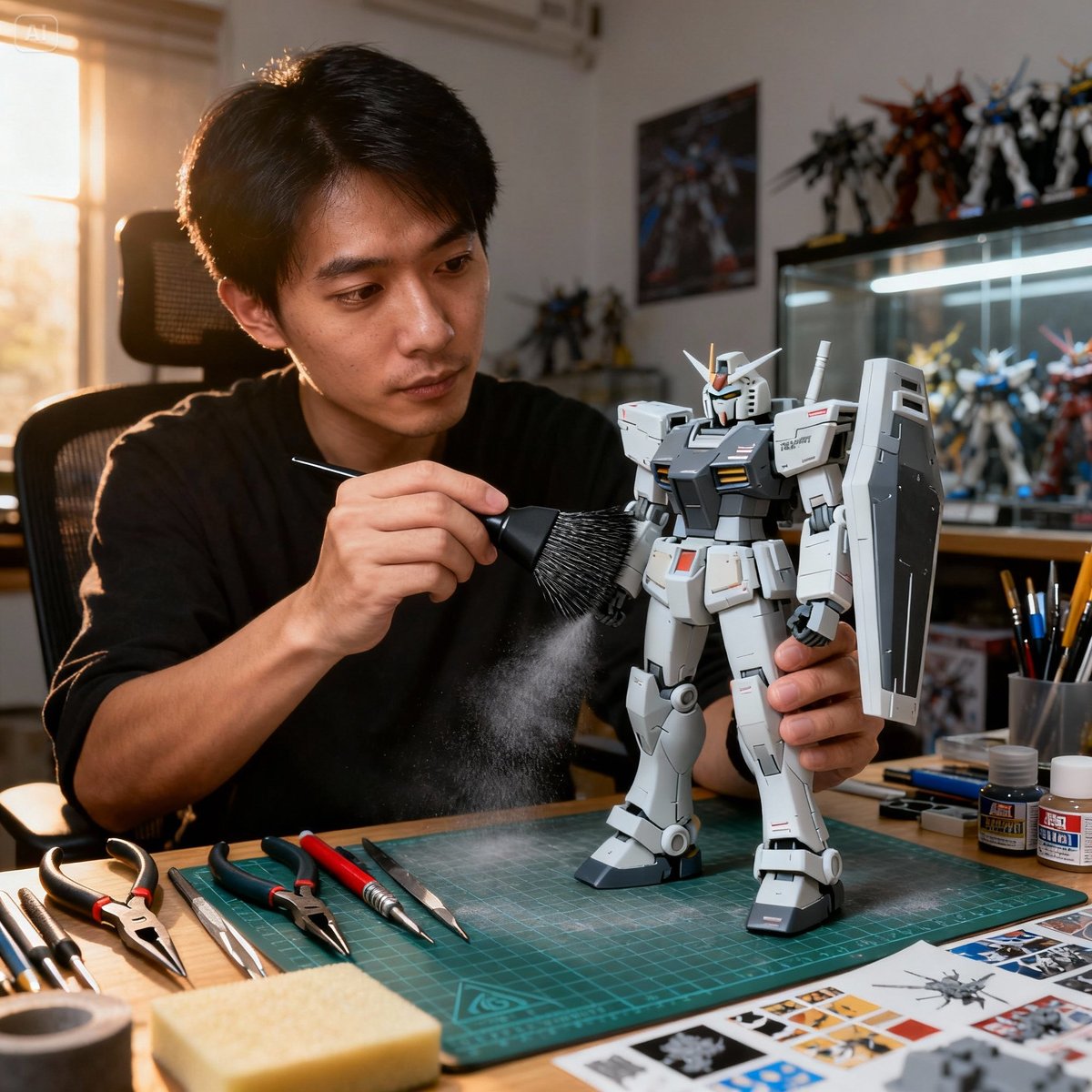
- Cleaning precision models: Gundam models, architectural models, Gunpla builds
- Dusting electronics: computer cases, keyboard gaps, screen surfaces
- Figure care: dusting anime figures, collectibles and display pieces
- Tidying clothing: removing lint from suits, coats and wool sweaters
- Vinyl records: removing dust before it scratches, to protect sound quality
- Lens cleaning: camera lenses, optical instruments (very soft filaments are needed)
- Car interiors: dashboards, center consoles, the gaps in air vents
- Furniture surfaces: everyday dusting of wooden furniture and leather sofas
If your needs match the situations above, an anti-static brush is definitely worth the investment.
Want to look more closely at how anti-static brushes actually perform? See our article Do anti-static brushes work? Measured results, which includes the full test data.
Recommended anti-static brush brands and product comparison
Recommended professional brands
These are the most recommended professional anti-static brush brands on the market:
Tamiya (TAMIYA):
- A major Japanese model maker, the highest quality standard
- Model 74078 is the most popular
- Organic conductive fiber combined with PBT resin filament, extremely soft
- Price: mid to high range (go by the price marked at each sales channel)
- Suited to: model builders, precision items
Industrial-grade ESD:
- Compliant with the IEC 61340 standard
- Price: high range
- Suited to: industrial use, corporate purchasing
Budget retail options
On a limited budget? These low-priced options are not bad either:
Daiso (DAISO):
- Price: budget
- Anti-static treated fiber (not carbon fiber)
- Suited to: everyday dusting, a first try
- Advantages: very cheap, easy to buy
- Disadvantages: stiffer filaments, lower durability
Showba (Xiaobei, a Taiwanese general-goods chain):
- Price: budget
- Quality slightly better than Daiso
- Suited to: household cleaning, rough surfaces
- Stores are mostly concentrated in central and southern Taiwan
Poya (a Taiwanese drugstore and variety chain):
- Price: budget
- More attractive design, suited to clothing
- Medium filament softness
- Suited to: clothing care, everyday dusting
Want a detailed brand review and a full comparison of the brands? See our dedicated article Anti-static brush recommendations | Anti-static brush brands fully compared and reviewed, which includes a detailed analysis of prices and specifications.
We especially recommend reading A complete introduction to the Tamiya anti-static brush to learn the features of the Tamiya anti-static brush and where it fits.
Product comparison table
| Brand | Price range | Filament material | Suited to | Durability | Value for money | Score |
|---|---|---|---|---|---|---|
| Tamiya | Mid to high range | Organic conductive fiber + PBT resin filament | Models / precision items | 2-3 years | ★★★★☆ | 9.5/10 |
| Industrial-grade ESD | High range | Conductive fiber | Industry / business | 2-3 years | ★★★☆☆ | 9/10 |
| Daiso | Budget | Anti-static treated fiber | Everyday dusting | 3-6 months | ★★★★★ | 7/10 |
| Showba | Budget | Anti-static treated fiber | Household cleaning | 6 months | ★★★★☆ | 7/10 |
| Poya | Budget | Anti-static treated fiber | Clothing care | 6-12 months | ★★★★☆ | 7.5/10 |
Where to buy an anti-static brush? A complete guide to purchase channels
Online shopping platforms
Shopee:
- Fierce price competition, frequent promotions
- Many sellers, a wide choice
- Note: there are counterfeit Tamiya products, so choose a reputable seller
- Recommended for: bulk purchases, the first stop for comparing prices
PChome 24h:
- Delivery within 24 hours, the first choice when you need it urgently
- Prices are fairly fixed, with fewer discounts
- Quality is assured, and returns and exchanges are easy
- Recommended for: urgent needs, not wanting to compare prices
momo:
- The most complete choice of brands
- Frequent spend-threshold discount campaigns
- Mid-range prices, good service
- Recommended for: buying all your tools in one go
Taobao / 1688:
- The cheapest prices, a wide choice
- Longer shipping time (7-14 days)
- Risks: unstable quality, hard to tell genuine from fake
- Recommended for: a very low budget, no urgency
Physical stores
Daiso stores:
- Nearly 100 stores across Taiwan, available everywhere
- Price: budget
- Advantages: buy and use right away, low cost of trial and error
- Disadvantages: ordinary quality, not recommended for precision items
Model specialty shops:
- Genuine Tamiya anti-static brushes guaranteed
- Higher prices, but quality is assured
- Recommended in Taipei: the Wannian Building in Ximending, the area around Guanghua Digital Plaza
- Recommended in Taichung: the model shops on Yizhong Street
- Recommended in Kaohsiung: the model street on Jianguo Road
Electronic component stores:
- Sell industrial-grade ESD anti-static brushes
- Taipei: Guanghua Digital Plaza, the Bade Road electronics street
- Hsinchu: the area around the Science Park
- Suited to: corporate purchasing, professional needs
Hardware stores:
- Industrial dust brushes and dust-removal brushes
- Affordable prices
- Suited to: factories, workshops, non-precision dusting
Ordering factory-direct (the YC Brushes advantage)
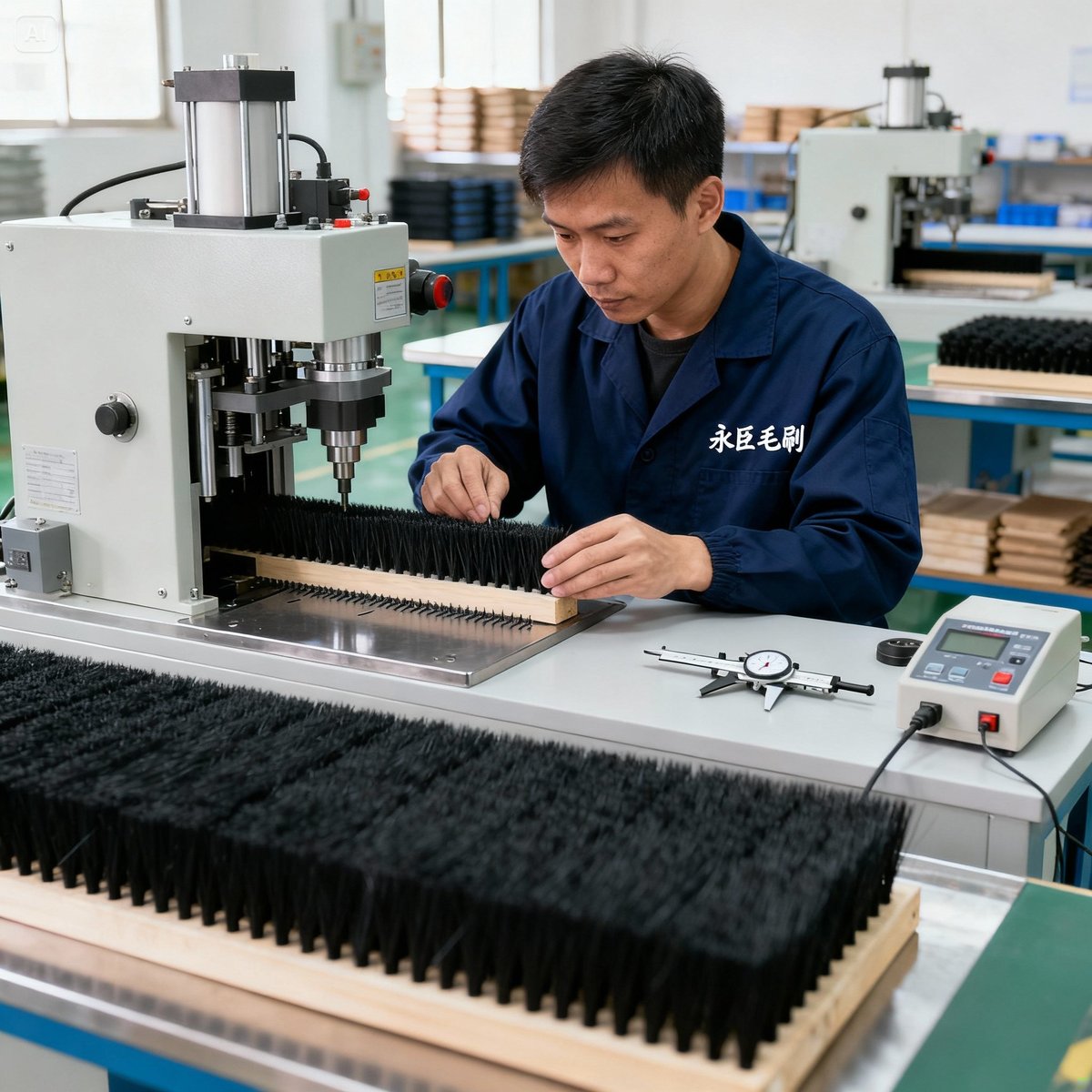
If you need to buy in bulk or need a custom specification, buying factory-direct is the best choice.
The 3 major advantages of YC Brushes:
-
Price advantage:
- Factory-direct, no middlemen
- Wholesale prices, with discounts for 100 pieces or more
- Long-term cooperation plans for businesses
-
Custom service:
- Filament material specified to your needs (carbon fiber / conductive fiber)
- Trim length, stiffness and density can be adjusted
- Custom handle design (hanging hole / non-slip design)
- Compliant with industrial ESD standards
-
Professional support:
- Over 40 years of brush-making experience, mature technology
- 3D-printed sampling, with volume production only after confirmation
- Stable quality; quantities and delivery times are quoted per specification
- A dedicated sales contact and complete after-sales service
Who it suits:
- Corporate IT departments (large demand for computer cleaning)
- Model studios / clubs (group-buy discounts)
- Factory production lines (compliant with ESD standards)
- Special specification needs (no ready-made product can be found)
Ordering process:
- Inquire online or call +886-2-2988-2721
- Explain your needs (purpose, quantity, specification)
- Quotation and advice (material and design suggestions)
- 3D sample confirmation (for custom orders)
- Volume production and shipment after confirmation
Want to know more about purchase channels and price comparisons? See Where to buy an anti-static brush? 10 purchase channels compared on price, with a roundup of offers, which analyzes the pros and cons of online platforms, physical stores and buying factory-direct.
If your budget is limited, see Are Daiso / Showba anti-static brushes any good? Budget dust brushes tested, with a value-for-money analysis to understand the real effect of budget products and where they fit.
How to choose the right anti-static brush: 5 key buying points
Choose according to purpose
The first step in buying an anti-static brush is to be clear about what it is for.
Model builders:
- First choice: the Tamiya anti-static brush
- Extremely soft filaments that do not harm the paint
- Expensive, but worth the investment
Computer cleaning:
- An industrial-grade ESD brush is recommended
- It must meet anti-static standards
- Avoids static damage to components
Everyday dusting:
- Daiso or Showba is enough
- Low budget, easy to buy
- The effect is sufficient, no need for a high-end product
Clothing care:
- Choose a model with softer filaments
- Stores such as Poya carry models made for clothing
- Avoid filaments that are too stiff and cause pilling
Industrial use:
- It must comply with ESD standards
- Choose a certified brand
- Consider long-term durability
Choosing the filament material
The filament material directly determines how well the brush works:
Carbon fiber (the best):
- Extremely soft
- Excellent conductivity
- Does not harm precision surfaces
- Higher price
Conductive fiber (industrial grade):
- Stable anti-static effect
- Compliant with ESD standards
- Suited to electronics
- Mid-to-high price
- Recommended brands: industrial-grade ESD
Anti-static treated fiber (budget):
- Coated with an anti-static agent
- The effect gradually fades
- Cheap
- Suited to everyday dusting
- Recommended brands: Daiso, Showba
Blended fiber (balanced):
- A balance of performance and price
- Suited to multiple uses
- Medium durability
Handle design and ergonomics
A good handle design makes the brush more comfortable to use:
- Non-slip grip: does not slip in the hand during long use
- Hanging hole: convenient for storage, keeps the filaments from deforming
- Moderate length: too short and it is hard to apply force, too long and it is not nimble
- Weight balance: the head must not be too heavy, to avoid a tired hand
The handle design of Tamiya is excellent and worth using as a reference.
Price and value for money
Different budgets call for different choices (for actual selling prices, go by the price marked at each sales channel):
Budget:
- Daiso
- Suited to: a first try, everyday dusting
- Disadvantages: low durability, limited effect on precision items
Mid to high range:
- Tamiya
- Suited to: model builders
- A high return on investment, worth buying
High range:
- Industrial-grade ESD
- Suited to: corporate purchasing, industrial use
- Compliant with international standards, the highest quality
Best value for money recommendations:
- Entry level: Daiso (to test the waters)
- Professional: Tamiya (a must-have for model builders)
Brand reputation and after-sales service
Choose a reputable brand to avoid a bad purchase:
International majors (Tamiya):
- Stable quality, an excellent reputation
- Watch out for counterfeits and choose a channel you trust
- Complete after-sales service
Factory-direct (YC Brushes):
- Strong custom capability
- A clear price advantage
- Backed by over 40 years of experience
- Suited to bulk purchases or special needs
Budget retailers (Daiso, Showba):
- Ordinary quality, but cheap
- Suited to beginners or non-precision uses
- Limited after-sales service
How to use and care for an anti-static brush
The correct way to use it
There are a few key techniques for using an anti-static brush:
Preparation before use:
- Confirm the surface is dry (dampness affects the static effect)
- Check that the filaments are clean
- Blow off large dust particles with an air blower first
Basic brushing method:
- Holding angle: the filaments at 30-45 degrees to the surface
- Brushing direction: brush lightly in one direction, not back and forth
- Force: as light as a feather, never press hard
- Slow speed: brushing fast easily generates static
Techniques for different materials:
- Plastic models: follow the edges of the parts and avoid the water-slide decals
- Computer cases: from top to bottom, to keep dust from falling into the components
- Clothing: follow the grain of the fabric; wool needs an even lighter touch
- Screens: extremely light force, to avoid scratching the coating
Pairing with other tools works even better:
- Anti-static brush + air blower: brush first, then blow, and the effect doubles
- Anti-static brush + cleaning gel: cleaning gel for flat surfaces, the anti-static brush for three-dimensional ones
- Anti-static brush + microfiber cloth: brush and then wipe, suited to screens
Want to learn more techniques for use and care? See How to use and care for a dust brush | 5 secrets to extending the life of an anti-static brush, which covers the correct brushing method, the cleaning steps and professional advice for a longer service life.
We also provide specialist guides for specific applications:
- Computer cleaning: see Computer dust brush recommendations | A guide to anti-static tools for cleaning cases, keyboards and screens to understand the ESD standards and the correct cleaning steps
- Model care: see Model dust brush recommendations | A guide to cleaning tools for Gundam and architectural models to learn how to protect delicate paintwork
- Clothing dusting: read Clothes dust brush recommendations | Dusting tools for suits and coats and how to use them to master the essentials of fabric care
Cleaning and caring for the filaments
After long use, dust builds up in the filaments of an anti-static brush.
Routine cleaning (after every use):
- Tap the filaments lightly to shake off the dust
- Blow the dust out from between the filaments with an air blower
- Check the filaments for anything tangled in them
- Hang the brush for storage, so the filaments are not pressed
Deep cleaning (weekly or every two weeks):
- Rinse the filaments gently with clean water
- Press gently; do not wring
- Shake off the excess water
- Dry in the shade, away from direct sunlight
What not to do:
- ❌ Do not use detergent (it destroys the anti-static effect)
- ❌ Do not use hot water (it deforms the filaments)
- ❌ Do not use a dryer (the high temperature damages the brush)
- ❌ Do not wring hard (the filaments break)
When to replace an anti-static brush
An anti-static brush has a service life. When the following appear, it is time for a new one:
The 6 signs that it needs replacing:
- The filaments are clearly split or broken
- The filaments are deformed and cannot stand straight again
- The anti-static effect has weakened (the dust comes back after brushing)
- The filaments have hardened and are no longer soft
- The filaments smell or have gone moldy
- The expected service life has been exceeded
Expected service life by brand:
- Tamiya: 2-3 years (normal use)
- Daiso anti-static treated fiber: 3-6 months
- Industrial-grade ESD: 2-3 years
Common mistakes in use
Avoid these mistakes and your anti-static brush will last longer:
❌ Brushing too hard:
- Wrong: thinking that brushing hard cleans better
- Right: as light as a feather, letting the filaments touch naturally
❌ Using it on a damp surface:
- Wrong: brushing an item right after wiping it
- Right: confirm it is completely dry before use
❌ Brushing back and forth:
- Wrong: brushing the same spot repeatedly
- Right: brush lightly in one direction; one pass is enough
❌ Not cleaning it for a long time:
- Wrong: cleaning it only once it is dirty
- Right: shake off the dust after every use
❌ Storing it flat under pressure:
- Wrong: tossing it into a drawer where other tools press on it
- Right: hang it for storage and keep the filaments upright
FAQ
Do anti-static brushes work? Can they really remove dust effectively?
They work, but it depends on where you use them.
On dry dust, the dust removal rate of an anti-static brush can reach 85%, so it is genuinely effective. It is especially suited to precision models, electronics, clothing and other items that cannot be washed or wiped with a damp cloth.
On grease, sticky stains and thick, heavy dust over a large area, however, the effect is limited.
The key is:
- Using it in the right situation
- Choosing the right material (carbon fiber or conductive fiber)
- Using the right method (gentle, brushing in one direction)
For detailed test data, see Do anti-static brushes work? Measured results.
Which anti-static brush brand is recommended?
It depends on your needs:
-
First choice for model builders: Tamiya (TAMIYA 74078)
- Extremely soft filaments that do not harm the paint
-
Recommended for computer cleaning: industrial-grade ESD
- Meets anti-static standards
- Protects electronic components
-
Entry level on a limited budget: Daiso
- Budget price, a low cost of trial and error
- Enough for everyday dusting
- Limited effect on precision items
-
Industrial / business use: industrial-grade ESD
- Compliant with IEC standards
- For bulk purchases, buy factory-direct from YC Brushes
Where is the cheapest place to buy an anti-static brush?
Cheapest online: Taobao / 1688
- Quality is unstable, genuine and fake are hard to tell apart, and shipping takes a long time
Cheapest in Taiwan: Daiso
- Budget price, available in stores across Taiwan
- Suited to a first try
Good value for a professional brush: factory-direct (YC Brushes)
- Wholesale prices for bulk purchases (100 pieces or more)
- Custom service to meet special needs
- Factory-direct, with no middleman markup
- Contact: +886-2-2988-2721
Recommended for online shopping:
- Shopee: competitive prices, frequent promotions
- PChome: 24h delivery, the first choice when you need it urgently
- momo: a full range of brands, spend-threshold discounts
What is the difference between an anti-static brush and an ordinary dust brush?
The biggest difference is the filament material.
Anti-static brush:
- The filaments are conductive (carbon fiber / conductive fiber)
- They can conduct static away or neutralize it
- Dust is not attracted back by static
- Suited to precision items and electronics
Ordinary dust brush:
- The filaments are ordinary fiber
- Friction generates static
- Dust is easily attracted back
- May damage electronic components (ESD)
A simple test: After brushing with an anti-static brush, the dust does not come back right away. After brushing with an ordinary brush, the dust may cling again.
Can an anti-static brush be used on a computer? Will it harm the electronic components?
Yes, but you have to choose the right product.
You must use an anti-static brush:
- Recommended: industrial-grade ESD
- Compliant with ESD anti-static standards
- Will not generate static that harms the components
Do not use:
- ❌ An ordinary brush (it generates static)
- ❌ A hair dryer (high temperature + static)
- ❌ A damp cloth (water conducts electricity, risk of a short circuit)
- ❌ A vacuum cleaner (the suction is too strong)
The correct steps:
- Shut down and unplug the power
- Leave it for 10 minutes so the capacitors discharge
- Wear an anti-static wrist strap (safer)
- Brush lightly from top to bottom
- Use an air blower as well to clear the dust
For detailed computer cleaning steps and tool recommendations, see Computer dust brush recommendations | A guide to anti-static tools for cleaning cases, keyboards and screens.
Why is the Tamiya anti-static brush so expensive? Is it worth buying?
The Tamiya anti-static brush sells for clearly more than Daiso's.
Why is it expensive?
- Special material: organic conductive fiber combined with PBT resin filament
- Brand premium: Tamiya is a top brand in the model world
- Extremely soft filaments: like cat fur, with a high development cost
Is it worth buying?
- Model builders: worth it (soft filaments, suited to delicate paintwork)
- Computer cleaning: not necessary
- Everyday dusting: too expensive (Daiso is enough)
Return on investment:
- A Tamiya brush lasts 2-3 years
- A Daiso brush lasts only 3-6 months
- In the long run, Tamiya is the better deal
Is the Daiso anti-static brush any good?
The Daiso anti-static brush is modestly priced. How is the value for money?
Advantages:
- Very cheap
- Available in stores all over Taiwan
- Acceptable everyday dusting (dust removal rate 65-70%)
- A low cost of trial and error, suited to beginners
Disadvantages:
- Stiffer filaments that may scratch precision items
- Limited anti-static effect, which also fades
- Low durability (3-6 months)
- The filaments fall out easily
Where it fits: ✅ Household cleaning ✅ Dusting rough surfaces ✅ A first try ✅ Non-precision items
Where it does not fit: ❌ Precision models (it will scratch the paint) ❌ Expensive instruments ❌ Electronics (not enough anti-static protection)
Conclusion: The Daiso anti-static brush is "enough for everyday use, not enough for precision work". On a limited budget or for a first try it is fine to buy, but for building models or cleaning computers we recommend upgrading to a professional brand.
For a detailed test of budget products and a value-for-money analysis, see Are Daiso / Showba anti-static brushes any good? Budget dust brushes tested, with a value-for-money analysis.
Can an anti-static brush be used on clothes?
Yes, and it works very well.
An anti-static brush is especially suited to removing the following from clothing:
- Lint and fluff
- Pet hair
- Dust and fine particles
Suitable clothing:
- Suit jackets
- Coats and trench coats
- Wool sweaters and woolen cloth
- Pile fabrics
Tips for use:
- Brush in one direction along the grain of the fabric
- Wool and pile need an even lighter touch
- Avoid brushing the same spot repeatedly (pilling)
- The difference is especially noticeable on dark clothing
Recommended products:
- Poya: high value for money
- Professional clothes brush: softer horsehair
Versus a lint roller:
- Anti-static brush: gentle, reusable, suited to fine fabrics
- Lint roller: fast, disposable, the adhesive may harm the fabric
For detailed clothing dusting techniques and product recommendations, see Clothes dust brush recommendations | Dusting tools for suits and coats and how to use them.
Do the filaments of an anti-static brush fall out? What should I do?
Normal shedding versus abnormal shedding:
Normal:
- A new brush losing a few filaments on first use is normal
- After 1-2 years of use, losing a few now and then is also normal
Abnormal shedding (a quality problem):
- A lot fall out every time you use it
- Whole tufts come out
- A brand-new brush sheds heavily
Causes:
- Poor tufting workmanship (common in cheap goods)
- Improper use (pulling too hard)
- The wrong cleaning method (wringing hard)
- The service life has been exceeded
What should I do?
- A new brush that sheds: it may be defective; contact the seller for a return or exchange
- An old brush that sheds: it is time to replace it
- A few filaments now and then: normal, and it does not affect use
How to avoid it:
- Choose a brand with good quality (Tamiya, made by YC Brushes)
- Use it gently, without pulling
- When cleaning, press gently and do not wring
- Hang it for storage, so it is not pressed
The factory-direct advantage: YC Brushes sells factory-direct and has over 40 years of experience in tufting, so the filaments do not come out easily. For bulk purchases or custom needs, contact us now.
Besides an anti-static brush, what other dusting tools are there?
An anti-static brush is the first choice for dry dusting, but it works even better together with other tools.
Common dusting tools compared:
| Tool | Advantages | Disadvantages | Suited to |
|---|---|---|---|
| Anti-static brush | Does not harm surfaces, anti-static | Slower on dust over large areas | Precision items, electronics |
| Air blower | No contact, reaches deep dust | Dust scatters, cannot move large particles | Lenses, keyboard gaps |
| Cleaning gel | Strong tack, picks up deep dust | A consumable, flat surfaces only | Keyboards, gaps in flat surfaces |
| Microfiber cloth | Strong pickup, washable | Needs a liquid, friction generates static | Screens, glasses |
| Vacuum cleaner | Fast over large areas | Suction may harm components, noise | Floors, sofas, fabric surfaces |
| Canned air (compressed air) | Deep and powerful | Risk of liquid spraying out, expensive | Electronics, precision instruments |
The best combinations:
- Basic set: anti-static brush + air blower (suits most situations)
- Advanced set: anti-static brush + air blower + cleaning gel (all-round dusting)
- Professional set: anti-static brush + canned air + microfiber cloth (precision instruments)
Order of use:
- Blow off large particles with the air blower
- Brush the surface lightly with the anti-static brush
- Lift what is left in the gaps with cleaning gel
- Give a final wipe with the microfiber cloth (if needed)
How can I tell whether an anti-static brush really is anti-static?
Simple tests:
Method 1: the dust re-attraction test
- Sprinkle a small amount of paper scraps or dust on an item
- Brush it off with the anti-static brush
- Watch whether the dust is immediately attracted back
- ✅ Anti-static brush: the dust is brushed away and does not come back
- ❌ Ordinary brush: the dust is attracted back right after brushing
Method 2: the friction charging test
- Rub the filaments quickly against a plastic bag
- Watch whether static attraction appears
- ✅ Anti-static brush: does not cling to the plastic bag
- ❌ Ordinary brush: clings to the plastic bag
Method 3: a static tester (professional)
- Measures the surface resistance
Other things to judge by:
- Material: carbon fiber, conductive fiber → effective; ordinary fiber → poor effect
- Price: products priced clearly below the market rate are usually not truly anti-static
- Brand: Tamiya, industrial-grade ESD → genuinely effective
Factory assurance: The anti-static brushes supplied by YC Brushes can be made to meet industrial ESD standards as required, and are inspected and passed with a static tester. See the professional services of YC Brushes.
What is an anti-static brush called in English?
Common English terms:
Antistatic Brush:
- The most standard term
- Anti-static = preventing static
- Used internationally
ESD Brush:
- ESD = Electrostatic Discharge
- A term from industrial / professional fields
- Emphasizes compliance with ESD standards
Static Removal Brush:
- Static Removal = removing static
- More colloquial
- Emphasizes the function
Dust Removal Brush:
- Emphasizes the dust-removal function
- But does not clearly say it is anti-static
Usage in different contexts:
- Model forums: "Antistatic brush for Gundam models"
- Industrial purchasing: "ESD-safe brush compliant with IEC 61340"
- Everyday shopping: "Anti-static dust brush"
Suggestions for searching:
- Amazon / eBay: search for "antistatic brush"
- Industrial platforms: search for "ESD brush"
- Model forums: search for "antistatic brush" + "model/gundam"
Conclusion: choose the right anti-static brush and cleaning gets easier
Summary of the core value
An anti-static brush looks like a simple tool, yet it solves many of the headaches of dusting precision items.
From model builders to computer enthusiasts, from clothing care to industrial applications, a good anti-static brush is an indispensable helper.
The keys to choosing the right anti-static brush:
- Understand the principle: knowing why it works is what lets you use the right method
- Choose the right material: carbon fiber / conductive fiber, according to your needs
- Choose the right brand: Tamiya / factory-direct, with assured quality
- Use the right method: gentle, in one direction, on a dry surface
- Care for it correctly: extend the service life and keep the effect
A quick review of the buying points
Choosing by budget:
- Budget: Daiso (a first try)
- Mid to high range: Tamiya (the professional first choice)
- Bulk purchases: factory-direct from YC Brushes (wholesale prices)
Choosing by purpose:
- Model builders: Tamiya (extremely soft filaments)
- Computer cleaning: industrial-grade ESD (meets the standards)
- Clothing care: Poya (better designs)
- Everyday dusting: Daiso (sufficient and cheap)
- Industrial use: an ESD-certified brand or a custom brush from YC Brushes
Avoiding a bad purchase:
- Do not buy no-name products that are too cheap
- Watch out for counterfeit Tamiya products and choose a channel you trust
- Do not use budget brushes on precision items
- Remember to be gentle in use, and do not press too hard
Call to action
General consumers:
- A first try: buy one at Daiso and see how it goes
- Professional needs: choose a brand such as Tamiya
- Special specifications: contact the YC Brushes factory for a custom brush
Businesses / studios / clubs:
- Wholesale prices for bulk purchases
- Custom filament material, trim length and stiffness
- Compliant with industrial ESD standards
- Fast sampling, stable quality