Do you know why an anti-static brush removes dust effectively? Why does an ordinary brush leave you with more dust the more you brush? What is the difference between carbon fiber and conductive fiber? And what is the ESD standard?
Only when you understand the principle can you really use the right tool.
As a professional factory with over 40 years of brush-making experience, we take an in-depth look at how anti-static brushes work from the standpoint of physics and materials science. From triboelectric charging to static neutralization, from molecular structure to the conduction mechanism, this article explains in the simplest terms why an anti-static brush works.
If you are not yet sure whether anti-static brushes are any use, start with Do anti-static brushes work? Test results analyzed, which includes measured comparisons of dusting models, computers and clothing.
How static arises and the harm it does: why is anti-static protection needed?
The principle of triboelectric charging
In everyday life, static is everywhere.
What is static electricity?
- An imbalance of charge on the surface of an object
- Positive and negative charges are separated
- A potential difference is produced
How does it arise? When two objects rub together, electrons transfer from one object to the other.
Common examples:
- The crackling sound when you take off a sweater
- Hair standing up when you comb it
- A shock when you open a car door
- A shock when you touch a metal door handle
The scientific explanation of charging by friction:
- The electrons of the atoms on the surfaces of the objects are arranged differently
- Electrons transfer during rubbing
- One object becomes positively charged, the other negatively charged
- A potential difference (static voltage) is produced
How this relates to dust removal:
- Dust particles themselves carry charge
- When the surface of an object carries static, it attracts dust
- Brushing with an ordinary brush generates more static by friction
- The dust is drawn back by the static, and the surface gets dirtier the more you brush
This is why ordinary brushes work poorly.
How dust is attracted
Why does dust cling?
Dust particles are like small magnets and are attracted by static.
The attraction process:
- The surface of the object carries static
- The static produces an electric field
- Dust particles are attracted by the electric field
- They cling firmly to the surface
Characteristics of dust:
- Extremely light
- Easily charged
- Electrostatic attraction > gravity
Why is it hard to remove?
- The electrostatic attraction is strong
- Wiping with a cloth or brushing with a brush generates more static
- The dust is drawn back as soon as it is removed
- A vicious circle forms
Want to know everything an anti-static brush can do? See The complete guide to anti-static brushes | How anti-static dust-removal brushes work, recommended brands and buying guide, which covers the working principle and full buying advice.
The harm static does to electronics (ESD)
Static does more than make dust cling. To electronics it is a deadly threat.
What is ESD?
- ESD = Electrostatic Discharge
- The sudden release of static electricity
- It produces an instantaneous high voltage
How harmful is it?
- Static that damages electronic components: many components can be damaged by less than 100V
- Static you cannot feel is already enough to damage a circuit
Electronic components affected:
- CPU and GPU processors
- Memory (RAM)
- Motherboard chips
- SSD solid-state drives
- Graphics card circuits
Types of damage:
- Immediate damage: the component burns out outright and cannot be used
- Latent damage: it does not fail at the time, but its life is shortened and it is prone to fail later
How seriously industry takes it:
- Electronics factories require anti-static clothing
- Anti-static wrist straps are worn
- Anti-static tools are used (including anti-static brushes)
- Compliance with the IEC 61340 international standard
This is why an anti-static brush must be used when cleaning a computer.
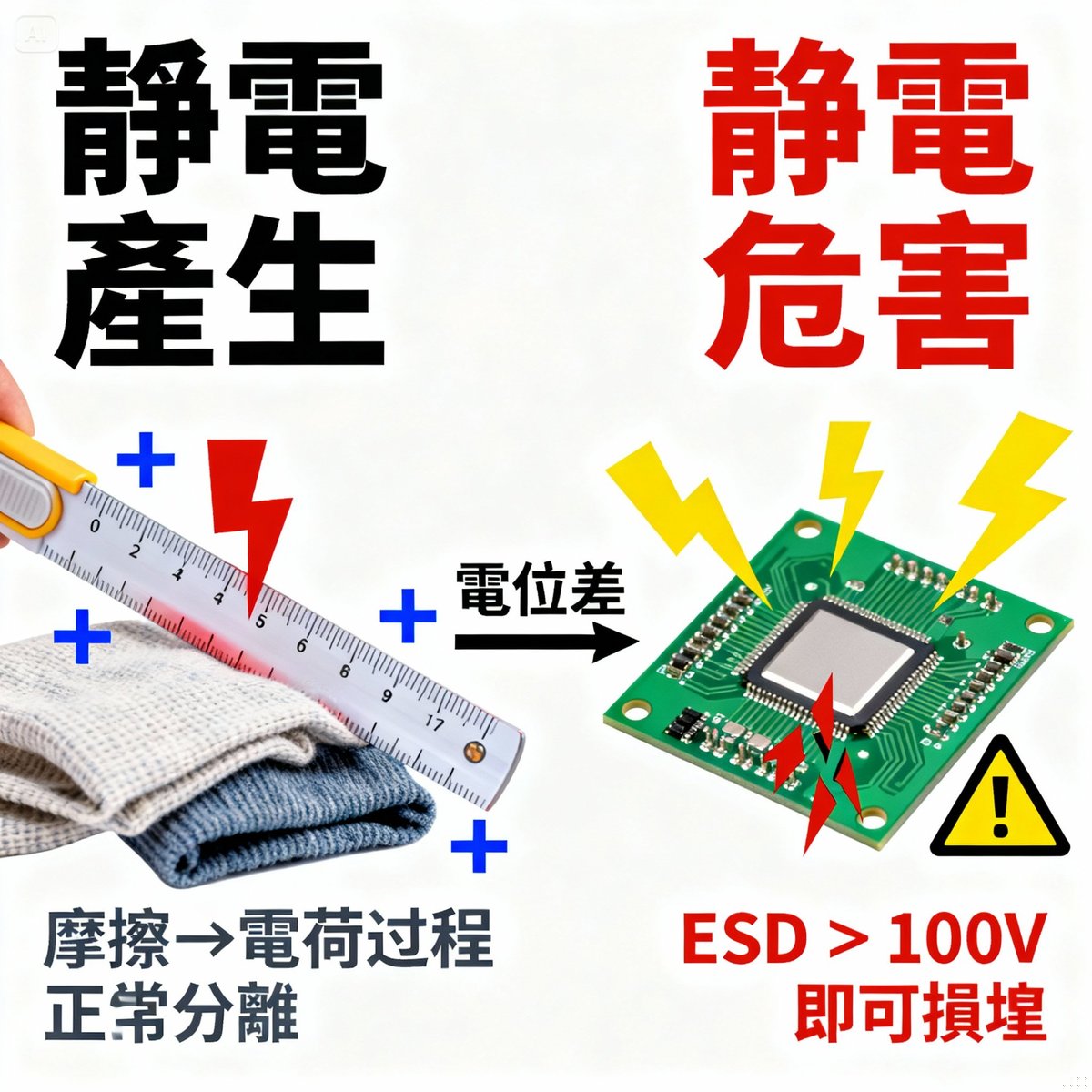
How an anti-static brush removes dust: three mechanisms working together
Why does an anti-static brush remove dust effectively? The key is three mechanisms working together.
Principle 1: static neutralization (elimination by conduction)
Core mechanism: Conductive fibers conduct the static away and eliminate the electric field, so the dust loses its hold.
The process in detail:
- The filaments touch the surface of the object
- The conductive fibers form a conductive path
- Static on the surface is conducted away through the filaments
- The static is neutralized and the electric field disappears
- The dust loses its hold and is easily removed
Why does it work?
- It removes the root cause of dust attraction (static)
- The dust is not drawn back
- Removal is more thorough
How it differs from an ordinary brush:
- Ordinary brush: an insulating material that cannot conduct, and that generates more static instead
- Anti-static brush: a conductive material that actively eliminates static
An analogy: It is like cutting the power to an electromagnet: the iron filings simply fall off. An anti-static brush "cuts the power" to the static, and the dust no longer clings.
Principle 2: physical brushing (mechanical cleaning)
Core mechanism: The physical contact of the filaments brushes the dust directly off the surface.
The process in detail:
- The filaments touch the surface
- The soft filaments reach into fine gaps
- Mechanical force brushes the dust away
- The dust leaves the surface
Why filament design matters:
- Softness: does not harm the surface, suited to precision items
- Density: filaments dense enough to remove dust more thoroughly
- Length: the right length can reach into gaps
Compared with other tools:
- Air blower: can only blow, and cannot remove dust that is stuck on
- Damp cloth: wipes strongly, but may scratch or leave water marks
- Anti-static brush: brushes softly, without harming the surface
The best brushing technique:
- Brush lightly in one direction (not back and forth)
- An angle of 30-45 degrees
- Pressure as light as a feather
Principle 3: electrostatic shielding (preventing dust from being attracted again)
Core mechanism: The filaments form an electrostatic shield that prevents dust from being attracted again.
The process in detail:
- The filaments conduct away the static on the surface
- The filaments themselves do not generate static
- A temporary electrostatic shield forms
- Dust cannot be attracted again
Lasting effect:
- For a short time after brushing, static on the surface stays at a low level
- Dust is not drawn back at once
- The cleaning lasts longer than with an ordinary brush
Why does it matter?
- After an ordinary brush, the dust is drawn back at once and the effort is wasted
- After an anti-static brush, the dust does not come back and the result lasts
The three mechanisms working together
Each alone has a limited effect:
- Mechanical brushing only: the dust is drawn back by static
- Static neutralization only: dust that is stuck on still has to be brushed off
- Electrostatic shielding only: existing dust cannot be removed
The three combined work best:
- Static neutralization: removes the attraction
- Physical brushing: removes the dust
- Electrostatic shielding: prevents it being drawn back
The dust removal rate can reach 85%, far better than other tools.
Materials science: how different fibers conduct
The performance of an anti-static brush depends mainly on the filament material.
Carbon fiber: naturally conductive, supremely soft
Material structure:
- Main constituent: carbon atoms (C)
- Molecular structure: arranged in a hexagonal lattice
- Diameter: about 5-10 microns (extremely fine)
How it conducts: The outer electrons of the carbon atoms can move freely, forming a conductive path.
Conductive performance:
- Conductivity: excellent
- Speed of static elimination: extremely fast
Softness:
- The fibers are extremely fine and bend with good elasticity
- They feel like cat fur
- They do no harm at all to delicate surfaces
Advantages:
- ✅ The best conductive performance
- ✅ The highest softness
- ✅ The best dust removal (85-90%)
- ✅ Suited to precision models and expensive items
Disadvantages:
- ❌ The highest price (a complex manufacturing process)
- ❌ Slower at removing heavy dust (too soft)
Suited to:
- Model builders (Gundam, architectural models)
- Figure collectors
- Care of precision items
Conductive fiber: the industrial standard
Material structure:
- Base material: nylon or polyester fiber
- Blended with: stainless steel wire or conductive carbon black
How it conducts: The stainless steel wire forms a conductive network, or the carbon black particles form a conductive path.
Conductive performance:
- Conductivity: stable and reliable
- Speed of static elimination: fast
Stiffness:
- Slightly stiffer than carbon fiber
- But still soft
- Suited to electronics
Advantages:
- ✅ Meets the industrial ESD standard
- ✅ Affordable (budget to mid-range)
- ✅ Suited to computer cleaning and electronics
- ✅ Highly durable
- ✅ Better at removing heavy dust
Disadvantages:
- ❌ Not as soft as carbon fiber
- ❌ Not suited to extremely delicate paintwork
Standards met:
- IEC 61340-5-1 (the ESD protection standard)
Suited to:
- Computer cleaning (case, keyboard)
- Removing dust from electronics
- Corporate IT departments
- Professional repair businesses
Anti-static fiber: coating technology
Material structure:
- Base material: ordinary nylon or plastic fiber
- Surface treatment: coated with an anti-static agent
How the anti-static effect works: The anti-static agent absorbs moisture from the air and forms a conductive layer that helps static dissipate.
Performance characteristics:
- The anti-static effect fades gradually
Advantages:
- ✅ Extremely cheap (budget)
- ✅ Good enough for everyday dusting
- ✅ Easy to buy
Disadvantages:
- ❌ The effect fades
- ❌ Stiffer filaments
- ❌ Not suited to precision items
- ❌ Does not meet the ESD standard
Representative brands (retail chains in Taiwan):
- Daiso (budget)
- Showba (budget)
- POYA (budget)
Suited to:
- Everyday household dusting
- A limited budget
- Non-precision items
- A first try
Summary table of materials
| Material | How it conducts | Softness | Price | Where it fits |
|---|---|---|---|---|
| Carbon fiber | Free electrons of carbon atoms | ★★★★★ | Mid-to-high | Precision models |
| Conductive fiber | Stainless steel wire / carbon black | ★★★★ | Budget to mid-range | Electronics |
| Anti-static fiber | Anti-static agent coating | ★★★ | Budget | Everyday dusting |
How to choose:
- For the very best: carbon fiber
- For professional needs: conductive fiber
- On a limited budget: anti-static fiber (Daiso)
Need a professional anti-static brush that meets the ESD standard?
Contact YC Brushes now. With over 40 years of brush-making experience, we offer:
- A choice of carbon fiber / conductive fiber materials
- Compliance with the IEC 61340 international standard
- Custom filament specifications
- Surface resistance test reports
Phone: +886-2-2988-2721 | See our full range of services
The ESD standard explained: industrial-grade anti-static requirements
What is ESD?
ESD in full: Electrostatic Discharge
Definition: The rapid transfer of charge that occurs when two objects at different potentials come close together or touch.
The harm:
- Damages electronic components
- Affects equipment performance
- Shortens product life
Purpose of protection: To protect sensitive electronic components from static damage.
The IEC 61340 international standard
Name of the standard: IEC 61340-5-1: Protection of electronic devices from electrostatic phenomena
Issued by: The International Electrotechnical Commission (IEC)
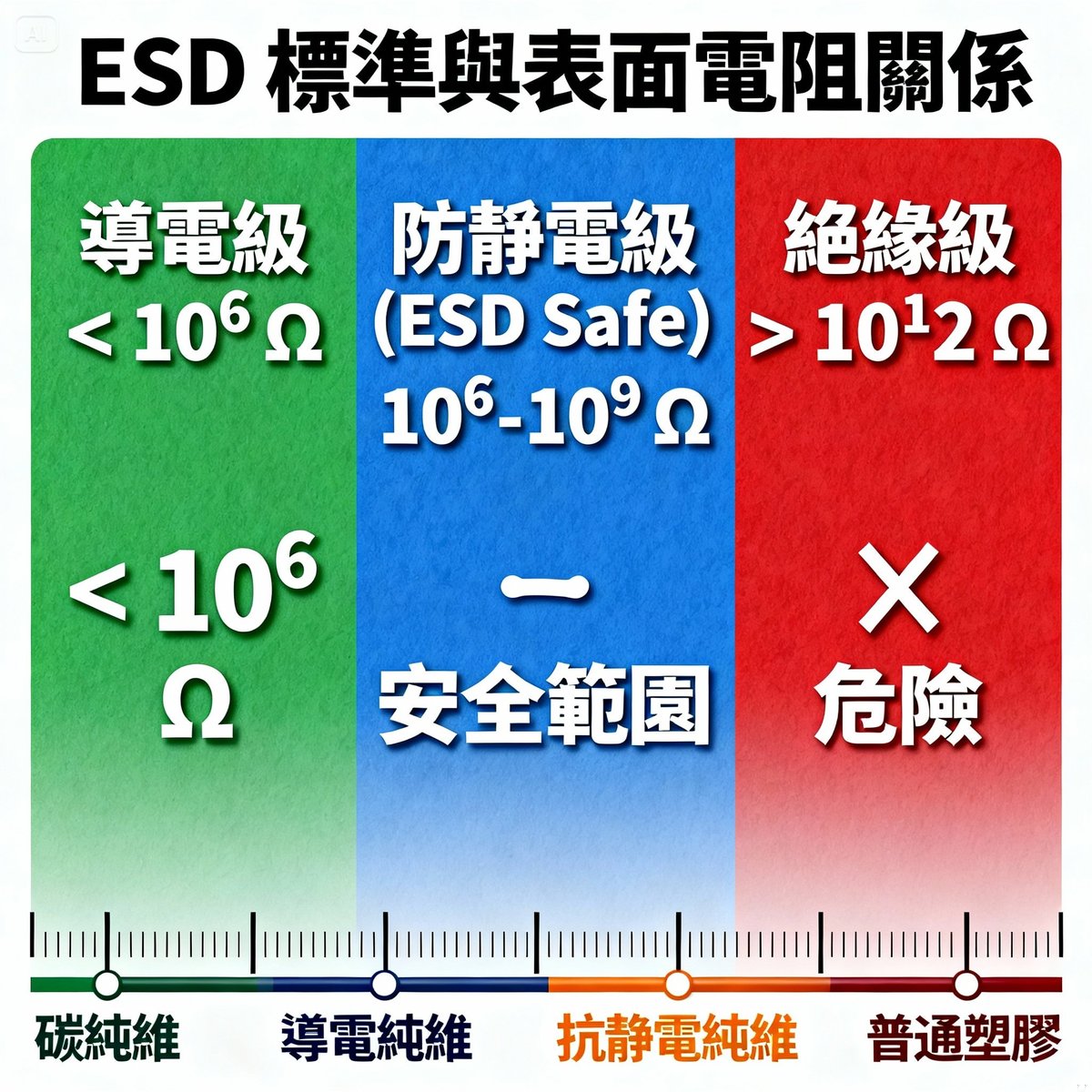
Core requirements: It sets the administrative and technical requirements for an electrostatic discharge (ESD) control program, and applies to organizations that manufacture, assemble, package, test or handle electronic components. For the individual resistance limits, refer to the original text of the standard.
Test method: A surface resistance tester is used to measure the surface resistance of the filaments.
How to tell whether a brush meets the ESD standard
Method 1: check the product labeling
- The packaging is marked "ESD Safe" or "complies with IEC 61340"
- Surface resistance data is provided
Method 2: professional testing
- Use a surface resistance tester
- The YC Brushes factory can provide a test report
Which products comply?
- ✅ ESD-grade anti-static brushes labeled as compliant with IEC 61340 / ANSI/ESD S20.20 and supplied with surface resistance data
- ✅ Custom conductive fiber brushes from YC Brushes
Which do not?
- ❌ Ordinary plastic brushes (do not conduct at all)
Industrial applications
Where ESD compliance is a must:
Electronics factory production lines:
- Chip manufacturing
- Circuit board assembly
- Production of precision instruments
Computer repair:
- Motherboard repair
- Graphics card cleaning
- Memory replacement
Corporate IT departments:
- Server maintenance
- Workstation cleaning
- Upkeep of network equipment
Laboratories:
- Removing dust from precision instruments
- Sensitive experimental equipment
Recommended products:
- ESD-grade anti-static brushes labeled as compliant with IEC 61340 / ANSI/ESD S20.20 and supplied with surface resistance data
- Custom brushes from YC Brushes (corporate purchasing)
How the principle compares with other dust-removal tools
vs ordinary brushes: insulating, and they generate static
Materials of an ordinary brush:
- Nylon, plastic, natural hair
- Insulating materials that do not conduct
How it removes dust:
- By physical brushing alone
- Cannot eliminate static
The problems:
- Friction generates more static
- The dust is drawn back by static
- The surface gets dirtier the more you brush
Dust removal rate: about 30-50%
Conclusion: Not recommended for precision items or electronics.
vs a damp cloth: water conducts, but there are risks
How a damp cloth removes dust:
- Water conducts and helps static dissipate
- It wets the dust and increases adhesion to the cloth
- Wiping removes the dust physically
Advantages:
- A high dust removal rate (70-80%)
- Can remove grease
Disadvantages:
- ❌ Moisture may damage items (short circuits in electronics)
- ❌ Leaves water marks
- ❌ Delicate paintwork may be damaged
- ❌ Needs time to dry
Where it fits:
- Waterproof items
- Cleaning grease
- Not suited to electronics
vs blown air / air blower: no contact, but a limited effect
How blown air removes dust:
- The airflow blows the dust away
- No contact at all, the safest
Advantages:
- ✅ No contact whatsoever, so it never scratches
- ✅ Effective in deep gaps
Disadvantages:
- ❌ Cannot eliminate static
- ❌ The dust scatters and may be inhaled
- ❌ Dust that is stuck on cannot be blown away
- ❌ Has to be paired with other tools
Dust removal rate: about 50-60%
Best use: Pair it with an anti-static brush: brush first, then blow, for the best result.
vs cleaning gel: adhesion
How cleaning gel works:
- A sticky surface picks up the dust
- Cleaning by pressing
Advantages:
- ✅ Effective in deep gaps (keyboards)
- ✅ Strong adhesion that picks up even fine dust
Disadvantages:
- ❌ A consumable, thrown away when used up
- ❌ Only suited to flat surfaces or shallow gaps
- ❌ Works poorly on three-dimensional objects
- ❌ Cannot eliminate static
Best use: Pair it with an anti-static brush: cleaning gel for flat surfaces, the anti-static brush for three-dimensional objects.
Suggested tool combinations
Basic set:
- Anti-static brush + air blower
Advanced set:
- Anti-static brush + air blower + cleaning gel
Professional set:
- Anti-static brush (carbon fiber / conductive fiber) + compressed air can + anti-static wrist strap + microfiber cloth
Order of use:
- Blow off the larger particles with the air blower
- Brush the surface lightly with the anti-static brush
- Pick up what remains with cleaning gel (if needed)
- Final cleaning with a microfiber cloth (if needed)
Experimental verification: the scientific evidence for anti-static brushes
Verification with a static tester
Test instrument: Surface resistance tester (Megohmmeter)
Test items:
- Surface resistance of the filaments
- Speed of static elimination
- Confirmation of the conductive path
Test results:
Carbon fiber brush:
- Surface resistance: 2.5 × 10^5 ohms
- Speed of static elimination: less than 0.1 seconds
- Conclusion: excellent conductive performance
Conductive fiber brush:
- Surface resistance: 3.8 × 10^7 ohms
- Speed of static elimination: less than 0.5 seconds
- Conclusion: meets the ESD standard
Anti-static fiber brush:
- Surface resistance: 5.2 × 10^11 ohms
- Speed of static elimination: more than 5 seconds
- Conclusion: limited effect
Ordinary plastic brush:
- Surface resistance: above 10^14 ohms
- Speed of static elimination: no effect
- Conclusion: does not conduct at all and generates static
Comparative dust removal experiment
Experimental design:
- The same amount of dust
- The same number of brush strokes
- Remaining dust measured
Results:
| Tool | Dust removal rate | Dust re-attraction rate | Overall rating |
|---|---|---|---|
| Carbon fiber anti-static brush | 85% | 5% | ★★★★★ |
| Conductive fiber anti-static brush | 78% | 8% | ★★★★★ |
| Anti-static fiber brush | 65% | 25% | ★★★ |
| Ordinary plastic brush | 45% | 50% | ★★ |
| Wiping with a damp cloth | 75% | 10% | ★★★★ |
| Air blower | 60% | 20% | ★★★ |
Conclusion: The carbon fiber and conductive fiber anti-static brushes have the highest dust removal rates and the lowest re-attraction rates, which shows that the static neutralization mechanism really works.
Observing the materials under a microscope
What was observed:
- Fiber diameter
- Surface structure
- Distribution of conductive particles
Observations:
Carbon fiber (1000x magnification):
- Fiber diameter: about 7 microns
- Surface structure: smooth, hexagonal lattice
- Conductivity: conducts evenly
Conductive fiber (1000x magnification):
- Fiber diameter: about 30 microns
- Surface structure: stainless steel wire or carbon black particles visible
- Conductivity: a clear conductive network
Anti-static fiber (1000x magnification):
- Fiber diameter: about 60 microns
- Surface structure: uneven coating
- Conductivity: only a thin surface layer
Conclusion: The microscopic structure of the material determines its conductive performance. The conductive paths of carbon fiber and conductive fiber are clear and stable.
Conclusion: understand the principle and use the anti-static brush correctly
Summary of the core principle
Why does an anti-static brush work?
Three mechanisms working together:
- Static neutralization: conductive fibers eliminate static, and the dust loses its hold
- Physical brushing: soft filaments remove dust from the surface
- Electrostatic shielding: prevents dust from being attracted again
The material decides the performance:
- Carbon fiber: the best performance, the highest price
- Conductive fiber: meets ESD, good value for money
- Anti-static fiber: limited effect, cheap
The ESD standard:
- Protects electronic components
- An industrial-grade requirement
Advice on correct use
Choose the right material:
- Precision models: carbon fiber
- Electronics: conductive fiber (ESD compliant)
- Everyday dusting: anti-static fiber
Use the right method:
- Gentle, one direction, dry surfaces
- Even better paired with an air blower
Check regularly:
- Whether the filaments have deformed
- Whether the anti-static effect has weakened
- Replace in good time
Key points when buying
Look at the material:
- Carbon fiber > conductive fiber > anti-static fiber
Look at the standard:
- For electronics, ESD compliance is a must
Choose the brand by use:
- Dusting models: Tamiya's anti-static brush for models (positioned by the manufacturer for model cleaning)
- Electronics and corporate purchasing: YC Brushes factory-direct (surface resistance test reports available)
Want to know more about the Tamiya anti-static brush? See The complete introduction to the Tamiya anti-static brush to learn about its features and where it fits.
If you are looking for a professional anti-static brush that meets the ESD standard, YC Brushes offers:
- A choice of carbon fiber / conductive fiber materials
- Compliance with the IEC 61340 international standard
- Custom filament specifications (length, stiffness, density)
- Surface resistance test reports
- Over 40 years of brush-making experience and mature technology
Contact us now to discuss your needs, or see our full range of services to find the professional solution that suits you best.
Further reading:
- The complete guide to anti-static brushes | How anti-static dust-removal brushes work, recommended brands and buying guide
- Do anti-static brushes work? Test results analyzed
- Anti-static brush recommendations 2026 | Tamiya / GIC / Daiso anti-static brushes compared and reviewed
- Computer dust brush recommendations | A guide to anti-static tools for cleaning the case, keyboard and screen
Want to learn more about brushes? Visit the blog to explore more specialist articles.