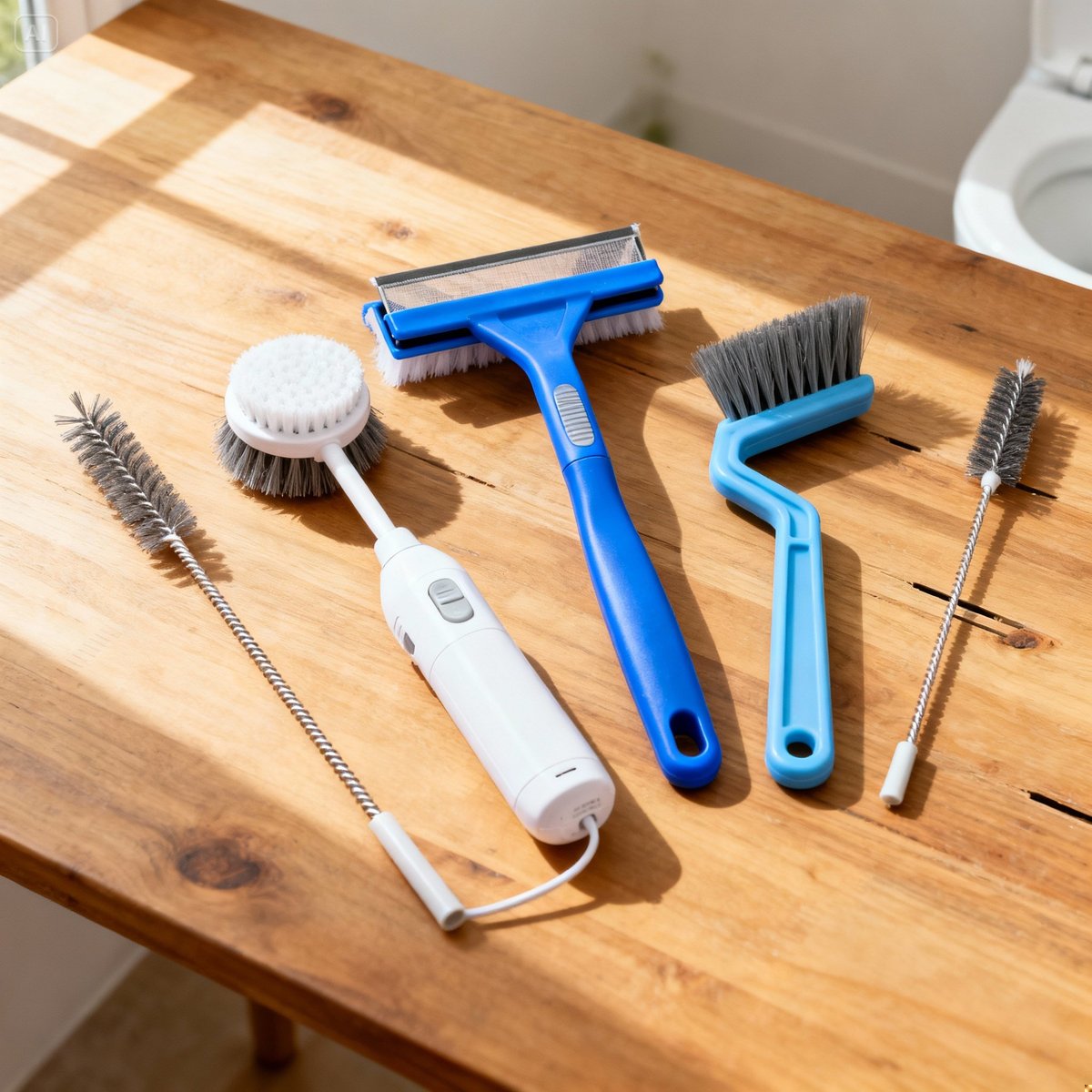
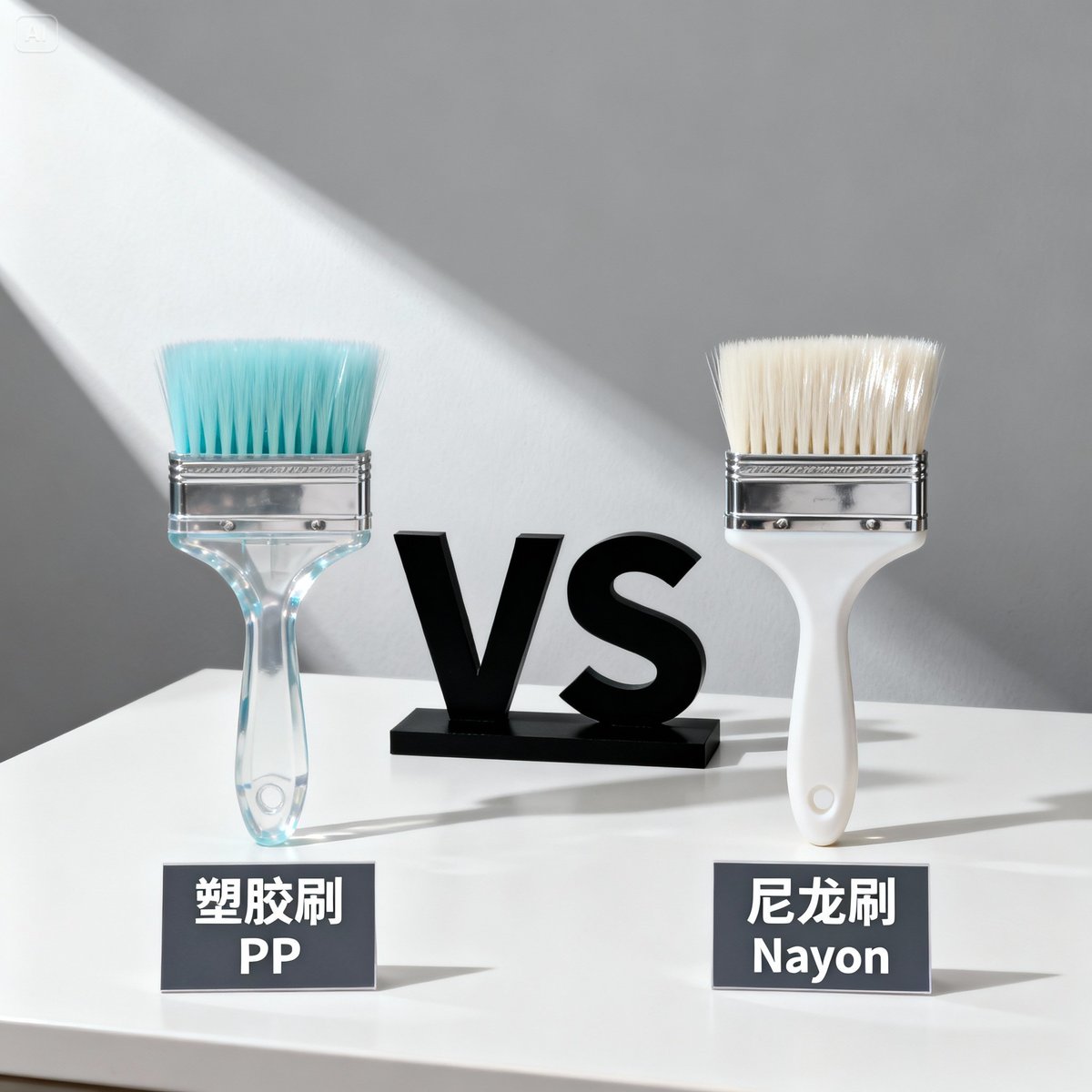
In painting, the hog bristle paint brush has always been the professional painter's tool of choice. Compared with synthetic brushes and foam brushes, a hog bristle brush has outstanding paint pickup, even coverage and durability. But there are many kinds of hog bristle paint brush on the market, so how do you choose the right size, bristle quality and specification? This article looks closely at the advantages of hog bristle paint brushes, what to check when buying, how to use them and how to care for them, and gives purchasing advice for professional painters and painting contractors.
Why choose a hog bristle paint brush? 7 professional advantages
1. Large paint pickup, fewer dips
The porous structure of hog bristle holds a large amount of paint, so one dip covers a larger area and work efficiency rises by 30-40%. A synthetic brush has to be dipped frequently; a hog bristle brush is especially suited to painting large wall areas.
2. Even coverage, a flat surface with no brush marks
Hog bristle is soft and springy, and it releases paint evenly as you brush, avoiding uneven thickness and visible brush marks. A professional painter using a hog bristle brush can achieve a flatness close to spray painting.
3. Highly durable, long service life
In normal use a good hog bristle brush lasts for 100-200 painting jobs (depending on how it is cared for), far more than the 30-50 of a synthetic brush. The initial investment is higher, but the long-term cost is lower.
4. A wide range of uses with oil-based coatings
A hog bristle brush is best suited to:
- ✅ Oil-based paint (alkyd enamel, wood lacquer)
- ✅ Varnish, oil-based primer and topcoat
- ✅ Wood stain and wood oil
For water-based paint (latex paint, masonry paint), a nylon / polyester synthetic brush is recommended instead: synthetic filament does not absorb water and does not deform easily, so it applies the paint more consistently.
5. High precision in detail work
Hog bristle lets you control the painted area precisely, which suits:
- Trimming the edges of door and window frames
- The line where ceiling meets wall
- Detail work on skirting boards
- Fine painting of woodwork and furniture
6. Natural material, no chemical emissions
Hog bristle is a natural protein fiber with no chemical additives. It gives off no odor during work, which is kinder to both the painter and the people living in the home.
7. A comfortable handle, no fatigue over long jobs
A good hog bristle brush has a wooden or bamboo handle that is comfortable to hold and well balanced, so the hand does not tire easily over long painting sessions. It is suited to professional contract work.
Hog bristle paint brush vs other tools: a full comparison
| Item compared | Hog bristle brush | Synthetic brush | Foam brush | Roller brush |
|---|---|---|---|---|
| Paint pickup | ⭐⭐⭐⭐⭐ | ⭐⭐⭐ | ⭐⭐ | ⭐⭐⭐⭐ |
| Evenness of coverage | ⭐⭐⭐⭐⭐ | ⭐⭐⭐ | ⭐⭐⭐⭐ | ⭐⭐⭐ |
| Durability | ⭐⭐⭐⭐⭐ | ⭐⭐⭐ | ⭐⭐ | ⭐⭐⭐ |
| Detail work | ⭐⭐⭐⭐⭐ | ⭐⭐⭐⭐ | ⭐⭐ | ⭐ |
| Efficiency on large areas | ⭐⭐⭐⭐ | ⭐⭐⭐ | ⭐⭐ | ⭐⭐⭐⭐⭐ |
| Difficulty of cleaning | Medium | Easy | Easy | Medium |
| Price | Higher | Cheap | Cheapest | Medium |
| Suitable paint types | Oil-based paint, stain, varnish | Best with water-based paint | Water-based paint only | Best with water-based paint |
Conclusion: the hog bristle brush has the best overall performance and suits professional work where quality matters; the roller brush suits fast work on large areas; the synthetic brush suits a limited budget or a one-off job.
Hog bristle paint brush size guide | 1-4 inch explained
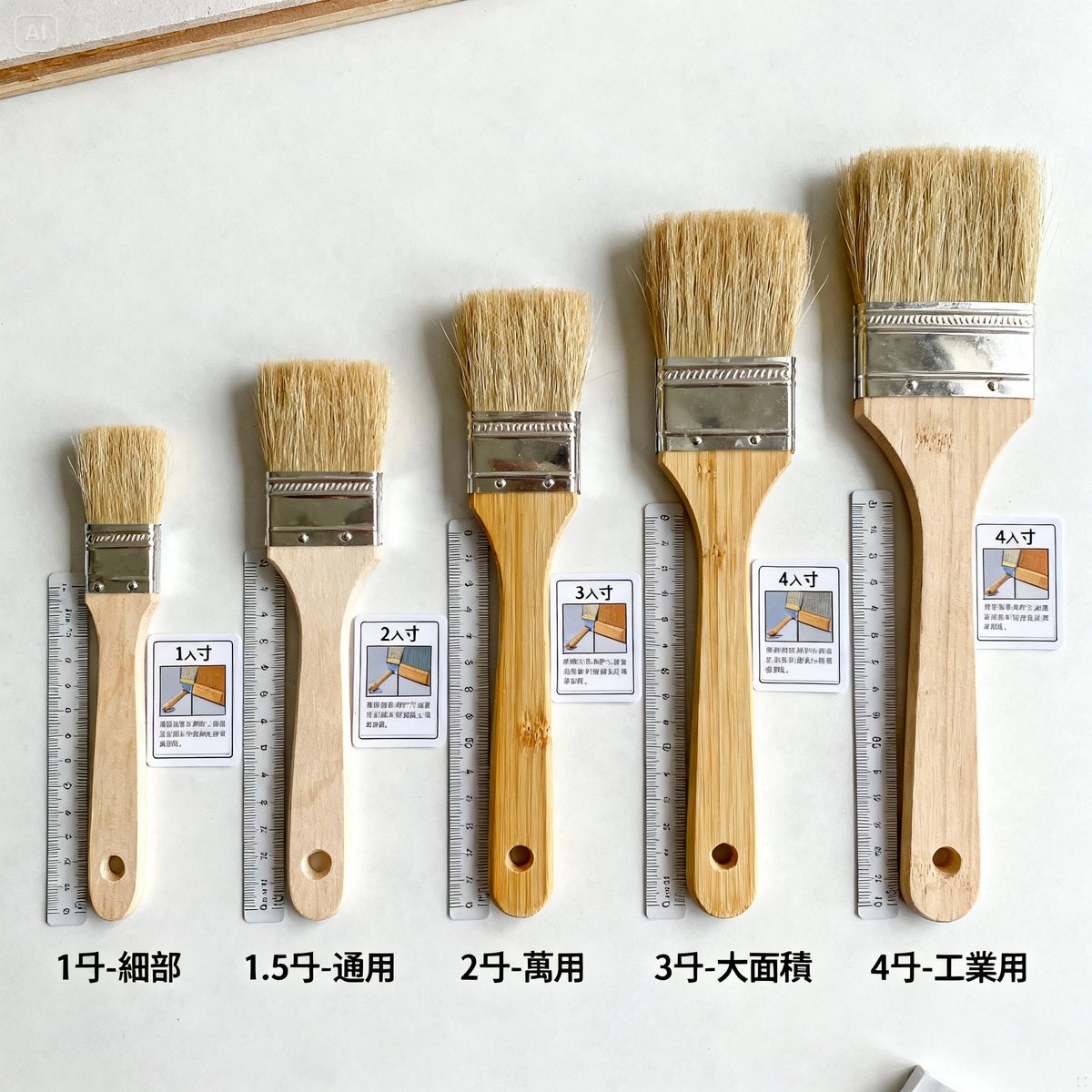
Common sizes and where they are used
| Size | Brush width | Where it is used | Recommended for |
|---|---|---|---|
| 1 inch | 25 mm | Very fine detail | Narrow window frame edges, carved woodwork, trim lines |
| 1.5 inch | 38 mm | General detail | Door frame edges, skirting boards, around switch plates |
| 2 inch | 50 mm | All-purpose size | Door panels, window frames, medium-sized woodwork, wall touch-ups |
| 2.5 inch | 63 mm | Medium areas | Room doors, cabinets, medium-sized walls |
| 3 inch | 75 mm | Large areas | Walls, ceilings, large furniture |
| 4 inch | 100 mm | Extra-large areas | Exterior walls, industrial plants, large commercial spaces |
Choosing the bristle length
- Short (30-40 mm): for thin coats, fine control and smooth surfaces
- Medium (40-50 mm): the all-purpose length, suitable for most painting jobs
- Long (50-60 mm): for rough surfaces and jobs that need a large paint pickup
The set professional painters recommend
Residential renovation:
- 2 inch hog bristle brush x 2 (the main working brush)
- 1.5 inch hog bristle brush x 1 (detail work)
- 3 inch hog bristle brush x 1 (large wall areas)
Commercial spaces:
- 3 inch hog bristle brush x 3 (main walls)
- 2 inch hog bristle brush x 2 (door and window frames)
- 4 inch hog bristle brush x 1 (large areas)
Woodwork and furniture:
- 1.5 inch hog bristle brush x 2 (detail painting)
- 2 inch hog bristle brush x 2 (flat surfaces)
What to check when buying a hog bristle paint brush | 5 quality criteria
1. Bristle quality: pure hog bristle vs blended
100% pure hog bristle brush
- Advantages: the best paint pickup, the most even coverage, a soft feel
- Disadvantages: a higher price, and it needs proper care
- Suitable for: high-quality work, fine painting of woodwork, professional painters
Hog bristle + synthetic blend
- Advantages: an affordable price, good spring, easy to clean
- Disadvantages: slightly weaker paint pickup, slightly lower durability
- Suitable for: ordinary residential work, limited budgets, DIY use
Blend ratios for reference:
- 80% hog bristle + 20% synthetic: close to the performance of pure bristle at a slightly lower price
- 50% hog bristle + 50% synthetic: a balance of performance and price
- 30% hog bristle + 70% synthetic: entry level, suitable for DIY
2. How the bristles are fixed
- Metal ferrule: the most common, highly durable, and the bristles do not come out easily (recommended)
- Glue: cheap but loosens easily, not suitable for professional work
- Brass nails: traditional craftsmanship, strong and durable, used on high-end products
How to check: pull the bristles gently. A good brush should not shed noticeably.
3. Handle material and design
| Material | Advantages | Disadvantages | Suitable for |
|---|---|---|---|
| Wooden handle | Comfortable grip, durable, good look and feel | Heavier, must be kept dry | Professional painters |
| Bamboo handle | Light, environmentally friendly, resists moisture well | Slightly less strong | General contract work |
| Plastic handle | Light, waterproof, cheap | Poor grip, breaks easily | DIY use |
Ergonomic design: choose a brush whose handle is curved where you hold it; it is more comfortable over long periods of use.
4. Bristle density and spring
How to test:
- Density test: press the brush face; the bristles should be dense, not loose
- Spring test: bend the bristles and let go; they should quickly return to shape
- Evenness: the bristles should be uniform in length
5. Brand reputation and place of origin
Advantages of brushes made in Taiwan:
- Stable quality, suited to local working habits
- Good after-sales service, easy to reorder
- Supports local industry and reduces the carbon footprint
YC Brushes, over 40 years of brush-making experience:
- Carefully selected, good-quality hog bristle
- Traditional craftsmanship combined with modern technology
- Custom sizes and specifications
- Volume purchase discounts for painting contractors
Are you a professional contractor with a purchasing requirement?
YC Brushes offers professional contractors a custom hog bristle brush manufacturing service, including:
- Special sizes made to order (anything from 0.5 to 6 inch)
- Adjusted bristle length and density
- Printing of your company logo
- Discounted prices for volume purchases
- Order quantities and lead times quoted per specification; please email us with your requirements
📞 Contact us now: +886-2-2988-2721 📧 Email: [email protected] 🌐 See our products: YC Brushes product range
Professional painting technique | Getting the most out of a hog bristle brush
Preparation before use (essential for a new brush)
Step 1: Remove loose hairs
A new hog bristle brush has a few loose hairs, which must be dealt with before use:
- Tap the brush face lightly with your fingers to shake out the loose hairs
- Rinse the bristles with warm water 2-3 times
- Comb the bristles with your fingers along their length
- Let the brush dry completely before using it
Step 2: Breaking in the brush (conditioning)
A professional painter's trick:
- Soak the bristles in warm water for 10-15 minutes (to soften them)
- Shake off the excess water (do not dry the brush completely)
- Use the brush slightly damp; it picks up paint better
Note: this method does not apply to oil-based paint, for which the bristles should be kept dry.
Correct brushing technique (5 key points)
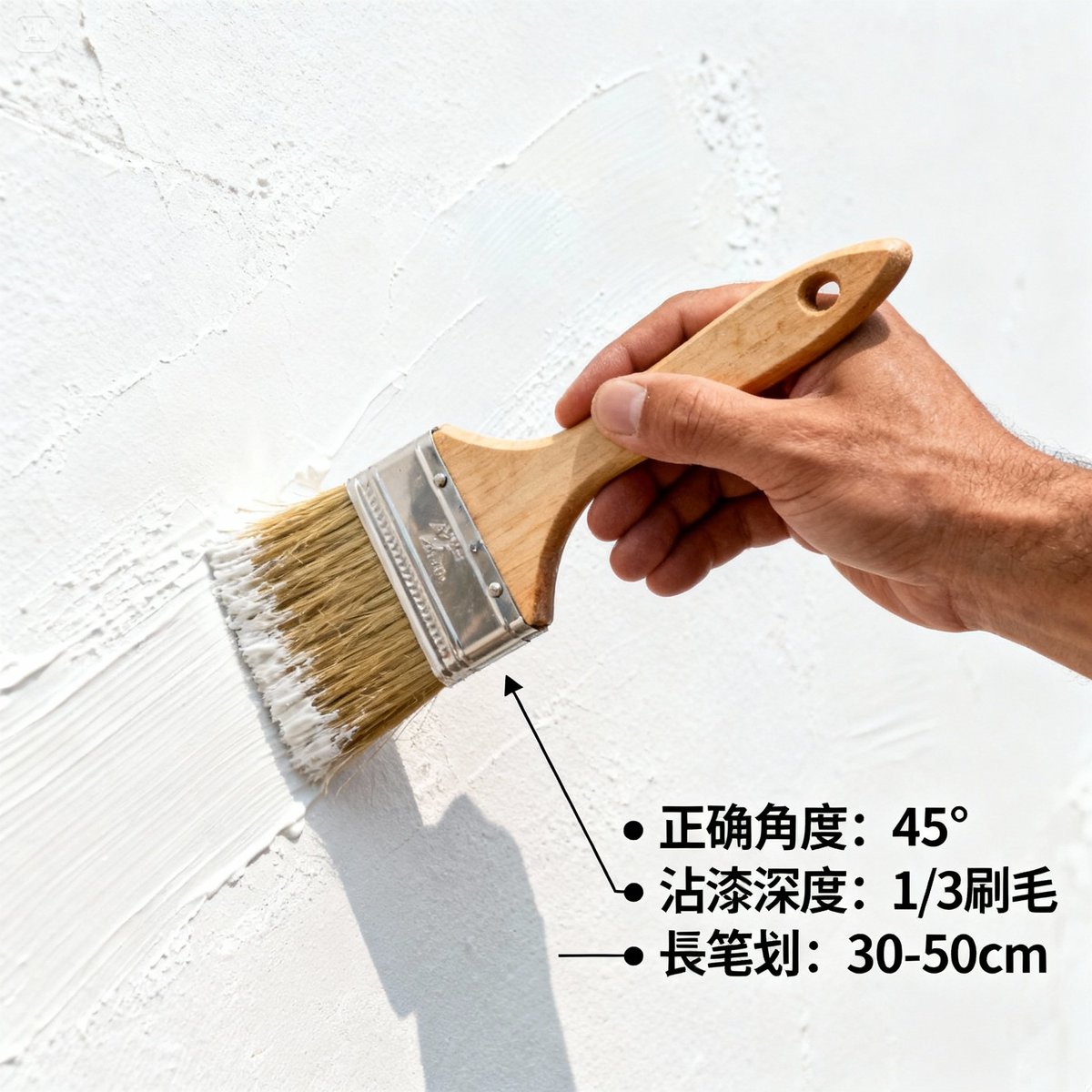
1. Dipping depth: 1/3 of the bristle length
Right: dip only the front 1/3 of the bristles, so that paint does not reach the root Wrong: dipping the whole length of the bristles into the paint → hard to clean, paint wasted
2. Scrape off the excess paint
After dipping, scrape the brush lightly on the rim of the paint can to remove excess paint and avoid drips.
3. Brushing direction: long strokes, even pressure
- Each stroke is about 30-50 cm long
- Apply even pressure and do not press hard
- Hold the bristles at a 45° angle to the wall
4. Cross-brushing (a professional technique)
- First pass: brush vertically
- Second pass: brush horizontally
- Third pass: brush lightly in one direction (to level the brush marks)
This method gives the most even coverage.
5. Cutting in at edges
Tools that help: use masking tape or an edging tool Technique: touch the edge lightly with the side of the bristles, steady your hand and move slowly
Common painting mistakes and how to avoid them
| Mistake | Result | What to do instead |
|---|---|---|
| Too much paint on the brush | Drips, uneven coverage | Dip only 1/3 of the bristle length |
| Pressing too hard | Visible brush marks, deformed bristles | Light pressure, several thin coats |
| Brushing too fast | Air bubbles, an uneven coat | Slow and even, keep a rhythm |
| Brushing in random directions | A rough, uneven surface | One brushing direction, finishing strokes at the end |
| Stopping midway | Visible lap marks | Keep a wet edge and join up quickly |
Cleaning and caring for a hog bristle paint brush | Tips for a longer service life
Washing out water-based paint (latex paint, masonry paint)
Wash immediately (within 30 minutes of finishing work)
- Rough clean: wipe off most of the paint with newspaper or a rag
- Water wash: rinse the bristles with warm water while combing them with your fingers
- Deep clean: add a small amount of neutral cleaner and rub gently
- Rinse clean: make sure no paint or cleaner is left
- Tidy the bristles: comb them neatly with your fingers along their length
- Dry: hang the brush with the bristles facing down in a ventilated place to air dry
Time: about 10-15 minutes
Washing out oil-based paint (alkyd enamel, wood lacquer)
Washing with solvent (mineral spirits, lacquer thinner)
- Rough clean: wipe off most of the paint with newspaper
- Solvent soak: soak the bristles in solvent for 3-5 minutes
- Scrub: clean the bristles with your fingers or an old toothbrush
- Change the solvent: pour away the dirty solvent and wash once more in fresh solvent
- Neutral wash: wash out the remaining solvent with neutral cleaner + warm water
- Dry: hang the brush to dry with the bristles facing down
Note: use solvents only with good ventilation, and avoid breathing in too much of the vapor.
Storage
Short-term storage (to be used again within 1-3 days)
Water-based paint:
- After washing, wrap the bristles in a damp cloth
- Seal in a plastic bag and keep in the refrigerator
- Let the brush return to room temperature before use
Oil-based paint:
- Immerse the bristles completely in solvent or paint
- Wrap in a plastic bag to prevent evaporation
- Wipe off the solvent before use
Long-term storage (more than 1 week)
- Wash completely clean and dry
- Wrap the bristles in newspaper or kraft paper (to keep their shape)
- Keep in a dry, ventilated place
- Avoid putting weight on the bristles or squeezing them
8 tips for a longer service life
- Use a synthetic brush for water-based paint: natural bristle absorbs water and deforms, so use a nylon / polyester synthetic brush for water-based paint and keep the hog bristle brush for oil-based paint
- Do not bend the bristles: do not apply sideways pressure; keep the bristles upright
- Wash immediately: do not let paint dry on the bristles
- Clean thoroughly: always wash the brush clean after every use
- Dry correctly: hang with the bristles facing down so that water does not collect at the root
- Avoid high temperatures: do not use hot water or a hair dryer to speed up drying
- Regular conditioning: after every 10 uses, treat the bristles with hair conditioner (to soften them)
- One brush, one job: use separate brushes for water-based and oil-based paint
Want the full care method for natural bristle brushes? See The complete guide to caring for and cleaning natural bristle brushes | Tips for a longer service life.
Hog bristle brushes recommended by purpose | Professional applications
Painting home interiors
Recommended set:
- 3 inch pure hog bristle brush (main brush for walls)
- 2 inch hog bristle brush (door and window frames, skirting boards)
- 1.5 inch hog bristle brush (detail work)
Suitable paint types: oil-based paint (alkyd enamel); for the latex paint and masonry paint commonly used on interior walls, a nylon / polyester synthetic brush is recommended instead
Painting woodwork and furniture
Recommended set:
- 2 inch short pure hog bristle brush (flat surfaces)
- 1.5 inch pure hog bristle brush (detail work)
- 1 inch detail brush (carving, lines)
Suitable paint types: wood lacquer, wood oil, wood stain
Exterior wall painting
Recommended set:
- 4 inch long hog bristle brush (large areas)
- 3 inch hog bristle brush (medium areas)
- 2 inch hog bristle brush (window frames, around pipes)
Suitable paint types: exterior wall paint, waterproof paint
Painting industrial equipment
Recommended set:
- 3-4 inch blended brush (large metal surfaces)
- 2 inch hog bristle brush (details and corners)
Suitable paint types: anti-rust paint, metal paint, industrial paint
DIY home repairs
Recommended set:
- 2 inch blended brush (all-purpose, the best value for money)
- 1.5 inch hog bristle brush (touch-ups)
Suitable paint types: oil-based paint, wood lacquer (for latex paint and masonry paint, a nylon / polyester synthetic brush is recommended instead)
FAQ
Is a hog bristle paint brush suitable for beginners?
Yes, but we suggest starting with a 2 inch blended brush. A hog bristle brush requires the right dipping depth and pressure, and a beginner may need 2-3 practice sessions to get the hang of it. Try practicing on a scrap board first to get a feel for the brush.
How long does a hog bristle brush last?
It depends on how often it is used and how it is cared for. A professional painter who uses the brush every day and cleans and cares for it correctly can use it for 6-12 months (about 100-200 jobs). A DIY user who looks after it properly can use it for 2-5 years.
Can the same brush be used for water-based and oil-based paint?
It is not recommended. A hog bristle brush is best suited to oil-based paint, and a nylon / polyester synthetic brush is recommended for water-based paint; even with the same type of brush, mixing them tends to cause:
- Leftover solvent that affects the water-based paint
- Difficult cleaning, which shortens the life of the brush
- Possible chemical reactions that affect the coating
We suggest keeping them separate: a synthetic brush for water-based paint and a hog bristle brush for oil-based paint.
Are there discounts for contractors buying in volume?
Yes! YC Brushes offers purchase discounts for professional contractors:
- 10 brushes or more: 10% off (90% of list price)
- 50 brushes or more: 15% off (85% of list price)
- 100 brushes or more: 20% off (80% of list price), with custom service available
📞 Business purchasing line: +886-2-2988-2721 (please mention that you are a contractor and a dedicated member of staff will help you)
How do I know when a hog bristle brush should be replaced?
Replace it when any of these 5 things happens:
- Bristles falling out in large numbers: more than 10 bristles shed with each use
- Bristles splayed and out of shape: they will not stand upright again, which affects evenness of coverage
- Heavy paint build-up at the root: it cannot be washed clean and the bristles turn stiff
- Loose metal ferrule: the bristles separate from the handle
- Clearly weaker paint pickup: frequent dipping is needed and efficiency drops
What is the difference between a hog bristle brush and a goat hair brush?
The main differences are:
- Hog bristle brush: stiffer, good spring, suitable for general painting, affordable
- Goat hair brush: extremely soft, the finest coverage, suitable for high-grade wood lacquer, expensive
A hog bristle brush is enough for ordinary residential and commercial work; a goat hair brush is worth considering for fine furniture finishing.
Does a hog bristle brush shed the first time it is used?
That is normal. A new brush has a few loose hairs (short hairs not fully fixed during manufacturing), and rinsing it with warm water 2-3 times before use improves this greatly. If it keeps shedding heavily (more than 20 bristles), it is a quality problem.
Is there a difference between using a hog bristle brush in winter and in summer?
There is a slight difference:
- Winter: the bristles are stiffer; we suggest soaking them in warm water for 5 minutes before use to soften them
- Summer: the bristles are softer, pick up paint well and dry quickly after washing
Neither makes much difference; just use the brush normally.
Can a hog bristle brush be used with special coatings (such as chalkboard paint or magnetic paint)?
Yes. A hog bristle brush suits most coatings, including:
- ✅ Chalkboard paint, magnetic paint
- ✅ Metal paint, anti-rust paint
- ✅ Primer and topcoat
- ✅ Wood lacquer, wood oil
It is not suitable for extremely viscous or fast-drying special coatings, though; ask the coating manufacturer which tool it recommends.
How do I avoid brush marks with a hog bristle brush?
5 techniques:
- Choose the right bristle length: long bristles for rough surfaces, short bristles for smooth surfaces
- Several thin coats: apply a thinner coat each time and build up 2-3 coats
- Cross-brush: vertical → horizontal → leveling strokes in one direction
- Keep a wet edge: join up quickly and avoid brushing again over areas that are already half dry
- Finishing strokes: light, long strokes in the same direction to level the surface
Summary | Why choose YC Brushes hog bristle paint brushes?
Over 40 years of professional brush-making experience
Since it was founded in 1985, YC Brushes has focused on manufacturing natural bristle brushes and has built up over 40 years of skill and experience. Our hog bristle paint brushes are widely trusted by professional painters, painting contractors and DIY enthusiasts.
Carefully selected raw material, assured quality
- Selected good-quality hog bristle: a stable source, strictly graded for quality
- Traditional craftsmanship + modern technology: bristles sorted by hand + fixed precisely by machine
- A defect rate below 1%: strict quality inspection before shipment ensures the quality of every brush
Flexible custom service
- ✅ Special sizes made to order (0.5-6 inch)
- ✅ Adjusted bristle length and density
- ✅ Custom blend ratio (pure bristle or blended)
- ✅ Choice of handle material (wood, bamboo, plastic)
- ✅ Printing of your company logo
Volume purchase discounts for contractors
- Lead times: order quantities and lead times are quoted per specification; please email us with your requirements
- Batch discount: discounted prices for 10 brushes or more
- Long-term cooperation: stable supply, transparent prices
- Professional advice: help in choosing the most suitable brush specification
Full after-sales service
- Advice on using the product
- Guidance on cleaning and care
- Fast exchange service (for quality problems)
- Exclusive offers for long-term customers
The first choice for professional contractors, painters and renovation companies
📞 Phone: +886-2-2988-2721 📧 Email: [email protected] 🌐 Official website: YC Brushes 📍 Factory address: Sanchong District, New Taipei City, Taiwan (visits by appointment are welcome)
Contact us now for exclusive contractor prices!
Recommended articles
- The complete guide to bristle brushes | The properties and many uses of natural hog bristle brushes
- Where to buy a bristle brush? 5 purchase channels compared on price and quality
- The complete guide to caring for and cleaning natural bristle brushes | Tips for a longer service life
- Horsehair brush vs bristle brush | Materials, uses and prices explained
- Uses of goat hair (wool) brushes | A complete guide to applications from baking to industry
References
- Summary of over 40 years of brush-making experience at YC Brushes (2025)