You bought a good natural bristle brush, and it wore out quickly because it was not cleaned and cared for properly? Many people have the same problem. Whether it is a bristle brush for body care, a cleaning brush for cast iron cookware or a hog bristle brush for painting, correct cleaning and care can greatly extend its service life. This article covers the washing methods for bristle brushes used for different purposes, drying techniques, the key points of everyday care and 10 tips for a longer life, so that your bristle brush stays like new and gives you real value for money.
Why clean and care for a bristle brush regularly?
5 problems caused by not cleaning
1. Bacteria build up and affect your health
Body care brushes: a brush that is not cleaned accumulates dead skin, oil and sweat and becomes a breeding ground for bacteria. Dry brushing the body with a dirty brush may lead to:
- Skin infection, folliculitis
- More pimples and blackheads
- Skin allergy and inflammation
2. The brush works less well
Kitchen cleaning brushes: built-up grease makes the bristles stiff and takes away their spring, so cleaning performance drops sharply. Paint brushes: leftover paint that dries in the brush makes the bristles clump together, and the brush can no longer apply paint evenly.
3. Service life gets shorter
Grease, paint and dust that build up at the root of the bristles will:
- Damage the structure that holds the bristles in place
- Make the bristles break and fall out sooner
- Leave the handle damp, moldy and cracked
The figures compared:
- Cleaned and cared for regularly: a service life of 2-5 years
- Not cleaned regularly: a service life of 3-6 months
4. Odor
A body brush or kitchen brush that is not cleaned develops an unpleasant smell, which spoils the experience of using it.
5. Higher long-term cost
The cost of replacing brushes frequently is far higher than the time spent on regular cleaning and care.
Cost comparison (taking a body care brush as an example):
- Regular care: the same brush for 3 years, NT$800 per 3 years (about NT$267 per year)
- No care: a new brush every half year, 6 brushes in 3 years, NT$800 × 6 = NT$4,800 per 3 years
Return on investment: spend 10 minutes a week on cleaning and save about NT$4,000 over 3 years.
How to wash bristle brushes used for different purposes
Washing a bristle brush for body care (the most important)
A body care brush touches the skin every day, so it has the highest cleaning requirements.
Quick clean (1-2 times a week)
What to prepare:
- Warm water (40°C or below)
- A neutral shampoo or body wash
- A clean towel
Steps:
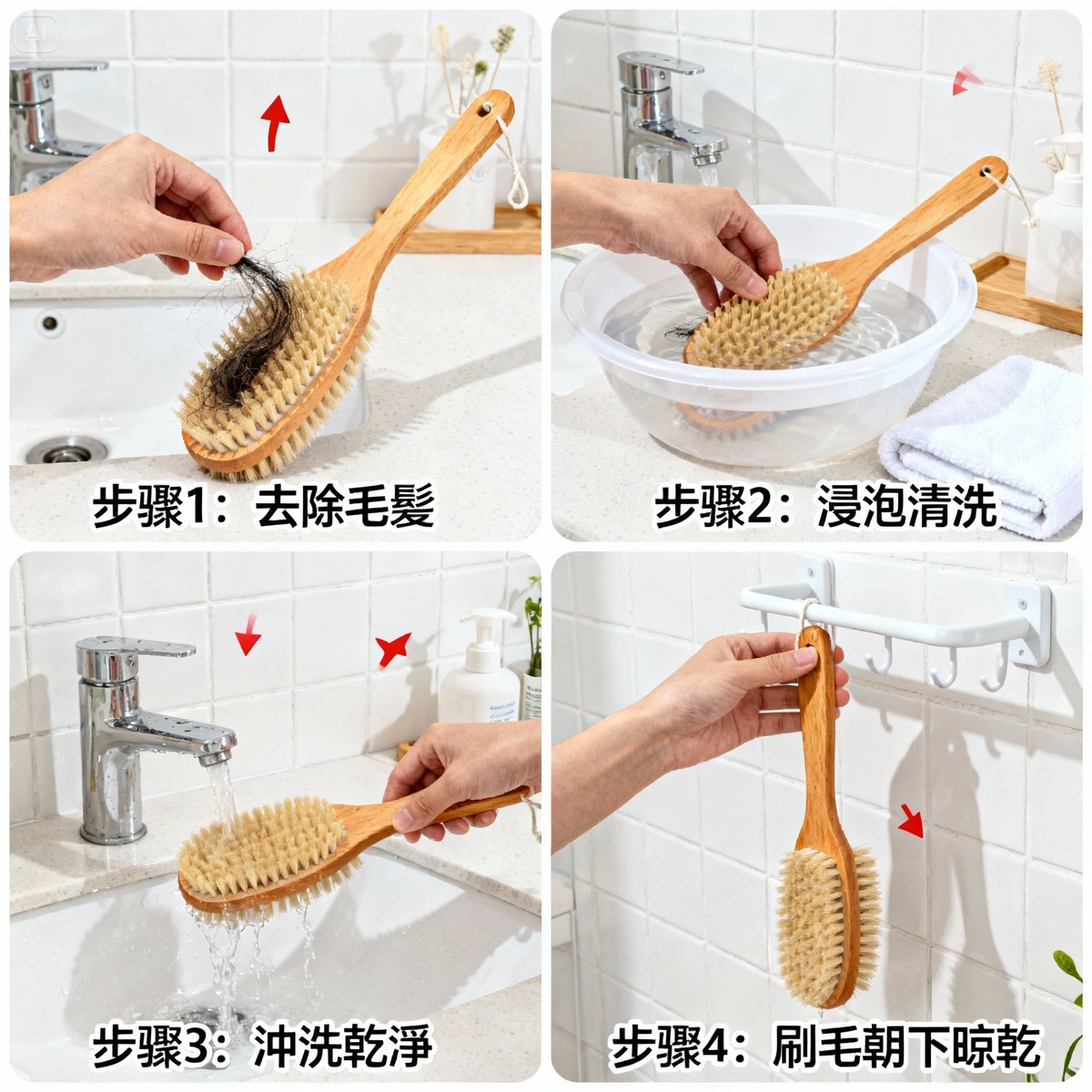
- Use your fingers or a brush-cleaning comb to remove the hair and dead skin caught between the bristles
- Add a small amount of shampoo to the warm water and stir until it foams
- Dip the bristles into the water and gently rub the brush face (keep the handle out of the water)
- Rinse with clean water until no foam is left
- Press with the towel to soak up the water
- Leave the brush with the bristles facing down in a ventilated place to dry
Time: about 5-8 minutes
Deep wash (once a month)
Cleaning recipe:
- 500 ml of warm water
- 50 ml of white vinegar (removes oil and odor)
- 1 teaspoon of baking soda (removes dead skin, removes odor)
Steps:
- Mix the cleaning recipe and soak the bristles for 10-15 minutes (do not soak the handle)
- Brush the bristles gently with a soft toothbrush to remove deep-seated dirt
- Rinse thoroughly with clean water 3-5 times
- Press with the towel to soak up the water
- Leave in a ventilated place to air dry (24-48 hours)
Result after a deep wash: the bristles are soft again, there is no odor, and the color is lighter.
Correct drying technique | Avoiding mold and deformation
3 correct ways to dry a brush
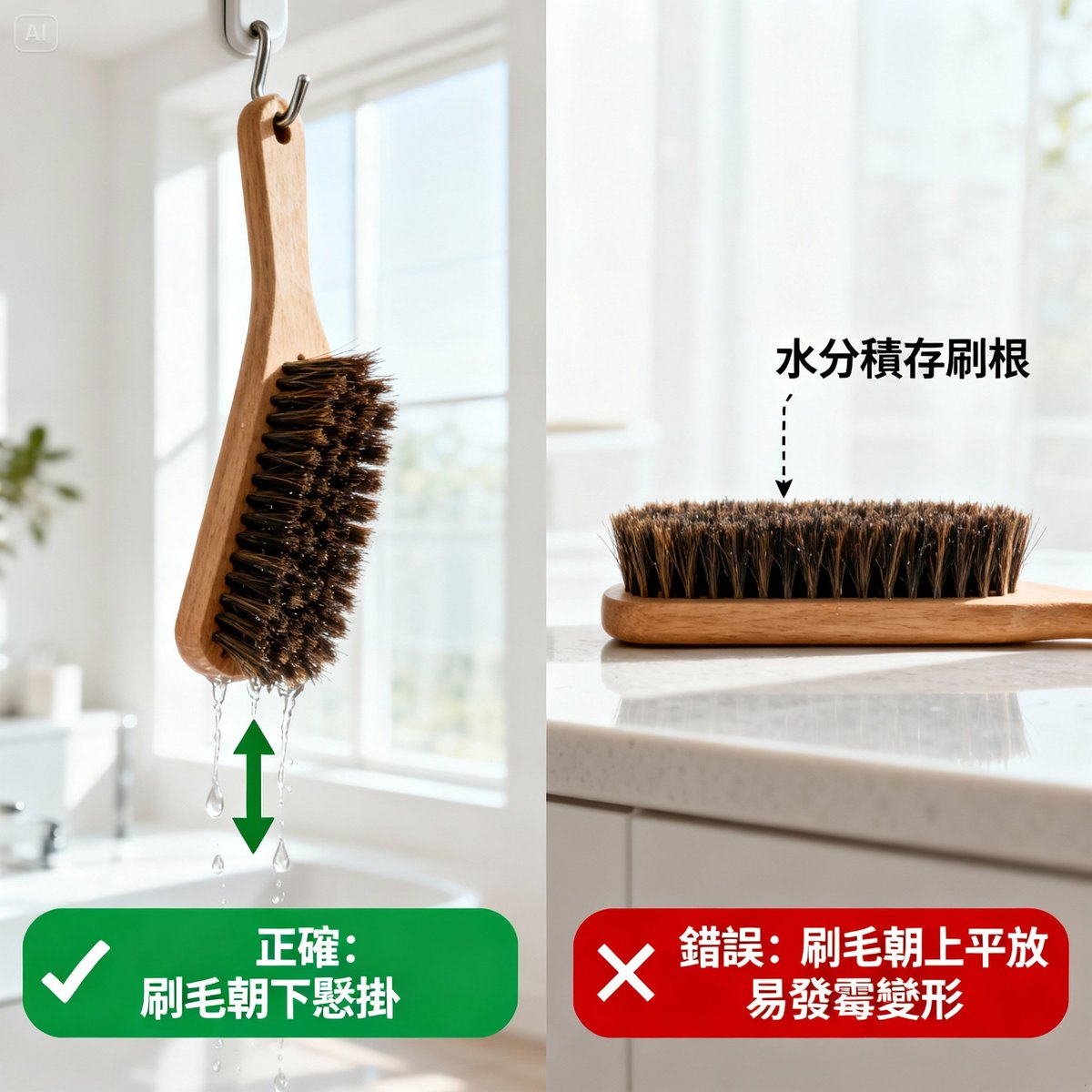
Method 1: Hang it with the bristles facing down (most recommended)
How to do it:
- Hold the handle with a clip or a hook
- Hang the brush with the bristles facing down in a ventilated place
- Make sure the bristles do not touch any surface
Advantages:
- Water runs down naturally and does not collect at the root of the bristles
- The bristles keep their original shape
- Drying is faster and mold is avoided
Method 2: Lay it flat on a ventilated rack (second choice)
How to do it:
- Lay the brush flat on a mesh drying rack
- Keep the bristles in the air (not touching a flat surface)
- Put it in a well-ventilated place
Advantages: suitable for large brushes or when there is no space to hang the brush
Disadvantages: drying is slightly slower
Method 3: Lean it against a wall with the bristles facing up (not recommended, but usable in an emergency)
How to do it:
- Lean the brush against a wall with the handle down and the bristles up
- Only suitable for tidying the brush after it has quickly become half dry
Disadvantages: water collects at the root of the bristles and raises the risk of mold
❌ Wrong ways to dry a brush
- Laid flat with the bristles facing up: water collects at the root → the bristles loosen and mold grows
- Exposed to direct sunlight: the bristles turn stiff, brittle and faded
- Dried with a hair dryer: high temperature destroys the protein structure and shortens the service life
- Dried in a closed space: no ventilation → mold and odor
Time needed to dry completely
- Body care brush: 24-48 hours
- Kitchen cleaning brush: 12-24 hours
- Paint brush (small): 12-18 hours
- Paint brush (large): 24-36 hours
How to judge: press the root of the bristles with a finger. If it does not feel damp at all, the brush is dry.
Everyday care and storage
Care before use
Body care brushes:
- Before the first use, soak in warm water for 5 minutes (to soften the bristles)
- Shake off the water before using
- The bristles will be softer and more comfortable
Paint brushes:
- Before working with water-based paint, soak the brush in warm water (it picks up paint better)
- For oil-based paint, use the brush dry
Care after use
Deal with it right away:
- Wash the brush as soon as possible after use (do not let the dirt dry)
- Dry it thoroughly after washing
- Put it away only when it is completely dry
Storage environment
The best storage conditions:
- ✅ A dry, ventilated place
- ✅ Out of direct sunlight
- ✅ Away from damp environments (the bathroom, inside kitchen cabinets)
- ✅ Bristles facing up or laid flat (so they are not pressed out of shape)
- ❌ Do not seal the brush in a plastic bag (mold grows easily)
Recommended ways to store a brush:
- Hang it in a ventilated wardrobe or storage room
- Put it in a cotton bag or paper bag (so it can breathe)
- Use a dedicated brush storage box (with ventilation holes)
10 tips for a longer service life
Tip 1: Buy a good bristle brush
Invest in quality; it pays off in the long run. A good bristle brush has:
- Bristles that are held tightly and do not fall out easily
- A handle made of a durable material that is not easily damaged
- A service life of 2-5 years in normal use
YC Brushes uses carefully selected hog bristle and traditional craftsmanship, with a defect rate below 1%, and most customers report that their brush is still like new after more than 3 years of use. For what to look for when buying a good bristle brush, see Where to buy a bristle brush? 5 purchase channels compared on price and quality.
Tip 2: Use each brush for its own purpose
One brush, one job. Avoid cross-use:
- Do not use a body care brush to clean cookware
- Do not use the same paint brush for both water-based and oil-based paint
- Do not use a kitchen brush to clean the bathroom
Tip 3: Clean regularly and do not put it off
Recommended cleaning frequency:
- Body care brush: a quick clean 1-2 times a week, a deep wash once a month
- Kitchen cleaning brush: wash immediately after every use
- Paint brush: wash immediately after use (do not put it off)
The principle: the more often a brush is used, the more often it should be cleaned.
Tip 4: Clean gently and avoid over-scrubbing
How much force to use:
- Gently rubbing the brush face is enough
- Do not pull hard on the bristles
- Do not scrub hard with a stiff brush
Choice of cleaner:
- Mainly neutral cleaners (pH 6-8)
- Avoid strongly alkaline or strongly acidic cleaners
- Natural recipes are better still (white vinegar, baking soda)
Tip 5: Dry thoroughly and avoid dampness
Key points:
- Hang the brush to dry with the bristles facing down
- Make sure it is completely dry before putting it away
- A ventilated environment speeds up drying
Tip 6: Avoid high temperatures and direct sunlight
Protective measures:
- Do not leave the brush in direct sunlight
- Do not wash it in hot water (40°C or below is best)
- Do not use a hair dryer or a tumble dryer
Why: hog bristle is a protein fiber, and high temperature destroys its structure and shortens its service life.
Tip 7: Comb the bristles regularly
How often: 1-2 times a month
Method:
- Comb the bristles with a brush-cleaning comb or a wide-tooth comb
- Remove the hair and dust caught between the bristles
- Bring the bristles back into neat alignment
Result: the bristles keep their spring and the brush lasts longer.
Tip 8: Conditioning before and after use
Conditioning recipe (for body care brushes):
- Treat the brush with hair conditioner once every 3 months
- Apply a small amount of conditioner to the bristles
- Leave for 10 minutes, then rinse clean
- After drying, the bristles are softer
Tip 9: Do not soak the handle
Points to note:
- When washing, soak only the bristles
- Do not leave the handle in contact with water for long
- Take particular care with wooden and bamboo handles
The reason: soaking the handle causes:
- The wood to swell and crack
- The bristles to loosen where they are fixed
- Mold and odor
Tip 10: Watch the condition of the brush and replace it in time
Regular check: check the condition of the brush once every 3 months
What to check:
- Are the bristles falling out in large numbers?
- Are the bristles splayed and out of shape?
- Is there heavy build-up at the root of the bristles?
- Is the handle loose or cracked?
If there is an obvious problem, replace the brush in good time so that neither its performance nor your health is affected.
Service life of a bristle brush and when to replace it
Normal service life
| Type of bristle brush | Frequency of use | Normal life |
|---|---|---|
| Body care brush | Used every day | 2-3 years |
| Cast iron cleaning brush | Used every day | 1-2 years |
| Ordinary pot brush | Used every day | 6-12 months |
| Paint brush (professional) | Used frequently | 6-12 months (100-200 uses) |
| Paint brush (DIY) | Used occasionally | 2-5 years |
Factors that affect service life:
- Frequency of use
- Cleaning and care habits
- Quality of the brush
- Whether the brush is used correctly
Replacement signals: 6 indicators
1. Bristles falling out in large numbers
Normal: 1-3 bristles come out with each wash Replacement signal: more than 10 bristles come out with each use
2. Bristles splayed and out of shape
Normal: the bristles stand upright in neat rows Replacement signal: the bristles are badly splayed and will not stand upright again
3. Heavy build-up at the root of the bristles
Normal: regular washing removes the dirt Replacement signal: stubborn dirt and odor remain even after a deep wash
4. Bristles turned stiff or too soft
Normal: the bristles are soft and springy Replacement signal: the bristles have turned stiff (lost their spring) or too soft (lost their support)
5. Damaged handle
Replacement signal:
- A wooden handle that is cracked or moldy
- Bristles separating from the handle
- A loose metal ferrule
6. Clearly poorer performance
Replacement signal:
- Body brush: exfoliation is less effective
- Pot brush: cleaning is less effective
- Paint brush: it picks up less paint and applies it unevenly
Need to replace your bristle brush?
If your bristle brush shows the replacement signals above, we suggest buying a good-quality replacement. YC Brushes supplies natural bristle brushes for many purposes:
- Brushes for body care
- Cast iron cleaning brushes
- Professional paint brushes
- Custom specifications on request
📞 Contact us: +886-2-2988-2721 🌐 See our products: YC Brushes product range
Common care questions answered
Can a bristle brush go in the washing machine?
Absolutely not. The strong agitation of a washing machine will:
- Tear out bristles and make them shed sooner
- Damage the structure that holds the bristles in place
- Knock and damage the handle
- Tangle the bristles and put them out of shape
Always wash by hand, and gently.
How often is it best to wash a bristle brush?
It depends on the purpose:
- Body care brush: a quick clean 1-2 times a week, a deep wash once a month
- Kitchen cleaning brush: wash immediately after every use
- Paint brush: wash immediately after use
- Brushes that are seldom used: wash before use and wash after use
Can a bristle brush be disinfected with hot water?
It is not recommended. Use warm water at 40°C or below. If the brush needs disinfecting, you can use:
- A 5-minute soak in diluted bleach (bleach to water = 1:100)
- Rinse, then dry thoroughly
Bleach is alkaline and can make bristles, which are a protein fiber, brittle and faded, so it is not suitable for routine disinfection; for everyday care, wash with a neutral detergent and dry thoroughly.
What should I do if my bristle brush has gone moldy?
Slight mold can sometimes be saved:
- Soak in diluted bleach (1:100) for 10 minutes (bleach can damage the bristles, so use it only for treating mold)
- Brush off the mold spots with a toothbrush
- Rinse thoroughly with clean water 5 times or more
- Leave to dry in a bright, ventilated place (not in direct sunlight)
- When it is completely dry, smell it; if it still smells moldy, throw it away
Severe mold: replace the brush straight away to avoid a health risk.
What should I do if my bristle brush has turned stiff?
Try softening it:
- Soak in warm water with hair conditioner for 30 minutes
- Gently comb the bristles with your fingers
- Rinse clean and dry completely
- If it has not improved, the bristles have aged and we recommend replacing the brush
The paint has dried in my paint brush. Can it still be saved?
You can try:
- Water-based paint: soak in warm water for 24 hours and brush the paint off with a toothbrush
- Oil-based paint: soak in solvent (mineral spirits) for 24 hours and wash repeatedly
The chance of saving it is not high, though, because the bristles are usually already out of shape. Prevention is better than cure: wash the brush immediately after use.
Can a bristle brush be shared?
A body care brush must never be shared (for hygiene reasons). Brushes for other purposes can be shared, but we suggest:
- Each family member uses a separate brush
- If a brush is shared, wash and disinfect it thoroughly after every use
Can a bristle brush be put in the sun to kill bacteria?
Direct sunlight is not recommended. Sunlight does kill bacteria, but it will make the bristles:
- Stiff and brittle
- Fade and age faster
Drying the brush in a cool, ventilated place is enough.
Does a newly bought bristle brush need washing first?
Yes. A new brush may carry:
- Dust and debris from the manufacturing process
- A few loose hairs (short hairs that are not fully fixed)
First wash: wash 2-3 times with warm water and a small amount of shampoo to remove loose hairs and dust, and let the brush dry before using it.
Caring for a bristle brush is a lot of trouble. Is it worth it?
Absolutely! Invest 10 minutes a week in care and the brush lasts much longer. Taking a body care brush as an example:
- No care: replaced every 6 months, costing NT$4,800 over 3 years
- Regular care: the same brush used for 3 years, costing NT$800
With 10 minutes of care a week, you save about NT$4,000 over 3 years and keep the brush working at its best.
Summary | Care is an investment that pays off
A natural bristle brush is a good long-term investment, and correct cleaning and care lets it stay with you for years and give its best. Remember the 3 principles of care:
- Clean regularly: adjust the frequency to the purpose, and do not put it off
- Dry correctly: hang with the bristles facing down and dry thoroughly
- Store properly: dry and ventilated, away from high temperature and dampness
Invest 10 minutes in care and greatly extend the service life, so that every use is as comfortable and effective as with a new brush.
Further reading
To learn more about the many uses of bristle brushes and how to choose one, we recommend:
- Soft cleaning brush application guide | The best choice for precision cleaning
- The complete guide to bristle brushes for body care | What dry brushing can and cannot do
- The complete guide to cleaning and caring for cast iron cookware | Why does it have to be a bristle brush?
- Hog bristle paint brush buying guide | 7 advantages, choosing a size, painting technique
- Where to buy a bristle brush? 5 purchase channels compared on price and quality
About YC Brushes
YC Brushes has over 40 years of professional brush-making experience. We insist on good natural bristle and combine traditional craftsmanship with modern technology to produce durable, high-quality bristle brushes.
Our commitment
✅ Carefully selected raw material: good hog bristle, strictly graded for quality ✅ Quality assurance: a defect rate below 1%, and most customers use their brush for more than 3 years ✅ Custom service: special sizes and specifications made to order ✅ Professional advice: free advice on buying and care
📞 Contact us: +886-2-2988-2721 📧 Email: [email protected] 🌐 Official website: YC Brushes
Choose YC Brushes, choose quality and expertise.
References
- Summary of over 40 years of brush-making experience and customer feedback at YC Brushes (2025)