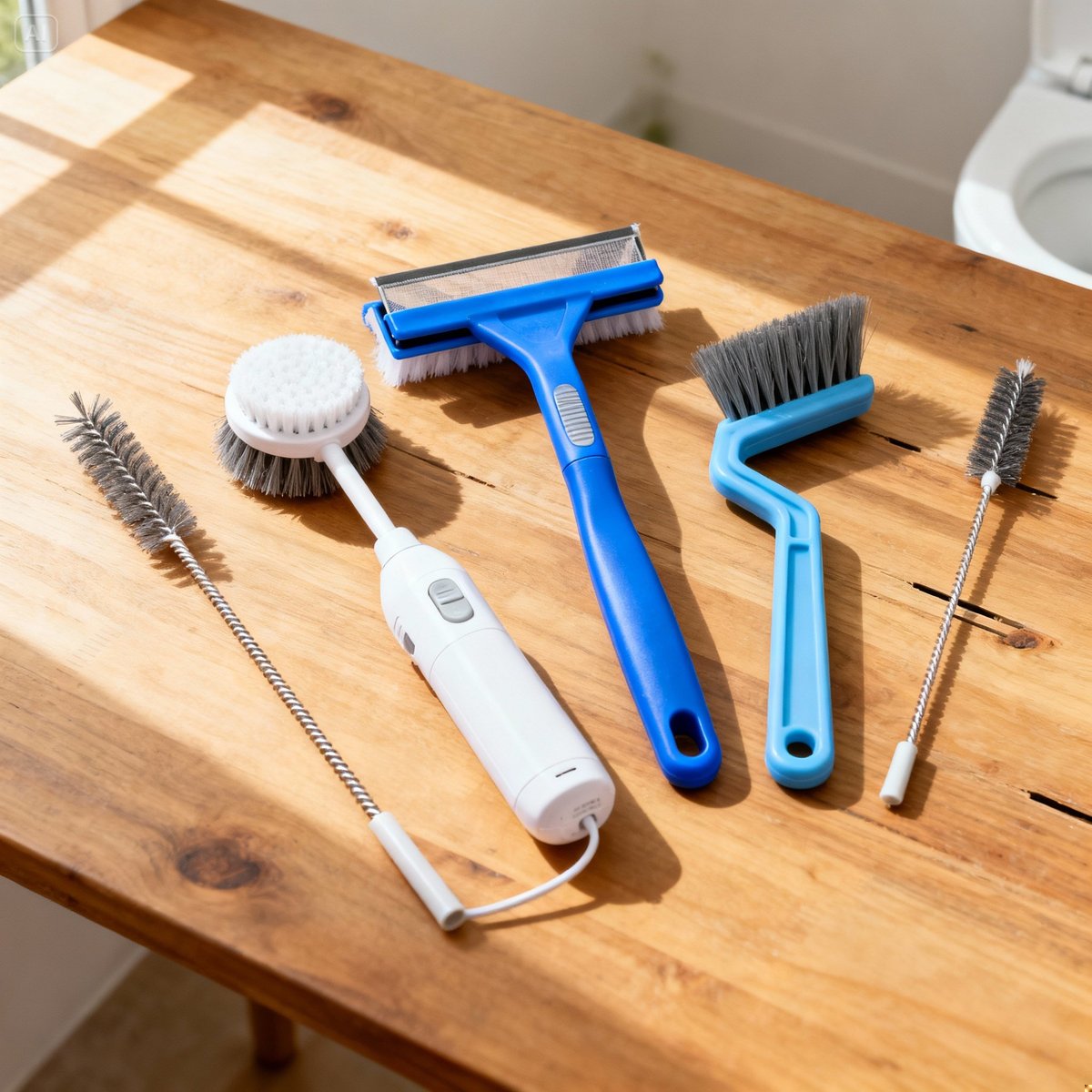
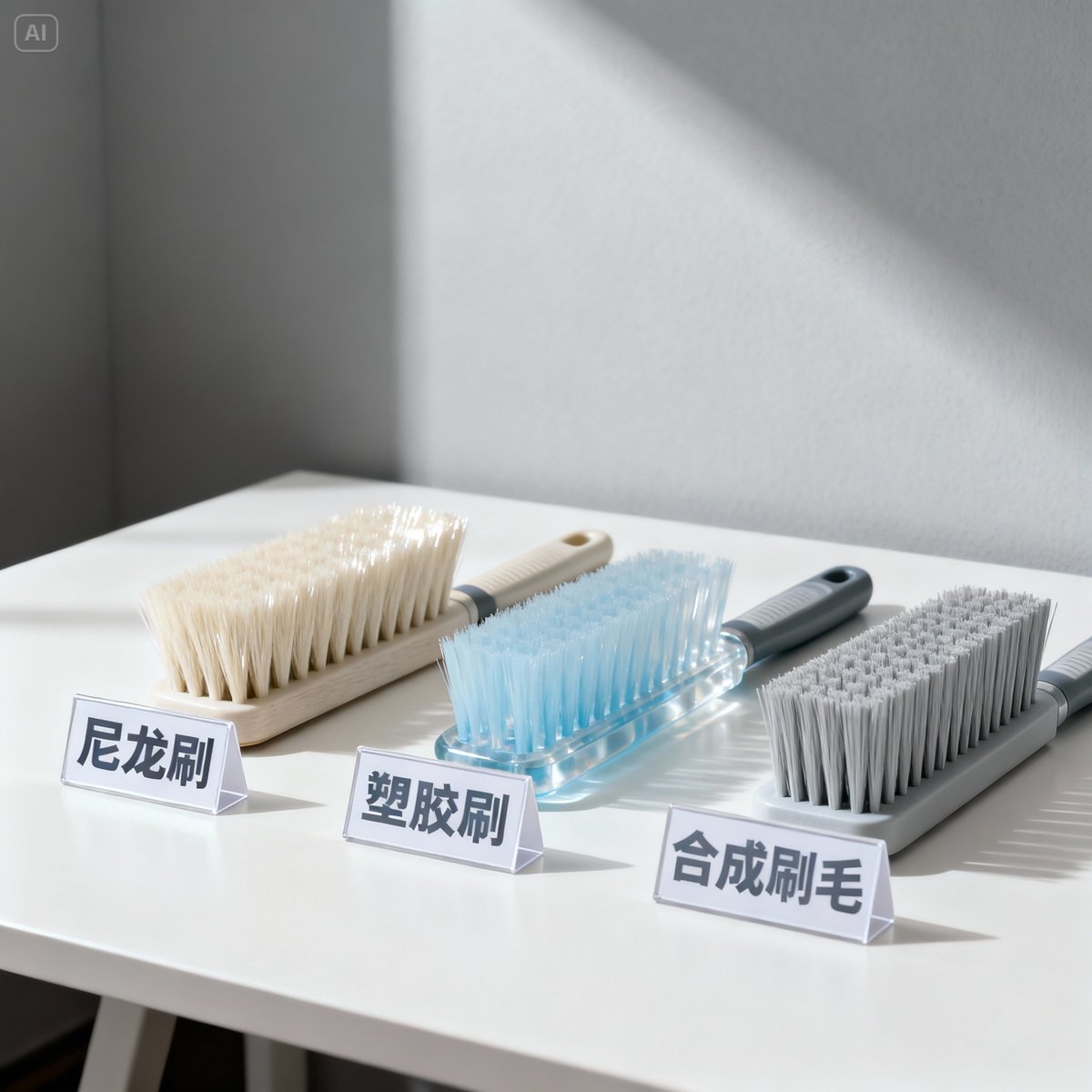
Introduction: why does choosing the right brush material matter so much?
Have you ever bought the wrong brush and had it worn out and scrapped in less than a month? Or spent a lot on a premium brush, only to find that an ordinary plastic brush would have done the job?
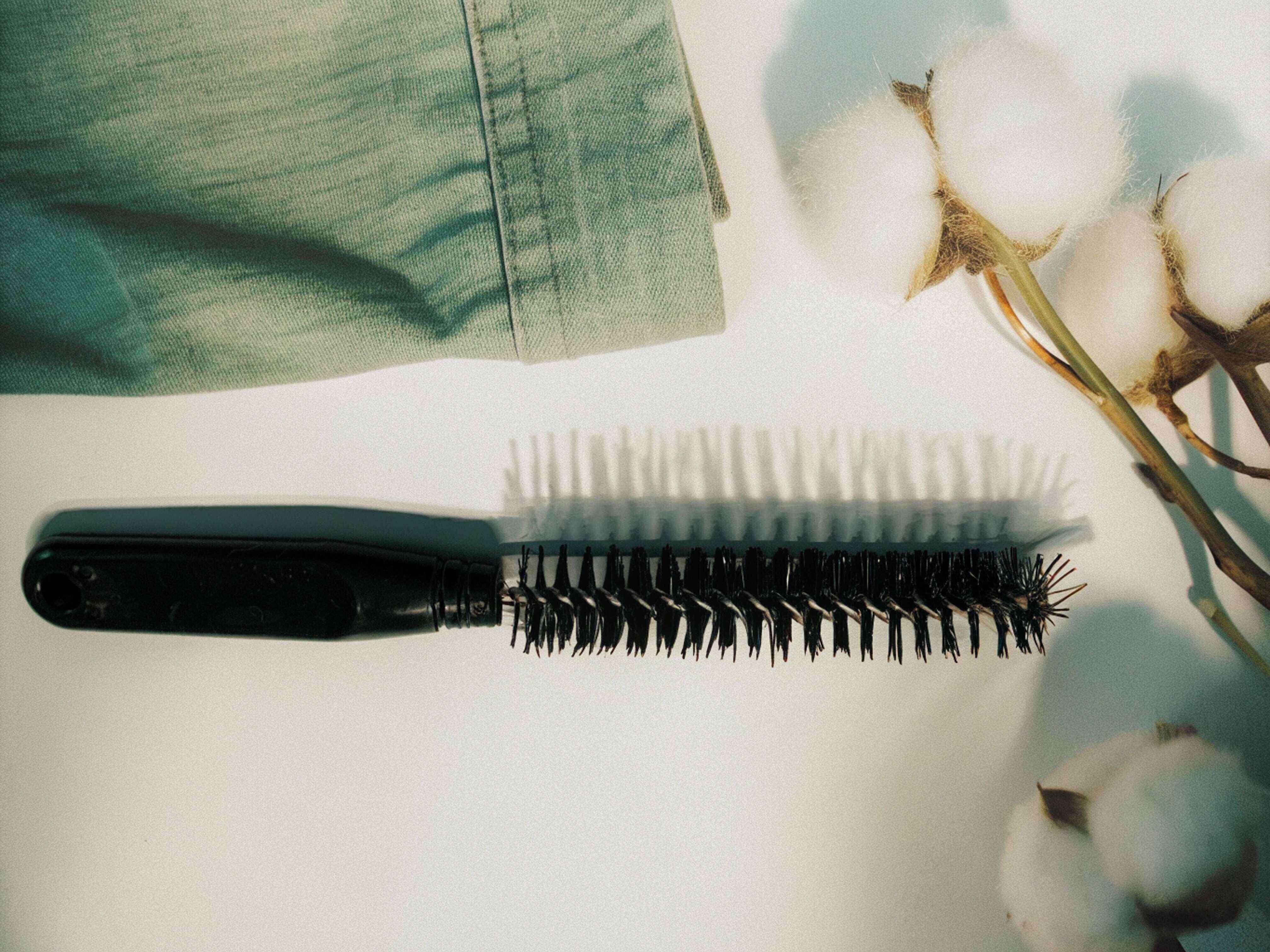
In the industrial brush market, "plastic brushes" and "nylon brushes" are the two materials most often compared. Many buyers are unclear about the difference, and end up choosing the wrong material, wasting budget and even hurting production efficiency.
Plastic brushes are cheap, but are they really not durable? Nylon brushes cost more, but does every application need one? What exactly is the difference between the two, and how should you choose?
This article is written by the manufacturing team at YC Brushes, which has over 40 years of professional experience. It compares the 5 key differences between plastic brushes and nylon brushes in depth, and provides 4 real case analyses, a cost-benefit calculation and a decision tree. After reading it you will know: when should you choose a plastic brush? Which applications must use a nylon brush? How do you avoid the common misconceptions?
Whether you are a factory buyer, an equipment maintenance technician, or a reader who simply wants to learn about brushes, this article will help you make the right choice.
The basics of plastic brushes and nylon brushes
Before comparing them in depth, let us be clear about what these two kinds of brush actually are.
Definition and properties of plastic brushes
What is a plastic brush?
"Plastic brush" is a broad term. It usually refers to brushes made with plastic materials such as PP (polypropylene), PET (polyester) and PE (polyethylene).
The most common is the PP brush (polypropylene brush):
- Chemical name: Polypropylene (PP)
- Resin identification code: No. 5
- Properties: resistant to acids and alkalis, does not absorb water, inexpensive
Physical properties:
- Resistant to chemicals, withstands strong acids and alkalis
- Does not absorb water and dries quickly
- Moderate hardness, suited to general cleaning
- Temperature range: -20°C to 90°C
- Service life: 1-2 years
Common applications:
- Household cleaning brushes (floor brushes, bathroom brushes)
- Industrial sweeping brushes, disc brushes for floor sweepers
- Food-grade brushes (materials compliant with FDA food-contact regulations are available)
- Car wash brushes
Advantages: inexpensive, good chemical resistance Disadvantages: poorer wear resistance, shorter service life
Definition and properties of nylon brushes
What is a nylon brush?
A nylon brush is a brush made with polyamide (PA), also known simply as nylon.
There are two main grades:
- Nylon 6 (PA6): lower cost, higher moisture absorption
- Nylon 66 (PA66): higher strength, better heat resistance
Physical properties:
- Extremely wear resistant, with a long service life
- Good elasticity, does not deform easily, recovers quickly
- Temperature range: -40°C to 120°C
- Higher moisture absorption (about 3-5%)
- Service life: 2-3 years
Common applications:
- Industrial cleaning brushes (nylon wheel brushes, nylon tube brushes)
- Polishing and abrasive brushes
- Deburring brushes
- Brushes for food processing equipment
Advantages: wear resistant and durable, good elasticity, long service life Disadvantages: higher price, degrades in strong acid and alkali environments
Want to know more about the properties of nylon brushes? See our complete guide to nylon brushes, plastic brushes and synthetic filaments.
The core difference in brief
Before the detailed comparison, here is a one-sentence summary:
Plastic brushes (PP) suit limited budgets, general cleaning and chemical environments; nylon brushes suit heavy use, durability and industrial cleaning.
The sections below analyze the 5 key differences between plastic brushes and nylon brushes in depth.
The 5 key differences compared
Let us go through the differences between plastic brushes and nylon brushes one by one.
Difference 1: Wear resistance and service life
Nylon brushes win outright
Test data:
Under the same conditions of use (deburring a metal surface):
- Nylon brush: can be used 1000-2000 times
- Plastic brush (PP): can be used 500-800 times
Why the difference:
Nylon has a tighter molecular structure and higher tensile strength, so it is more wear resistant.
PP plastic is lower in hardness and wears easily under repeated friction.
What this means in practice:
If your application involves long hours and high-frequency use, the total cost of a nylon brush may be lower.
For example:
- A metalworking plant deburring every day → use a nylon brush; it costs more, but it is only replaced once every half year
- Occasional cleaning in an office → use a PP brush; it is cheap, and replacing it once a year is still good value
Difference 2: Heat resistance
Nylon brushes come out ahead
Temperature range comparison:
| Material | Minimum temperature | Maximum temperature | Notes |
|---|---|---|---|
| PP plastic brush | -20°C | 90°C | Softens and deforms above 90°C |
| Nylon 6 brush | -40°C | 90°C | Suited to ordinary environments |
| Nylon 66 brush | -40°C | 120°C | First choice for high-temperature environments |
Applications:
- High-temperature environments (80-120°C) → nylon 66 is required
- Ordinary temperatures (<80°C) → PP or nylon 6 both work
- Chemicals + high temperature → needs assessment; a special material may be required
A real case:
Cleaning steam pipes in a food plant (100°C) → nylon 66 is required; PP would soften.
Difference 3: Elasticity and recovery
Nylon brushes are clearly better
Recovery speed test:
Bend the filament 90 degrees and release it:
- Nylon brush: fully returns to its original shape within 0.5 seconds
- PP brush: takes 1-2 seconds to recover, and may be slightly deformed
Why does elasticity matter?
- Cleaning performance: filament with good elasticity reaches deep into gaps
- Service life: filament with poor recovery is prone to permanent deformation
- Range of use: a brush with good elasticity adapts to all kinds of surfaces
Recommendation:
- You need to clean deep into gaps → choose a nylon brush
- Cleaning flat surfaces → a PP brush is enough
Difference 4: Chemical resistance
PP plastic brushes come out ahead
This is the biggest advantage of the PP brush!
Chemical resistance comparison:
| Chemical environment | PP plastic brush | Nylon brush |
|---|---|---|
| Strong acid (pH<3) | ✓ Excellent | ✗ Degrades |
Strong alkali (pH>11) | ✓ Excellent | △ Acceptable, but degrades |
| Organic solvents | ✓ Resistant to most | △ Dissolves in some |
| Salt water | ✓ Resistant | ✓ Resistant |
| Food-grade requirement | ✓ Materials compliant with FDA 21 CFR 177 available | ✓ Materials compliant with FDA 21 CFR 177 available |
Applications:
- Cleaning electroplating tanks (strong acids and alkalis) → a PP brush is a must
- Chemical plant equipment (organic solvents) → a PP brush is better
- Ordinary industrial environments → a nylon brush is fine
An important reminder:
If your application involves strong acids or alkalis, never choose a nylon brush. It will degrade quickly!
Difference 5: Price and total cost
Initial cost: PP brushes are cheaper Long-term cost: it depends on how often the brush is used
Market price comparison (2025):
| Product type | PP plastic brush | Nylon 6 brush | Nylon 66 brush |
|---|---|---|---|
| General cleaning brush | Budget | Mid-range | Upper mid-range |
| Industrial wheel brush | Mid-range | Upper mid-range | High |
| Strip brush / meter | Mid-range | Upper mid-range | High |
Total cost calculation (TCO - Total Cost of Ownership):
Example: a factory floor cleaning brush
Option A: PP brush
- Unit price: budget
- Service life: 3 months
- Total cost over 3 years: on the high side (frequent replacements add up)
Option B: Nylon 6 brush
- Unit price: mid-range
- Service life: 1 year
- Total cost over 3 years: relatively low (few replacements)
Conclusion: although the unit price of the nylon brush is higher, its total cost is lower!
If the brush is used very infrequently, though, the PP brush may be better value.
Recommendation:
- High-frequency use (every day) → choose a nylon brush (low total cost)
- Low-frequency use (occasional) → choose a PP brush (low initial cost)
- Ample budget → choose a nylon brush (better results, long service life)
- Limited budget → choose a PP brush (economical)
Want more price analysis? See the purchasing advice in the complete guide to nylon brushes, plastic brushes and synthetic filaments.
Real case analyses
That is the theory. Now for some cases from actual use.
Case 1: A food processing plant's choice
Customer background:
A food processing plant needs to clean a stainless steel conveyor belt. The brush is used every day, sometimes with chemical cleaning agents.
Requirements analysis:
- Frequency of use: 2 times a day
- Environment: chemical cleaning agents (mildly alkaline)
- Material: stainless steel (must not be scratched)
- Hygiene requirement: materials compliant with food-contact regulations needed
Brush selection:
Initial choice: PP brush (cheap, chemical resistant)
Result:
- Worn out in 3 months, needing frequent replacement
- Filament shed, creating a contamination risk
- 4 replacements a year, so the overall cost was clearly on the high side
Improvement:
Switched to a nylon 6 brush (compliant with FDA food-contact regulations)
Result:
- Only needs replacing after 1 year of use
- Filament does not shed easily and meets the hygiene standard
- The overall cost turned out lower, with greater savings
Lesson:
For high-frequency use, the nylon brush has the lower total cost and better meets hygiene requirements.
Case 2: A metalworking plant's problem
Customer background:
A metalworking plant needs to deburr aluminum alloy parts, processing several hundred parts a day.
Requirements analysis:
- Frequency of use: extremely high (several hundred times a day)
- Material: aluminum alloy (a soft metal)
- Requirement: the surface must not be scratched
- Budget: limited
Brush selection:
Initial choice: a cheap PP brush
Result:
- Poor performance; the burrs were not removed cleanly
- Worn out in 2 weeks, needing frequent replacement
- Workers complained about low efficiency
Improvement:
Switched to a nylon wheel brush (fine filament, 0.5mm)
Result:
- Good deburring results without scratching the aluminum
- Only needs replacing after 3 months of use
- Work efficiency improved by 30%
Lesson:
For heavy industrial use, a nylon brush is a necessary investment; both efficiency and service life are better.
Want to know how to choose a nylon wheel brush? We have a dedicated article on it.
Case 3: A cleaning company's cost control
Customer background:
A cleaning company has the contract for floor cleaning in office buildings and uses rotary floor machines.
Requirements analysis:
- Frequency of use: medium (3 times a week)
- Environment: ordinary floors (vinyl flooring, tiles)
- Budget: cost-driven
Brush selection:
Choice: PP disc brush (inexpensive)
Result:
- Cleaning performance is sufficient
- Replaced once every half year, so the annual cost is fairly well under control
- Meets the budget requirement
Is a switch to nylon needed?
After assessment: no
Reasons:
- The frequency of use is not high, so the service life of PP is sufficient
- The cleaning performance already meets the need
- Switching to nylon would not lower the total cost
Lesson:
Not every application needs a nylon brush. Choose according to the actual need.
Case 4: A chemical plant's special requirement
Customer background:
A chemical plant needs to clean equipment tanks that are in contact with strong acid.
Requirements analysis:
- Frequency of use: medium (1 time a month)
- Environment: strong acid (pH<2)
- Material: fiberglass tank
- Safety requirement: the brush must not degrade
Brush selection:
Initial choice: nylon brush (wrongly assumed to be more durable)
Result:
- After 3 uses the filament had clearly degraded
- Filament strength dropped, with a risk of breakage
- Did not meet the safety requirement
Improvement:
Switched to a PP brush (resistant to strong acid)
Result:
- Good acid resistance, no degradation
- In good condition after half a year of use
- Meets the safety requirement
Lesson:
The chemical environment is a key consideration. The chemical resistance of a PP brush is something a nylon brush cannot replace.
💡 Still unsure whether to choose a plastic brush or a nylon brush?
Contact YC Brushes now and let a professional team with over 40 years of manufacturing experience help you assess it. We offer free selection advice and sample testing, to make sure you choose the right brush and do not waste budget. Factory-direct, with transparent pricing.
Cost-benefit analysis (TCO calculation)
With the theory and the cases covered, let us work out the actual cost.
What is TCO (Total Cost of Ownership)?
TCO = total cost of ownership, which includes:
- Initial purchase cost
- Replacement cost (how many replacements are needed over the period of use)
- Maintenance cost (cleaning, upkeep)
- Efficiency cost (time wasted because of poor performance)
Many people look only at the initial cost and overlook the total cost, and end up paying more!
Worked example: a factory floor cleaning brush
Scenario:
- Frequency of use: 1 time a day
- Period of use: 3 years
- Floor material: concrete
Option A: PP plastic brush
| Item | Amount |
|---|---|
| Unit price | Budget |
| Service life | 3 months |
| Replacements needed in 3 years | 12 |
| Total purchase cost | On the high side (frequent replacements add up) |
| Maintenance cost | No special upkeep needed |
| Efficiency cost | Poorer performance, takes extra time |
| 3-year TCO | Clearly on the high side |
Option B: Nylon 6 brush
| Item | Amount |
|---|---|
| Unit price | Mid-range |
| Service life | 1 year |
| Replacements needed in 3 years | 3 |
| Total purchase cost | Clearly lower |
| Maintenance cost | No special upkeep needed |
| Efficiency cost | Good performance, no waste |
| 3-year TCO | Clearly lower |
Conclusion:
The 3-year TCO of the nylon brush is usually clearly lower than that of the PP brush!
When is a PP brush better value?
Scenario: occasional cleaning in an office
- Frequency of use: 1 time a week
- Period of use: 3 years
Option A: PP plastic brush
| Item | Amount |
|---|---|
| Unit price | Budget |
| Service life | 1 year (low-frequency use) |
| Replacements needed in 3 years | 3 |
| 3-year TCO | On the low side |
Option B: Nylon 6 brush
| Item | Amount |
|---|---|
| Unit price | Mid-range |
| Service life | 3 years (low-frequency use) |
| Replacements needed in 3 years | 1 |
| 3-year TCO | On the low side |
Conclusion:
With low-frequency use the nylon brush still comes out slightly ahead, but the gap is small.
If your budget is limited, a PP brush is also a reasonable choice.
A TCO calculation tool
The formula for working it out yourself:
TCO = unit price × (period of use ÷ brush service life) + other costs
Example:
Applied to the factory floor cleaning brush scenario above: because the PP brush is replaced many times, its total cost is pushed up noticeably; the nylon brush has a higher unit price but few replacements, so over 3 years its total cost turns out lower.
Recommendation:
Always calculate TCO before purchasing. Do not look only at the unit price!
A decision tree for choosing
Having read the comparison and the cases, you may still not know which one to choose.
Let me help you decide quickly with a decision tree.
Decision flow
Step 1: Confirm the frequency of use
Q: Is the frequency of use high? (used every day)
- Yes → choose a nylon brush (durable, low total cost)
- No → go on to Step 2
Step 2: Confirm the environmental conditions
Q: Is there a strong acid or alkali environment? (pH<3 or >11)
- Yes → choose a PP brush (good chemical resistance)
- No → go on to Step 3
Step 3: Confirm the temperature requirement
Q: Does the operating temperature exceed 90°C?
- Yes → choose a nylon 66 brush (high-temperature resistant)
- No → go on to Step 4
Step 4: Confirm budget and requirements
Q: Is the budget ample, and do you want the best results?
- Yes → choose a nylon brush (better results, long service life)
- No → choose a PP brush (economical)
Quick reference table
| Scenario | Recommended choice | Reason |
|---|---|---|
| Heavy-duty industrial cleaning | Nylon brush | Wear resistant, long service life |
| Chemical environment | PP brush | Resistant to acids and alkalis |
| High-temperature environment (>90°C) | Nylon 66 brush | High-temperature resistant |
| General household cleaning | PP brush | Economical |
| Metal deburring | Nylon brush | Good results |
| Cleaning food equipment | Nylon or PP (must comply with food-contact regulations) | Depends on frequency |
| Occasional use | PP brush | Low initial cost |
| Durability is the priority | Nylon brush | Long service life |
Recommendations for special scenarios
1. Food industry
- Compliance with FDA food-contact regulations needed → both nylon and PP have compliant materials to choose from
- High-frequency use → choose nylon (does not shed easily)
- Low-frequency use → choose PP (economical)
2. Electronics industry
- Anti-static needed → choose anti-static PP or nylon
- Precision cleaning → choose a soft brush
3. Automotive industry
- Painted surfaces → choose soft nylon (does not scratch)
- Chassis cleaning → choose PP (chemical resistant)
4. Construction industry
- Rough surfaces → choose nylon (wear resistant)
- Cleaning concrete floors → either PP or nylon works
If you are still not sure, you are welcome to contact YC Brushes. We offer free selection advice.
Common misconceptions corrected
When choosing a brush, many people fall into a few misconceptions.
Misconception 1: Plastic brushes are not durable?
Wrong! It depends on the frequency of use.
The facts:
The service life of a PP brush is indeed shorter than that of a nylon brush, but if it is used infrequently its service life can also be long.
For example:
- An office cleaned 1 time a week → a PP brush lasts 1-2 years
- A factory cleaned 2 times a day → a PP brush may be scrapped in 3 months
The right way to see it:
Frequency of use determines service life. With low-frequency use, a PP brush is quite durable.
Misconception 2: Nylon brushes are too expensive to be worth it?
Wrong! Look at the total cost.
The facts:
A nylon brush has a higher unit price but a long service life, so its total cost may be lower.
For example:
- PP brush: lower unit price, but because its service life is short it may need replacing several times in a year
- Nylon brush: higher unit price, but a long service life, so the overall cost over a year may be lower
The right way to see it:
Assess the total cost (TCO), not just the unit price.
Misconception 3: Plastic brushes and nylon brushes are both plastic, so there is no difference?
Completely wrong!
The facts:
Although nylon is also a kind of plastic, the performance differences are large!
Different chemical structure:
- PP: polypropylene, a simple hydrocarbon
- Nylon: polyamide, a complex molecule containing nitrogen
Performance differences:
- Wear resistance: nylon >> PP
- Chemical resistance: PP >> nylon
- Elasticity: nylon >> PP
The right way to see it:
The two are completely different materials and should not be lumped together.
Want the detailed material differences? See the complete guide to nylon brushes, plastic brushes and synthetic filaments.
Misconception 4: A cheap brush must be poor quality?
Not necessarily! It depends on the need.
The facts:
A cheap PP brush that meets the need is a good choice.
An expensive nylon brush whose advantages go unused is a waste.
For example:
- A chemical environment → a cheap PP brush is actually the better fit
- General household cleaning → a cheap PP brush is enough
The right way to see it:
Choose the most suitable one, not the most expensive one.
Misconception 5: Nylon brushes can be used in every scenario?
Wrong! They are not suitable for chemical environments.
The facts:
Nylon brushes degrade in strong acid and alkali environments and are no match for PP brushes there.
Risky scenarios:
- Cleaning electroplating tanks (strong acid)
- Strongly alkaline cleaning agents
- Certain organic solvents
The right way to see it:
Environmental conditions are the key to the choice. More expensive is not always better.
FAQ
What is the biggest difference between a plastic brush and a nylon brush?
There are two biggest differences:
1. Wear resistance
- Nylon brush: extremely wear resistant, service life 2-3 years
- Plastic brush (PP): moderately wear resistant, service life 1-2 years
2. Chemical resistance
- Nylon brush: degrades in strong acid and alkali environments
- Plastic brush (PP): resistant to strong acids and alkalis, the first choice for chemical environments
In short:
- Durability and high-frequency use → choose a nylon brush
- Chemical environment and limited budget → choose a PP brush
The key to the choice:
Decide according to frequency of use, environmental conditions and budget.
Want the full material comparison? See the complete guide to nylon brushes, plastic brushes and synthetic filaments.
Which brush is better value?
It depends on the frequency of use!
High-frequency use (every day):
The nylon brush is better value, with a lower total cost.
Reasons:
- The PP brush is replaced frequently (about 12 times a year), so the long-term spend is clearly higher
- The nylon brush is replaced rarely (about 1 time a year), so the long-term spend is relatively low
Low-frequency use (occasional):
The PP brush is better value, with a low initial cost.
Reasons:
- The PP brush only needs replacing 1 time a year, and its initial cost is lower
- The nylon brush is replaced even less often, but its unit price is higher, so the overall gap is small
The nylon brush is still the better value, but the gap is very small.
Conclusion:
- High-frequency use → the nylon brush is better value
- Low-frequency use → either works, depending on budget
- Calculating the total cost (TCO) is the most accurate approach
Which brush should a food plant choose?
A food plant should consider two factors:
1. Hygiene and safety (material regulations)
- PP brush: materials compliant with the FDA 21 CFR 177 food-contact regulations are available
- Nylon brush: materials compliant with the FDA 21 CFR 177 food-contact regulations are available
Both have compliant options, so there is no difference on this point.
2. Frequency of use
High-frequency use (cleaning every day):
A nylon brush is recommended
Reasons:
- Does not shed easily, which lowers the contamination risk
- Long service life, which reduces how often it is replaced
- Lower total cost
Low-frequency use (cleaning every week):
A PP brush is an option
Reasons:
- Economical
- Replaced infrequently, so the cost is under control
Conclusion:
A food plant should choose brushes that comply with the FDA food-contact regulations (21 CFR 177), then decide the material according to the frequency of use.
High frequency → nylon brush; low frequency → PP brush.
Which one should I choose for a chemical environment?
In a strong acid or alkali environment, a PP brush is a must!
Reason:
The chemical resistance of PP is far better than that of nylon.
Suitability for chemical environments:
| Environment | PP brush | Nylon brush |
|---|---|---|
| Strong acid (pH<3) | ✓ Suitable | ✗ Degrades |
Strong alkali (pH>11) | ✓ Suitable | △ Degrades |
| Organic solvents | ✓ Suitable for most | △ Dissolves in some |
| General cleaning agents | ✓ Suitable | ✓ Suitable |
A real case:
An electroplating plant cleaning a strong acid tank with a nylon brush:
- The filament degraded after 3 uses
- Filament strength dropped, raising safety concerns
After switching to a PP brush:
- In good condition after half a year of use
- No degradation
Conclusion:
For chemical environments choose a PP brush first; a nylon brush may degrade quickly.
Can the two be mixed? For example, PP filament with a nylon base?
In theory yes, but in practice it is not recommended.
Reasons:
-
Mismatched performance
- PP filament is soft and a nylon base is hard → the filament sheds easily
- Nylon filament is hard and a PP base is soft → the base deforms easily
-
Inconsistent service life
- A nylon base has a long service life and PP filament a short one
- When the filament is worn the base is still almost new, which is a waste
-
The cost may not be worth it
- The custom cost of a mixed design may be higher
- It is better to simply choose the most suitable material
Recommendation:
Choose a brush whose filament and base are the same material for the best performance.
If you have a special requirement, you can contact YC Brushes to discuss a custom solution.
Conclusion: the right brush saves money and works better
Having read this far, you should be clear about the differences between plastic brushes and nylon brushes.
Quick summary
The 5 key differences:
- Wear resistance: nylon > PP
- Heat resistance: nylon 66 (120°C) > nylon 6 / PP (90°C)
- Elasticity: nylon > PP
- Chemical resistance: PP > nylon
- Price: PP is lower than nylon (but the total cost depends on the frequency of use)
Selection guide:
Choose a plastic brush (PP) if:
- Your budget is limited and economy matters
- The environment involves chemicals (strong acids and alkalis)
- The frequency of use is low (occasional use)
- The need is general cleaning
Choose a nylon brush if:
- The frequency of use is high (used every day)
- You want durability and a lower total cost
- The job is heavy-duty industrial cleaning
- The environment is hot (80-120°C)
- You need a brush with good elasticity
Final reminders before purchasing
-
Calculate the total cost (TCO)
- Do not look only at the unit price
- Total cost = unit price × number of replacements
-
Confirm the environmental conditions
- Chemical environment → PP brush
- High-temperature environment → nylon 66 brush
- Ordinary environment → either works
-
Ask for samples to test
- Confirm the results with an actual test
- Request a free sample
-
Choose a reliable manufacturer
- YC Brushes has over 40 years of experience
- Factory-direct, with transparent pricing
- Professional selection advice
Start your purchase
If you need to purchase brushes, contact YC Brushes now. We offer:
- Free selection advice
- Free sample testing
- Factory-direct pricing
- Order quantities quoted per specification
- Lead times quoted per specification (email us with your requirements)
Or see the full product catalog to learn about more brush options.
Want to learn more about brushes? Explore the related articles:
- The complete guide to nylon brushes, plastic brushes and synthetic filaments
- The complete buying guide to nylon wheel brushes
- Soft brush recommendations: where to buy?
References
- ISO 4892 - Test standard for the weathering resistance of plastic materials
- ASTM D638 - Test method for the tensile properties of plastics
- FDA 21 CFR 177 - Safety regulations for food contact materials