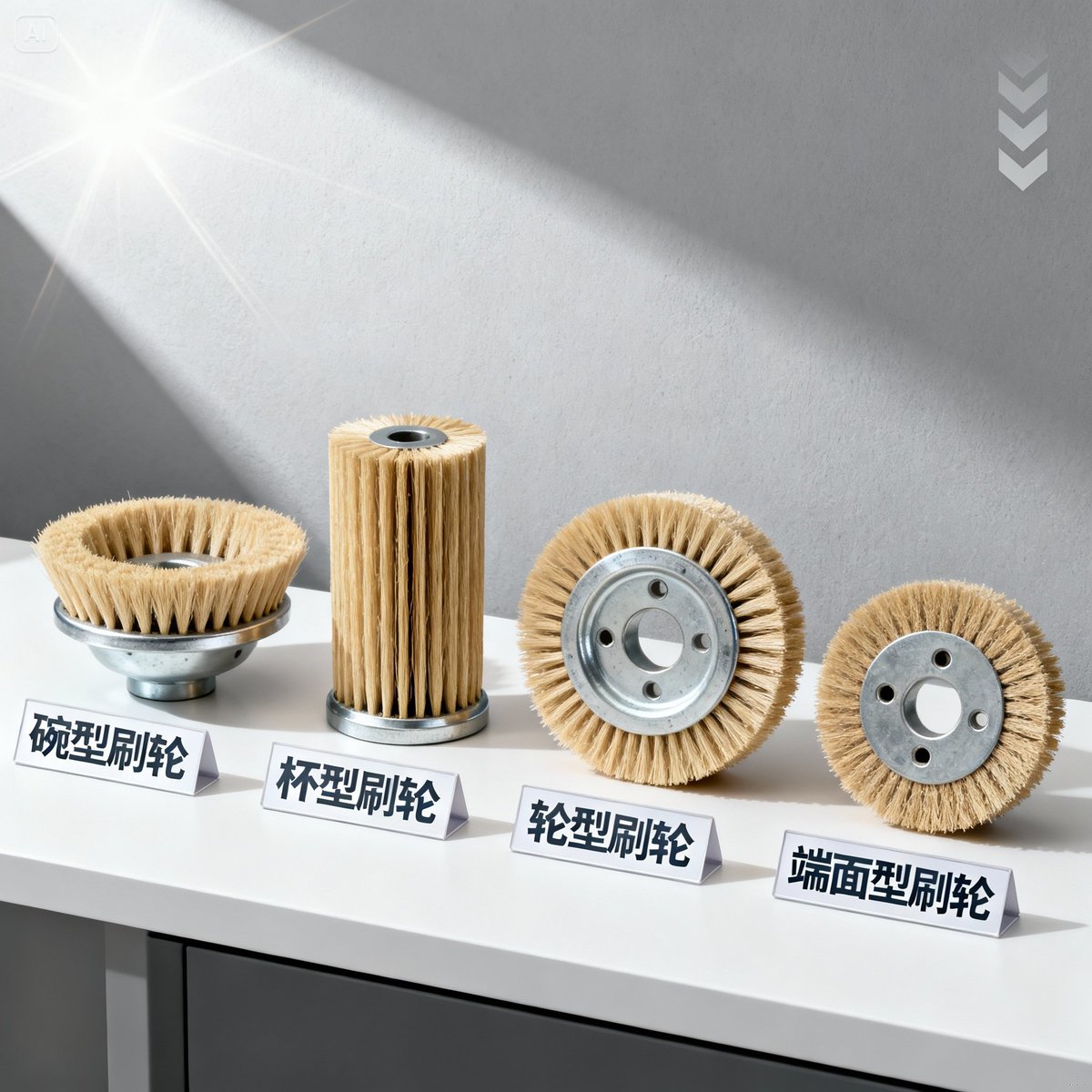
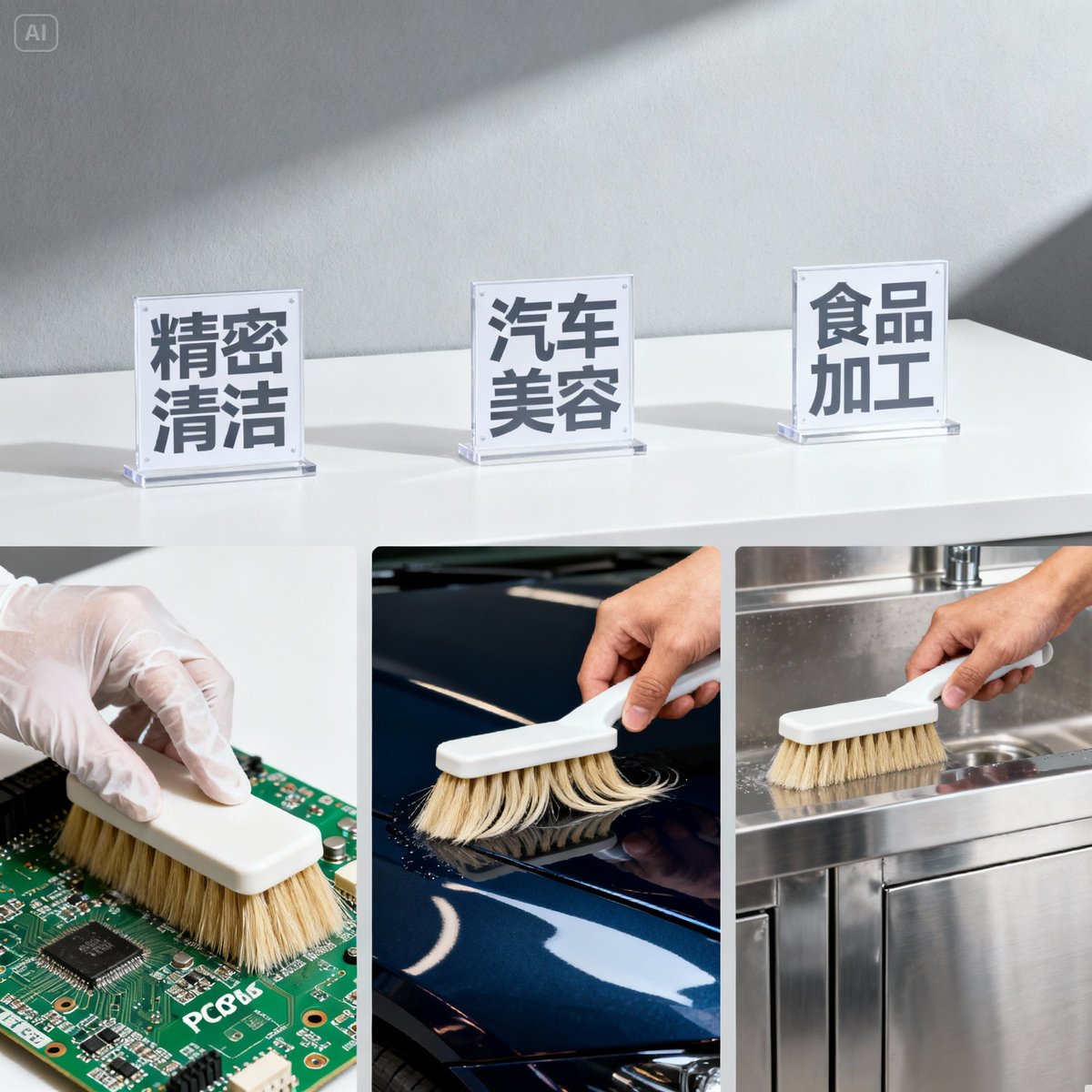
Introduction: the painful experience of a car wash brush scratching the paint
Your new car has just been washed, and when you look at it in the sunlight the paintwork is covered in fine scratches.
It hurts, and you have no idea where the problem came from.
In fact, many car wash scratches come from "choosing the wrong car wash brush".
Washing a car looks simple, but the devil is in the details. An unsuitable car wash brush can leave your car's paint looking more swirled and older with every wash. This is especially true of large areas such as the roof and the hood, which are even harder to wash without a long-handle brush.
The good news is that once you know what to look for in a long-handle car wash brush, you can greatly reduce scratch problems.
This article looks closely at the 5 buying points for long-handle car wash brushes, compares the materials, explains how to use them, and recommends products for different needs. Whether you are an owner who washes your own car or a car detailing business, you will find the most suitable solution here.
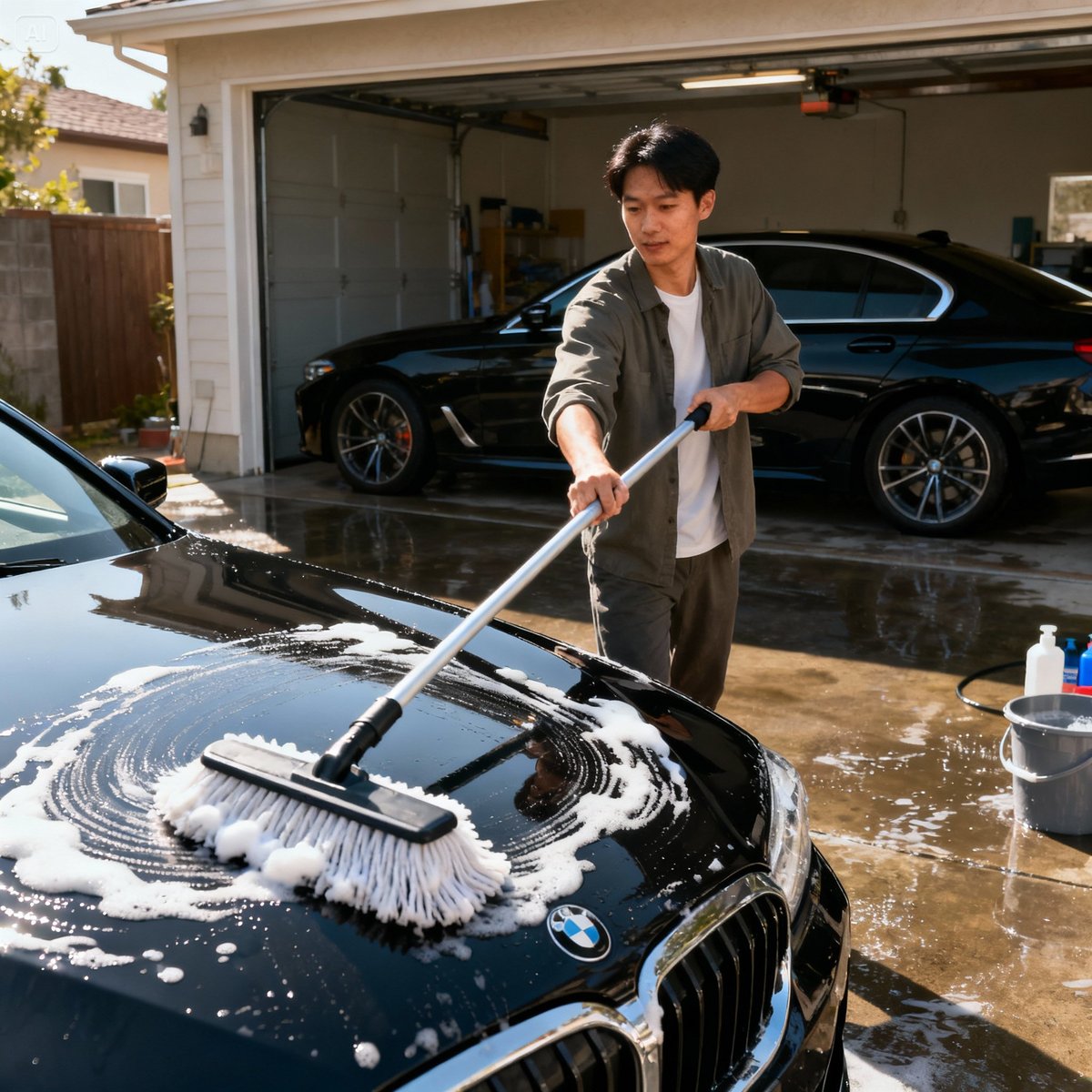
Why do car wash brushes damage paintwork?
Before choosing a long-handle car wash brush, you need to understand what causes scratches.
Only by knowing "why it scratches" can you avoid "scratching again".
The three main culprits
1. Filaments that are too hard
This is the most common cause.
Hard filaments (such as stiff nylon or wire brushes) are harder than the paint surface and scratch it directly.
- Stiff nylon filaments: hard in texture and likely to leave scratches
- Wire brushes: harder still, and must never be used for washing a car
When the filaments are harder than the paint, scratches are inevitable.
2. Grit trapped in the filaments
Even with a soft brush, grit or hard particles trapped in the filaments will cause scratches.
Common situations
- The filaments were not cleaned thoroughly after the previous wash
- The brush was dropped on the ground and picked up grit
- The brush was used on the body straight after the tires, without cleaning the filaments
These grit particles are much harder than the paint and wear it away like sandpaper.
3. The wrong washing technique
- Too much force: pressing the brush down hard increases friction
- Dry brushing: brushing dry without rinsing and wetting the surface first
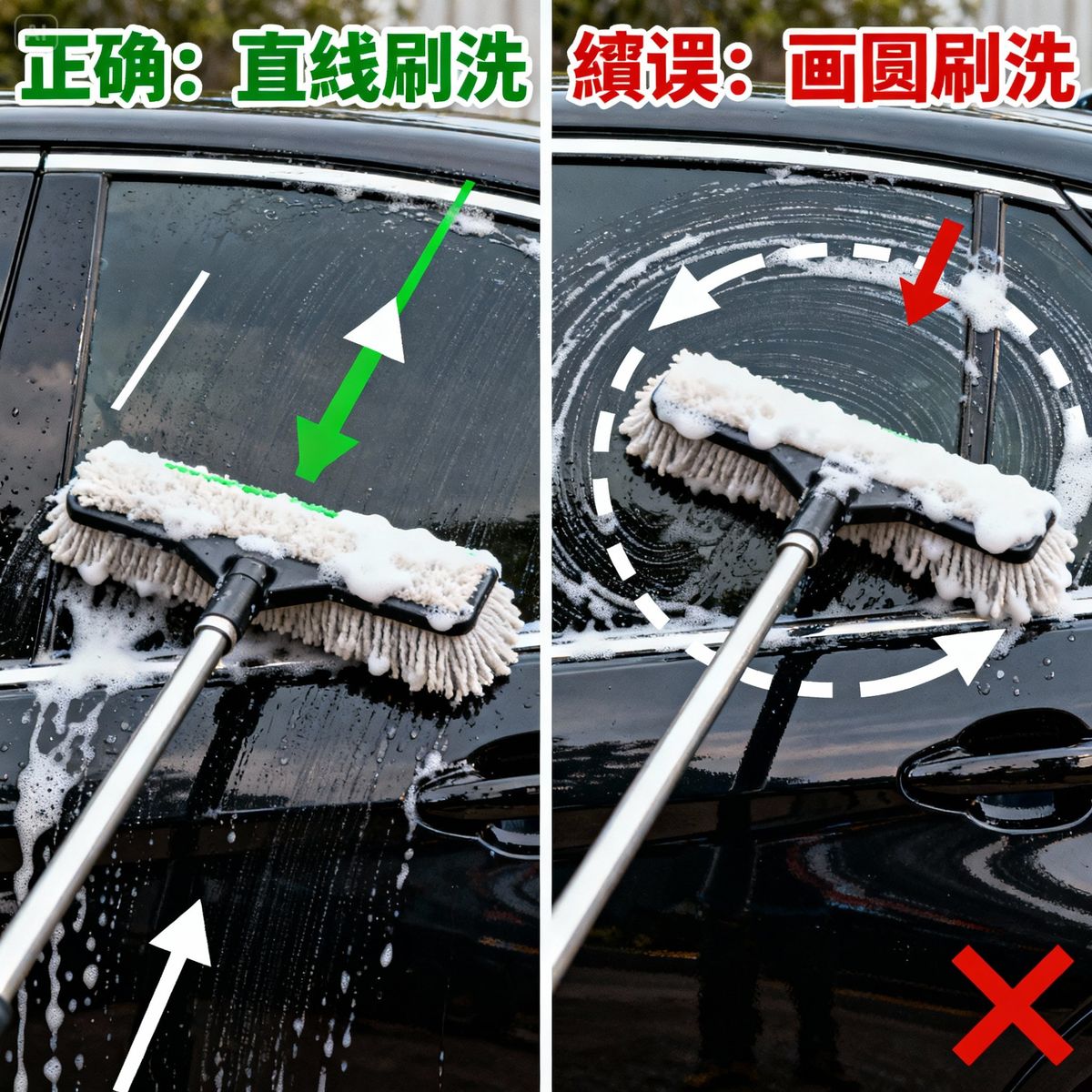
- Brushing in circles: circular scratches are the most visible; brush in straight lines
The three levels of paint scratches
Knowing the depth of a scratch helps you judge how serious it is.
| Scratch level | Depth | Appearance | Repair difficulty | Repair method |
|---|---|---|---|---|
| Shallow scratch | Damages only the clear coat | Fine lines visible in sunlight | Easy | Polishing is enough |
| Medium scratch | Damages the color coat | Clearly visible scratch | Medium | Compounding and polishing + touch-up paint |
| Deep scratch | Damages the primer or the metal | Primer color or rust spots exposed | Difficult | Needs professional respraying |
Choosing the right car wash brush, together with rinsing off the grit first and using the right technique, greatly reduces these scratches.
Why do you need a long-handle brush?
When washing a car, the roof and the hood are the hardest parts to deal with.
The problem without a long-handle brush
- You have to climb onto the car or use a stool (dangerous)
- Your arms are overstretched and your posture is poor
- The wash does not reach everywhere and dust builds up on the roof
The advantages of a long-handle brush
- You can wash the roof easily while standing on the ground
- A relaxed posture and less fatigue
- More even washing with nothing missed
Want to know more about how long-handle brushes are used? See The complete guide to long-handle brushes.
5 buying points for long-handle car wash brushes
Master these 5 buying points and you can choose a quality car wash brush that does not damage paintwork.
Point 1: filament material (the most critical)
The material decides whether the paint will be scratched.
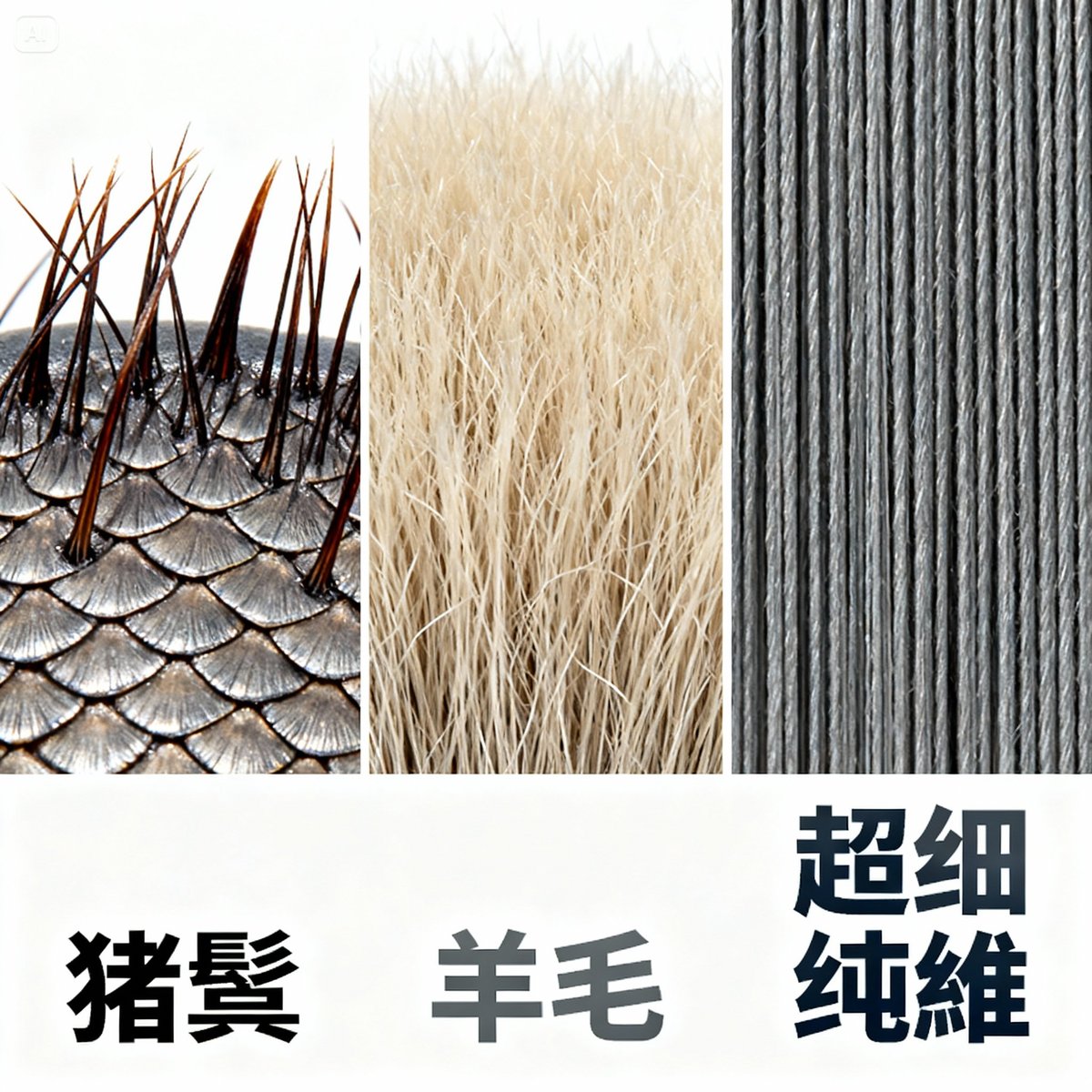
Hog bristle (natural hair)
Characteristics
- Natural animal hair, soft and springy
- Excellent water absorption, holds a large amount of foam
- The bristle tips are naturally split, which increases the cleaning contact area
Advantages
- ✅ Does not damage paintwork at all (far softer than the paint)
- ✅ Rich foam, good cleaning power
- ✅ Long service life (2-3 years with proper care)
Disadvantages
- ❌ Higher price (mid to high range)
- ❌ Needs regular cleaning and care
- ❌ Does not tolerate heat and strong sun
Recommendation: ★★★★★
Best for: owners who care about protecting their paint and are willing to invest in quality
Wool
Characteristics
- The softest of the natural hairs
- Fine, dense fibers with a silk-like feel
- The best water absorption
Advantages
- ✅ The softest choice and the least likely to damage paintwork
- ✅ Suited to premium cars, new cars and dark-colored cars
- ✅ An excellent washing feel
Disadvantages
- ❌ The highest price (high range)
- ❌ Slightly less durable than hog bristle
- ❌ Needs very careful maintenance
Recommendation: ★★★★☆
Best for: owners of premium cars and those with very high demands for paint protection
Microfiber (synthetic)
Characteristics
- Made of chemical fiber with an extremely fine fiber diameter (below 0.1 mm)
- Good water absorption
- Does not deform easily
Advantages
- ✅ Good softness, does not damage paintwork
- ✅ Affordable (mid-range)
- ✅ Easy to clean and care for
- ✅ Dries quickly
Disadvantages
- ❌ Shorter service life than natural hair
- ❌ Foam does not last as long as with natural hair
Recommendation: ★★★★☆
Best for: ordinary car owners, limited budgets, those who wash their cars often
Soft nylon
Characteristics
- Nylon filaments specially treated for softness
- Excellent durability
- The most affordable price
Advantages
- ✅ Cheap (budget)
- ✅ Durable, does not deform easily
- ✅ Simple to clean
Disadvantages
- ❌ Not as soft as natural hair or microfiber
- ❌ If the quality is poor, it may still scratch paintwork
- ❌ Poorer water absorption
Recommendation: ★★★☆☆
Best for: very limited budgets, cars that are seldom washed, old cars
Material selection chart
| Material | Softness | Paint safety | Water absorption | Foam retention | Durability | Price | Best use |
|---|---|---|---|---|---|---|---|
| Wool | ★★★★★ | ★★★★★ | ★★★★★ | ★★★★★ | ★★★☆☆ | $$$$$ | Premium cars, new cars |
| Hog bristle | ★★★★☆ | ★★★★★ | ★★★★☆ | ★★★★☆ | ★★★★☆ | $$$$ | All vehicles |
| Microfiber | ★★★★☆ | ★★★★☆ | ★★★★☆ | ★★★☆☆ | ★★★☆☆ | $$$ | Ordinary vehicles |
| Soft nylon | ★★★☆☆ | ★★★☆☆ | ★★☆☆☆ | ★★☆☆☆ | ★★★★★ | $$ | Old cars, limited budgets |
Advice from YC Brushes
We recommend hog bristle as the best value for money. It balances paint safety, cleaning results, durability and price, and suits the great majority of car owners.
See our range of soft long-handle brushes for car washing
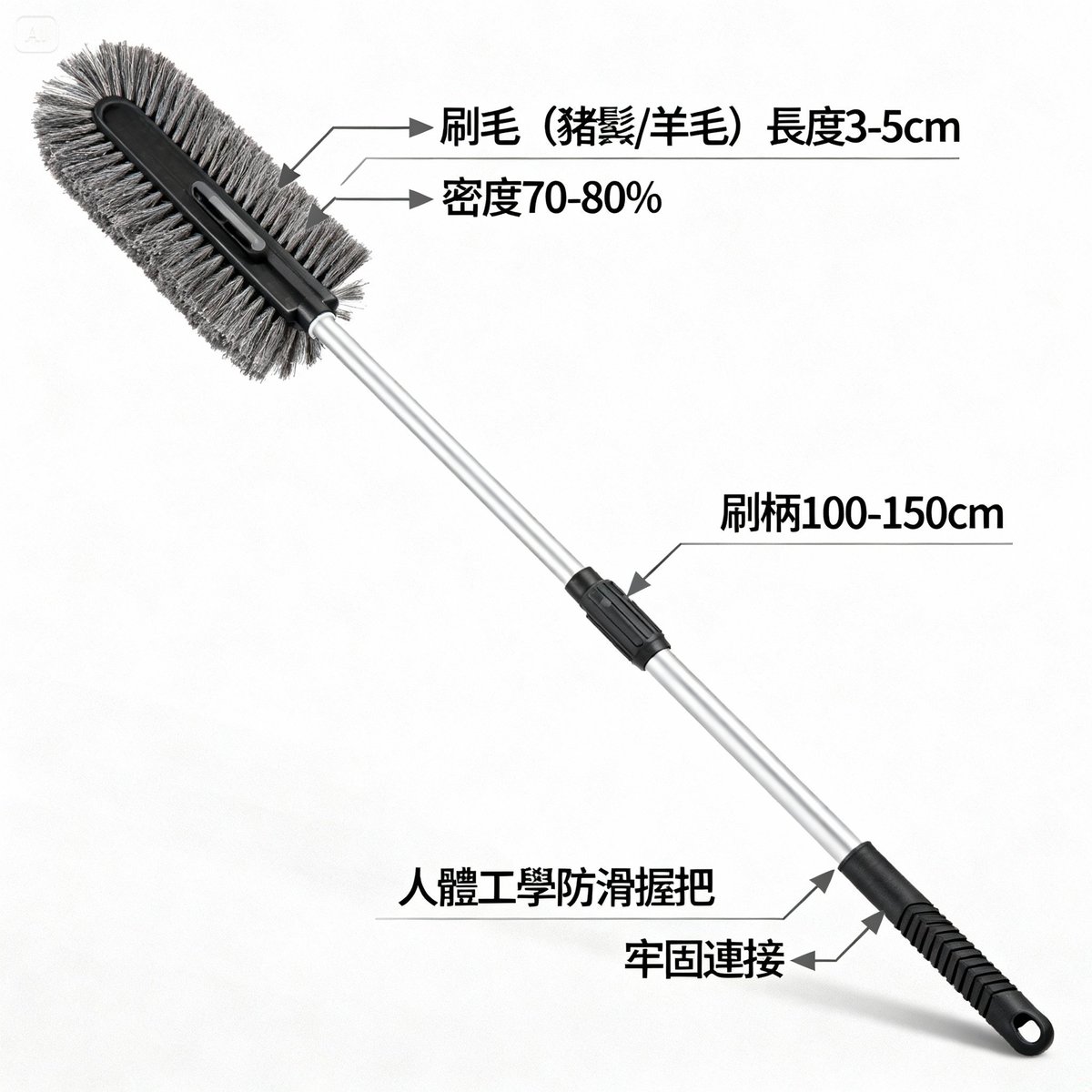
Point 2: filament length
Filament length affects cleaning efficiency and safety.
Long filaments (5-8 cm)
- Advantages: softer, a larger contact area, less likely to scratch
- Disadvantages: weaker at removing stubborn dirt
- Suitable for: routine maintenance washes, new cars
Medium filaments (3-5 cm)
- Advantages: a balance of softness and cleaning power
- Disadvantages: no obvious drawbacks
- Suitable for: most car washing situations (recommended)
Short filaments (below 3 cm)
- Advantages: strong cleaning power
- Disadvantages: the filaments are stiffer, which increases the risk of scratching
- Suitable for: cleaning tires and wheel rims (not to be used on the body)
Recommendation: for washing the body, choose medium-length filaments of 3-5 cm.
Point 3: filament density
The higher the density, the better the cleaning result, but also the higher the price.
High density (80% or more)
- Features: small spacing between filaments, almost no gaps
- Result: rich foam, even cleaning, no damage to paintwork
- Price: higher
- Recommended for: car detailing businesses, owners of premium cars
Medium density (60-80%)
- Features: moderately spaced filaments
- Result: good cleaning
- Price: medium
- Recommended for: ordinary car owners (recommended)
Low density (below 60%)
- Features: sparse filaments
- Result: poor cleaning, easy to miss spots
- Price: cheap
- Recommended for: not recommended for car washing
How to judge
Hold the brush head up to the light. If there are obvious gaps between the filaments, the density is low. A quality car wash brush should show no obvious gaps.
Point 4: handle length
Handle length decides how convenient the brush is to use.
Formula: handle length = highest point of the vehicle - shoulder height + 20 cm
| Vehicle type | Vehicle height | Suggested handle length | Notes |
|---|---|---|---|
| Sedan | 1.4-1.5 m | 100-120 cm | An ordinary length is enough |
| SUV / minivan | 1.6-1.8 m | 120-150 cm | Needs a longer handle |
| Truck / large vehicle | Over 1.8 m | 150-180 cm | Needs an extra-long handle |
Telescopic design
If you have several vehicles of different types, or want one brush for several jobs, you can choose a telescopic long-handle brush.
Advantages:
- Length adjusts flexibly
- Easy to store
Disadvantages:
- The locking mechanism may work loose
- Higher price
Want a detailed review of telescopic brushes? See Telescopic long-handle brush review.
Point 5: grip design
When washing a car for a long time, the comfort of the grip matters a great deal.
Ergonomic grip
- Follows the curve of the palm
- Non-slip design
- Reduces hand fatigue
Choice of material
- Rubber grip: the best non-slip effect
- Foam grip: comfortable, but less durable
- Wooden grip: natural and comfortable, but does not tolerate water
Grip diameter
We recommend a grip with a diameter of 2.5-3.5 cm. Too thin and the hand tires easily; too thick and it is hard to hold.
An in-depth comparison of long-handle car wash brush materials
To help you make the best choice, we compared the real performance of each material in depth.
How we tested
We used the following test criteria:
- Scratch test: brush a black painted test panel 100 times and check for scratches
- Cleaning power test: clean the same dirt and measure the time required
- Foam retention: with the same car shampoo, measure how long the foam lasts
- Durability test: simulate 100 car washes and check the filament shedding rate
Material test results
Hog bristle vs wool vs microfiber
| Test item | Hog bristle | Wool | Microfiber | Soft nylon |
|---|---|---|---|---|
| Number of scratches (after 100 strokes) | 0 | 0 | 0 | 2-3 fine lines |
| Cleaning time (same dirt) | 3 minutes | 3.5 minutes | 3 minutes | 4 minutes |
| Foam retention (minutes) | 15 minutes | 18 minutes | 12 minutes | 8 minutes |
| Filament shedding rate (after 100 uses) | 5% | 8% | 10% | 3% |
| Water absorption (grams per 100 g of filament) | 350 g | 420 g | 380 g | 150 g |
Test conclusions
- Paint safety: hog bristle, wool and microfiber are all 100% scratch-free
- Cleaning efficiency: hog bristle and microfiber are slightly better than wool
- Foam performance: wool is best, followed by hog bristle
- Durability: soft nylon is the most durable, but it scratches paintwork
Overall ratings
| Material | Paint safety | Cleaning power | Foam | Durability | Price | Value for money | Verdict |
|---|---|---|---|---|---|---|---|
| Hog bristle | A+ | A | A | A- | B | ★★★★★ | Most recommended |
| Wool | A+ | A- | A+ | B+ | C | ★★★★☆ | First choice for premium cars |
| Microfiber | A+ | A | B+ | B | A | ★★★★☆ | Good value |
| Soft nylon | C | B+ | C | A+ | A+ | ★★★☆☆ | Not recommended for the body |
Advice for different paint colors
Paint color also affects the choice of brush.
Dark cars (black, dark blue, dark gray)
- Scratches are the most visible
- Recommended: wool or top-grade hog bristle
- Avoid completely: any stiff brush
Light cars (white, silver, gold)
- Scratches are less visible
- Recommended: hog bristle or microfiber
- Acceptable: high-quality soft nylon
Pearl paint, metallic paint
- Higher value, needs special protection
- Recommended: wool or top-grade hog bristle
- Avoid: nylon-type filaments
Choosing by vehicle age
New cars (less than 3 years)
- The paint is in its best condition
- Recommended: wool or hog bristle, to protect it well
- Worth investing in: high
Used cars (3-7 years)
- The paint has aged slightly
- Recommended: hog bristle or microfiber
- Worth investing in: medium
Old cars (more than 7 years)
- The paint already has more defects
- Recommended: microfiber or soft nylon
- Worth investing in: depends on personal needs
Long-handle car wash brushes on the market compared
There are many brands of long-handle car wash brush on the market. We have put together a comparison of the main products.
Types of long-handle car wash brushes on the market compared
| Brand / model | Filament material | Handle length | Filament density | Price | Pros | Cons | Recommendation |
|---|---|---|---|---|---|---|---|
| YC Brushes - hog bristle car wash brush | Natural hog bristle | 120 cm | 80% | NT$880 | Paint-safe, rich foam, factory-direct | Needs care | ★★★★★ |
| Brand A - wool car wash brush | Wool | 110 cm | 75% | High | Extremely soft | Expensive, wears easily | ★★★★☆ |
| Brand B - microfiber brush | Microfiber | Telescopic 100-150 cm | 70% | Mid-range | Telescopic, reasonably priced | Telescopic mechanism works loose easily | ★★★★☆ |
| Brand C - foam brush head | Foam + fiber | 105 cm | 85% | Mid-range | Plenty of foam, cheap | Poor durability | ★★★☆☆ |
| Brand D - nylon car wash brush | Soft nylon | 120 cm | 60% | Budget | Cheap, durable | May scratch paintwork | ★★☆☆☆ |
The YC Brushes advantage
Our long-handle car wash brushes use selected hog bristle at a density of 80%, the handle length is made to order (100-180 cm), and factory-direct pricing makes them better value.
Features:
- ✅ Over 40 years of manufacturing experience, quality assured
- ✅ The bristles are pull-tested and do not shed easily
- ✅ Handle length can be customized to the vehicle type
- ✅ Volume discounts for car detailing businesses
A dedicated plan for car detailing businesses
If you run a car detailing business, we offer:
- Volume discounts: wholesale prices from 100 pieces
- Custom service: your shop name and logo can be printed
- Fast restocking: stable supply, no worry about running out
- Professional advice: we recommend the most suitable brushes for the services you offer
A real case
After a car detailing chain adopted hog bristle car wash brushes from YC Brushes, its complaint rate fell by 87% and customer satisfaction rose sharply. Their feedback: "The bristles are soft enough not to harm the car, the foam is rich and washes clean, and durability is very good too."
Want car wash brushes made specially for your detailing shop? Contact YC Brushes now for a B2B volume purchasing offer.
How to use a long-handle car wash brush
Choosing the right brush is only the first step. Only correct use truly protects the paint.
Preparation before washing
1. Rinse thoroughly
Purpose: to remove grit and hard particles from the surface of the body
Steps
- Rinse the whole car from top to bottom with a pressure washer or a hose
- Pay special attention to the tires, wheel rims and underbody (the dirtiest areas)
- Make sure all surface grit has been rinsed off
Important: this step must never be skipped! Many scratches come from "grit grinding".
2. Prepare the car shampoo and the brush
Choosing a car shampoo
- Neutral pH (6-8)
- A high-foam type
- Contains lubricating ingredients
Dilution ratio
- Dilute according to the product instructions (usually 1:50 - 1:100)
- Use a foam gun or the two-bucket method (one bucket of car shampoo, one of clean water)
Checking the brush
- Confirm there is no grit or hard matter in the filaments
- Check the handle for cracks
- The filaments should be soft, not hardened
The correct washing steps
Step 1: top to bottom
Principle: wash the clean parts first, then the dirty parts
Order
- Roof
- Hood, trunk lid
- Windows, windshield
- Sides of the body
- Bumpers
- Tires, wheel rims (use a dedicated brush)
Why?
Dirty water runs downward. If you wash the lower parts first, the dirty water running down will make them dirty again.
Step 2: brushing technique
Correct technique
- ✅ Brush back and forth in straight lines (front to back or side to side)
- ✅ Touch lightly, do not press down
- ✅ Let the filaments glide naturally over the surface
- ✅ Keep the brush head well loaded with foam
Incorrect technique
- ❌ Brushing in circles (circular scratches are the most visible)
- ❌ Pressing down hard
- ❌ Dry brushing (no foam for lubrication)
- ❌ Brushing the body straight after the tires
Step 3: rinse in sections
Do not wait until the whole car is brushed before rinsing!
We suggest:
- Rinse as soon as one area (such as the roof) is done
- Avoid letting the car shampoo dry
- Avoid leaving water marks
Step 4: dry
Choice of tools
- Microfiber drying cloth (most recommended)
- Chamois
- Absorbent sponge
Wiping direction
- Back and forth in straight lines
- Do not wipe in circles
Techniques specific to long-handle brushes
Washing the roof
- Stand at the side of the car, not at the front or the rear
- Hold the handle with both hands, one on the grip and one in the middle of the handle
- Brush in straight lines from the center of the roof out to both sides
- Move position when needed to avoid overstretching
Washing the hood
- Stand at the side of the front of the car
- Brush from the center of the hood toward the front and the back
- Pay attention to the edges of the hood and the seams with the body
Washing the windshield
- A little more force can be used on glass (it is harder than the body)
- Brush in straight lines from top to bottom
- Pay attention to where the wipers meet the glass
Brush care after washing
Clean immediately
- Rinse the filaments thoroughly with clean water
- Check for grit left between the filaments
- Shake off the excess water
Drying
- Hang with the filaments facing down
- Dry in a ventilated place
- Avoid direct sunlight (natural hair hardens)
Regular deep cleaning
After every 5-10 uses:
- Wash the filaments in warm water (below 40°C) with a neutral detergent
- Gently work the filaments to remove grease and dirt
- Rinse thoroughly
- Leave to dry naturally
🚀 Want to find the most suitable car wash brush for your car?
Professional long-handle car wash brushes from YC Brushes
Contact YC Brushes now. With over 40 years of professional manufacturing experience, we will recommend the car wash brush that is gentlest on your paint. Car detailing businesses enjoy volume discounts!
FAQ
Which is better, a hog bristle brush or a wool brush?
That depends on your needs and budget.
Hog bristle brush (recommended)
- Suitable for: most car owners, the best value for money
- Strengths: paint-safe, durable, rich foam
- Price: mid to high range
Wool brush
- Suitable for: premium cars, new cars, dark-colored cars
- Strengths: the softest, the least likely to damage paintwork
- Price: high range
Advice from YC Brushes: on an ordinary budget a hog bristle brush is the best value for money; with a generous budget you can choose a wool brush. A wool brush is softer, but hog bristle is already gentle enough not to damage paintwork, and it is more durable.
Can I use a tire brush on the body?
Absolutely not!
Tire brushes usually use stiff nylon or steel wire. They clean strongly but will scratch paintwork badly.
The right way
- Body: soft brush (hog bristle, wool, microfiber)
- Tires / wheel rims: stiff brush (nylon, wire brush)
- Keep them strictly separate and never mix them
How often does a car wash brush need replacing?
Service life depends on the material and on care.
| Material | Normal service life | Service life with good care | Signs it needs replacing |
|---|---|---|---|
| Hog bristle | 1-2 years | 2-3 years | More than 30% of bristles shed, hardening |
| Wool | 6 months - 1 year | 1-2 years | Fibers knotted, thinning |
| Microfiber | 6 months - 1 year | 1-2 years | Fibers hardened, deformed |
| Soft nylon | 2-3 years | 3-5 years | Filaments hardened, split |
When to replace
- The filaments are shedding heavily
- The filaments have hardened or deformed
- Grit trapped in the filaments cannot be removed
- You find scratches after use
Can dish soap be used instead of car shampoo with a long-handle car wash brush?
Not recommended!
The problems with dish soap:
- Its pH is on the alkaline side and harms the paint
- Its degreasing power is too strong and strips protective wax
- Its foam does not last
- It lacks lubricating ingredients, which increases the risk of scratching
The right choice
- A dedicated car shampoo (neutral pH)
- Contains lubricating ingredients
- A high-foam type
Emergency substitute
If you really have no car shampoo, you can temporarily use:
- Baby shampoo (pH close to neutral)
- But we still recommend buying a dedicated car shampoo as soon as possible
Can I wash the car on a rainy day?
Yes, and it has some advantages.
Advantages
- The rain rinses off some of the dust for you first
- Humidity is high, so the car shampoo does not dry easily
- No water marks from direct sunlight
Disadvantages
- Rainwater may contain acidic substances
- The car will get wet in the rain again after washing
Advice
- Light rain: washing is fine; dry the car immediately afterward
- Heavy rain: not recommended; visibility is poor and it is not safe
- Best time: wash the car right after the rain stops
Does a new car need a special car wash brush?
The paint on a new car is in its best condition and deserves extra care.
Car wash brush advice for new cars
- First choice: wool brush (the safest)
- Second choice: top-grade hog bristle brush
- Avoid: any nylon-type filaments
Points to note when washing a new car
- The first 3 months are the most critical (the paint is still hardening)
- Avoid automatic car washes (the brushes are too hard)
- Hand washing is the safest
- Remember to wax for protection after washing
Investment advice
For a new car, we suggest investing in one good-quality long-handle car wash brush (mid to high range). Used for 2-3 years, the average cost per use is quite low, and it avoids paint damage (repairs easily cost more than ten thousand NT dollars).
What car wash brushes do car detailing shops use?
Professional car detailing shops choose by stricter standards.
Professional requirements
- Absolutely no damage to paintwork
- High durability (used every day)
- High cleaning efficiency
- Controllable cost
Common choices
- Luxury car specialists: mostly wool brushes
- Ordinary detailing shops: hog bristle brushes (the best value for money)
- Quick car wash shops: microfiber brushes (durable + cheap)
Car detailing customers of YC Brushes
We serve more than 200 car detailing businesses and offer:
- Volume discounts (wholesale prices from 100 pieces)
- Custom service (shop name and logo printing)
- Stable supply (no worry about running out)
- Quality assurance (a reputation of over 40 years)
Want to know about our services for businesses? Contact YC Brushes now for a dedicated B2B quote.
What tools should be used together with a car wash brush?
A complete set of car washing tools:
Essential tools
- Long-handle car wash brush: roof, hood, body
- Tire brush: for tires and wheel rims only (stiff brush)
- Detail brush: gaps, badges, air intakes
- Car wash sponge: for supplementary cleaning
- Drying cloth: microfiber
Supporting equipment
- Pressure washer or hose
- Foam gun (optional)
- Two buckets (one of car shampoo, one of clean water)
Consumables
- Car shampoo
- Tire cleaner
- Glass cleaner
- Car wax
See our recommended complete car wash tool set
Further reading
Want to know more about how long-handle brushes are used? We recommend the following articles:
- The complete guide to long-handle brushes - everything you need to know about long-handle brushes
- The complete guide to cleaning ceilings with a long-handle brush - the cleaning techniques also apply to car washing
- Telescopic long-handle brush review - want a car wash brush with adjustable length?
- Custom long-handle brush service - custom plans for car detailing businesses
Need professional car washing tools? See the full YC Brushes product catalog, or contact us now for professional advice and a quote.