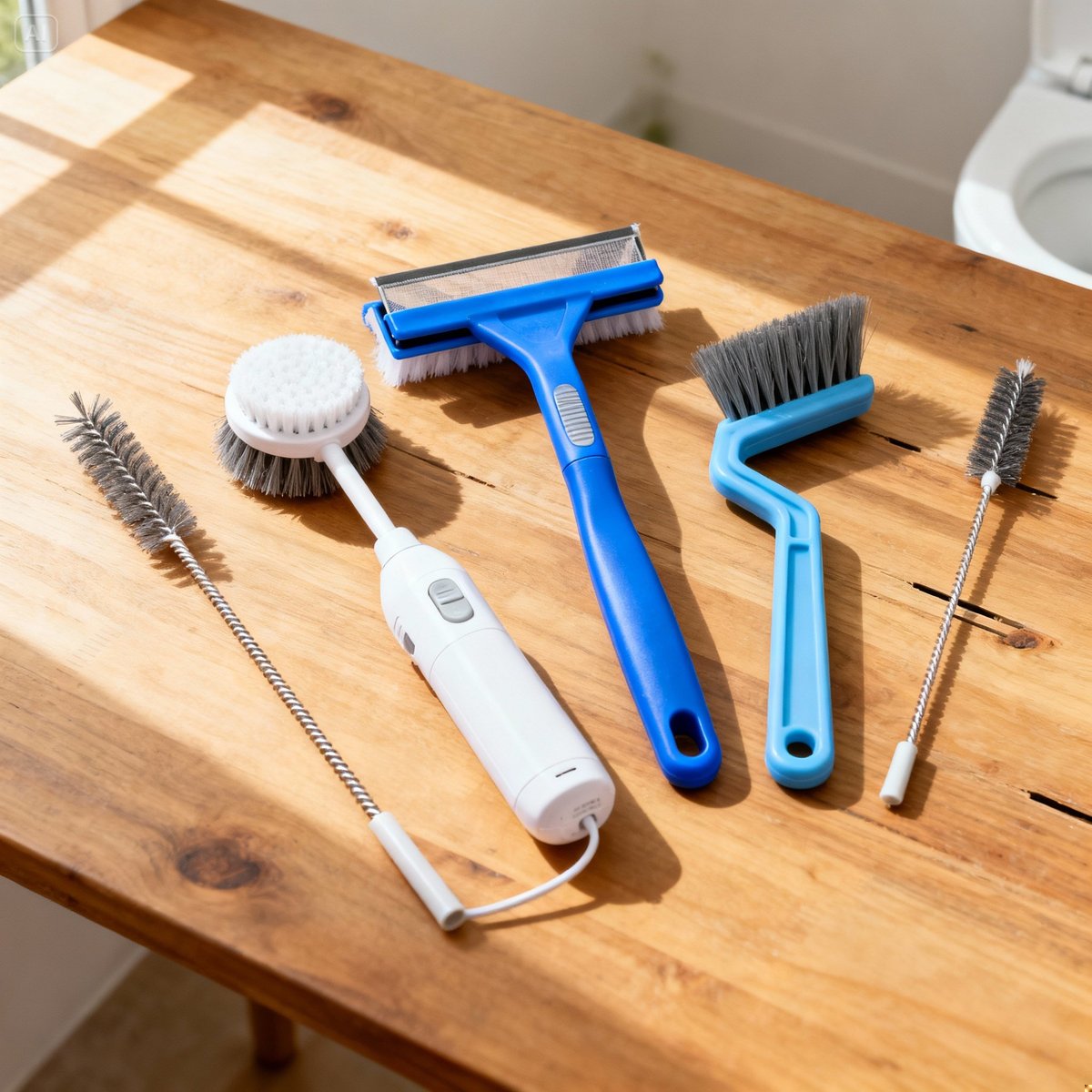
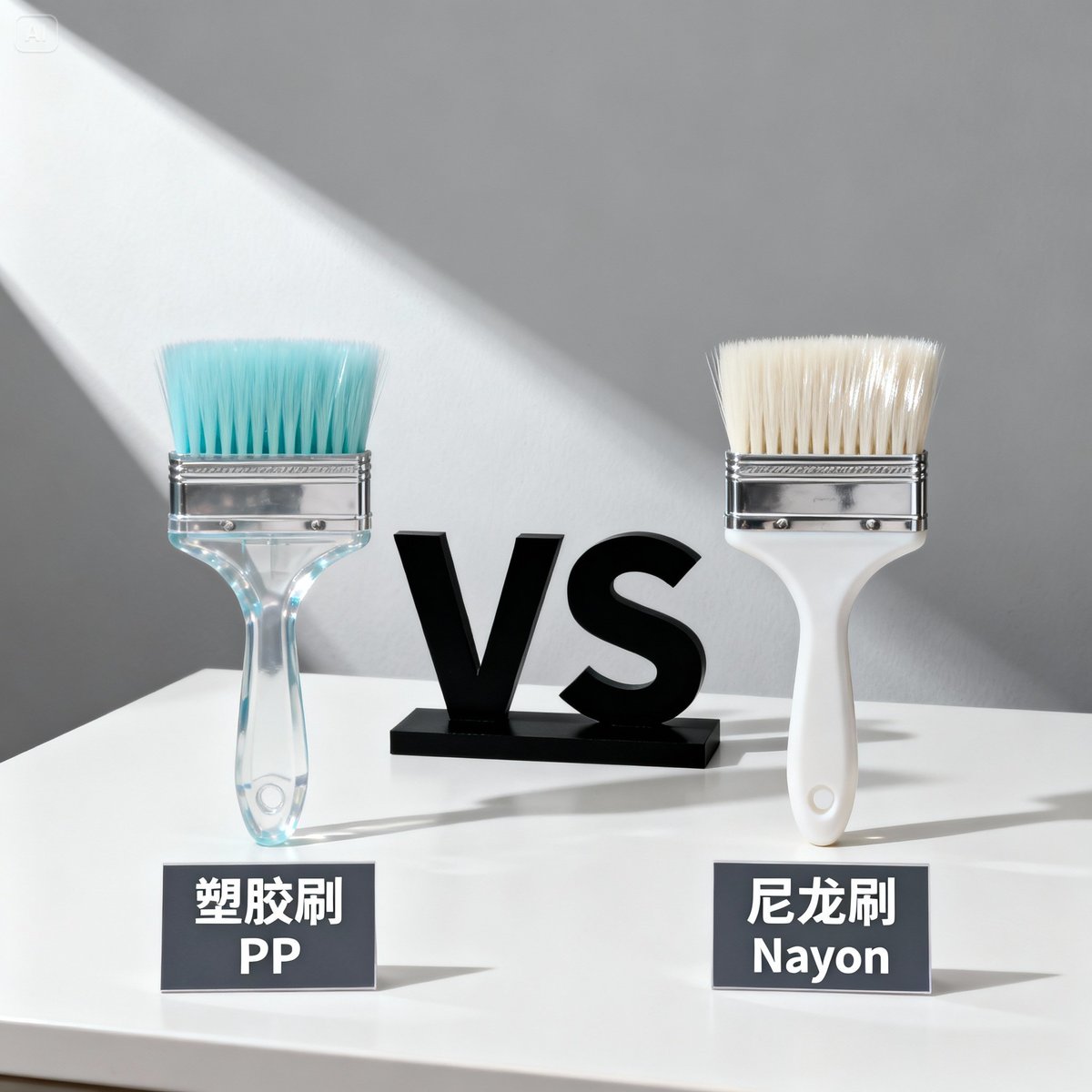
Introduction: why does choosing the right brush material matter so much?
Have you ever bought the wrong brush and had it worn out and scrapped in less than a month? Or found that it did not clean as well as expected and scratched the surface of expensive equipment instead?
In the industrial brush market, nylon brushes, plastic brushes and synthetic filaments are the three mainstream materials. Many buyers and plant managers do not know which one to choose, and end up paying for the wrong brush, getting poor results and even hurting production efficiency.
This article is written by the manufacturing team at YC Brushes, which has over 40 years of professional experience. It gives a complete account of how the three materials differ in their properties, where they are used, what they cost and how to buy them. After reading it you will know clearly: when should you choose a nylon brush? Which applications suit a plastic brush? What are the advantages of synthetic filaments? How do you avoid the pitfalls?
Whether you are a factory buyer, an equipment maintenance technician, or a reader who simply wants to learn about brushes, this article will help you reach the right decision quickly.
What are nylon brushes, plastic brushes and synthetic filaments? Definitions and basics
Before comparing them in depth, let us be clear about what these three materials actually are.
Definition and properties of nylon brushes
A nylon brush is a brush made with polyamide (PA).
There are two main grades:
- Nylon 6 (PA6): lower cost, higher moisture absorption, suitable for temperatures up to 80°C
- Nylon 66 (PA66): higher strength, heat resistance up to 120°C, better chemical resistance
Physical properties:
- Extremely wear resistant, with a service life of 2-3 years
- Good elasticity, does not deform easily, recovers quickly
- A wide temperature range: -40°C to 120°C
- Higher moisture absorption (about 3-5%), softening slightly in humid environments
Common applications:
- Industrial cleaning brushes (nylon wheel brushes, nylon tube brushes)
- Polishing and abrasive brushes
- Brushes for food processing equipment (must comply with FDA food-contact regulations)
- Deburring brushes
The biggest advantage of a nylon brush is durability. If your application involves frequent use and high-intensity work, a nylon brush is the first choice.
It has drawbacks too: it costs more than an ordinary plastic brush, and it degrades in strong acid and alkali environments.
Definition and properties of plastic brushes
"Plastic brush" is a broad term. It usually refers to brushes made with materials such as PP (polypropylene), PET (polyester) and PE (polyethylene).
Physical properties:
- Resistant to chemicals, withstands strong acids and alkalis
- Economical, with good cost control
- Moderate hardness, suited to general cleaning
- Does not absorb water, dries quickly and does not go moldy easily
The common materials in detail:
- PP brush: resistant to acids and alkalis, does not absorb water, inexpensive; the most common
- PET brush: hardness between nylon and PP, good recovery, suited to road sweeping brushes
- PE brush: the softest, does not damage surfaces, suited to cleaning precision parts
Common applications:
- Household cleaning brushes (bathroom brushes, floor brushes)
- Industrial sweeping brushes, disc brushes for floor sweepers
- Anti-static brushes
- Food-grade brushes (must comply with food safety certification)
The advantages of plastic brushes are economy and good chemical resistance.
The drawback is poorer wear resistance: the service life is usually only 1-2 years, and for heavy-duty industrial cleaning they are no match for nylon brushes.
Definition and scope of synthetic filaments
Synthetic filament is the general term for all man-made fiber brush filaments, including nylon, PP, PBT, PET and other materials.
In other words, nylon brushes and plastic brushes are both kinds of synthetic filament brush.
Advantages over natural bristle (hog bristle, horsehair):
- Contains no animal ingredients, in line with animal-friendly values
- Stable quality, does not shed easily, little variation between batches
- Hardness, diameter and length can be customized
- Good chemical resistance, suited to industrial environments
- Some materials are recyclable (such as PET and PP), which is environmentally sustainable
Market trend:
In recent years synthetic filaments have gradually replaced natural bristle and become the mainstream in industrial brushes.
The reason is simple: the quality of natural bristle is affected by the season and the place of origin, so it is unstable; with synthetic filaments the specification can be controlled precisely and the quality is consistent.
If you need to purchase in volume, or have requirements for quality stability, synthetic filament is definitely the better choice.
Nylon brushes vs plastic brushes vs synthetic filaments: a full comparison of the three materials
After all these definitions, you may still be unclear about which one to choose.
Let me help you grasp the key points quickly with one complete comparison table.
Material performance comparison table
| Item | Nylon brush (Nylon) | Plastic brush (PP/PET) | Synthetic filament (in general) |
|---|---|---|---|
| Wear resistance | ★★★★★ Excellent | ★★★☆☆ Medium | ★★★★☆ Depends on the material |
| Heat resistance | -40°C~120°C | -20°C~90°C | Depends on the specific material |
| Elasticity | Excellent, fast recovery | Medium | Depends on the fiber type |
| Chemical resistance | Good (resists weak acids and alkalis) | Excellent (resists strong acids and alkalis) | Depends on the material |
| Water absorption | Higher (about 3-5%) | Extremely low (<0.1%) | Depends on the material |
| Price | Upper mid-range | Economical | Wide range |
| Main uses | Industrial cleaning / polishing | General cleaning / sweeping | All-round applications |
| Service life | Long (2-3 years) | Medium (1-2 years) | Depends on quality |
The table shows that:
- Wear resistance: nylon brushes win outright, plastic brushes are average
- Chemical resistance: plastic brushes (PP) are stronger, nylon brushes come second
- Price: plastic brushes are the cheapest, nylon brushes cost more
- Service life: nylon brushes last longest, plastic brushes are shorter-lived
How to choose according to the application
Having read the comparison table, you may still not know which one to choose.
Let me tell you directly how to choose according to your application.
1. Heavy-duty industrial cleaning → choose a nylon brush
Reason: wear resistant, high strength, long service life
Examples: deburring metal surfaces, polishing and abrasive finishing, cleaning machinery
2. Food / pharmaceutical industry → choose a nylon or PP brush that complies with FDA food-contact regulations
Reason: hygienic and safe, compliant with food contact standards
Examples: brushes for food processing equipment, conveyor belt cleaning, cleanroom brushes
3. General environmental cleaning → choose a PP plastic brush
Reason: economical and practical, with sufficient performance
Examples: sweeping factory floors, bathroom cleaning, household brushes
4. Special chemical environments → choose a PP or PBT brush
Reason: corrosion resistant, withstands strong acids and alkalis
Examples: cleaning electroplating tanks, brushes for chemical equipment, laboratory brushes
5. High-temperature environments → choose nylon 66 or stainless steel wire
Reason: heat resistance of 120°C and above
Examples: oven cleaning, high-temperature pipe brushes, steam cleaning
A simple way to remember it:
- Limited budget, general cleaning → PP plastic brush
- Heavy use, durability → nylon brush
- Chemical environment, strong acids and alkalis → PP or PBT
- High-temperature environment → nylon 66 or stainless steel
If you are still not sure, you can contact YC Brushes. We offer free selection advice.
Types and applications of nylon brushes in detail
Now that the basic differences are clear, let us look more closely at the types of nylon brush.
Common product types of nylon brush
There is more than one kind of nylon brush. Depending on the purpose, the common types are as follows:
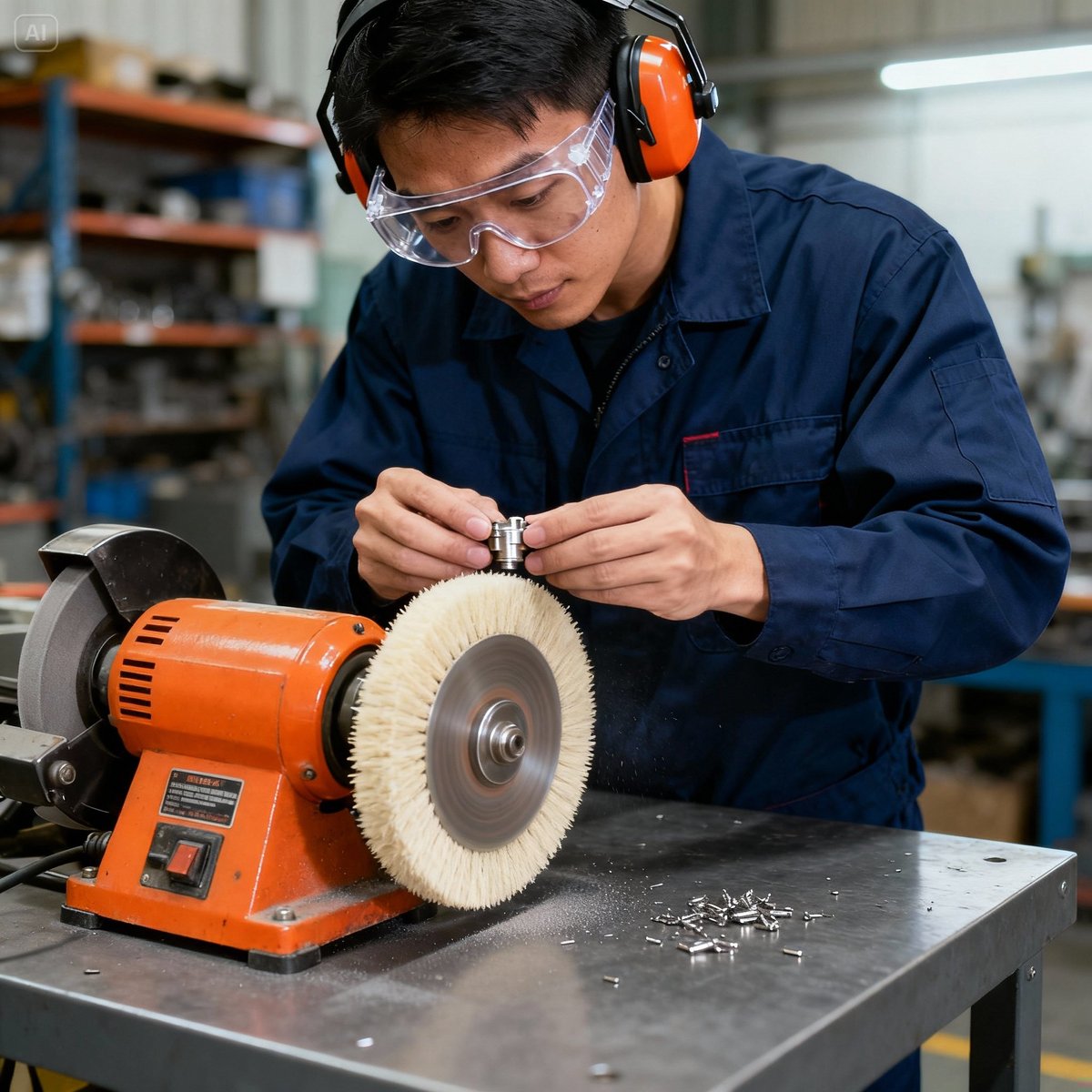
1. Nylon wheel brush (Nylon Brush Wheel)
This is the most common nylon brush for industrial use.
Purpose: abrasive finishing, deburring, polishing
Specifications:
- Diameter: 50mm-300mm
- Bore: 22.2mm or 25.4mm (to fit bench grinders)
- Filament diameter: 0.3mm-1.0mm
Suitable equipment: bench grinders, power tools, automated production lines
Want more detail? See our complete buying guide to nylon wheel brushes, which has detailed advice on choosing specifications.
2. Nylon tube brush (Nylon Tube Brush)
A brush made specifically for cleaning the inner wall of pipes and tubes.
Purpose: pipe cleaning, removing deposits, maintaining food equipment
Specifications:
- Diameter: 5mm-100mm
- Length: made to order (usually 30cm-200cm)
- Handle: twisted-wire handle, plastic handle, flexible handle
Industries: food processing, medical equipment, machinery maintenance, air-conditioning lines
The key with a nylon tube brush is choosing the right size. The brush head diameter should be 1.2-1.5 times the inner diameter of the tube for effective cleaning.
3. Strip brush (Strip Brush)
A strip-shaped brush in which nylon filament is fixed in a metal or plastic strip.
Purpose:
- Sealing doors and windows, dust strips
- Conveyor belt cleaning
- Protecting industrial equipment
Features: can be bent to shape, flexible to install, length made to order
Specifications:
- Base width: 5mm-50mm
- Trim length: 10mm-100mm
- Length: orders usually start at 1 meter
If you need to install strip brushes, we suggest reading the strip brush hardware installation guide, which covers the full measuring and installation steps.
4. Hard nylon brush (Hard Nylon Brush)
A nylon brush with thicker filament (0.5mm-1.0mm) and high stiffness.
Purpose: cleaning heavy soiling, surface treatment, removing stubborn deposits
Suited to: industrial floor cleaning, equipment maintenance, building cleaning
Hard nylon brushes clean powerfully but also scratch surfaces easily. Always confirm material compatibility before use.
Nylon brush material grades: nylon 6 vs nylon 66
As mentioned above, nylon brushes come in two grades, PA6 and PA66.
What exactly is the difference, and which one should you choose?
Nylon 6 (PA6):
- Lower cost
- Higher moisture absorption (takes up moisture and softens easily)
- Suitable temperature: up to 80°C
- Suited to general industrial use
Nylon 66 (PA66):
- Higher strength
- Heat resistance up to 120°C
- Better chemical resistance
- Lower moisture absorption
- Higher price
Recommendation:
- Limited budget, general cleaning → PA6 is enough
- High-temperature environment (80-120°C) → PA66 is required
- Heavy industry, high-intensity work → PA66 is recommended
- Humid environment → PA66 is better (low moisture absorption)
An example:
If you run a food plant and need to clean high-temperature steam pipes (100°C), you must choose PA66.
If it is just ordinary factory floor cleaning, PA6 is enough and saves cost as well.
Types and applications of plastic brushes in detail
With nylon brushes covered, let us look at plastic brushes.
Common material types of plastic brush
Plastic brushes are not a single material. There are three common ones:
1. PP brush (polypropylene brush)
The most common plastic brush, with the highest market share.
Properties:
- Resistant to acids and alkalis, withstands chemical corrosion
- Does not absorb water and dries quickly
- Inexpensive and economical
- Moderate hardness
Uses:
- Cleaning brushes, brooms
- Car wash brushes
- Floor brushes
- Industrial sweeping brushes
The biggest advantages of a PP brush are that it is cheap, durable and unaffected by chemicals.
If your budget is limited, a PP brush is definitely the first choice.
2. PET brush (polyester brush)
Hardness between nylon and PP, with good recovery.
Properties:
- Does not absorb water, does not deform easily in outdoor use
- Good weather resistance, UV resistant
- Good elasticity and recovery
Uses:
- Road sweeping brushes
- Industrial sweeping
- Outdoor brushes
PET brushes suit outdoor environments, for example the main brush of a floor sweeper or the disc brushes of a road sweeping truck.
3. PE brush (polyethylene brush)
The softest plastic brush.
Properties:
- Very soft, does not damage surfaces
- Suited to precision cleaning
- Low price
Uses:
- Cleaning precision parts
- Scrubbing soft surfaces
- Car detailing
PE brushes are very soft and suit situations that need gentle cleaning.
If you need to clean painted surfaces, glass or precision parts, a PE brush or a soft brush is a good choice.
Applications of plastic brushes
Plastic brushes are used very widely. The common scenarios are:
Household cleaning:
- Bathroom brushes, toilet brushes
- Floor brushes, window brushes
- Shoe brushes, clothes brushes
Industrial sweeping:
- Disc brushes for floor sweepers
- Factory floor cleaning
- Warehouse sweeping
Special purposes:
- Anti-static brushes (electronics industry)
- Food-grade brushes (food plants)
- Car wash brushes (car detailing)
The advantages of plastic brushes are economy and a wide range of uses.
If you need heavy-duty industrial cleaning, though, a nylon brush is still recommended for its longer service life.
Want the detailed differences between plastic brushes and nylon brushes? See Plastic brush vs nylon brush | 5 key differences compared, which goes into more depth.
Advantages of synthetic filaments and market trends
Having covered nylon brushes and plastic brushes, let us turn to the overall advantages of synthetic filaments.
Why choose synthetic filaments?
Compared with natural bristle (hog bristle, horsehair), synthetic filaments have the following advantages:
1. Quality stability
The quality of natural bristle is affected by the season, the place of origin and the health of the animal, so it varies a lot between batches.
Synthetic filaments are produced industrially, so every batch is consistent in quality and precise in specification.
If you need to purchase in volume, synthetic filaments are definitely more stable.
2. Customizable function
With synthetic filaments the following can be adjusted:
- Hardness (Shore A 50-90)
- Filament diameter (0.1mm-2.0mm)
- Filament length
- Added functions (anti-static, antibacterial, high-temperature resistant)
Natural bristle cannot do this.
For example, the electronics industry needs anti-static brushes, and only synthetic filaments can be used for them.
3. Environmentally sustainable
Synthetic filaments do not involve killing animals, in line with animal-friendly values.
Some materials (such as PET and PP) are recyclable, which is environmentally sustainable.
By comparison, the way natural bristle is obtained is more controversial.
4. Economic benefit
The service life of synthetic filaments is usually longer than that of natural bristle.
Calculated as total cost (unit price × service life), synthetic filaments are often better value.
Synthetic filaments also do not shed easily, which reduces the contamination risk. This is especially important in the food and medical industries.
Applications of synthetic filaments by industry
Synthetic filaments are already widely used across the major industries:
Food industry:
- Nylon brushes and PP brushes that comply with FDA food-contact regulations
- Cleaning food processing equipment
- Conveyor belt brushes
- Fruit and vegetable washing brushes
Electronics industry:
- Anti-static brushes
- Dedicated cleanroom brushes
- PCB cleaning brushes
- Dust-removal brushes for precision parts
Automotive industry:
- Car wash brushes
- Polishing brushes
- Wheel rim cleaning brushes
- Interior cleaning brushes
Construction industry:
- Paint brushes
- Waterproofing brushes
- Cleaning brushes
- Site sweeping brushes
It is fair to say that almost every industry uses synthetic filaments.
The trend for the future is that synthetic filaments will continue to replace natural bristle and become the mainstream.
Strip brushes: specifications and buying guide
The strip brush is a special form of brush with a very wide range of applications.
What is a strip brush?
A strip brush is a strip-shaped brush in which the filament is fixed in a metal or plastic strip.
Structure:
- Base: galvanized steel strip, stainless steel strip, aluminum strip or plastic strip
- Filament: nylon, PP, PBT and other materials
Common specifications:
- Base width: 5mm-50mm
- Trim length: 10mm-100mm
- Length: made to order (orders usually start at 1 meter)
The advantage of the strip brush is flexible installation: it can be bent into all kinds of shapes and fits all kinds of installation spaces.
Applications of strip brushes
Strip brushes have a great many applications:
1. Sealing doors and windows
Purpose: keeping out dust, wind, noise and insects
Material choice: nylon or PP (good weather resistance)
Common specifications: base 10-15mm, trim length 20-40mm
This is the most common application of strip brushes; almost every door and window needs one.
2. Industrial equipment
Purpose:
- Dust protection for conveyor belts
- Cleaning machinery
- Anti-static strip brushes
- Sealing equipment
Material choice: according to the environment (PP for chemical environments, nylon for ordinary environments)
3. Architectural hardware
Purpose:
- Door-bottom strip brushes
- Insect-proof strip brushes for windows
- Strip brushes for elevator doors
- Sealing automatic doors
Material choice: for outdoor use, a stainless steel base + PP filament (weather resistant)
How to choose the right strip brush size
Choose the wrong size and the strip brush either cannot be fitted or seals poorly.
Here are the correct steps for choosing:
Step 1: Measure the installation space
- Measure the width of the mounting channel (the base width must match)
- Measure the depth of the gap (the trim length must be sufficient)
- Measure the length needed (ordering 5-10% extra as spare material is recommended)
Step 2: Confirm the purpose
- Sealing and dust protection → choose a style with high density and fine filament
- Cleaning function → choose nylon (wear resistant)
- Outdoor use → choose a stainless steel base + PP filament (weather resistant)
Step 3: Choose the base material
- Galvanized steel strip: economical and durable, suited to indoor use
- Stainless steel strip: rustproof, suited to outdoor or humid environments
- Aluminum strip: lightweight, suited to applications where weight must be reduced
- Plastic strip: insulating, suited to electrical equipment
Step 4: Choose the filament material
- Nylon: wear resistant with good elasticity, suited to a cleaning function
- PP: weather resistant, does not absorb water, suited to outdoor sealing
- PBT: highly elastic with good recovery, suited to frequent opening and closing
If you are buying strip brushes for the first time, we suggest reading our strip brush hardware installation guide, which has complete instructions for measuring and installing.
💡 Need a professional brush solution?
Contact YC Brushes now and let over 40 years of manufacturing experience help you find the most suitable brush product or custom solution. Factory-direct, with transparent pricing, free selection advice and sample testing.
Soft brushes vs hard brushes: a guide to choosing stiffness
Besides the material, the stiffness of the filament is also an important consideration when buying.
What determines filament stiffness
Filament stiffness is not fixed. It is determined by the following factors:
1. Filament diameter
The thicker, the stiffer; the finer, the softer.
- 0.1-0.3mm: soft brush
- 0.4-0.6mm: medium stiffness
- 0.7-1.0mm: hard brush
- 1.0mm and above: extra-hard brush
2. The material itself
Different materials differ in their inherent hardness.
Hardness ranking: nylon > PBT > PP > PE
3. Filament length
For filament of the same diameter, the shorter it is the stiffer, and the longer it is the softer.
4. Tufting density
With the same material and diameter, the denser the tufting the stiffer the brush, and the sparser the softer.
Applications of soft brushes
The characteristic of a soft brush is that it is gentle and does not damage surfaces.
Suitable scenarios:
- Cleaning precision parts (electronics, optics)
- Painted car surfaces
- Furniture polishing
- Food processing equipment (washing fruit and vegetables)
- Jewelry cleaning
- Musical instrument care
If your application needs gentle cleaning without scratching, a soft brush is the first choice.
Want to know more about choosing soft brushes? See Soft brush recommendations: where to buy? | Recommended professional manufacturers.
Applications of hard brushes
The characteristics of a hard brush are strong cleaning power and wear resistance.
Suitable scenarios:
- Heavy industrial cleaning
- Floor sweeping (factories, warehouses)
- Deburring and polishing
- Removing stubborn dirt
- Outdoor cleaning (stone, concrete)
If your application needs powerful dirt removal, a hard brush is the first choice.
But take care: hard brushes scratch surfaces easily. Always confirm material compatibility before use.
Recommendation:
- Not sure whether to choose soft or hard → start with medium stiffness
- Worried about scratching → choose a soft brush
- Not enough cleaning power → switch to a hard brush
- Cannot judge → ask for samples and test them
YC Brushes offers free sample testing. You are welcome to contact us.
Price analysis and purchasing advice for nylon and plastic brushes
After all these technical details, what you probably care about most is: how much will it actually cost?
The key factors that affect price
Brush prices are not fixed. They are mainly affected by the following factors:
1. Material grade
Price ranking: nylon 66 > nylon 6 > PBT > PET > PP > PE
For example:
- A nylon 66 brush usually costs a good deal more than a PP brush
- But its service life is also 2-3 times longer
So do not look only at the unit price; look at the total cost (unit price × number of uses).
2. Manufacturing process
- Hand tufting vs machine tufting (hand tufting costs more)
- Base material (plastic < aluminum alloy < stainless steel)
- Tufting density (the denser, the more expensive)
3. Custom requirements
- Standard products are cheaper
- Custom work requires tooling, so the cost is higher
- Quantity affects the unit price (MOQ, the minimum order quantity)
4. Brand and origin
- Imported brands cost more
- Made in Taiwan means good quality at a reasonable price
- Made in China is the cheapest, but quality is uneven
Market price reference
The following are market reference prices. Please ask the manufacturer for an actual quote.
Disclaimer: prices are for reference only and vary with specification and quantity
| Product type | Material | Price range |
|---|---|---|
| General nylon brush | PA6 | Budget |
| Premium nylon wheel brush | PA66 | Upper mid-range |
| PP plastic brush | PP | Budget |
| Strip brush | Nylon/PP | Mid-range |
| Custom industrial brush | Depends on the specification | Quoted by specification |
| Soft brush (precision) | PE / fine nylon | Budget to mid-range |
Price observations:
- PP brushes are the cheapest and suit limited budgets
- Nylon brushes are in the upper mid-range, but they last long, so the total cost is good value
- For custom brushes the quantity needs to be assessed; the larger the quantity, the lower the unit price
Purchasing advice and things to watch
Buying brushes is not only about price. Here is our professional advice.
✓ What you should do:
-
Confirm the operating environment
- Temperature range
- Whether there is contact with chemicals
- Frequency of use
-
Ask for material certificates
- Proof of compliance with FDA 21 CFR 177 (food grade)
- REACH compliance (environmental)
- ISO certification (quality)
-
Ask for samples to test
- Test in the actual setting
- Confirm the results before placing the order
- Avoid discovering after a bulk purchase that the brush is unsuitable
-
Choose factory-direct
- Transparent pricing (saves the middleman's cost)
- Quality assurance (controlled at the source)
- Flexible customization (adjusted to your needs)
- Technical support (professional advice)
-
Assess the total cost
- Look at service life, not only the unit price
- Total cost = unit price × number of replacements
- A cheap brush may need replacing often and end up costing more
✗ Pitfalls to avoid:
-
Looking only at price and not at quality
- Cheap brushes may wear out quickly
- Heavy shedding contaminates the product
- Insufficient stiffness gives poor cleaning results
-
Not confirming the MOQ (minimum order quantity)
- Some custom products have a very high MOQ
- Small quantities may not be possible to custom-make
- Ask clearly in advance
-
Overlooking lead time and payment terms
- Custom products need time for sampling
- Confirm the lead time so production is not affected
- Understand the payment method (deposit, balance)
-
Buying in bulk without an on-site test
- What works on paper may not match reality
- Always ask for samples to test
- Place the bulk order only after confirming the results
The purchasing advantages of YC Brushes:
- Factory-direct for over 40 years, with transparent pricing
- Order quantities quoted per specification; please email us with your requirements
- Free sample testing
- Sampling and production lead times quoted per specification
- One-to-one selection advice from a professional team
Want an actual quote? Contact us now, or call +886-2-2988-2721.
FAQ
What is the difference between a nylon brush and a plastic brush?
A nylon brush is a brush made mainly with polyamide (Nylon, PA). It has excellent wear resistance and elasticity and suits heavy-duty industrial cleaning.
A plastic brush usually refers to PP (polypropylene) or PET. Its features are chemical resistance and an economical price, and it suits general cleaning.
Key differences:
- Wear resistance: nylon brush > plastic brush
- Price: plastic brush < nylon brush
- Application: nylon brushes suit industry, plastic brushes suit household use
- Service life: nylon brushes 2-3 years, plastic brushes 1-2 years
Want a more detailed comparison? See Plastic brush vs nylon brush | 5 key differences compared.
Which is better, synthetic filament or a natural bristle brush?
Synthetic filament and natural bristle each have their advantages; it depends on the purpose.
Advantages of synthetic filament:
- ✓ Stable quality, does not shed easily
- ✓ Hardness and function can be customized
- ✓ Good chemical resistance, suited to industrial environments
- ✓ No animal ingredients, in line with sustainability values
- ✓ Some materials are recyclable (environmentally friendly)
Advantages of natural bristle brushes:
- ✓ A soft, fine feel
- ✓ Suited to premium cosmetic brushes
- ✓ Natural material, no chemical additives
Recommendation:
Industrial use, food industry, electronics industry → choose synthetic filament (stable quality, hygienic and safe)
Cosmetics, makeup brushes, special requirements for feel → natural bristle is worth considering
If you need to purchase in volume, or have requirements for quality stability, synthetic filament is definitely the better choice.
Can nylon brushes withstand high temperatures?
Yes, but it depends on the nylon grade.
Temperature range by grade:
- Nylon 6 (PA6): withstands about 80°C-90°C
- Nylon 66 (PA66): withstands up to 120°C
- Special nylon: up to 150°C after modification
Application advice:
- General cleaning (<80°C) → PA6 is enough
- High-temperature environment (80-120°C) → choose PA66
- Extreme high temperature (>120°C) → consider a stainless steel wire brush
Real cases:
Cleaning steam pipes in a food plant (100°C) → PA66 is required
Cleaning ordinary factory equipment (room temperature) → PA6 is enough
If you are not sure which one to choose, you can contact YC Brushes. We offer free selection advice.
Can plastic brushes be recycled?
It depends on the material.
Recyclable plastic brushes:
- PP brush (resin code No. 5): ✓ recyclable
- PET brush: ✓ recyclable
Non-recyclable plastic brushes:
- Composite brushes: ✗ usually cannot be recycled (for example filament + a metal base)
Recycling advice:
- Take the brush apart (separate the filament from the base)
- Check the resin identification code (on the bottom or the packaging)
- Dispose of it according to local recycling rules
Environmentally friendly choices:
- Choose brushes designed to be taken apart
- Give priority to products made from recycled plastic
- Choose materials with a long service life (to reduce how often they are replaced)
Some YC Brushes products use recyclable materials. You are welcome to ask.
How do I choose strip brush hardware?
The key points in choosing a strip brush are the base material, the filament material and the dimensions.
1. Choosing the base material:
- Galvanized steel strip: economical and durable, suited to indoor use
- Stainless steel strip: rustproof, suited to outdoor or humid environments
- Aluminum strip: lightweight, suited to applications where weight must be reduced
- Plastic strip: insulating, suited to electrical equipment
2. Choosing the filament material:
- Dust sealing → choose nylon or PP (fine and dense)
- Cleaning function → choose nylon (wear resistant)
- Outdoor use → choose PP (weather resistant)
3. Measuring the specification:
- Measure the width of the mounting channel
- Confirm the trim length needed
- Work out the length needed (ordering 5-10% extra as spare material is recommended)
For detailed installation instructions, see the strip brush hardware installation guide.
Where are soft brushes suitable?
Soft brushes suit situations that need gentle cleaning without scratching.
Main applications:
Precision cleaning:
- Dust removal from electronic products
- Cleaning optical lenses
- Maintaining precision instruments
- PCB cleaning
Gentle treatment:
- Painted car surfaces
- Furniture polishing
- Jewelry cleaning
- Musical instrument care
Food industry:
- Washing fruit and vegetables
- Food processing equipment
- Conveyor belt cleaning
- Baking utensils
Key points when choosing:
Soft brushes usually use fine filament (0.1-0.3mm) or soft materials (PE, soft PP).
If you need to purchase soft brushes, see Soft brush recommendations: where to buy?.
What machining jobs are nylon wheel brushes suited to?
Nylon wheel brushes are mainly used for surface treatment of metal and wood.
Main uses:
Surface treatment:
- Deburring
- Surface polishing
- Removing oxide layers
- Treating rust
Metalworking:
- Cleaning weld seams
- Pre-treatment grinding
- Scratch repair
- Polishing
Woodworking:
- Polishing wood
- Texturing the grain
- Antique restoration
- Leveling surfaces
Equipment used:
Bench grinders, electric drills, grinders, automated production lines
Key points when buying:
- Confirm that the wheel diameter matches the equipment
- Choose the right bore (22.2mm or 25.4mm)
- Choose the filament diameter according to the hardness of the material
Want to know more? See the complete buying guide to nylon wheel brushes.
How do I choose the size of a nylon tube brush?
The key to choosing a nylon tube brush is the brush head diameter and the handle length.
Steps:
Step 1: Measure the tube diameter
- Measure the inner diameter (ID) of the tube
- Recommended brush head diameter = inner diameter × 1.2-1.5 (to ensure effective cleaning)
Step 2: Confirm the tube length
- Measure the length of tube to be cleaned
- The handle length should be > tube length + 30cm (for easy handling)
Step 3: Choose the filament material
- General cleaning: nylon 6
- High-temperature pipes: nylon 66
- Chemical pipes: PP or stainless steel wire
Step 4: Choose the handle
- Twisted-wire handle: economical, suited to straight tubes
- Plastic handle: comfortable to hold
- Flexible handle: suited to bent tubes
Common specifications:
Diameter 5mm-100mm, length 30cm-200cm, made to order
Want more tips on use? See the nylon tube brush usage guide.
How do factory-direct brushes differ from those sold in shops?
Factory-direct brushes and retail brushes differ mainly in price, customization and technical support.
Factory-direct advantages (taking YC Brushes as an example):
Price advantage:
- No middleman's cost
- Better prices for volume orders
- Can be customized to the budget
Quality assurance:
- Over 40 years of professional manufacturing experience
- Traceable raw materials
- Strict process quality control
- Material certificates provided (FDA, ISO)
Custom service:
- Development from drawings or samples
- Confirmation with a 3D-printed sample
- Order quantities quoted per specification
- Sampling lead times quoted per specification; please email us with your requirements
Technical support:
- Professional selection advice
- Training in use
- After-sales service
- One-to-one consultation
Retail brushes:
- Mostly standard products
- Less flexibility
- Usually cannot be customized
- Limited technical support
Recommendation:
Volume purchases or special requirements → choose factory-direct (YC Brushes)
Occasional purchases, standard products → retail is fine
Want to know the advantages of factory-direct? See our full range of services.
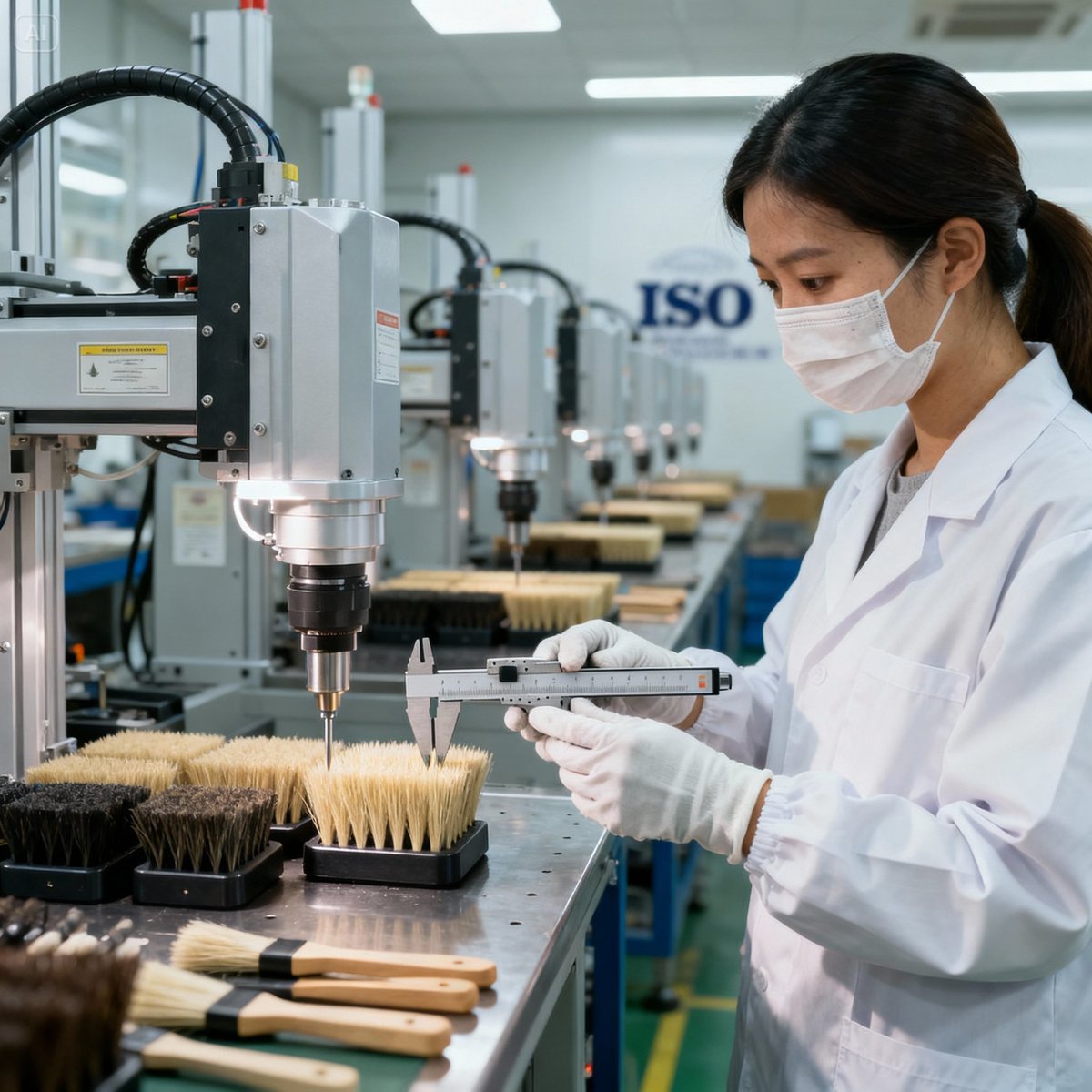
How can I judge the quality of a brush?
Brush quality can be checked from three angles: the filament, the tufting workmanship and the base material.
What to check:
1. Filament quality
- ✓ Even thickness with no obvious variation
- ✓ Does not come out easily when pulled by hand
- ✓ Springs back quickly after bending and does not deform easily
- ✗ Has an odor (may be poor-quality recycled material)
2. Tufting workmanship
- ✓ Neatly arranged, even density
- ✓ No looseness in the tuft holes
- ✓ The filament is firmly fixed at the base
- ✗ Sheds heavily in use
3. Base material
- ✓ Thick enough, does not deform easily
- ✓ Good surface treatment (no rust)
- ✓ Accurate dimensions, small tolerances
- ✗ Has burrs or cracks
4. Overall design
- ✓ Ergonomic, comfortable to hold
- ✓ Well balanced, easy to use
- ✓ Accurate mounting hole positions
Professional advice:
Always ask for samples and test them before purchasing. Do not go only by photos or price.
YC Brushes offers free sample testing. Apply now.
Conclusion: the right brush doubles efficiency and halves cost
Having read this far, you should now be clear about the differences between nylon brushes, plastic brushes and synthetic filaments.
Quick summary: a guide to choosing among the three materials
Choose a nylon brush if you need:
- Heavy-duty industrial cleaning and durability
- A high-temperature environment (80-120°C)
- Polishing, abrasive finishing, deburring
- Long-term use with the lowest total cost
Choose a plastic brush (PP/PET) if you need:
- Economy on a limited budget
- Resistance to chemicals and strong acids and alkalis
- General cleaning, household or light industrial use
- No water absorption, outdoor use
Choose synthetic filament if you need:
- Stable quality, consistent from batch to batch
- Customized functions (anti-static, antibacterial)
- Environmental sustainability and animal-friendly materials
- Volume purchasing with precise specifications
Final reminders before purchasing
-
Look at the total cost, not only the price
- A cheap brush may need replacing often and end up costing more
- Total cost = unit price × number of replacements
-
Always ask for samples to test
- What works on paper may not match reality
- Confirm the results with an on-site test
-
Choose an experienced manufacturer
- YC Brushes, with over 40 years of experience
- Factory-direct, with transparent pricing
- Custom service, with order quantities quoted per specification
-
Confirm the material certification
- Food grade must comply with the Sanitation Standard for Food Utensils, Containers and Packages (and with FDA 21 CFR 177 for export to the US)
- Environmental compliance needs to meet the EU REACH regulation
- Quality needs ISO certification

References
- ISO 4892 - Test standard for the weathering resistance of plastic materials
- FDA - Safety regulations for food contact materials (21 CFR 177)
- REACH - EU regulation on the Registration, Evaluation, Authorisation and Restriction of Chemicals
- Sanitation Standard for Food Utensils, Containers and Packages (issued under Article 17 of the Act Governing Food Safety and Sanitation)