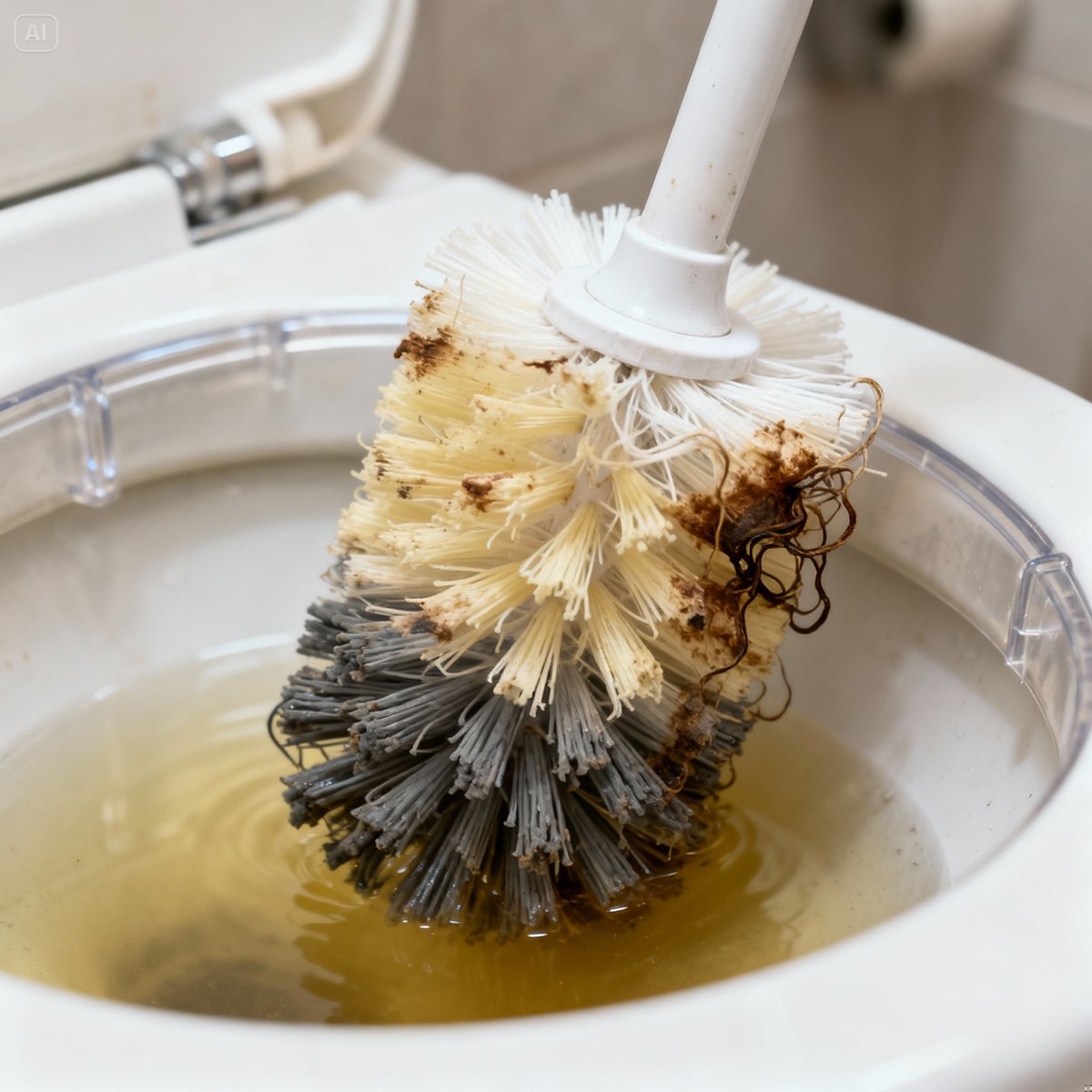
A toilet brush is an essential bathroom tool, but it is also the cleaning item most likely to harbor dirt and breed bacteria. After a few months of use, the filaments of a traditional nylon toilet brush are clogged with dirt and give off an odor, yet people are reluctant to throw it away, and carrying on with it only makes things dirtier. Choosing the right toilet brush not only gives a good cleaning result, it also keeps things hygienic and safe. But there are many kinds of toilet brush on the market: traditional nylon, silicone and disposable. How do you choose?
This article gives a full comparison of the pros and cons of the 3 types of toilet cleaning brush (hygiene, cost, eco-friendliness, convenience), introduces brands such as MUJI, and teaches you the correct way to clean a toilet and look after the brush, to help you find the toilet cleaning tool that suits you best and is hygienic and safe. (This article was written for readers in Taiwan: the brands and stores it mentions describe the Taiwan market.)
Want to know more about choosing bathroom cleaning brushes? See our bathroom cleaning brush recommendations, a full comparison of all kinds of bathroom cleaning tools.
Why the toilet brush matters | Hygiene cannot be ignored
Why is the toilet brush the cleaning item most likely to breed bacteria?
3 hygiene problems:
Problem 1: The filaments easily harbor dirt
- After every use, feces, urine and bacteria remain on the filaments of a toilet brush
- Traditional nylon filaments are densely packed, and dirt trapped in the gaps is hard to remove
- Even after rinsing with water, a large number of bacteria remain
Problem 2: A damp environment speeds up bacterial growth
- The toilet brush is stored inside its holder, with poor ventilation
- The filaments stay damp for long periods
- Bacteria and mold multiply quickly and produce odors
Problem 3: It is cleaned rarely, so dirt builds up
- Most people do not think to clean the toilet brush
- After 3-6 months of use, the filaments discolor, stiffen and smell
- Continuing to use it means cleaning the toilet with a "dirty brush"
How serious the hygiene problem is
Health risks:
- Pathogens such as E. coli and Salmonella
- May cause diarrhea, gastroenteritis and urinary tract infections
- The risk is higher for people with weaker resistance (young children, older people, pregnant women)
Cross-contamination:
- Water droplets splashed from the toilet brush may contaminate the floor and walls
- Not washing your hands thoroughly after touching the toilet brush may contaminate other areas
- A brush kept in the wrong place may contaminate toothbrushes, towels and other items
Conclusion: choosing a hygienic, easy-to-clean toilet brush and replacing it regularly is the key to keeping the household hygienic.
The 3 types of toilet cleaning brush explained in full
Type 1: Traditional nylon toilet brush | The most common, but a hygiene concern
Design features:
- A ball-shaped or oval brush head, about 8-12 cm in diameter
- Nylon filaments, densely arranged
- A long handle (30-40 cm), usually plastic or wood
- Comes with a holder; the brush head is stored in the holder
Price range: budget range
Pros:
- ✓ The cheapest price
- ✓ Easy to buy, available at every major retailer
- ✓ Strong cleaning power; scrubs off stubborn stains
- ✓ Dense filaments and a large contact area
Cons:
- ⚠ A serious hygiene problem (harbors dirt most easily)
- ⚠ The filaments easily deform and tangle
- ⚠ Needs regular replacement (every 3-6 months recommended)
- ⚠ Water collecting in the holder causes odors
- ⚠ Hard to clean completely after use
Who it suits:
- An extremely limited budget
- Very infrequent cleaning (once a week or less)
- Those who do not mind replacing it regularly
Type 2: Silicone toilet brush | A hygiene upgrade, easy to wash
Design features:
- A silicone brush head in a flat or ball-shaped design
- Thicker, longer and more widely spaced bristles
- Does not easily harbor dirt; easy to wash
- Usually molded in one piece
Price range: mid-price range
Pros:
- ✓ Much better hygiene (does not easily harbor dirt)
- ✓ Easy to wash; a rinse with water is enough
- ✓ Does not deform easily; high durability (1-2 years)
- ✓ Will not scratch the toilet surface
- ✓ Silicone is a more environmentally friendly material
Cons:
- ⚠ A higher price
- ⚠ Cleaning power slightly below a nylon brush
- ⚠ More widely spaced bristles and a small contact area
- ⚠ Needs more passes
Who it suits:
- Those who care about hygiene
- Those whose budget allows
- Those who want long-term use (1-2 years)
- Toilets with light to moderate dirt
Type 3: Disposable toilet cleaning brush | The most hygienic, but costly
Design features:
- The brush head is disposable and thrown away after use
- The long handle is reusable
- The brush head usually contains cleaner
- How to use it: attach the head → clean → press to release → the head is flushed down the toilet
Price range: mid-price range (handle + a set of brush heads; the Fresh Brush kit, for example, comes with 4 brush heads and a storage caddy)
Pros:
- ✓ The most hygienic (thrown away after use, zero bacteria)
- ✓ No need to wash the brush
- ✓ No dirty brush head to store (the head is flushed away after use; the handle still needs a caddy, and the Fresh Brush kit includes one)
- ✓ The head contains cleaner, so cleaning power is strong
- ✓ The handle design is usually more attractive
Cons:
- ⚠ The highest long-term cost
- ⚠ Replacement heads have to be bought continually
- ⚠ Creates waste, less environmentally friendly
- ⚠ Replacement heads may be hard to get
Cost analysis:
- First purchase: handle + 4 brush heads + storage caddy (taking the Fresh Brush kit as an example), with refill heads bought separately afterwards
- Refills: mid-price range / 10-20 pieces
- Monthly usage: cleaning once a week = 4 pieces/month
- Monthly cost: mid-price range
Who it suits:
- Those who care about hygiene above all
- A sufficient budget (comfortable with the long-term cost)
- Those who do not want to wash a toilet brush
- Those who want convenience
Recommended brands:
- Scrubbing Bubbles Fresh Brush (a US brand, mid-to-high price)
Disposable vs traditional toilet brushes: the full comparison
| Item compared | Traditional nylon brush | Silicone toilet brush | Disposable brush head | Notes |
|---|---|---|---|---|
| Hygiene | ★★☆☆☆ | ★★★★☆ | ★★★★★ | Disposable is the most hygienic |
| Cleaning power | ★★★★★ | ★★★☆☆ | ★★★★☆ | The nylon brush is the strongest |
| Initial cost | Budget | Mid-price | Mid-price | The nylon brush is the cheapest |
| Long-term cost (2 years) | Mid-price (replaced several times) | Mid-price (hardly ever replaced) | High-price (heads bought continually) | The silicone brush saves the most over time |
| Replacement frequency | 3-6 months | 12-24 months | Every use | Disposable is replaced every time |
| Difficulty of washing | ★★★★★ (very hard) | ★★☆☆☆ (easy) | ★☆☆☆☆ (no washing needed) | Disposable is the most convenient |
| Durability | 6-12 months | 12-24 months | The handle lasts 1-2 years | The silicone brush is the most durable |
| Eco-friendliness | ★★☆☆☆ | ★★★★☆ | ★☆☆☆☆ | Disposable is the least eco-friendly |
| Ease of buying | ★★★★★ | ★★★☆☆ | ★★★☆☆ | The nylon brush is the easiest to buy |
| Appearance | ★★☆☆☆ | ★★★☆☆ | ★★★★☆ | Disposable designs look better |
| Rating | ★★☆☆☆ | ★★★★☆ | ★★★★☆ | Choose according to need |
Choosing advice
When to choose a traditional nylon brush:
- ✓ An extremely limited budget
- ✓ A heavily soiled toilet that needs strong cleaning
- ✓ Regular replacement is acceptable (every 3-6 months)
When to choose a silicone toilet brush (most recommended):
- ✓ You care about hygiene and durability
- ✓ A moderate budget
- ✓ You want long-term value for money (the lowest cost over 2 years)
- ✓ You do not want to replace the brush often
When to choose disposable brush heads:
- ✓ You care about hygiene above all (obsessive about cleanliness)
- ✓ A sufficient budget (comfortable with the long-term cost)
- ✓ You do not want to wash a toilet brush
- ✓ You do not mind it being less eco-friendly
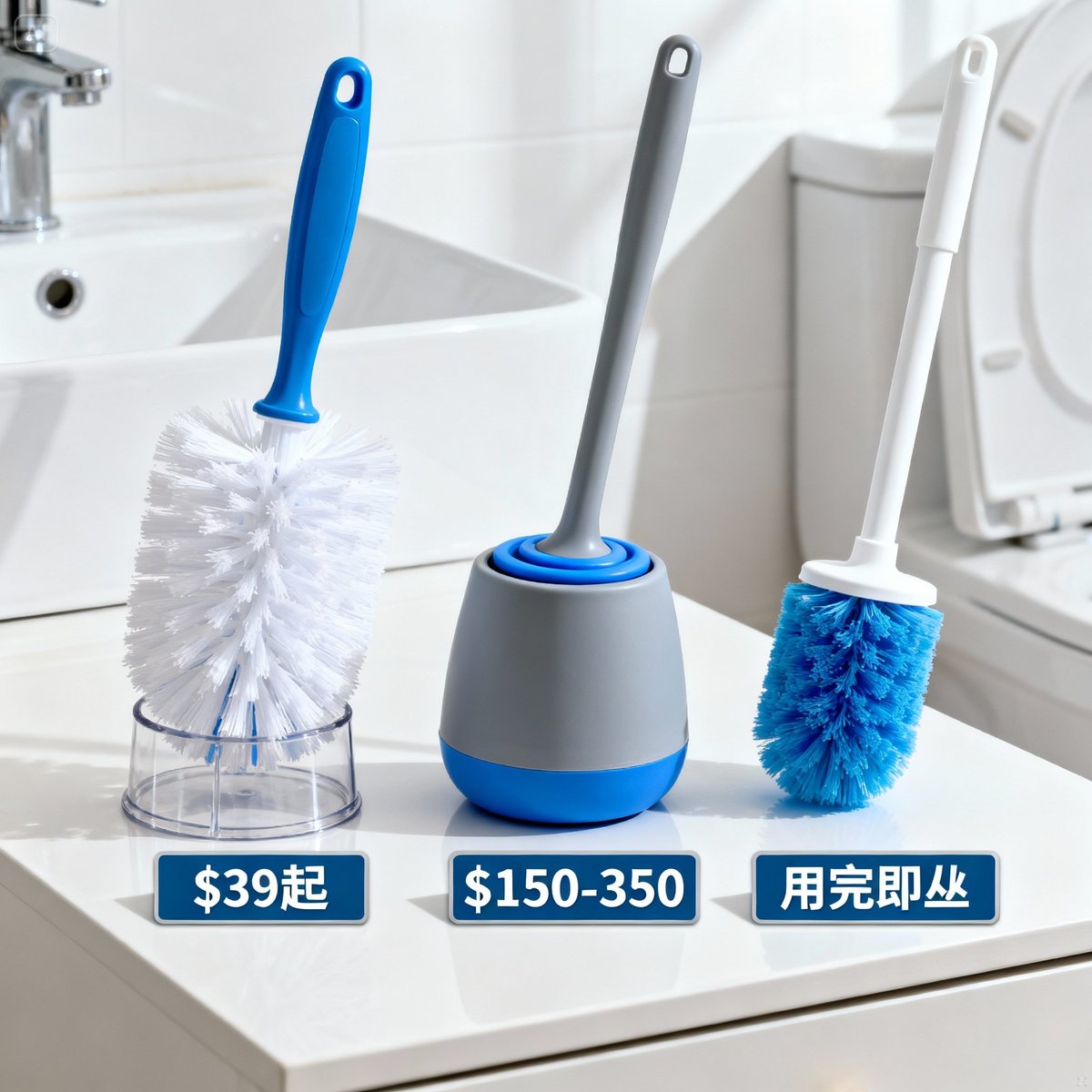
Recommended toilet cleaning brush brands | 3 popular products
Recommendation 1: Scrubbing Bubbles Fresh Brush disposable brush heads | The most hygienic choice
Price: mid-to-high (handle + 4 brush heads + storage caddy)
Features:
- A well-known US cleaning brand
- Disposable brush heads, thrown away after use
- The brush heads contain cleaner
- An attractive handle design
Pros:
- ✓ The most hygienic (thrown away after use)
- ✓ No need to wash the brush
- ✓ The heads contain cleaner, so cleaning power is strong
- ✓ An attractive design
Cons:
- ⚠ A high long-term cost (heads have to be bought continually)
- ⚠ Replacement heads are not easy to get
- ⚠ Less eco-friendly
Who it suits: those who care about hygiene above all, have a sufficient budget and want convenience
Recommendation 2: Daiso toilet brush | The first choice for beginners
Price: budget
Features:
- A budget toilet brush
- Easy to buy (Daiso stores across Taiwan)
Pros:
- ✓ An affordable price
- ✓ Easy to buy
Cons:
- ⚠ Average quality and lower durability
Who it suits: buyers on a tight budget, renters
Recommendation 3: MUJI toilet brush | Minimalist looks
Price: mid-to-high
Features:
- Designed by MUJI of Japan
- A minimalist style with a quality feel
- The brush head is replaceable
Pros:
- ✓ An attractive design that suits a minimalist bathroom
- ✓ Stable quality
- ✓ The brush head is replaceable, extending the service life
Cons:
- ⚠ A higher price
- ⚠ Fewer places to buy it (MUJI stores or the official website)
Who it suits: those who care about design and like the MUJI style
The correct way to clean a toilet | A deep clean in 6 steps
Step 1: Prepare the tools and materials
Tools you need:
- 1 toilet brush
- Toilet cleaner or bleach
- 1 pair of rubber gloves
- Disinfectant spray (optional)
Choosing a cleaner:
- Dedicated toilet cleaner: the most recommended; strong cleaning power that does not harm the toilet
- Bleach: use it diluted (water : bleach = 10:1)
- Baking soda + white vinegar: natural and eco-friendly, but weaker cleaning power
Step 2: Spray or pour in the cleaner
How to do it:
- Put on the rubber gloves
- Lift the toilet lid and seat
- Spray or pour the cleaner onto the inner wall of the bowl (circling from top to bottom)
- Concentrate on the waterline and around the rim outlets
- Leave it for 5-10 minutes so the cleaner softens the dirt
Tip: flush first to lower the water level before applying the cleaner; it will not be diluted and works better.
Step 3: Scrub the inside of the bowl
How to do it:
- Start at the upper rim of the bowl and scrub from top to bottom
- Concentrate on the waterline (where limescale forms most easily)
- Reach into the trap and scrub back and forth
- Scrub carefully around the rim outlets too
Tip: keep the toilet brush at a 45-degree angle to the inner wall while scrubbing for a better cleaning result.
Step 4: Flush and scrub again
How to do it:
- Flush the toilet
- See whether any stains remain
- If they do, repeat steps 2-3
Tip: stubborn stains may need scrubbing 2-3 times.
Step 5: Clean the outside of the toilet and the seat
How to do it:
- Wipe the outside of the toilet with a damp cloth and cleaner
- Concentrate on the seat, the underside of the seat and the base of the toilet
- Wipe once with clean water
- Wipe dry with a dry cloth
Note: a cloth is recommended for cleaning the outside; do not use the toilet brush (it is unhygienic).
Step 6: Wash and store the toilet brush
Washing a traditional brush / silicone brush:
- Rinse the toilet brush with clean water inside the bowl
- Shake off the water (shake it several times)
- Spray with disinfectant (optional)
- Let it air dry for 10-15 minutes before putting it back in the holder
Disposable brush heads:
- When you have finished cleaning, press the release button on the handle
- The brush head drops into the toilet
- Just flush
Tip: a silicone brush can be rinsed clean directly with water, which is very convenient. A traditional nylon brush should be soaked in bleach to disinfect it once a month.

Cleaning and caring for a toilet brush
Cleaning and care of a traditional nylon brush
Washing after use (every time):
- Rinse the filaments with clean water inside the bowl
- Shake off the water (10-20 times)
- Spray with disinfectant (alcohol or disinfectant spray)
- Leave it in a ventilated place to dry for 10-15 minutes
- Put it back in the holder
Deep clean (once a month):
- Prepare 1 liter of clean water + 100 ml of bleach
- Soak the brush head for 15-20 minutes
- Rinse it clean with water
- Store it once it is dry
Cleaning the holder (once a week):
- Pour out the water collected in the holder
- Wash the holder with cleaner
- Rinse with clean water
- Use it once it is dry
When to replace:
- The filaments are clearly deformed or tangled
- The filaments are discolored (brown, black)
- There is an odor that cannot be removed
- It has been used for more than 6 months
Cleaning and care of a silicone toilet brush
Washing after use (every time):
- Rinse the brush head with clean water (very easy)
- Shake off the water
- Let it air dry for 5-10 minutes
- Put it back in the holder
Deep clean (once a month):
- Wash the brush head with cleaner
- Rinse with clean water
- Use it once it is dry
Advantage: a silicone brush is very easy to clean. A rinse with water gets it clean, and it hardly ever needs a deep clean.
When to replace:
- The silicone bristles break
- The brush head is clearly deformed
- It has been used for more than 2 years
Care of disposable brush heads
Cleaning the handle (once a month):
- Wipe the handle with a damp cloth
- Wipe dry with a dry cloth
- Disinfect with alcohol if necessary
Storing the brush heads:
- Keep them in a dry, ventilated place
- Keep them away from moisture
When to replace:
- The handle is damaged
- The release mechanism is faulty
FAQ
How often does a toilet brush need replacing?
It depends on the type of brush.
Traditional nylon brush: 3-6 months
- No longer than 6 months at most is recommended
- If it is discolored, smells or is deformed, replace it immediately
- With frequent use (twice a week or more), replace every 3 months
Silicone toilet brush: 12-24 months
- In normal use it lasts 1-2 years
- Replace when the bristles break or it is clearly deformed
- 3-4 times as durable as a nylon brush
Disposable brush heads: every use
- The head is thrown away after each use
- The handle lasts 1-2 years
How to judge when to replace:
- The filaments are deformed or tangled
- The filaments are discolored (brown, black)
- There is an odor that cannot be removed
- The cleaning result is clearly worse
Is a disposable toilet brush really more hygienic?
Yes, disposable brush heads are the most hygienic choice.
Hygiene advantages:
- ✓ Thrown away after use, with zero bacteria left behind
- ✓ No need to wash the brush
- ✓ No dirty brush head to store
- ✓ A brand-new head every time
But there is a price:
- ⚠ The highest long-term cost
- ⚠ Creates waste, less environmentally friendly
- ⚠ Replacement heads have to be bought continually
Conclusion: if your budget allows and hygiene matters to you above all, disposable brush heads are the best choice. If you take long-term cost and the environment into account, a silicone brush is the more balanced choice.
Is the cleaning power of a silicone toilet brush really weaker?
Its cleaning power is indeed slightly below that of a nylon brush, but the difference is small.
Reasons:
- Silicone bristles are thicker and more widely spaced, so the contact area is small
- The bristles are softer, so they are slightly less able to remove stubborn stains
The difference in real use:
- Light dirt: a silicone brush and a nylon brush give the same result
- Moderate dirt: a silicone brush needs 1-2 more passes
- Heavy stains: a silicone brush may need a cleaner and 2-3 more passes
How to make up for it:
- Spray on cleaner before use and leave it for 10 minutes
- Scrub more times
- Clean regularly (do not wait for dirt to build up)
Conclusion: as long as you clean regularly (1-2 times a week), the cleaning power of a silicone brush is entirely sufficient. Only when the toilet has not been cleaned for a long time and is heavily soiled does a nylon brush have a clear advantage.
Can a toilet brush be disinfected with bleach?
Yes, and regular disinfection is recommended.
Disinfection methods:
Method 1: Soaking in bleach (recommended)
- 1 liter of clean water + 100 ml of bleach (a ratio of 10:1)
- Soak the brush head for 15-20 minutes
- Rinse it clean with water
- Use it once it is dry
- Frequency: once a month
Method 2: Disinfectant spray
- Spray with alcohol or disinfectant spray after use
- Leave it for 5-10 minutes
- Put it back in the holder
- Frequency: after every use
Method 3: Boiling
- Only for heat-resistant materials (not suitable for some plastics)
- Boil for 5-10 minutes
- Use it once it is dry
Points to note:
- Do not make the bleach too concentrated (above 10%), as it damages the filaments
- Always rinse it clean with water after disinfecting
- Store it only once it is dry, to avoid damp
What should I do about water collecting in the toilet brush holder?
Water collecting in the holder is a breeding ground for bacteria and must be cleaned out regularly.
What to do:
After every use:
- Shake the filaments dry before putting the brush in the holder
- Let the brush head air dry for 10-15 minutes before covering it
Once a week:
- Pour out the water collected in the holder
- Wash the holder with cleaner
- Rinse with clean water
- Use it once it is dry
Choose a well-designed holder:
- ✓ The holder has ventilation holes
- ✓ The holder can be taken apart for washing
- ✓ The holder is transparent or white (so you can see whether water has collected)
Tips for avoiding standing water:
- Always shake the filaments dry after use (10-20 times)
- Air dry with the filaments facing up for 10-15 minutes
- Choose a holder with a good draining design
Where should a toilet brush be kept?
Where the toilet brush is kept affects both hygiene and convenience.
Recommended positions:
Position 1: On the floor beside the toilet (the most common)
- ✓ Convenient, always within reach
- ⚠ Takes up floor space
- ⚠ Ventilation must be ensured to avoid damp
Position 2: Behind the toilet or in a corner to the side
- ✓ Does not take up the main space
- ✓ More hidden and tidier
- ⚠ Slightly less convenient to reach
Position 3: Inside a cabinet (not recommended)
- ✓ Completely hidden and tidy
- ⚠ Poor ventilation; mold forms easily
- ⚠ Inconvenient to reach
Principles for placing it:
- Keep it away from personal items such as toothbrushes and towels (at least 1 meter)
- Keep it ventilated; avoid damp, enclosed spaces
- Keep it easy to reach, not too far away
- Choose an attractive brush and holder that do not spoil the look of the bathroom
Conclusion: choose the right toilet brush for both cleaning and hygiene
After a full comparison and analysis, choosing a suitable toilet cleaning brush is essential for hygiene and safety. Each of the three types has its pros and cons; choose the one that best fits your own needs.
Final buying advice
A limited budget:
- Choose a traditional nylon brush (budget range)
- Remember to replace it every 3-6 months
Hygiene and long-term value for money (most recommended):
- Choose a silicone toilet brush (mid-price range)
- Look for a brush head made of silicone and a holder with a ventilated design
- The lowest cost over 2 years, with good hygiene
Hygiene above all (with a sufficient budget):
- Choose disposable brush heads (from the mid-price range up)
- Scrubbing Bubbles Fresh Brush
- The most hygienic, but with a high long-term cost
Checklist before buying
- Confirm your budget range
- Confirm how much hygiene matters to you
- Confirm whether regular replacement is acceptable
- Confirm whether eco-friendliness matters to you
- Confirm how convenient the retail channels are
Want to know more about bathroom cleaning tools? See our bathroom cleaning brush recommendations, a full comparison of all kinds of bathroom cleaning tools.
Professional cleaning brush solutions from YC Brushes
If you are a professional user who needs toilet cleaning brushes in volume, such as a hotel, office building, property management company or cleaning company, YC Brushes has over 40 years of professional brush manufacturing experience and offers:
Volume purchasing offers
- Volume purchasing offers for hotels, office buildings and property management
- Filament material, stiffness and shape can be customized
- Professional consultation
Contact YC Brushes now to discuss your professional cleaning brush needs, or see the full product catalog.
Further reading
Want to know more about cleaning brushes? We recommend:
- The complete buying guide to cleaning brushes | All about straw brushes, tube brushes and electric brushes
- Bathroom cleaning brush recommendations | A full comparison of popular bathroom brushes
- Are window screen cleaning brushes any good? | A review of the Daiso window screen brush and tips for using it
- Electric cleaning brush recommendations 2026 | A full comparison of popular brands
- How often should brushes be washed (coming soon) | The complete guide to cleaning brushes, with recommended cleaning fluids
Visit the blog to explore more specialist articles on brushes and cleaning tools.