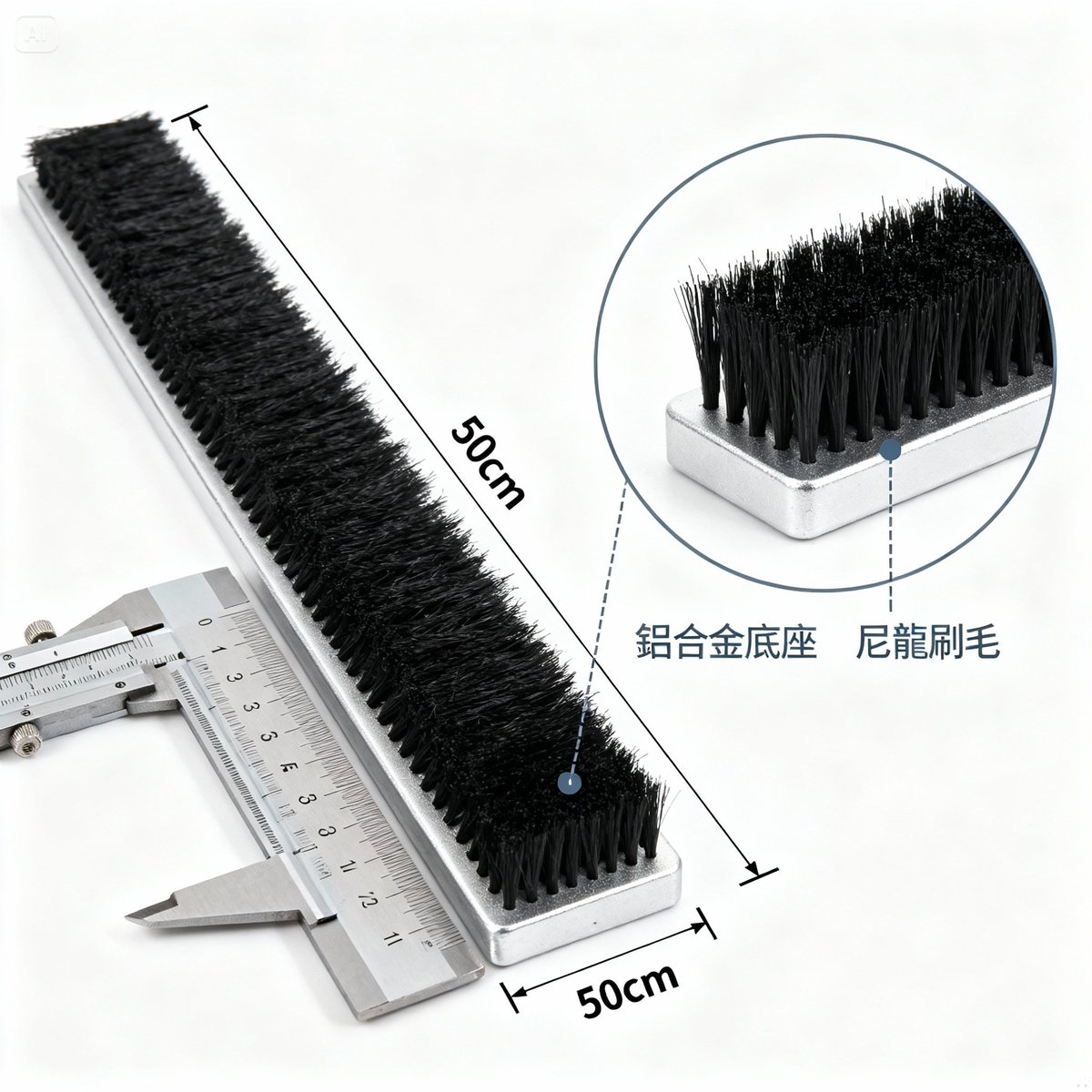
The filament of the plate brush was chosen correctly, and the brush face is still not flat.
The problem is often not the filament. It is the board underneath.
A tufted plate brush is a brush made by drilling holes in a board and setting the tufts into it one by one. A board swells when it absorbs water, softens when it is heated and works loose when it is not fastened tightly. This article compares three common base plate materials, epoxy fiberglass board, Bakelite board and PE board, and uses two specifications we have made to explain what should be made clear before asking for a quote.
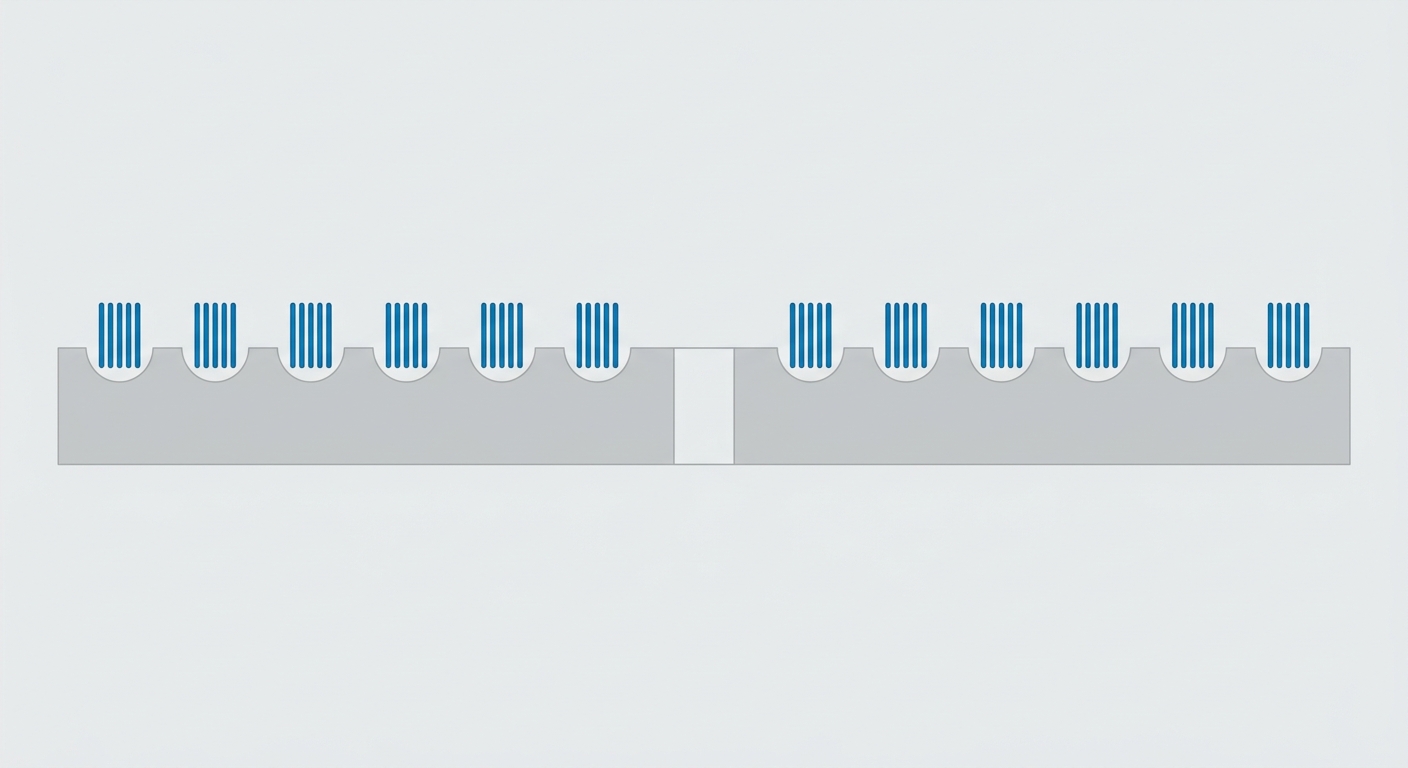
Caption: the parts of a tufted plate brush: the base plate, the tuft holes, the tufts, and the fastening holes that fix it to the machine
Not sure about the base plate material? First tell us whether the brush is used in a dry or wet environment and whether it will touch chemical solutions, and we will reply with the workable materials and their limits → Send a technical question
The four things a tufted plate brush base has to handle: hole position accuracy, deformation from water absorption, fastening and heat resistance
The base plate has to handle 4 things at once: hole position accuracy, deformation from water absorption, fastening and heat resistance. Of these, water absorption is the one most easily overlooked. ASTM D570, the standard test method for the water absorption of plastics, states that the moisture content of a plastic is closely related to its mechanical strength, appearance and dimensions (ASTM International, 2022). When the dimensions of the board change, the brush face changes with them.
Why are plate brushes especially vulnerable to water absorption?
The same standard has another sentence worth noting: cut edges usually absorb water faster than molded surfaces. The base plate of a tufted plate brush has many drilled holes, and every hole wall is a cut surface.
We have put the requirements for a base plate into four questions, to be answered one by one when selecting the material:
| What it has to handle | The question to ask when selecting material | What happens if the choice is wrong |
|---|---|---|
| Hole position accuracy | After this kind of board is drilled, will the hole diameter and hole pitch hold? | Tufts are unevenly tight, and the brush face is uneven in height |
| Deformation from water absorption | Is the operating environment dry, wet, or one that needs washing down? | The board swells or warps, and the brush face is not flat |
| Fastening | How is the board fixed to the machine? Tapped directly, or with through bolts? | Stripped threads, and the brush works loose on the machine |
| Heat resistance | How high is the working temperature? Is there frictional heat? | The board softens and deforms |
Whether the tufts themselves will come out is a separate question; for how to judge it, see factory acceptance criteria for brush shedding.
Epoxy fiberglass board (FR-4 type): dimensionally stable, but the machining cost has to be counted in
Epoxy fiberglass board is a laminate pressed from glass fiber cloth impregnated with epoxy resin. Its 24-hour water absorption is 0.10%, its density is 1.80 g/cm³, and its maximum operating temperature is 284°F, that is 140°C (Laminated Plastics). The flame-retardant version, FR-4, is used mainly in the printed circuit board industry as the base material of PCBs. Values differ between brands, so when selecting material, go by the technical data of the actual supplier.
Low water absorption and high rigidity: these two points make it suitable for plate brushes that are large in area and must be flat.
We once made a fiberglass board brush measuring 600 × 232 × 10 mm, tufted with nylon filament over the whole face, with a tolerance of ±0.5 mm required on the board face. With a board 600 mm long and only 10 mm thick, if the material absorbed water or warped easily it would be very hard to keep the brush face flat. Fiberglass board was chosen precisely because it does not deform easily.
And its drawbacks?
It is expensive and hard to machine. The material supplier itself states that G-10 can be extremely difficult to cut and machine (Laminated Plastics). A machining service provider also notes that the abrasiveness of fiberglass board wears cutting tools frequently, that machining produces a large amount of dust, and that installing an exhaust system is recommended (Prolean Tech). A large board has many tuft holes to drill, and both tool wear and machining time show up in the cost.
There is one more point that is easily confused. The material supplier's G-10 technical data states that FR-4 is a flame-retardant G-10 epoxy fiberglass laminate (Laminated Plastics). Flame retardancy is what matters about it in the circuit board industry; for a plate brush it is usually not the reason to choose it. Do not pay extra for a property you will not use.
The names people commonly use, "fiberglass board", "glass fiber board" and "epoxy board", mostly refer to the same class of material on a plate brush inquiry. Writing "epoxy resin, glass fiber cloth base" clearly is the least likely to go wrong.
Bakelite board (paper phenolic laminate): cost-effective, but its water absorption is 20 times that of fiberglass board
Bakelite board is a laminate of paper base impregnated with phenolic resin. Its 24-hour water absorption is 2.0% and its maximum operating temperature is 257°F, that is 125°C (Laminated Plastics). The same data sheet describes it as having good moisture resistance, and its list of applications includes high-humidity settings; another sentence says that because of its performance and cost-effectiveness, this kind of material is often chosen as an insulating material for low-voltage electrical equipment in dry environments. Our reading is that these descriptions look at it from the point of view of electrical insulation. When it is used as the base plate of a plate brush, what we care about is whether the dimensions are stable, so we go back to the water absorption figure.
2.0% does not sound like much. Compared with the 0.10% of fiberglass board, it is 20 times as much.
The strength is also a step behind. The same material supplier's data shows that the lengthwise flexural strength of paper phenolic board is 16,000 psi and that of epoxy fiberglass board is 75,000 psi, a gap of nearly 5 times. The longer and thinner the board, the more obvious this gap becomes.
So can Bakelite board not be used? That is not the case.
For dry, room-temperature applications where the board is not large, Bakelite board is a good-value choice. Our concern is with humid environments and large sizes: with a board material of high water absorption, the risk that humidity affects the dimensions is greater, hole positions and the flatness of the brush face are harder to guarantee, and the larger the board, the more obvious this is. This is our judgment based on the water absorption figure, not a statement by the material supplier.
Here there is a terminology trap. On a request form we received, the same board was given two names at once, "epoxy board" and "glass fiber board". In search data we can also see queries such as "Bakelite board fr4" that write the two materials together. In fact:
- Bakelite board: paper base, phenolic resin
- FR-4: glass fiber cloth base, epoxy resin
The two differ by 20 times in water absorption and by nearly 5 times in flexural strength, and their prices differ too. Writing only "Bakelite board" or only "fiberglass board" on an inquiry can lead to a quote for the wrong material. Write out the base material and the resin, and the two sides will not be talking past each other.
PE board: no water absorption and chemical resistance, and what to watch when tapping threads for fastening
PE board means polyethylene board; the technical data for high-density polyethylene (HDPE) is used as the example below. Its water absorption is given in the technical data as "slight", meaning a very small amount; its density is about 0.96 g/cm³ and its melting point is 259–267°F, which converts to about 126–131°C (Plastics International). The same data sheet lists it as a chemical-resistant and corrosion-resistant material.
It does not absorb water, it resists chemicals, and it is light. For wet environments or ones that need washing down, it is a very natural choice.
We once made a very small PE board brush with this specification:
- Board: 50 × 25 × 16 mm
- Tuft holes: 16 holes in 3 rows, hole diameter 4 mm
- Filament: PA66 nylon, filament diameter 0.3 mm, trim length 28 mm
- Fastening: an M6 × 1.0 thread tapped in the center of the board, screwed directly onto the machine
The customer was a machinery manufacturer, and our assessment was that this brush is mounted on the machine to sweep away chips.
This design has one point worth noting: the thread is tapped directly in the PE board.
Can it be done this way? Yes, but you need to know the limits. The same technical data shows that the hardness of high-density polyethylene is Shore D 67, which makes it a plastic on the soft side. Threads tapped in a soft material cannot withstand repeated removal and refitting or high torque.
Our judgment is as follows:
- The brush is fitted and then seldom removed, and the load is small → direct tapping is acceptable
- Repeated removal and refitting, vibration, or high fastening torque → assess whether to lengthen the effective thread length or switch to a metal insert
This PE board brush was made 16 mm thick, and one of the reasons was to give the M6 thread enough engagement length.
The other limit of PE is temperature. Its melting point is about 126–131°C; the maximum operating temperature of fiberglass board is 140°C and of Bakelite board 125°C. These two kinds of figures mean different things: a maximum operating temperature means "can still be used", while a melting point means "starts to melt", so the temperature at which PE board can actually be used is lower than its melting point. PE board is not suitable for environments with frictional heat or high temperatures.
For how PE differs from other plastic brush materials, see plastic brushes and nylon brushes compared.
Material not decided yet? Tell us the environment first
Dry or wet, the working temperature, whether it will touch chemical solutions, and how large the board is. With these four things, the unsuitable base plates can be ruled out first, without quoting a round for all three.
→ Fill in an inquiry and attach the base plate dimensions and operating environment
Comparison table of the three base plates: water absorption, heat resistance, strength and suitable environments
Putting the three base plates side by side, the 24-hour water absorption is 0.10%, 2.0% and slight respectively, and this is the item with the largest difference (Laminated Plastics). In the table below, the figures for fiberglass board and Bakelite board are taken from the technical data of Laminated Plastics and those for PE board from the HDPE data sheet of Plastics International; cells for which the data gives nothing say "Not listed". The "Suitable environments" row is our judgment based on the items above it, not a statement by the material suppliers.
| Item compared | Epoxy fiberglass board (G-10 / FR-4) | Bakelite board (paper phenolic board) | PE board (high-density polyethylene) |
|---|---|---|---|
| Base material and resin | Glass fiber cloth + epoxy resin | Paper + phenolic resin | Polyethylene (no base material) |
| 24-hour water absorption | 0.10% | 2.0% | Slight (very small amount) |
| Temperature reference value | Maximum operating 140°C | Maximum operating 125°C | Melting point about 126–131°C |
| Lengthwise flexural strength | 75,000 psi | 16,000 psi | Not listed |
| Density | 1.80 g/cm³ | 1.35 g/cm³ | About 0.96 g/cm³ |
| Lengthwise coefficient of linear expansion | 0.55 × 10⁻⁵ /°F | 0.80 × 10⁻⁵ /°F | Not listed |
| Machinability | The supplier notes it is extremely difficult to cut and machine | Not listed | Not listed (hardness Shore D 67, on the soft side) |
| Suitable environments | Large sizes, must be flat, dry or wet | Dry, moderate temperature, small to medium sizes | Wet, washed down, in contact with chemical solutions |
| Main limits | High material and machining cost | High water absorption, lower strength | Soft, not resistant to high temperature, limited thread holding strength |
Two reminders on using this table.
First, the values are typical values from two material suppliers, and different brands and grades will vary. Both data sheets note that values of this kind are for reference and comparison and should not be used directly as design specifications.
Second, there are no prices in the table. Board prices change with size, thickness and purchase quantity, so we do not write figures in the article and quote against the actual specification.
For how to pair the filament material, see brush material properties compared.
How much a temperature change deforms a large plate brush: a trial calculation with the coefficient of linear expansion
Taking a board 600 mm long and a temperature change of 10°C, the length of epoxy fiberglass board changes by about 0.06 mm and that of Bakelite board by about 0.09 mm. The basis is the lengthwise coefficient of linear expansion measured by the material supplier to ASTM D696: 0.55 × 10⁻⁵ /°F for fiberglass board and 0.80 × 10⁻⁵ /°F for paper phenolic board (Laminated Plastics).
The calculation is a single line: length × coefficient of linear expansion × temperature difference. A temperature difference of 10°C equals 18°F.
| Base plate | Lengthwise coefficient of linear expansion | Change in length for 600 mm and a 10°C temperature difference |
|---|---|---|
| Epoxy fiberglass board | 0.55 × 10⁻⁵ /°F | About 0.06 mm |
| Bakelite board (paper phenolic board) | 0.80 × 10⁻⁵ /°F | About 0.09 mm |
0.06 mm and 0.09 mm: are these two numbers large?
Looking at the 600 mm fiberglass board brush with its ±0.5 mm tolerance, 0.06 mm takes up only about 12% of the one-sided tolerance. With Bakelite board it would be no more than 17%. In other words, on temperature alone, both boards can hold this tolerance.
So when a large plate brush deforms, temperature is usually not the main cause. What really opens up the gap is water absorption and strength: the former differs by 20 times and the latter by nearly 5 times.
This trial calculation has two limits. First, the HDPE data sheet we have does not list a coefficient of linear expansion, so PE board was not calculated. Second, there is no corresponding coefficient to plug in for the dimensional change caused by water absorption; here we can only say that it is related to moisture content and cannot give a figure.
Customer-supplied filament and base plate tolerances: three things to make clear when asking for a quote
When asking for a quote, 3 things should be made clear first: who supplies the filament, where the tolerance applies, and which drawing governs the number of holes and the trim length. If these three things are not clear, both the lead time and acceptance will run into problems.
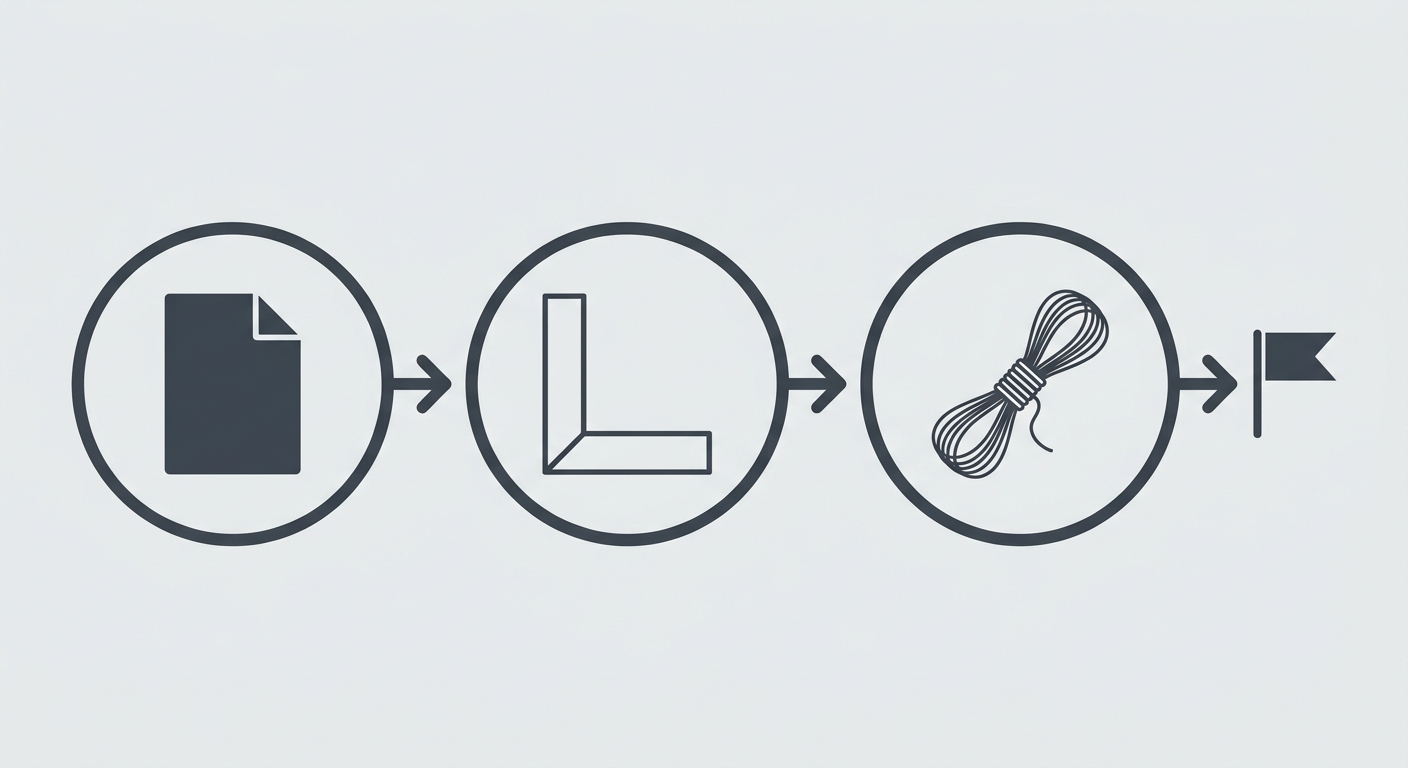
Caption: the lead time starts counting only when the order, the dimensional drawing and the customer-supplied filament have all arrived
Who supplies the filament for the plate brush
We once made a fiberglass board brush measuring 600 × 232 × 10 mm for which the customer prepared the nylon filament. For this kind of "customer-supplied material" job, our lead time counts from the day all three things are in place: the order, the dimensional drawing file, and the filament arriving at the factory.
If one is missing, the count does not start.
This is not being difficult. If the filament has not arrived, the tufting machine cannot start; if the drawing is not settled, the holes cannot be drilled. Writing the conditions for starting the count on the quotation is what makes both sides understand the lead time in the same way.
Where the base plate tolerance applies
With the phrase "tolerance ±0.5 mm", you need to ask clearly which dimension the tolerance is for. Is it the outline of the board? The hole pitch? Or the height of the brush face after tufting?
The three differ greatly in difficulty. The outline of the board is the easiest to hold; the height of the brush face involves trim length and trimming and is the hardest. If only one general tolerance is written, each side tends to have its own version at acceptance.
Which drawing governs the number of tuft holes and the trim length
The number of holes, the layout and the trim length of a plate brush should be governed by the dimensional drawing, not by a verbal description or a photo of a sample. Until the drawing is finished, a quote can only be a rough estimate.
The full list of what to prepare before asking for a quote is in the specification checklist for a custom brush inquiry. For the steps between placing the order and shipment, see the full explanation of the brush manufacturing process. If the plate brush is to use abrasive filament containing abrasive, the selection method is covered separately in filament diameter and abrasive criteria for deburring brushes.
FAQ
Are FR-4 and Bakelite board the same material?
No. FR-4 is a laminate of glass fiber cloth impregnated with epoxy resin, and Bakelite board is a laminate of paper base impregnated with phenolic resin. The same material supplier's data shows a water absorption of 0.10% for fiberglass board and 2.0% for Bakelite board, a difference of 20 times. When asking for a quote, please write out the base material and the resin to avoid a quote for the wrong material.
Can a PE board brush be tapped and screwed directly onto the machine?
Yes, but with limits. The hardness of high-density polyethylene is about Shore D 67, a plastic on the soft side, and the threads cannot withstand repeated removal and refitting or high torque. Where the brush is seldom removed and the load is small, it can be tapped directly; where repeated removal and refitting is needed or there is vibration, assess a longer thread or a switch to a metal insert.
How is the base plate thickness of a tufted plate brush decided?
The thickness has to satisfy both the tuft hole depth and the fastening requirement. In the examples we have made, the 600 mm long fiberglass board brush uses a thickness of 10 mm, while the small 50 mm long PE board brush uses 16 mm, because the latter has an M6 thread tapped directly in it and needs enough engagement length.
Why is the lead time for a fiberglass board brush longer?
There are 2 main reasons. Fiberglass board wears cutting tools heavily, so drilling a large number of tuft holes takes longer; and if the filament is supplied by the customer, the lead time starts counting only when all 3 things, the order, the dimensional drawing and the filament, have arrived. Scheduling the arrival date of the customer-supplied material in advance is the most direct way to shorten the lead time.
Which base plate should be chosen for humid environments or ones that need washing down?
Consider PE board or epoxy fiberglass board first. PE board has slight water absorption and resists chemicals, and epoxy fiberglass board has a water absorption of about 0.10%; both suit wet environments. Bakelite board has a water absorption of about 2.0%, and we do not recommend it where dimensional stability is required. When the temperature is high, rule out PE board.
Ask about the environment first, then choose the base plate
The order for selecting a base plate material is: ask about the environment first, then look at the size, and only then talk about cost.
For wet conditions, washing down or contact with chemical solutions, think of PE board; for a large board that must be flat, think of epoxy fiberglass board; for dry, room-temperature conditions and a modest size, Bakelite board is enough. Where the temperature is high, rule out PE first; where it is humid and dimensional stability is required, we would rule out Bakelite first.
The comparison in this article has its boundaries too. The values come from the typical values of two material suppliers and do not cover every brand; the judgment on fastening is summarized from specifications we have made and gives no torque figures. The actual design still has to go back to your machine and operating conditions.
Are your base plate dimensions ready?
Send us the base plate dimensions, the number of holes and the fastening method, together with the operating environment, and we will assess the quote and lead time against the actual specification. If you would like to see which brush types exist first, you can also browse the product page.
→ Fill in an inquiry | Browse existing brush types
Further reading
- Brush materials explained: the properties of hog bristle, nylon and steel wire compared
- What to prepare for a custom brush quote: a checklist of the three spec elements
- The brush manufacturing process revealed: the full steps from design to shipment
- Five differences between plastic brushes and nylon brushes
- Industrial brush application cases: custom examples from eight industries