How long has it been since you cleaned your comb? A comb touches your hair and scalp every day and builds up a great deal of hair, sebum, dust and styling product residue. This not only affects how well it combs, it can also become a breeding ground for bacteria and lead to scalp problems. A dedicated comb cleaning brush reaches into the gaps between the teeth and removes the dirt effectively. This article brings together comb cleaning brush recommendations from retail channels such as POYA and Cosmed, a step-by-step cleaning tutorial and a comparison of places to buy, so your comb looks like new. The stores and brands described here reflect the Taiwan market.
Why do you need a comb cleaning brush?
How dirty is a comb? The startling truth
Types of dirt that build up:
- Hair: tangled between the teeth and hard to remove
- Sebum and dandruff: oil builds up at the roots of the teeth
- Dust and lint: particles in the air stick to the comb
- Styling product residue: hair gel, hairspray, hair oil
Health risks:
- Itchy, inflamed scalp
- More dandruff
- A higher risk of folliculitis
- Hair gets oilier the more you comb it
Combing performance declines:
- With the teeth clogged with dirt, the comb does not glide through the hair
- It actually combs the dirt back onto your hair
- The life of the comb is shortened
The limits of ordinary cleaning methods
Pulling the hair out by hand:
- Problem: only removes the hair on the surface; deep-seated sebum and grease stay
- Effectiveness: ★★☆☆☆
Rinsing with water:
- Problem: the gaps between the teeth do not rinse clean, and wooden combs easily absorb moisture and warp
- Effectiveness: ★★★☆☆
Picking with a toothpick:
- Problem: time-consuming and laborious, and it easily damages the teeth
- Effectiveness: ★★★☆☆
Advantages of a dedicated comb cleaning brush:
- ✅ Fine, dense bristle reaches into the gaps between the teeth
- ✅ Removes tangled hair quickly
- ✅ Effectively brushes away sebum and grease
- ✅ Does not damage the teeth
Types and designs of comb cleaning brush
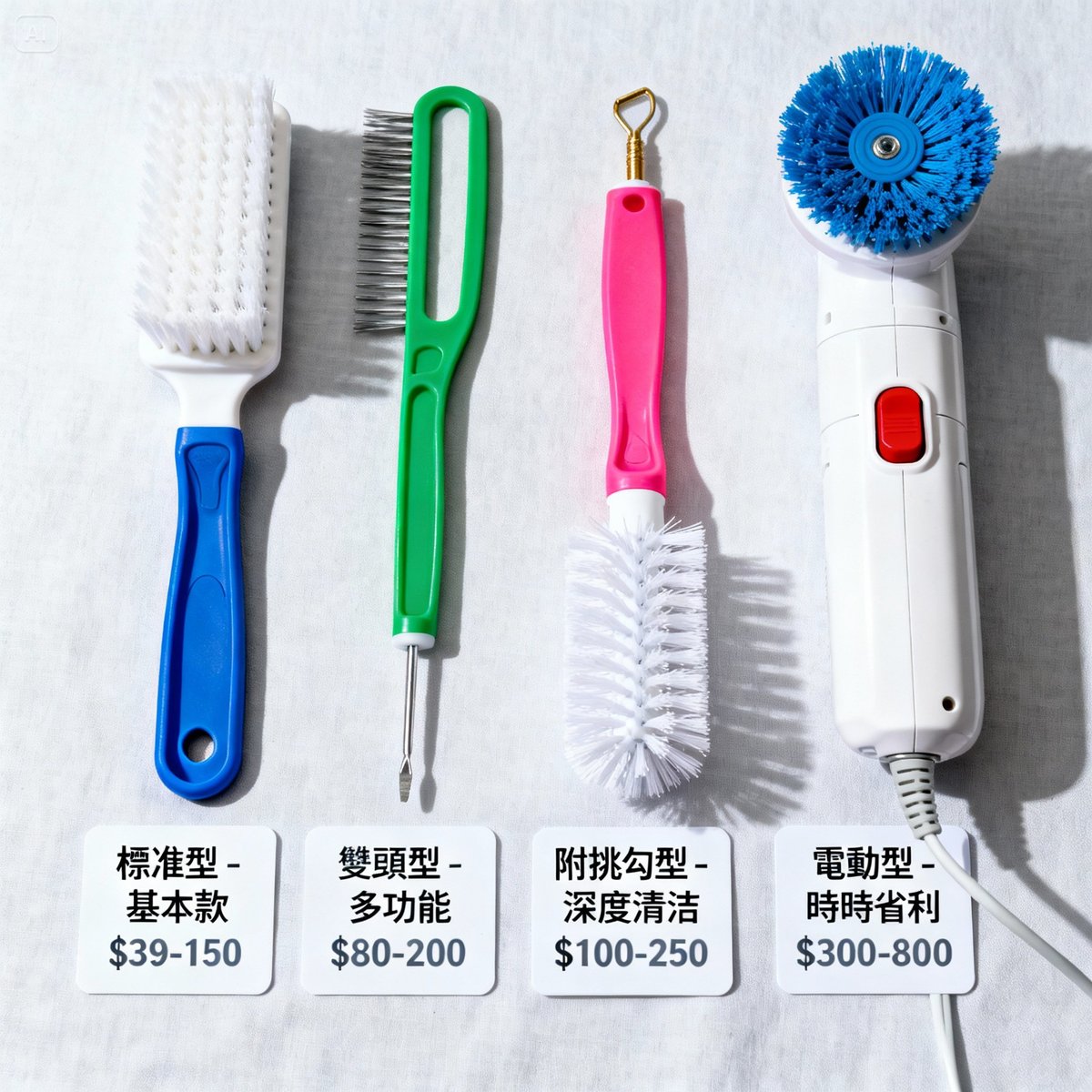
1. Standard comb cleaning brush | The basic model
Design features:
- Brush head 2-3cm wide
- Fine, dense bristle (nylon or hog bristle)
- Straight handle, 12-15cm long
- Usually has a pointed pick at the end (for removing tangled hair)
Suitable for cleaning:
- Ordinary flat combs
- Vent brushes
- Round brushes (small and medium)
Price: entry-level to mid-price
Recommended brands:
- Daiso
- POYA exclusive models
- Brands sold at Cosmed
2. Double-ended comb cleaning brush | Multi-purpose
Design features:
- One end: a wide brush head (for cleaning the face of the comb)
- The other end: a narrow brush head or a pick (for removing hair)
- Length 15-20cm
Suitable for cleaning:
- All kinds of combs
- Hair rollers
- Hair clips
Price: mid-price
3. With a pick | Deep cleaning
Design features:
- A brush + a metal or plastic pick
- The pick reaches into the gaps between the teeth
- Lifts out tangled hair easily
Suitable for cleaning:
- Fine-tooth combs
- Round brushes (roller type)
- Dense-tooth vent brushes
Price: mid-price to mid-to-high price
Recommended brands:
- Professional hairdressing tool brands
4. Electric rotating type | Saves time and effort
Design features:
- Electric rotating brush head
- Button operated, cleans automatically
- Usually detachable for washing
Suitable for cleaning:
- All kinds of combs
- Large numbers of combs (hair salons)
- Those who do not want to clean by hand
Price: high price
Pros and cons:
Pros:
- ✅ Saves time and effort, cleans quickly
- ✅ Strong cleaning power
- ✅ Suits hairdressing professionals
Cons:
- ❌ Higher price
- ❌ Needs batteries or charging
- ❌ Cannot clean fine gaps
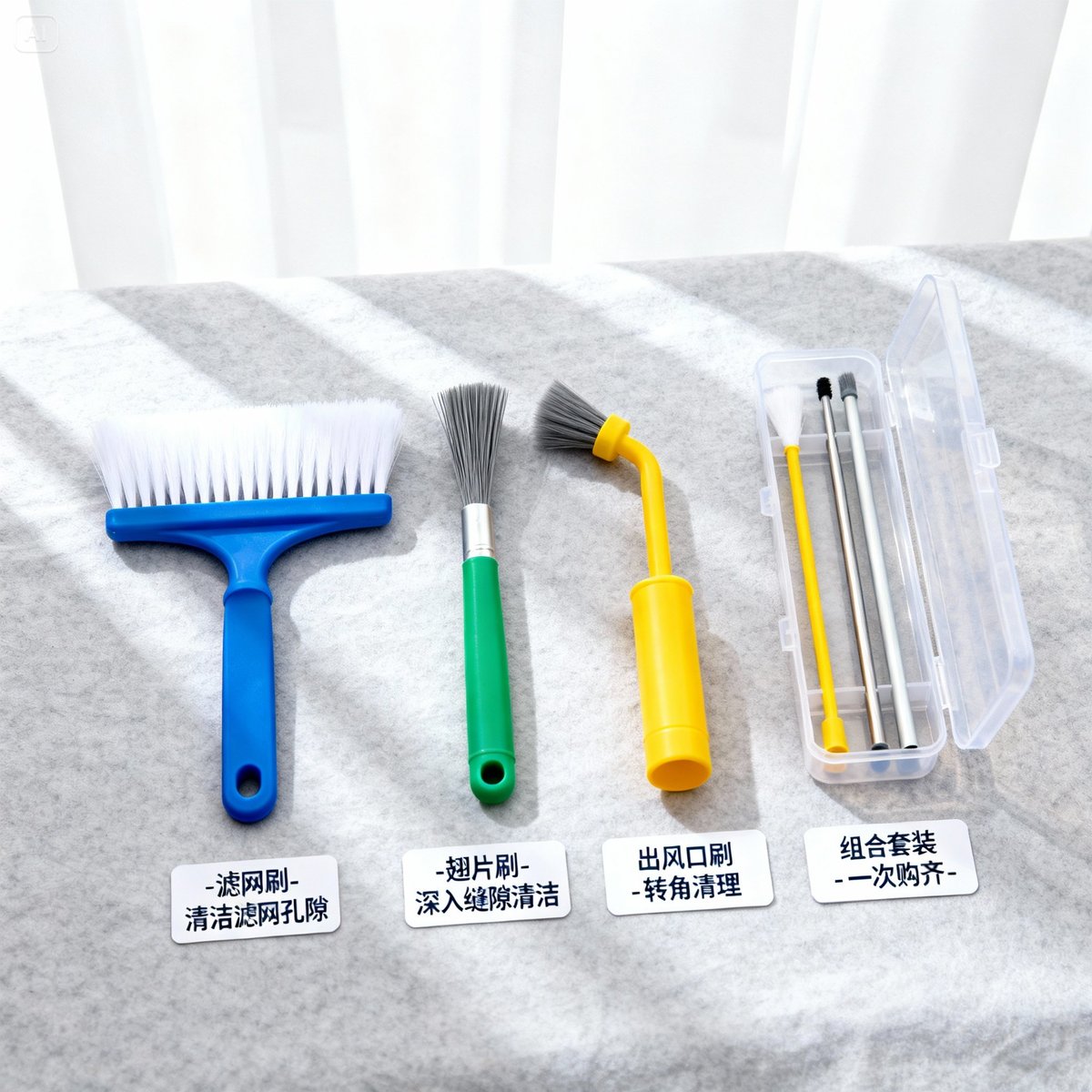
5. Sets | Everything in one purchase
A standard set includes:
- Comb cleaning brush × 1
- Pick tool × 1
- Cleaning liquid × 1 (small bottle)
- Storage bag × 1
Who it suits:
- First-time buyers of comb cleaning tools
- Hair salons, beauty salons
- Households with several combs
Price: mid-to-high price
Brush material comparison
| Material | Characteristics | Suitable combs | Price |
|---|---|---|---|
| Nylon filament | Resilient, durable, strong cleaning power | Plastic combs, metal combs | Entry-level to mid-price |
| Hog bristle | Natural material, soft, does not damage the teeth | Wooden combs, horn combs, premium combs | Mid-price to mid-to-high price |
| Silicone filament | Waterproof, easy to wash, does not grow mold | All kinds of combs | Mid-price |
| Mixed filament and bristle | Nylon + hog bristle, combining cleaning power and softness | All kinds of combs | Mid-price to mid-to-high price |
Comb cleaning brush brands in common retail channels
1. POYA exclusive models | The most locations
POYA is a Taiwanese beauty and household goods chain.
Where to buy: POYA stores, POYA online store
Price: mid-price
Product features:
- All the basic functions
- Medium bristle density
- A simple hanging hole for easy storage
Who it suits:
- First-time buyers of a comb cleaning brush
- Those who do not clean their comb often (occasional use)
Pros and cons:
Pros:
- ✅ Available at every POYA in Taiwan
- ✅ Enough for basic cleaning needs
Cons:
- ❌ The bristle is rather stiff and may not suit wooden combs
- ❌ Average durability (about 1 year)
- ❌ A fairly bare-bones design
2. Cosmed selected brands | Affordable entry level
Cosmed is a Taiwanese drugstore chain.
Where to buy: Cosmed stores, Cosmed official website
Price: entry-level price
Product features:
- Selected domestic and international brands
- Consistent, assured quality
Who it suits:
- Those who value quality
- Those who need a multi-purpose design
3. MUJI | Quality and aesthetics
Where to buy: MUJI stores, MUJI official website
Price: mid-to-high price
Product features:
- Minimalist design with an excellent feel
- Soft bristle, suited to all kinds of combs
- A comfortable, ergonomic handle
- Japanese design, consistent quality
Who it suits:
- Those who care about looks and feel
- Users of premium combs (wooden combs, horn combs)
- Those who like the MUJI style
4. Daiso | The great-value choice
Where to buy: Daiso stores
Price: budget price
Product features:
- Very cheap
- Has the basic functions
- Easy to buy
Who it suits:
- An extremely limited budget
- Those who clean their comb occasionally
- Those who want to find out whether they need a dedicated tool
Brand comparison table
| Brand | Price | Ease of purchase | Quality | Durability |
|---|---|---|---|---|
| POYA | Mid-price | ★★★★★ | ★★★☆☆ | ★★★☆☆ |
| Cosmed | Entry-level price | ★★★★★ | ★★★★☆ | ★★★★☆ |
| MUJI | Mid-to-high price | ★★★★☆ | ★★★★★ | ★★★★☆ |
| Daiso | Budget price | ★★★★★ | ★★☆☆☆ | ★★☆☆☆ |
💡 Does your beauty salon or hair salon need comb cleaning brushes in volume?
Contact YC Brushes now. We provide custom cleaning brush solutions and wholesale prices, backed by over 40 years of manufacturing experience, and can design the most suitable brush for your professional needs.
How to clean a comb, step by step
Preparing the tools
Essential tools:
- Comb cleaning brush
- Warm or clean water
- Neutral shampoo or dish soap
- A clean towel
Optional tools:
- Baking soda (removes grease)
- White vinegar (kills bacteria and removes odors)
- Alcohol spray (disinfects)
Recommended cleaning frequency
| Usage | Cleaning frequency | Deep cleaning |
|---|---|---|
| Used every day | Once a week | Once a month |
| Used occasionally | Once every 2 weeks | Once every 2-3 months |
| Styling products used | Once every 3-5 days | Once every 2 weeks |
| Hair that gets oily easily | 1-2 times a week | Once a month |
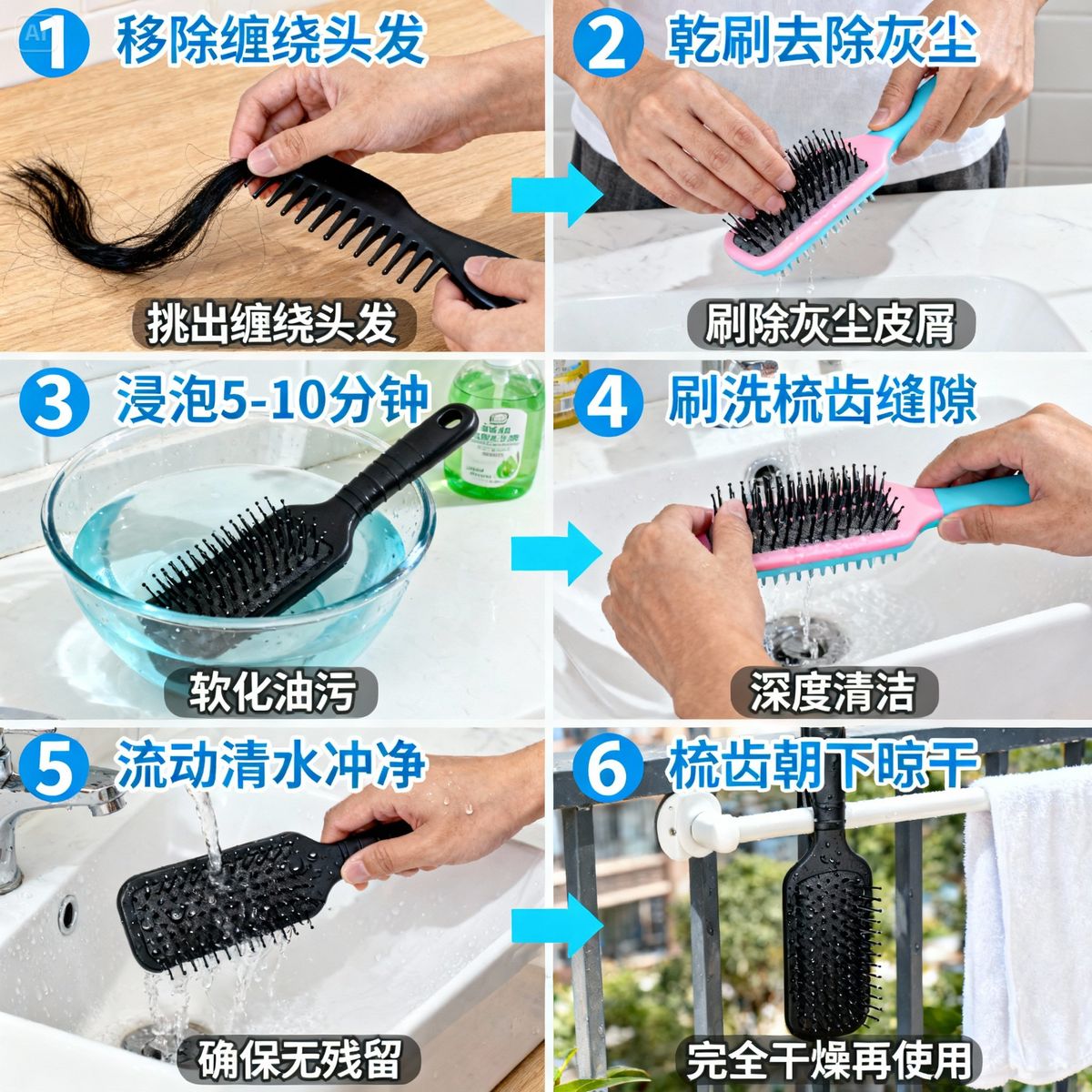
Step 1: Remove the hair
Method 1: Pull it out by hand
- Start from the base of the teeth
- Pull upward along the direction of the teeth
- Draw out the tangled hair
Method 2: Lift it out with the comb cleaning brush
- Insert the pick of the brush between the teeth
- Hook the hair and pull upward
- Repeat until all the hair is removed
Tips:
- Loosen the hair crosswise first, then pull it out lengthwise
- If there is a lot of hair, work in sections
- Cut through knots with scissors
Step 2: Dry-brush to remove dust
How to do it:
- Brush the teeth with the comb cleaning brush
- Brush along the direction of the teeth (back and forth)
- Brush out the dust and skin flakes between the teeth
- Pay special attention to the roots of the teeth
Tips:
- Brushing lightly several times is more effective than brushing hard once
- Hold the comb at an angle while brushing so the dirt falls out
Step 3: Soak
Standard cleaning (ordinary dirt):
- Prepare warm water (30-40°C)
- Add a small amount of shampoo or dish soap
- Soak the comb for 5-10 minutes
Deep cleaning (heavy grease):
- Warm water + 1 tablespoon of baking soda + a small amount of dish soap
- Soak for 10-15 minutes
- The grease softens by itself
Precautions:
- ⚠️ Do not soak wooden combs for long (3-5 minutes at most)
- ⚠️ Avoid soaking natural-bristle hairbrushes (hog bristle, horsehair)
- ⚠️ The water should not be too hot (avoid going above 50°C)
Step 4: Scrub the comb
How to do it:
- Scrub the teeth with the comb cleaning brush
- Scrub along the direction of the teeth
- Pay special attention to the roots of the teeth and the gaps
- Scrub the spine and handle of the comb too
Areas to focus on:
- The roots of the teeth (where there is the most sebum)
- The gaps between the teeth
- The grooves in the spine of the comb
- The seam at the handle
Step 5: Rinse clean
How to do it:
- Rinse the comb under running water
- Make sure no cleaner is left behind
- Feel the teeth with your hand; they should not be sticky
- Rinse for about 1-2 minutes
How to check:
- Look: no foam between the teeth
- Smell: no smell of cleaner
- Touch: the teeth feel smooth, not sticky
Step 6: Dry
The correct way to dry:
- Wipe off the excess water with a dry towel
- Place the comb with the teeth facing down (so the water runs downward)
- Leave it to air-dry in a ventilated place
- Make sure it is completely dry before using it (2-4 hours)
Drying tips:
- ✅ Put it by a window or on the balcony (a ventilated place)
- ✅ Teeth facing down, handle facing up
- ✅ A hair dryer on the cool setting can be used (not hot air)
- ❌ Do not lay it flat or with the teeth facing up (water will collect in the handle seam)
- ❌ Do not put it in an enclosed space (mold grows easily)
Drying times for combs of different materials:
- Plastic comb: 1-2 hours
- Wooden comb: 4-6 hours (it must be completely dry)
- Metal comb: 1-2 hours
- Natural-bristle hairbrush: 6-8 hours
Precautions for cleaning special combs
Wooden combs:
- Avoid long soaks (5 minutes at most)
- Do not use hot water
- Avoid direct sunlight when drying
- Once completely dry, a little wood care oil can be applied
Natural-bristle hairbrushes (hog bristle, horsehair):
- Do not soak; clean by wet brushing
- Dip the comb cleaning brush in cleaning liquid and scrub
- When rinsing, keep large amounts of water away from the roots of the bristle
- Dry with the bristle facing down, to keep water out of the handle
Round brushes (roller brushes):
- Pay special attention to cleaning the roots of the bristle
- Use the pick tool to remove hair deep inside
- Make sure it is completely dry, to prevent mold inside
Massage brushes (cushion brushes):
- Keep water out of the base (it collects and grows mold)
- Clean only the teeth
- Simply wipe the base with a damp cloth
Where to buy a comb cleaning brush: places to buy compared
Physical stores
Drugstores:
- POYA: mid-price, many locations across Taiwan, the most convenient to buy
- Cosmed: entry-level price, consistent quality, a wide choice
- Watsons: mid-price, sold in some stores
Household goods stores:
- Daiso: budget price, the best value for money
- HOLA, IKEA: mid-to-high price, good design
- MUJI: mid-to-high price, excellent feel
Hair supply stores:
- The POYA hair care section: mid-price to high price, many professional models
- Professional beauty supply stores: mid-to-high price to high price, suited to hairdressers
Supermarkets / hypermarkets:
- Wanjiafu (formerly Carrefour Taiwan), PX Mart: entry-level to mid-price (some stores)
Online channels
General e-commerce:
- momo, PChome, Shopee, Yahoo
- Price: a wide price range, with large differences between sellers and specifications
- Pros: the widest choice, easy price comparison, convenient home delivery, reviews to read
- Cons: you cannot handle the product
Brand official websites:
- MUJI official website
- Pros: guaranteed genuine, full warranty
- Cons: higher prices, no discounts
Social commerce:
- Instagram shops, Facebook groups
- Price: varies widely; you need to judge for yourself
- Pros: limited-quantity offers from time to time
- Cons: quality varies, so choose the seller carefully
Price tiers and recommendations
Entry-level:
- Recommended: Daiso, Cosmed
- Suits: a first purchase, a limited budget, occasional cleaning
Mid-range:
- Recommended: POYA exclusive models, MUJI
- Suits: regular cleaning, those who value quality, long-term use
High-end:
- Recommended: professional hairdressing tool brands
- Suits: hairdressing professionals, those who want high quality, large cleaning volumes
Buying advice
Beginners:
- Recommended: Daiso or Cosmed
- Reason: a cheap way to test the waters, and enough for basic needs
Serious about care:
- Recommended: POYA exclusive models or MUJI
- Reason: consistent quality, good cleaning results
Professional use:
- Recommended: brands from professional beauty supply stores
- Reason: very durable, suited to heavy use
Hair salons:
- Recommended: buy wholesale or contact a professional brush manufacturer
- Reason: with large quantities, discounts can be negotiated
FAQ
Q1: Can a toothbrush be used instead of a comb cleaning brush?
A: Yes, but the results are limited.
The problems with a toothbrush:
- The head is too small, so cleaning a whole comb takes a long time
- The filament is short and cannot reach the roots of the teeth
- The filament layout does not suit the structure of a comb
When a toothbrush is suitable:
- Emergency use (when you have no comb cleaning brush)
- Cleaning details (the fine detail at the roots of the teeth)
- Cleaning small combs
Advice:
- Comb cleaning brushes are affordable, so we suggest simply buying one
- If you really want to use a toothbrush, choose a "soft" one
Q2: What should I watch out for when cleaning a wooden comb?
A: Water is a wooden comb's worst enemy, so clean it with special care.
Precautions for cleaning a wooden comb:
- ⚠️ Do not soak it for long (3-5 minutes at most)
- ⚠️ Do not use hot water (it warps and cracks the wood)
- ⚠️ Do not use strongly alkaline cleaners
- ✅ Cleaning with a slightly damp brush is enough
- ✅ Avoid direct sunlight when drying
- ✅ Once completely dry, wood care oil can be applied
Suggested cleaning method:
- Dry-brush with the comb cleaning brush to remove hair and dust
- Dip the brush in a little warm water + shampoo and scrub the teeth
- Wipe with a wrung-out damp cloth
- Dry with the teeth facing down for 4-6 hours
- Once completely dry, wipe the wooden comb with a tissue dipped in a little coconut oil
Q3: How often should a comb be cleaned?
A: It depends on how often it is used and on the condition of your hair.
General advice:
- Used every day: once a week
- Used occasionally: once every 2 weeks
- Styling products used: once every 3-5 days
- Hair that gets oily easily: 1-2 times a week
Signs it needs cleaning right away:
- The teeth are clogged with hair
- The surface of the comb is greasy
- The comb has an odor
- Your hair combs less and less smoothly
Deep cleaning frequency:
- Ordinary use: once a month
- Heavy use: once every 2 weeks
Further reading: How often should brushes be washed? The complete guide to cleaning your brushes
Q4: Why is my comb still greasy after cleaning?
A: The cleaning method may be wrong, or the wrong cleaner may have been chosen.
Causes and solutions:
1. The cleaner is not strong enough on grease:
- Problem: only water or a mild shampoo was used
- Solution: add dish soap, which cuts grease well, or baking soda
2. Not soaked for long enough:
- Problem: it was scrubbed after only 1-2 minutes of soaking
- Solution: soak for at least 5-10 minutes so the grease softens
3. Not scrubbed thoroughly enough:
- Problem: only the surface was brushed, not the roots of the teeth
- Solution: use the comb cleaning brush to scrub the roots of the teeth in particular
4. Not rinsed clean:
- Problem: cleaner is left behind and feels sticky
- Solution: rinse under running water for at least 1-2 minutes
5. The comb itself has aged:
- Problem: a plastic comb used for a long time ages and becomes oily
- Solution: consider replacing it with a new comb
A stronger grease-removing method:
- Warm water + 2 tablespoons of baking soda + 1 teaspoon of dish soap
- Soak for 15 minutes
- Scrub the roots of the teeth firmly with the comb cleaning brush
- Rinse thoroughly
- Dry completely
Q5: Can a cushion brush (massage brush) be soaked in water?
A: Not recommended; water gets in easily and mold grows.
The problem with cushion brushes:
- The base has an air cushion (usually with a small vent hole)
- When soaked, water gets in through the vent hole
- Water trapped inside cannot drain out and causes mold and odors
- The cushion function is damaged
The correct way to clean it:
- Remove the hair with the comb cleaning brush
- Dry-brush to remove dust
- Wipe the teeth and the surface of the base with a damp cloth
- Dip the brush in a small amount of cleaning liquid and clean only the teeth
- Wipe off the cleaning liquid with a damp cloth
- Wipe dry with a dry cloth
- Dry with the teeth facing down for 1-2 hours
What if water has already got in?:
- Pour the water out immediately
- Blow it dry with a hair dryer on the cool setting
- Leave it to dry in a ventilated place for 24 hours
- If there is mold or an odor, we suggest replacing it with a new comb
Q6: Does the comb cleaning brush itself need washing?
A: Yes, otherwise it gets dirtier the more you clean with it.
Cleaning frequency:
- Wash it once after every 3-5 uses
- Or when hair and dirt are clearly stuck in the bristle
How to wash it:
- First remove the hair tangled in the bristle
- Rinse the bristle with clean water
- It can be rubbed with a small amount of shampoo
- Rinse thoroughly until there is no foam
- Shake off the excess water
- Dry with the bristle facing down for 2-4 hours
Drying tips:
- Hang it in a ventilated place
- Bristle facing down, so water does not collect in the handle seam
- Make sure it is completely dry before using it
Further reading: How often should brushes be washed? The complete guide to cleaning your brushes
Further reading
Want to learn more about cleaning brushes? We recommend:
- How often should brushes be washed? The complete guide to cleaning your brushes: comb cleaning brushes need regular care too
- Gap cleaning brush recommendations | The secret weapon for small gaps and hard-to-reach spots: the other hard-to-clean gaps in the home
- Keyboard cleaning brush recommendations | The complete buying guide to cleaning brushes for 3C electronics: electronic devices need dedicated brushes too
For more on choosing and using cleaning brushes, see our complete cleaning brush buying guide.
Summary: clean your comb regularly for healthier hair
A comb is a tool that touches your hair and scalp every day. Cleaning it regularly not only extends the life of the comb but also looks after the health of your scalp. A dedicated comb cleaning brush quickly and effectively removes tangled hair, sebum, grease and dust:
- Choosing a brush: beginners choose Daiso or Cosmed; for quality, choose MUJI
- Cleaning frequency: at least once a week, or once every 3-5 days for those who use styling products
- The correct steps: remove the hair → dry-brush → soak → scrub → rinse clean → dry
- Special care: avoid long soaks for wooden combs, and never soak cushion brushes
Starting today, make a habit of cleaning your comb regularly, so your hair gets healthier with every stroke!
Need to buy comb cleaning brushes in volume, or have a custom requirement? YC Brushes offers professional brush manufacturing, backed by over 40 years of manufacturing experience you can rely on. Contact us now to find out more, or see the full product range.
Want to learn more about cleaning and maintenance? Go to the blog to explore more specialist articles.