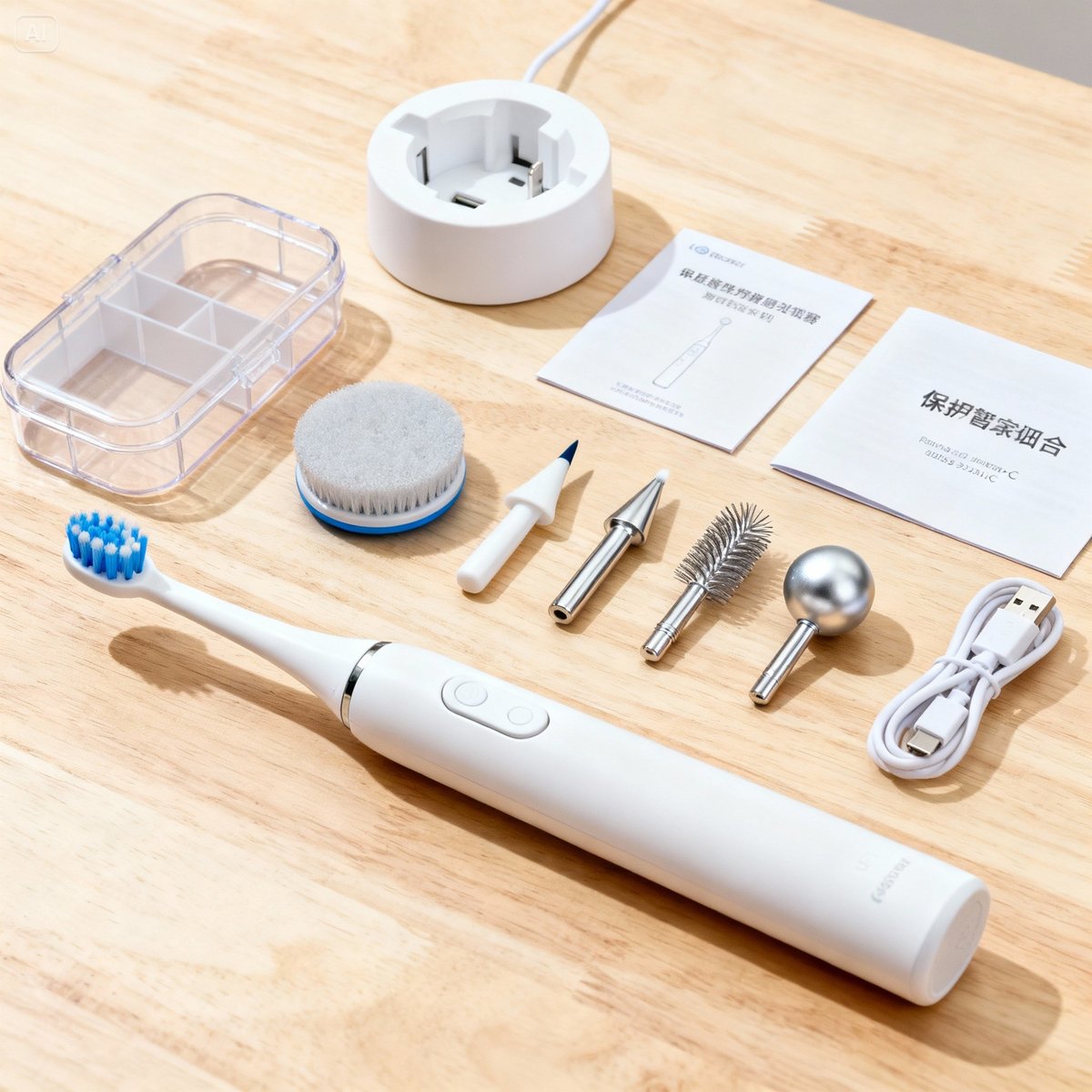
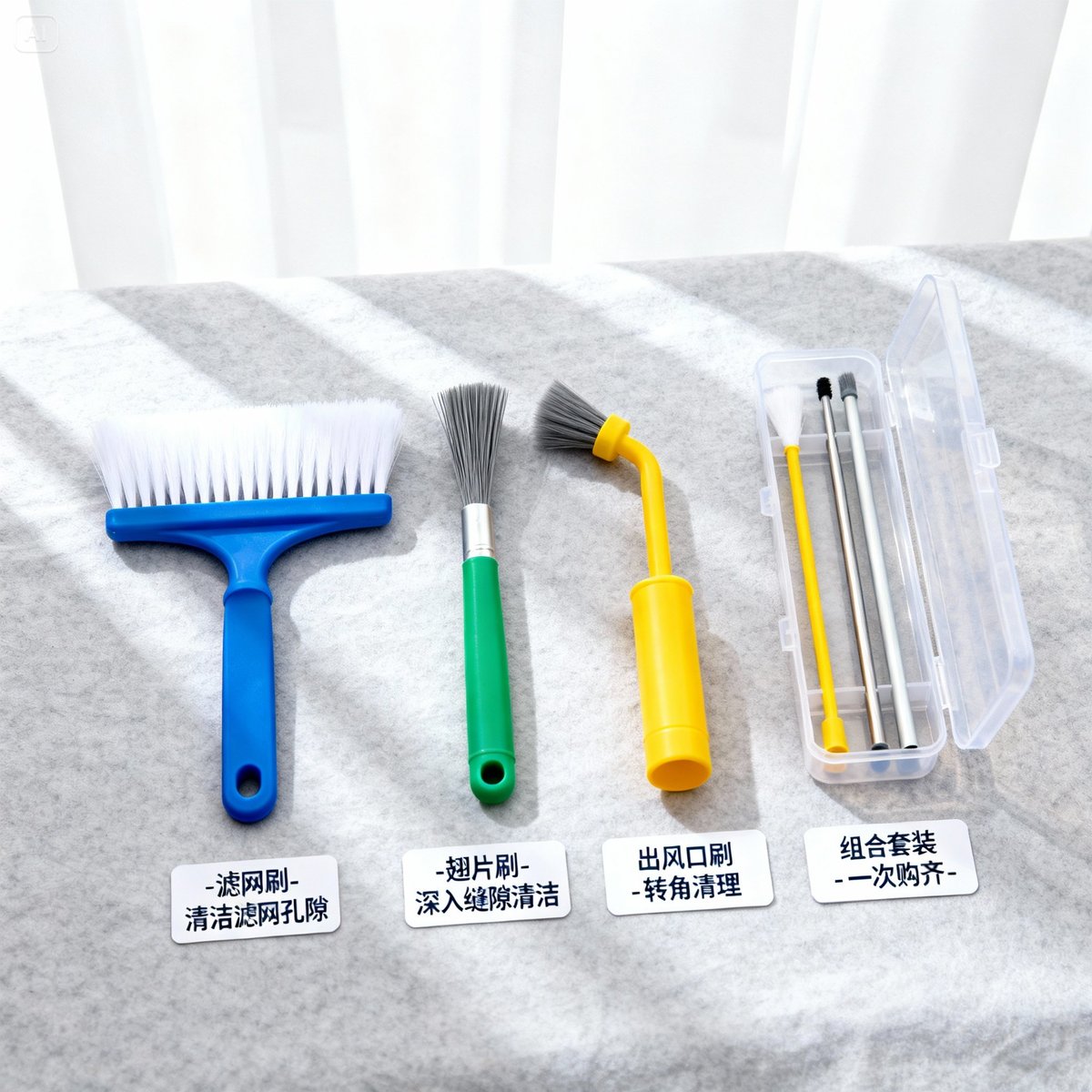
Window frame channels, door gaps, the edge of the sink, the gaps in home appliances... these narrow dead corners always collect dirt; a cloth cannot reach them and a vacuum cleaner cannot get them clean. A dedicated gap cleaning brush, designed with a long, narrow brush head and stiff filament, reaches into narrow spaces of 0.5-2 cm and effectively clears away dirt that has built up over years. This article gives a full introduction to the gaps at home that are commonly hard to clean, the design features of gap brushes, brand recommendations and cleaning techniques, so that your home has no more dead corners. The brands, stores, forum opinions and price levels it mentions describe the Taiwan market.
Common hard-to-clean gaps at home
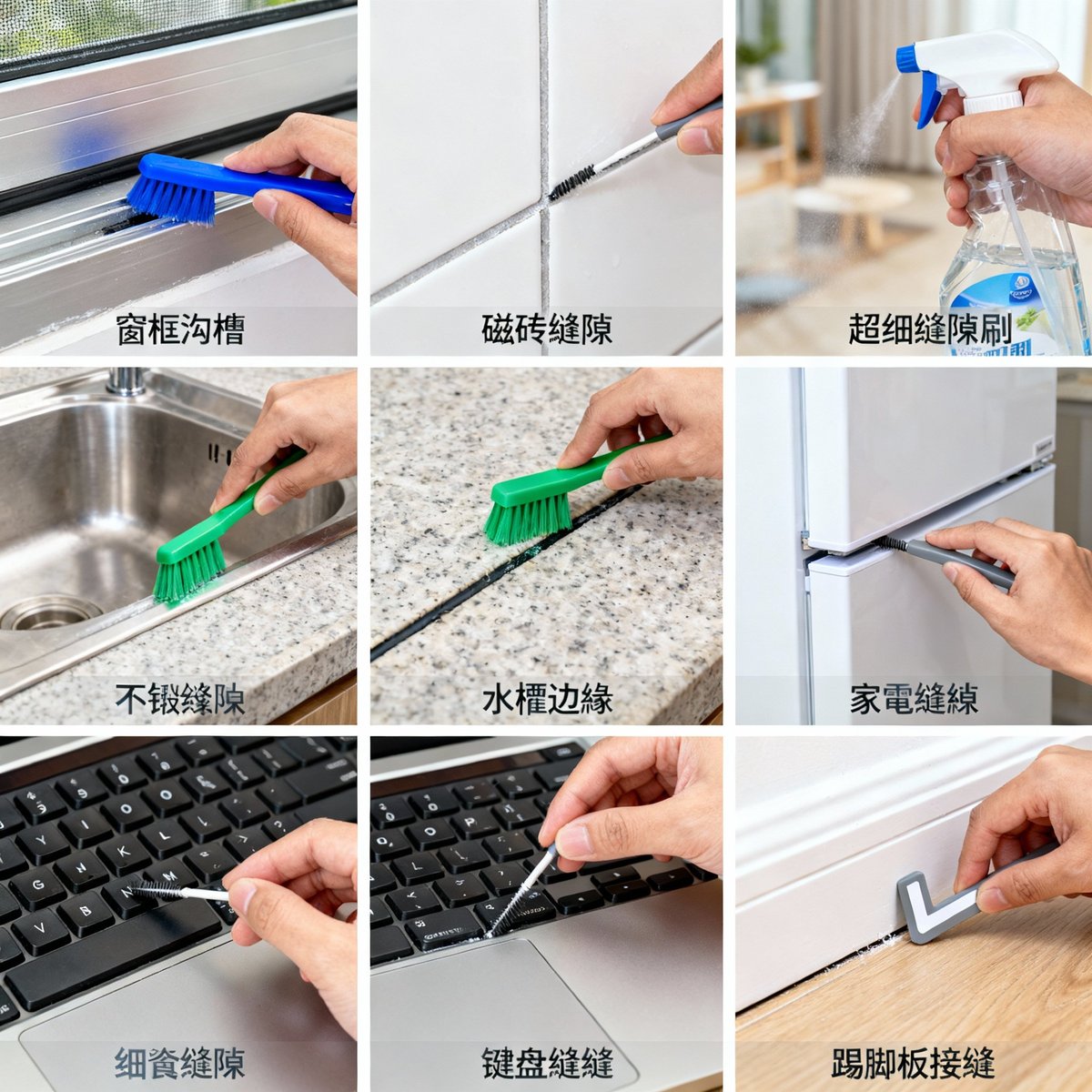
1. Window frame channels | Where dust and rainwater build up
Types of dirt:
- Dust, lint, hair
- Mud and sand brought in by rainwater
- Dead insects
- Mold spots (in damp environments)
Cleaning difficulty: ★★★★★
Why they are hard to clean:
- The channel is only 0.8-1.5 cm wide
- The corners are especially deep
- Aluminum window tracks have a multi-layer structure
- Dirt that builds up over time hardens and is hard to remove
The harm:
- Windows no longer open and close smoothly
- Mold growth affects air quality
- Small insects breed easily
2. Door gaps and door frames | Details that are easily overlooked
Types of dirt:
- Built-up dust
- Finger grease (around the door handle)
- Cobwebs (where the ceiling meets the door frame)
Cleaning difficulty: ★★★☆☆
Common locations:
- The joint between the door frame and the wall
- The gap at the bottom of the door (between the floor and the door)
- The gaps around the door handle
3. The edge of the kitchen sink | Sticky grease that is hard to deal with
Types of dirt:
- Food residue
- Built-up grease
- Limescale and soap scum
- Mold (from long-term damp)
Cleaning difficulty: ★★★★☆
Common locations:
- The joint between the sink and the countertop (the edge of the silicone sealant)
- The gap at the base of the faucet
- The groove around the drain hole
Characteristics:
- The grease is sticky and not easy to remove
- Built up over time, it turns black and smells
- Mold and bacteria grow easily
4. Bathroom gaps | A breeding ground for mold
Types of dirt:
- Built-up soap scum
- Limescale and lime deposits
- Black mold spots
- Hair, skin flakes
Cleaning difficulty: ★★★★★
Common locations:
- Tile grout lines (where the grout is)
- The joint between the edge of the bathtub and the wall
- The joint between the washbasin and the wall
- The joint between the base of the toilet and the floor
The harm:
- Mold spores affect the respiratory tract
- Black mold spoils the appearance
- Once silicone sealant has turned black it is hard to clean and has to be reapplied
Further reading: Bathroom cleaning brush recommendations | Bathroom brushes and electric bathroom cleaning brushes fully compared
5. Gaps in home appliances | Built-up dust affects heat dissipation
Types of dirt:
- Dust and lint
- Hair attracted by static electricity
- Small food crumbs (kitchen appliances)
Cleaning difficulty: ★★★☆☆
Common locations:
- The refrigerator door gap and around the handle
- The microwave door gap
- The oven door gap and vents
- The gap in the washing machine door seal
- The corners of the air conditioner outlet
The harm:
- Lower heat dissipation efficiency
- Higher power consumption
- Built-up dust may trigger allergies
Further reading: Air conditioner cleaning brush recommendations | A guide to cleaning brushes for filters, fins and air outlets
6. Other common gaps
| Location | Type of dirt | Cleaning difficulty |
|---|---|---|
| Gaps between keyboard keys | Dust, food crumbs | ★★★☆☆ |
| Sofa crevices | Hair, dust, snack crumbs | ★★★★☆ |
| The joint between baseboard and floor | Dust, hair | ★★☆☆☆ |
| Cabinet door gaps | Dust, grease (kitchen) | ★★★☆☆ |
| Light fixture grooves | Dust, dead insects | ★★★★☆ |
Further reading: Keyboard cleaning brush recommendations | A complete buying guide to 3C cleaning brushes
Design features of gap cleaning brushes
Why is a dedicated gap brush needed?
The limits of ordinary cleaning tools:
| Tool | Problem | Gap cleaning result |
|---|---|---|
| Cloth | Cannot reach into narrow spaces | ★☆☆☆☆ (10%) |
| Ordinary cleaning brush | The brush head is too wide to fit in | ★★☆☆☆ (30%) |
| Toothbrush | Small brush head, but the filament is too soft | ★★★☆☆ (50%) |
| Vacuum cleaner | Not enough suction to get it clean | ★★☆☆☆ (40%) |
| Cotton swab | Too small an area, low efficiency | ★★★☆☆ (60%) |
The advantages of a dedicated gap brush:
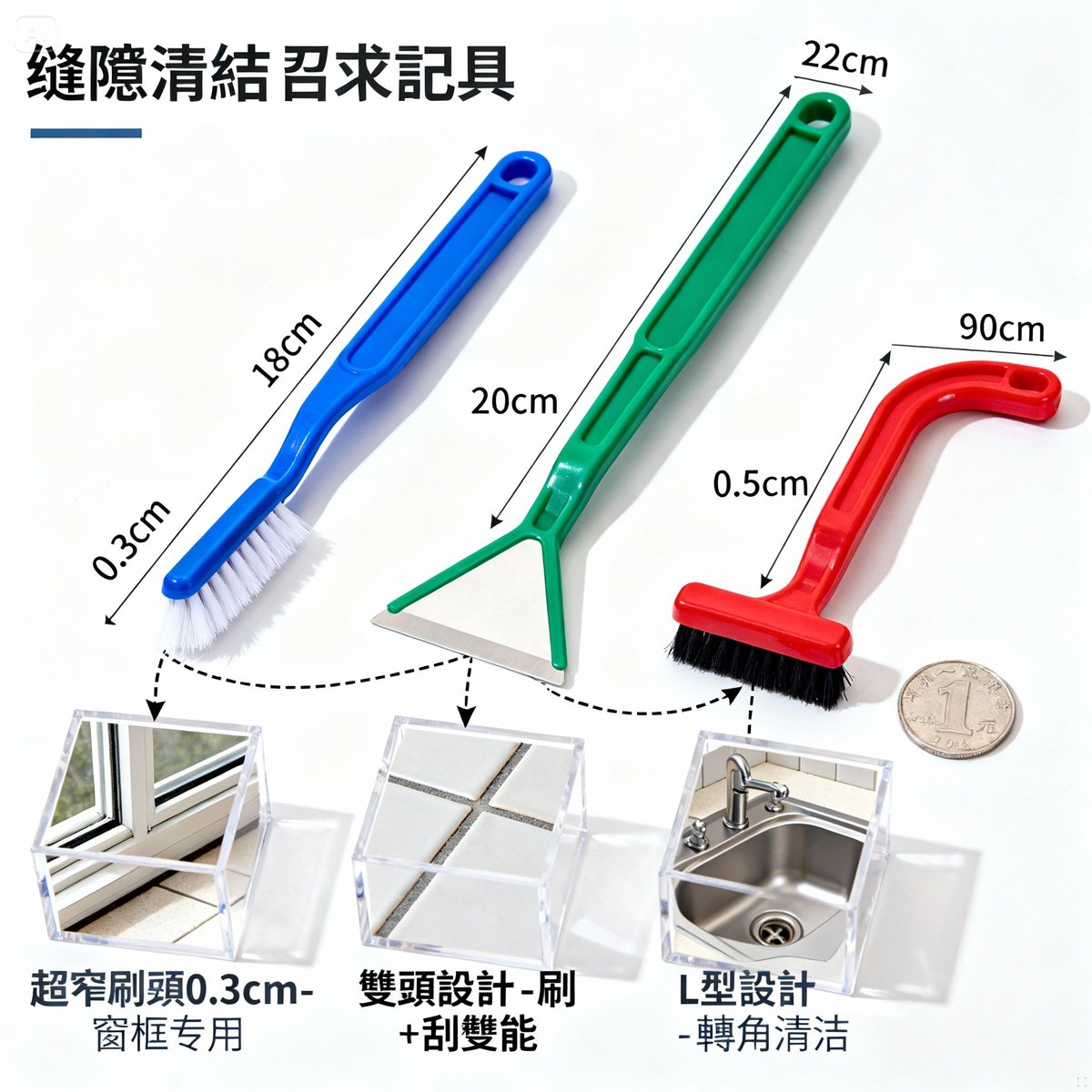
- ✅ A long, narrow brush head (0.3-0.8 cm) that reaches into narrow gaps
- ✅ Stiff filament that scrubs off hardened dirt
- ✅ An angled design that cleans corners
- ✅ A handle of moderate length that makes it easy to apply force
- ✅ A cleaning result of 90% or more
The key design points of a gap cleaning brush
1. Brush head width and shape
Ultra-narrow brush head (0.3-0.5 cm):
- Suitable for: window frame channels, tile grout lines
- Feature: gets into even the narrowest spaces
Standard brush head (0.5-0.8 cm):
- Suitable for: door gaps, sink edges, appliance gaps
- Feature: balances cleaning area with reach
Wide brush head (0.8-1.2 cm):
- Suitable for: baseboards, wider channels
- Feature: high cleaning efficiency
- Representative product: Daiso multi-purpose gap brush
Shapes:
- Flat: suited to parallel gaps (window frame tracks)
- Pointed: suited to reaching into narrow spaces (tile grout)
- Beveled: suited to cleaning corners (the edge of the bathtub)
2. Filament material and stiffness
Stiff nylon filament:
- Advantages: scrubs off hardened dirt, high durability
- Disadvantages: may scratch soft surfaces
- Suitable for: window frames, tile grout, sink edges
Medium-stiff filament:
- Advantages: balances cleaning power and safety
- Disadvantages: limited effect on hardened dirt
- Suitable for: door gaps, appliance gaps
Soft filament:
- Advantages: does not harm surfaces, suited to precision items
- Disadvantages: weaker cleaning power
- Suitable for: 3C products (computers, phones and consumer electronics), keyboard gaps
Trim length:
- Short filament (0.5-1 cm): concentrated force, strong cleaning power
- Medium filament (1-1.5 cm): suits most gaps
- Long filament (1.5-2 cm): reaches into deeper channels
3. Handle design
Straight handle:
- Suitable for: cleaning in a parallel direction
- Length: 15-20 cm
- How force is applied: push and pull
Bent handle (L-shaped, S-shaped):
- Suitable for: corners, cleaning in a vertical direction
- Angle: 45-90 degrees
- Advantage: saves effort and cleans corners that are hard to reach
Rotating handle:
- Suitable for: cleaning at complex angles
- Feature: the brush head rotates 360 degrees
- Price: higher
4. Double-ended design
Many gap brushes have a double-ended design:
- One end: a narrow brush head (for deep cleaning)
- The other end: a scraper blade or scraper tab (for scraping off stubborn dirt)
Advantages:
- One tool does the work of two, which is economical
- After brushing, the scraper removes the loosened dirt
- Easy to carry
Recommended gap cleaning brush brands
1. MUJI gap brush | Both good feel and function
Price: budget
Product features:
- Minimalist design, in white or gray
- A long, slim brush head, suited to most gaps
- Medium filament stiffness that does not harm surfaces
- A comfortable handle that is not tiring over long use
- Japanese design, stable quality
Where it is used:
- Window frame channels
- Door gaps
- Sink edges
- Appliance gaps
Where to buy:
- MUJI stores
- The MUJI official website
- E-commerce platforms such as momo and PChome
2. MARNA Mizo Sukkiri sash brush (window channel brush) | A favorite of Japanese homemakers
Price: mid-to-high
Product features:
- Double-ended design: fine brush + scraper tab
- High filament density, strong cleaning power
- Designed specifically for window frames and tile grout
- Made in Japan, excellent quality
Where it is used:
- Deep window frame channels
- Tile grout lines
- The edge of bathroom silicone sealant
- Extremely narrow dead corners
Where to buy:
- eslite spectrum
- Japanese-style household goods stores
- Online purchasing agents
3. Daiso (DAISO) gap brush | Outstanding value for money
Price: budget
Product features:
- Extremely cheap; buy it and use it right away
- Several styles to choose from (straight, L-shaped, double-ended)
- All the basic functions
- Available at every Daiso in Taiwan
Pros and cons:
Advantages:
- ✅ An extremely affordable price
- ✅ Easy to buy, with many locations across Taiwan
- ✅ Enough for basic cleaning needs
- ✅ You can buy several and keep them in different places
Disadvantages:
- ❌ Stiffer filament that may scratch some surfaces
- ❌ Average durability (about 6 months-1 year)
- ❌ Less consistent quality
Suitable for:
- Those on a limited budget
- Those trying a gap brush for the first time
- Those who need several in different places (one each for the kitchen and bathroom)
4. 3M gap cleaning brush | Assured quality
Price: mid-range
Product features:
- An international brand with stable quality
- Resilient filament and high durability
- A non-slip handle
- Suited to surfaces of all kinds of materials
Where it is used:
- Kitchen sink edges
- Bathroom gaps
- Window frame channels
- Door frames
5. TLW own brand | The local Taiwanese choice
TLW is a Taiwanese home-improvement chain.
Price: mid-range
Product features:
- A Taiwanese brand that meets local needs
- Several styles to choose from
- Good prices
- Easy to buy (TLW stores across Taiwan)
Suitable for:
- Those who support Taiwanese brands
- Those who like to try products in a physical store
- Medium budgets
Brand comparison table
| Brand | Price | Durability | Cleaning power | Design | Value for money |
|---|---|---|---|---|---|
| MUJI | Budget | ★★★★☆ | ★★★★☆ | ★★★★★ | ★★★★☆ |
| MARNA | Mid-to-high | ★★★★★ | ★★★★★ | ★★★★☆ | ★★★★☆ |
| Daiso | Budget | ★★★☆☆ | ★★★☆☆ | ★★☆☆☆ | ★★★★★ |
| 3M | Mid-range | ★★★★☆ | ★★★★☆ | ★★★☆☆ | ★★★★☆ |
| TLW | Mid-range | ★★★☆☆ | ★★★☆☆ | ★★★☆☆ | ★★★★☆ |
💡 Need gap cleaning brushes in special specifications?
A factory or cleaning company that needs gap brushes in special sizes or materials? Contact YC Brushes now. We offer a custom design service and, with over 40 years of manufacturing experience, can build brushes to your requirements.
Gap cleaning techniques and points to note
Techniques for cleaning window frame channels
Step 1: Vacuum first, then brush
- Use a vacuum cleaner to remove the large pieces of dust on the surface
- Reach into the channel with the gap brush and scrub
- Brushing direction: along the track (side to side)
Step 2: Wet-brush to remove stubborn dirt
- Put a small amount of cleaning agent on the gap brush
- Scrub deep in the channel
- Wipe away the loosened dirt with a damp cloth
Step 3: Rinse with clean water
- Spray water from a water bottle or spray bottle
- Brush once more with the gap brush
- Wipe dry with a dry cloth
Tips:
- ✅ Brush outward, so the dirt is brushed out
- ✅ Use an L-shaped brush or the scraper tab in the corners
- ✅ Wipe immediately after brushing, so the dirt does not spread
Techniques for cleaning tile grout lines
Tools to prepare:
- Ultra-fine gap brush (0.3 cm)
- Baking soda + white vinegar
- An old toothbrush (as a helper)
Cleaning steps:
- Sprinkle baking soda on the grout line
- Spray on white vinegar and leave for 5-10 minutes (it will foam)
- Scrub along the grout line with the gap brush
- Rinse with clean water or wipe with a damp cloth
- Wipe dry with a dry cloth
Dealing with black mold:
- Heavy mold: use diluted bleach (1:10)
- Soak for 15 minutes, then scrub
- Always wear gloves and keep the area ventilated
Techniques for cleaning sink edges
Cleaning grease:
- Spray on a degreasing cleaner
- Leave for 3-5 minutes
- Scrub with a stiff gap brush
- Rinse clean with water
Cleaning the edge of silicone sealant:
- Use a medium-stiff gap brush, to avoid scratching the sealant
- Brushing direction: along the edge of the sealant
- Do not use too much force; silicone sealant is easily damaged
Preventing dirt from building up:
- Give it a quick brush with the gap brush once a week
- Keep it dry and avoid standing water over long periods
Techniques for cleaning appliance gaps
Before cleaning:
- ⚠️ Switch off the power and pull out the plug first
- ⚠️ Brush dry, so that no moisture gets into the appliance
- ⚠️ The filament should not be too stiff, to avoid scratching the casing
Cleaning steps:
- Brush away the dust with the gap brush
- Wipe away the loosened dirt with a dry cloth
- A vacuum cleaner can be used to help remove the dust
- Finally wipe the casing with a slightly damp cloth
Points to note when cleaning
Choose a suitable brush head:
- Narrow gaps (under 0.5 cm): use an ultra-fine brush head
- Ordinary gaps (0.5-1 cm): use a standard brush head
- Wider channels (over 1 cm): use a wide brush head
Brushing direction:
- Parallel gaps: brush along the gap (back and forth)
- Vertical gaps: brush from top to bottom
- Corners: use an L-shaped brush or a beveled brush
Choosing filament stiffness:
- Hardened dirt: use stiff filament
- Ordinary dirt: use medium-stiff filament
- Soft surfaces: use soft filament
Avoiding damage:
- ❌ Do not use too much force; it may scratch the surface
- ❌ Do not use filament that is too stiff on the edge of silicone sealant
- ❌ Avoid wet brushing in appliance gaps

Gap cleaning brushes vs ordinary cleaning brushes
Differences in structure
| Item | Gap cleaning brush | Ordinary cleaning brush |
|---|---|---|
| Brush head width | 0.3-0.8 cm | 3-8 cm |
| Trim length | 0.5-1.5 cm | 2-5 cm |
| Filament stiffness | Medium-stiff to stiff | Soft to medium-stiff |
| Handle length | 15-25 cm | 20-40 cm |
| Brush head shape | Long, narrow and flat | Round or wide |
Differences in function
Gap cleaning brush:
- ✅ Reaches into narrow spaces (0.5-2 cm)
- ✅ Scrubs off hardened dirt
- ✅ Cleans corners and dead spots
- ❌ Low efficiency on large areas
Ordinary cleaning brush:
- ✅ Cleans large areas quickly
- ✅ Suited to flat surfaces
- ❌ Cannot reach into gaps
- ❌ Cannot clean corners
Where each is used
Only a gap brush will do:
- Window frame channels (under 1 cm)
- Tile grout lines (under 0.5 cm)
- Gaps between keyboard keys
- The edge of the sink's silicone sealant
Either will do, but a gap brush is better:
- Door frame edges
- Baseboard joints
- Appliance gaps
An ordinary cleaning brush is more suitable:
- Cleaning large floor areas
- Scrubbing walls
- Bathtub surfaces
Buying advice
Essential set:
- Gap brush × 1 (for window frames and tile grout)
- Ordinary cleaning brush × 1 (for large areas)
- Total budget: a mid-range budget is enough for the essential set
Upgraded set:
- Ultra-fine gap brush × 1 (for extremely narrow spaces)
- Standard gap brush × 1 (for ordinary gaps)
- Ordinary cleaning brush × 1 (for large areas)
- L-shaped gap brush × 1 (for corners)
- Total budget: a mid-to-high budget buys the upgraded set
Where to buy a gap cleaning brush?
The stores and platforms below are those available to shoppers in Taiwan.
Physical stores
Household goods stores:
- MUJI: budget, excellent feel
- Daiso (DAISO): budget, the best value for money
- HOLA, IKEA: mid-range, good design
DIY stores:
- TLW: mid-range, a full variety
- Showba (Xiaobei), a household goods chain: budget, good prices
Japanese-style household goods stores:
- eslite spectrum: mid-range, selected brands
Supermarkets / hypermarkets:
- Carrefour, Costco: budget to mid-range
- PX Mart: budget (some stores)
Online channels
General e-commerce platforms:
- momo, PChome, Shopee, Yahoo
- Price: budget to high
- Advantages: wide choice, prices can be compared, convenient home delivery
- Disadvantage: you cannot handle the product
Brand official websites:
- The MUJI official website, the MARNA official website
- Advantage: guaranteed genuine
- Disadvantage: higher prices
Purchasing from Japan through an agent:
- Taobao, Rakuten Japan
- Price: mid-range (including shipping)
- Advantage: more Japan-only models
- Disadvantage: a wait of 1-3 weeks
Price ranges and recommendations
Entry-level (budget):
- Recommended: Daiso, MUJI, Showba
- Suitable for: first-time buyers, limited budgets
Mid-level (mid-range):
- Recommended: TLW, 3M
- Suitable for: serious cleaning, long-term use
High-end (mid-to-high):
- Recommended: MARNA
- Suitable for: those who want quality, professional cleaning
FAQ
Q1: Can a toothbrush be used in place of a gap brush?
A: In some situations yes, but the effect is limited.
The problems with a toothbrush:
- The brush head is too wide (about 1-1.5 cm) to get into extremely narrow gaps
- The filament is too soft, with too little cleaning power for hardened dirt
- The filament is short and cannot reach deep channels
When a toothbrush is suitable:
- In an emergency (when you have no gap brush)
- Wider gaps (over 1 cm)
- Gaps that are not very dirty
Advice:
- For narrow spaces such as window frame channels and tile grout, still use a dedicated gap brush
- Gap brushes are cheap, so we suggest simply buying one
Q2: Can a gap brush remove mold from silicone sealant?
A: Light mold yes; with heavy mold the effect is limited.
Light mold (black spots on the surface):
- Spray on diluted bleach (1:10)
- Leave for 10-15 minutes
- Scrub with the gap brush
- Rinse clean with water
- Result: removes 70-80% of the mold spots
Heavy mold (large black areas):
- The mold has already gone deep inside the sealant
- A gap brush can only clean the surface
- Advice: reapply the silicone sealant
Prevention:
- Scrub with a gap brush once a week
- Keep the area dry and ventilated
- Deal with mold spots as soon as you see them
Q3: Is an L-shaped gap brush really necessary?
A: It depends on your cleaning needs.
When an L-shaped brush is needed:
- Your home has many corner gaps (the edge of the bathtub, sink corners)
- Gaps that run vertically (the joint between the door frame and the wall)
- You want to save effort (the L-shaped design is more ergonomic)
When it is not necessarily needed:
- Most of the gaps run in a parallel direction (window frames)
- The budget is limited and a straight brush is enough
- Cleaning frequency is low
Advice:
- Beginners: buy a straight gap brush first, try it and then decide
- Heavy users: one straight + one L-shaped
Q4: Can a gap brush be used to clean inside a car?
A: Yes, and it is very suitable.
Where it is used inside a car:
- Gaps in the air conditioning vents
- Around the buttons on the center console
- Seat crevices
- Door handle recesses
- Dashboard grooves
Tips for use:
- Choose medium-stiff filament, to avoid scratching the interior
- Brush dry, so that no moisture is left behind
- It works even better together with a vacuum cleaner
Recommended models:
- MUJI gap brush (moderate filament)
Q5: How often does a gap brush need replacing?
A: It depends on frequency of use and quality.
When to replace:
- More than 20% of the filament has fallen out
- The filament is deformed or bent and has lost its cleaning power
- The root of the filament is moldy or smells
- The handle has broken
Typical service life:
- Budget models such as Daiso: 6 months - 1 year
- MUJI, 3M: 1-2 years
- High-quality MARNA models: 2-3 years
Ways to extend the service life:
- Rinse clean immediately after use
- Dry with the brush head downward
- Do not scrub with too much force
- Clean the brush itself regularly
Further reading: How often should brushes be washed? A complete guide to cleaning brushes
Q6: Why doesn't my gap brush get things clean?
A: You may have chosen the wrong brush or be using the wrong method.
Common causes and solutions:
1. The brush head is too wide:
- Problem: the brush head will not fit into the gap
- Solution: switch to a finer brush head (0.3-0.5 cm)
2. The filament is too soft:
- Problem: hardened dirt will not budge
- Solution: switch to a gap brush with stiff filament
3. The dirt is too stubborn:
- Problem: residue remains after brushing
- Solution: spray on a cleaning agent to soften it first, then scrub
4. The wrong brushing direction:
- Problem: brushing inward pushes the dirt deeper and deeper
- Solution: brush outward, so the dirt is brushed out
5. The gap is too deep:
- Problem: the filament is not long enough
- Solution: choose a model with longer filament, or use a long-handled brush
Tips:
- It works better with a cleaning agent
- Wipe or rinse immediately after brushing
- Heavy dirt may need several rounds of cleaning
Further reading
Want to know more about cleaning brushes? We recommend:
- Keyboard cleaning brush recommendations | A complete buying guide to 3C cleaning brushes: keyboard gaps need a dedicated tool too
- Bathroom cleaning brush recommendations | Bathroom brushes and electric bathroom cleaning brushes fully compared: bathroom gaps collect a lot of mold, so regular cleaning matters
- How often should brushes be washed? A complete guide to cleaning brushes: gap brushes also need regular cleaning and maintenance
For more on buying and using cleaning brushes, see our Complete buying guide to cleaning brushes.
Summary: the gap brush is the secret weapon of home cleaning
Narrow dead corners such as window frames, tile grout and sink edges are the places in a home that are most easily overlooked and yet the dirtiest. A dedicated gap cleaning brush reaches into narrow spaces and effectively clears away dirt that has built up over years:
- Choosing a brush: an ultra-fine brush head (0.3 cm) for window frames, a standard brush head (0.5 cm) for ordinary gaps
- Brand recommendations: beginners choose the budget Daiso models; those who want quality choose MUJI or MARNA
- Cleaning techniques: brush along the gap, brush outward so the dirt comes out, and use a cleaning agent for a better result
- Cleaning frequency: at least once a month, with a deep clean of the window frames once a quarter
Starting today, use a gap cleaning brush to clear the dirt out of the dead corners of your home completely and make it look like new!
Need gap cleaning brushes in special specifications or in volume? YC Brushes offers a custom design service, backed by over 40 years of manufacturing experience you can rely on. Contact us now to learn more, or see the full product range.
Want to learn more about cleaning? Go to the blog to explore more specialist articles.