Long-pile carpets are beautiful, but are they a real chore to clean?
In fact, with the right methods and tools, cleaning a long-pile carpet is not hard at all.
Three challenges of cleaning a long-pile carpet
Why are long-pile carpets especially hard to clean?
There are three main reasons.
Challenge 1: Dust hides deep in the fibers
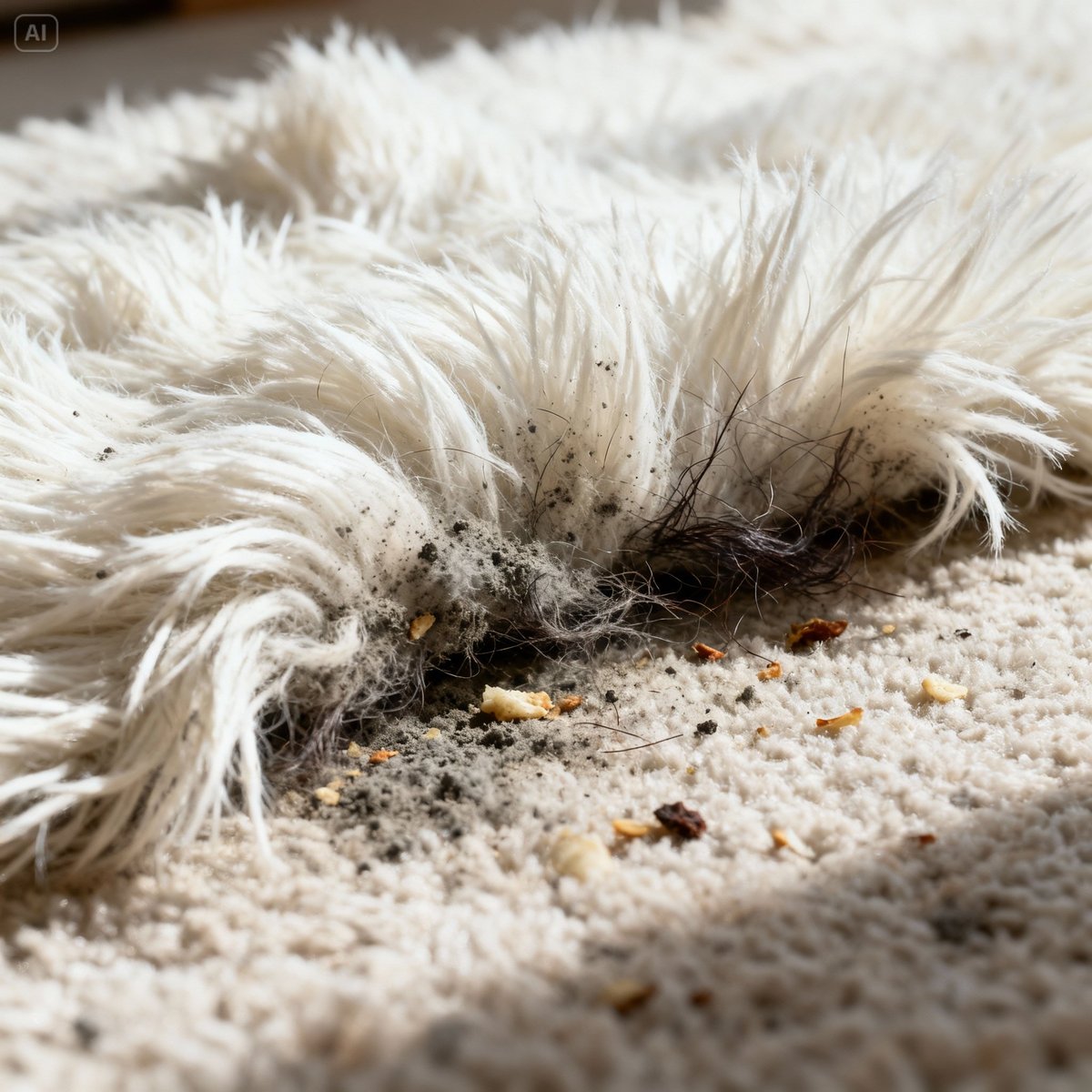
The pile of a long-pile carpet is usually 2-5 cm long.
Dust, hair and skin flakes fall deep into the fibers.
An ordinary vacuum cleaner only removes the dust on the surface and cannot pull up the dirt deep down.
Over time, the carpet gets dirtier and dirtier.
Challenge 2: Dirt builds up easily
A long-pile carpet has a large surface area, with many gaps between the fibers.
These gaps easily collect:
- Dust
- Hair
- Food crumbs
- Pet hair
- Skin flakes
Without regular deep cleaning, the carpet becomes a breeding ground for bacteria and dust mites.
Challenge 3: Slow to dry after washing
Once a long-pile carpet has been washed with water, it is very hard to dry completely.
The pile is long, absorbs a lot of water and takes a long time to dry.
If it is not dried thoroughly:
- It goes moldy easily
- It develops odors
- Bacteria grow
That is why many people do not dare to wash a long-pile carpet with water.
Three common ways to clean a long-pile carpet
Here are 3 common, easy-to-follow ways to clean a long-pile carpet.
Method 1: Vacuum cleaner + long-handle carpet brush
The most basic cleaning method.
Steps:
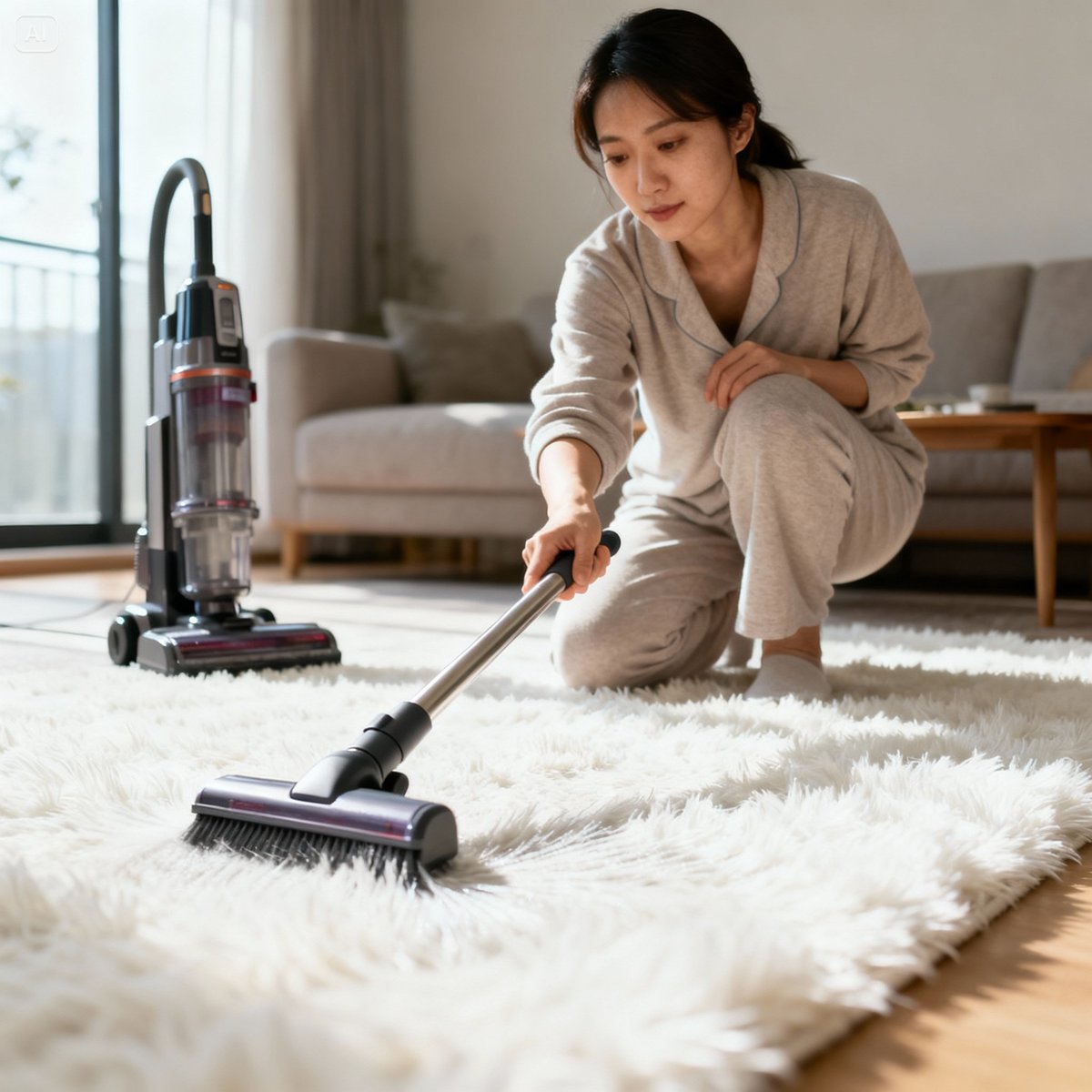
- First remove surface dust with a vacuum cleaner
- Brush the fibers with a long-handle carpet brush so that the deep-seated dust comes to the surface
- Vacuum again to pick up the dust that has come up
- Repeat 2-3 times
Result:
It brings the deep-seated dust out and is the most basic and most important part of everyday care.
Want to know how to choose a long-handle brush? See Long-handle cleaning brush recommendations: 5 best-value long-handle brushes compared.
See the long-handle carpet cleaning brushes from YC Brushes, with soft bristles that do not damage carpet fibers.
Method 2: Deodorizing with baking soda
A common deodorizing method.
Steps:
- Sprinkle baking soda evenly over the carpet
- Brush gently with a carpet brush so the baking soda works deep into the fibers
- Leave it for 30-60 minutes
- Vacuum up the baking soda thoroughly
Result:
- Removes odors
- Absorbs grease
Note:
The baking soda must be vacuumed up completely; otherwise the residue makes the carpet stiff.
Method 3: Cleaning with a white vinegar solution
A natural cleaning method.
Steps:
- Mix white vinegar and water in a ratio of 1:5
- Pour it into a spray bottle
- Spray it on the dirty area
- Scrub gently with a soft-bristle carpet brush
- Blot up the moisture with a dry cloth
- Open the windows and let it air dry
Result:
- Removes stains
- Removes odors
- Natural and non-toxic
Want to know which soft brushes suit carpet cleaning? See The soft-bristle cleaning brush application guide: the best choice for precision cleaning.
See the soft cleaning brush series from YC Brushes, which will not scratch carpet fibers.
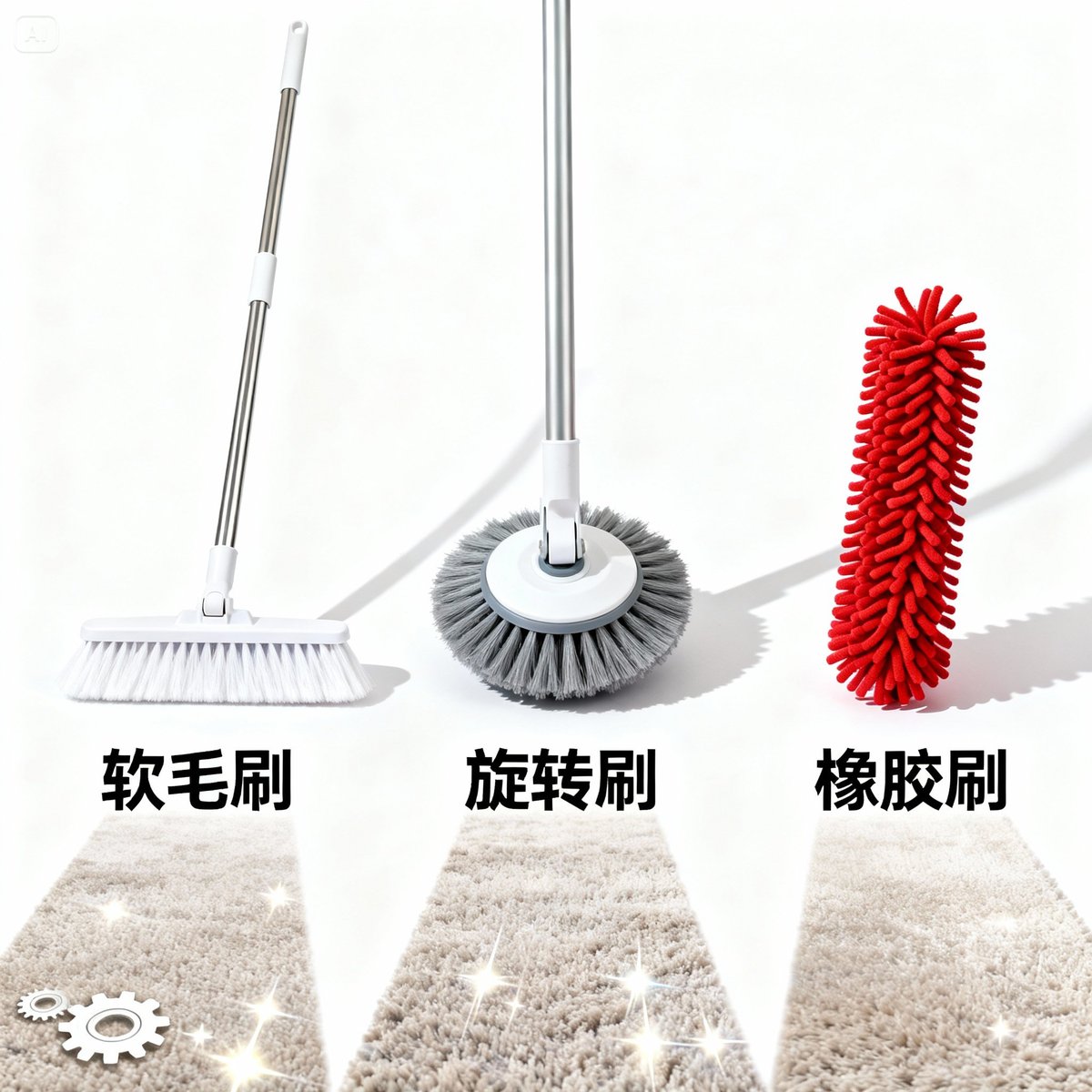
A guide to choosing professional carpet cleaning brushes
To do a good job, you first need good tools.
With the right brush, cleaning a long-pile carpet takes half the effort.
Brush type 1: Long-handle soft-bristle carpet brush
This is the most basic and most important carpet cleaning tool.
Features:
- A handle 60-100 cm long, so there is no need to bend over
- Soft bristles that do not damage carpet fibers
- Bristles 2-3 cm long that reach deep into the fibers
Suitable for:
- Everyday dusting
- Brushing the fibers to bring dust to the surface
- Use together with a vacuum cleaner
See the long-handle soft-bristle carpet brushes from YC Brushes, made with imported soft nylon filament that is gentle on carpets.
Brush type 2: Carpet brush with a swivel head
A more advanced carpet cleaning tool.
Features:
- The brush head rotates 360 degrees
- High cleaning efficiency
- Suited to large carpets
Suitable for:
- Large living room carpets
- Regular deep cleaning
- Fast dusting
Brush type 3: Carpet brush with rubber bristles
A wonder tool made for removing pet hair.
Features:
- Made of rubber, which generates static electricity
- Picks up hair very well
- Easy to clean
Suitable for:
- Households with pets
- Removing stubborn hair
- Use together with a vacuum cleaner
Complete steps for deep cleaning a long-pile carpet
We suggest a deep clean every 3-6 months.
The complete steps are as follows.
Step 1: Preparation
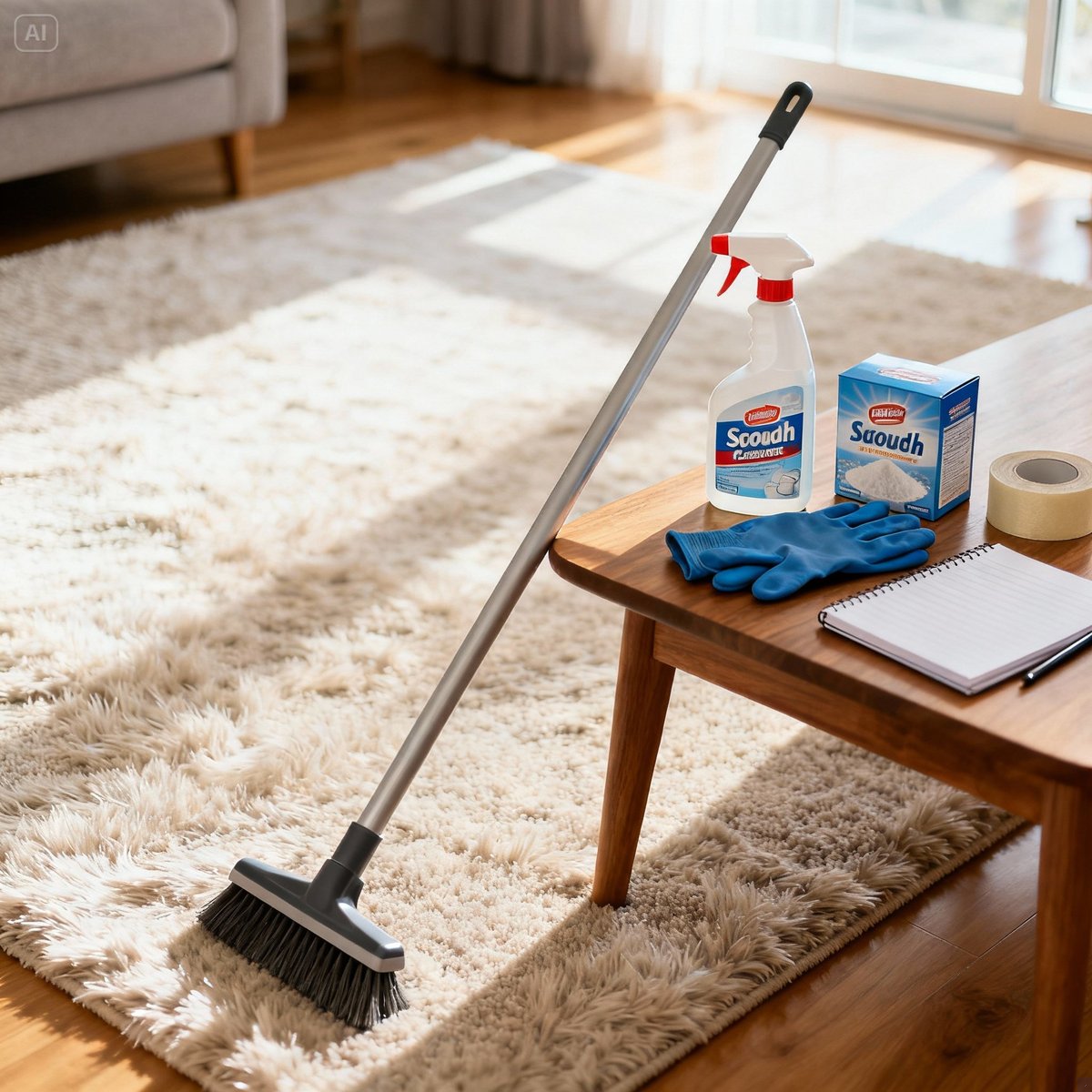
Tools to prepare:
- Vacuum cleaner
- Long-handle carpet brush
- Carpet cleaner or white vinegar solution
- Spray bottle
- Several clean cloths
- Electric fan (to speed up drying)
Before you start:
- Move the furniture off the carpet
- Open the windows for ventilation
- Choose a sunny day (it helps drying)
Step 2: Thorough dust removal
- Vacuum the surface dust carefully
- Brush the carpet in different directions with a long-handle carpet brush
- Vacuum again to pick up the dust that has come up
- Repeat 2-3 times, until no obvious dust comes out
This step is important: if you wash the carpet without removing the dust first, the dust turns into mud.
Step 3: Treating local stains
Deal with the obvious stains first.
- Spray cleaner on the stain
- Leave it for 5-10 minutes
- Scrub gently with a carpet brush
- Wipe with a damp cloth
- Blot up the moisture with a dry cloth
Different stains are treated in different ways; see the next section for details.
Step 4: Cleaning the whole carpet
- Spray cleaner evenly over the whole carpet
- Scrub with a long-handle carpet brush along the direction of the fibers
- Do not use too much force, to avoid damaging the fibers
- Wipe with a clean damp cloth
- Blot up as much moisture as possible with a dry cloth
Step 5: Speeding up drying
- Open the windows for ventilation
- Use an electric fan to blow it dry
- Avoid walking on it and let the carpet dry naturally
- Do not put the furniture back until it is completely dry
It usually takes 6-12 hours to dry completely.

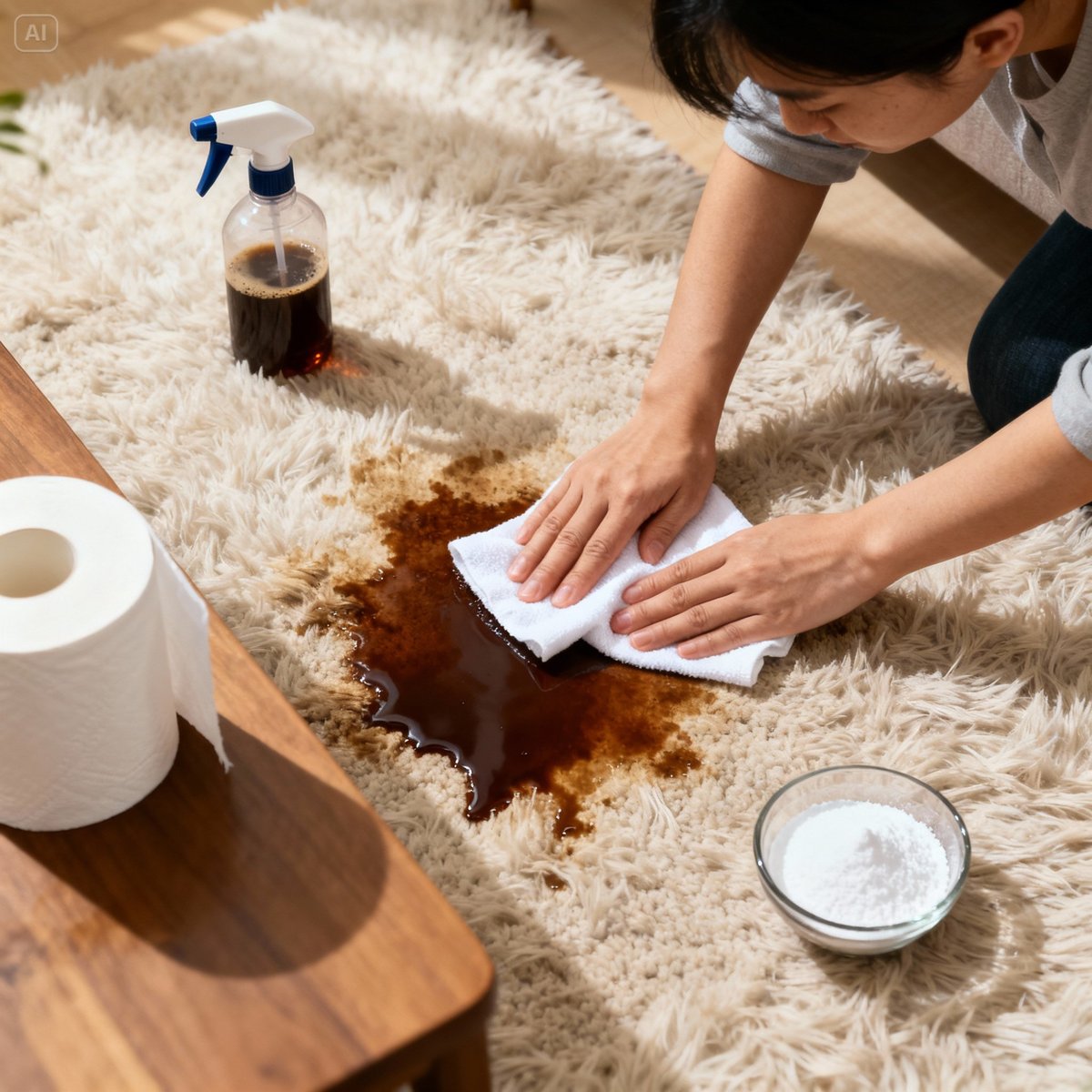
How to treat common stains
Different stains need different treatment.
Stain type 1: Coffee and tea
Treatment:
- Blot up the liquid immediately with a dry cloth
- Do not rub, so the stain does not spread
- Spray on white vinegar solution
- Scrub gently with a carpet brush
- Wipe clean with a damp cloth
Note:
The sooner a coffee stain is treated the better; over time it soaks deep into the fibers.
Stain type 2: Grease and sauces
Treatment:
- Scrape off the solid part with a spoon
- Sprinkle on cornstarch or potato starch to absorb the grease
- Leave it for 20 minutes
- Vacuum up the powder
- Spray on cleaner and scrub clean
Stain type 3: Pet urine
Treatment:
- Blot up the urine with plenty of tissue paper
- Spray on white vinegar solution (to remove the urine smell)
- Leave it for 10 minutes
- Wipe with clean water
- Sprinkle on baking soda to deodorize
- Leave it for 30 minutes, then vacuum it up
Stain type 4: Red wine and fruit juice
Treatment:
- Immediately sprinkle on plenty of salt to absorb the liquid
- Leave it for 10 minutes
- Vacuum up the salt
- Spray on soda water
- Scrub with a carpet brush
- Wipe clean with clean water
Stain type 5: Chewing gum
Treatment:
- Freeze the chewing gum with ice cubes
- Once it has hardened, scrape it off gently with a blade
- Wipe off the residue with alcohol
- Wipe clean with clean water
Everyday care tips for long-pile carpets
Regular care extends the life of the carpet and reduces how often it needs a deep clean.
Care tip 1: Vacuum 2-3 times a week
This is the most basic and most important care.
Regular vacuuming:
- Removes surface dust
- Keeps dust from working deep into the fibers
- Keeps the carpet fluffy
Tip:
Brushing the fibers with a long-handle carpet brush first makes vacuuming more effective.
Care tip 2: Turn the carpet regularly
If the carpet is reversible, we suggest turning it over every 3-6 months.
This:
- Evens out the wear
- Extends its service life
- Keeps one side from being walked on too much
Care tip 3: Avoid direct sunlight
Long exposure to the sun makes a carpet:
- Fade in color
- Stiffen in the fibers
- Lose resilience
Use curtains or blinds to block the sunlight.
Care tip 4: Use a carpet underlay
Lay a non-slip mat under the carpet.
Benefits:
- Keeps the carpet from sliding
- Adds cushioning, so it is more comfortable
- Extends the life of the carpet
Care tip 5: Take your shoes off indoors
Making a habit of taking off your shoes greatly reduces dirt on the carpet.
The grit on the soles of shoes is a carpet's biggest enemy.
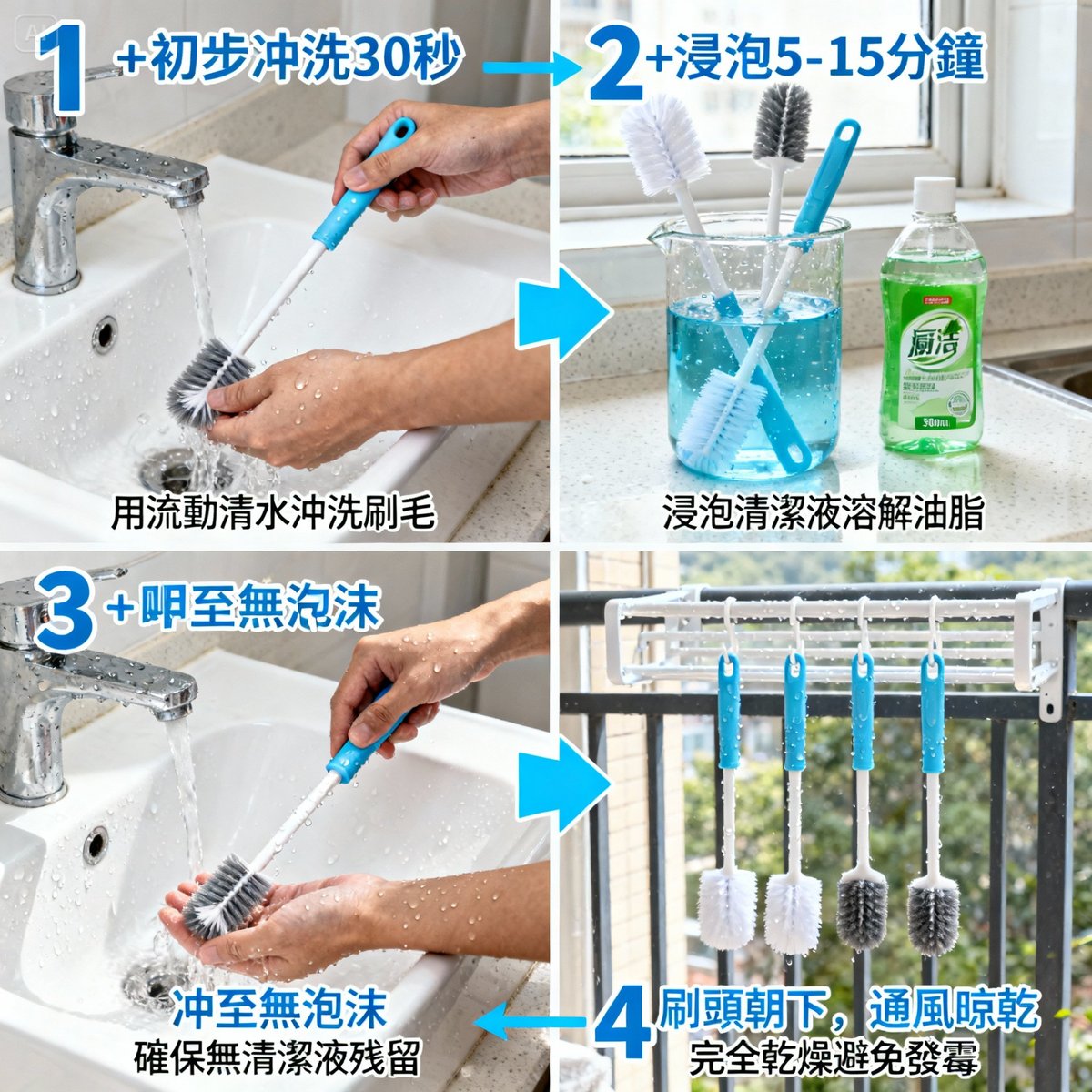
On everyday care of the brushes themselves, see The brush cleaning and maintenance guide.
FAQ
Here are the 4 most common questions.
How often should a long-pile carpet be cleaned?
Suggested cleaning frequency:
Everyday dusting: 2-3 times a week Deodorizing with baking soda: once a month Deep cleaning: once every 3-6 months Professional cleaning: 1-2 times a year
If you have pets or children, you can clean more often.
Can a long-pile carpet be washed in a washing machine?
We do not recommend it.
Reasons:
- The carpet is too heavy for the washing machine to handle
- It is hard to spin out the water, so it is very hard to dry
- The carpet's structure is easily damaged
Small rugs can be washed by hand, but for large long-pile carpets we suggest a steam cleaner or professional cleaning.
How do I get hair out of a long-pile carpet?
Pet hair is especially hard to clean up.
Methods that work:
- Use a carpet brush with rubber bristles, which generates static electricity that picks up hair
- Put on rubber gloves and brush the carpet with your hands; the hair sticks to the gloves
- Wrap adhesive tape around your palm and lift the hair off
See the rubber-bristle carpet brushes from YC Brushes, made for dealing with stubborn hair.
What should I do if a long-pile carpet smells?
Deodorizing methods:
- Baking soda: sprinkle on baking soda, leave it for 1 hour and then vacuum it up
- White vinegar spray: spray on diluted white vinegar solution and let it air dry
- Activated carbon: place activated carbon packs under the carpet
- Sunlight: a short spell in the sun (avoid over-exposure)
If the odor persists, the inside of the carpet may have gone moldy, and we suggest professional cleaning.
Summary: cleaning a long-pile carpet is not actually hard
Cleaning a long-pile carpet looks like a chore, but once you have the right methods and tools, it is actually simple.
Key points:
- Everyday care matters most: vacuum 2-3 times a week, together with a long-handle carpet brush
- Choose the right cleaning method: the 3 methods covered above are all practical
- Tools are key: the long-handle soft-bristle brush and the rubber-bristle brush each have their uses
- Treat stains promptly: different stains are treated in different ways
- Deep clean regularly: do a thorough clean every 3-6 months
Which brushes to have:
If you have a long-pile carpet at home, we suggest having at least:
- 1 long-handle soft-bristle carpet brush (everyday dusting)
- 1 rubber-bristle brush (removing hair)
See the carpet cleaning brush series from YC Brushes, at factory-direct prices.
Professional service:
If you need carpet cleaning brushes in a special specification, or are not sure which brush to choose, contact YC Brushes now and our team will advise you based on your type of carpet.
With over 40 years of manufacturing experience, we have everything from household to professional grade.
Want to learn more about cleaning brushes? Visit the blog for more specialist articles:
- The complete guide to long-bristle brushes | An expert look from buying to maintenance
- Long-handle cleaning brush recommendations | 5 best-value long-handle brushes compared
- Soft-bristle cleaning brush application guide | The best choice for precision cleaning
- Brush cleaning and maintenance guide | Cleaning frequency, 4 cleaning methods and care tips
- Long-bristle paint brush buying guide | Long bristles vs short bristles: how to choose?