Cleaning brushes correctly can noticeably extend their service life.
How often do brushes really need washing? Where can you buy brush cleaner? These are the two most common questions when caring for brushes.
This article brings together the common ways to clean brushes, adds professional care tips, and tells you everything in one place. (The stores mentioned here describe the market in Taiwan.)
How often should brushes be cleaned? A complete frequency guide
How often brushes need cleaning depends on how they are used.
Too little cleaning affects performance, and cleaning too often shortens service life.
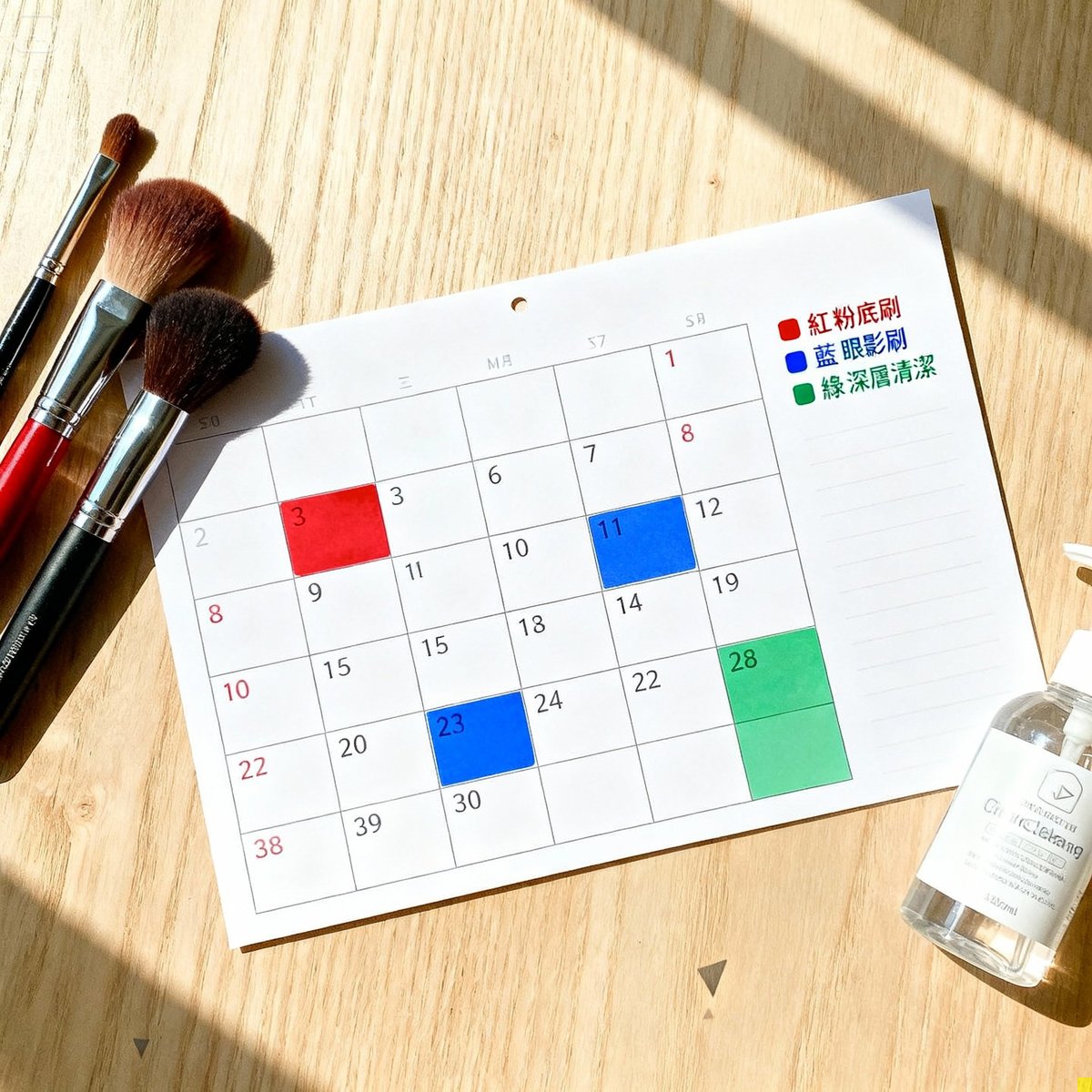
Cleaning frequency for makeup brushes
The recommended frequency depends on the type of makeup on the brush:
Foundation brushes, concealer brushes:
- Clean after every use
- Or at least 2-3 times a week
- These brushes trap dirt the most easily
Eyeshadow brushes, blush brushes:
- 1-2 times a week
- Wipe lightly with a tissue after use
- Deep clean regularly
Setting powder brushes, loose powder brushes:
- Once every 2 weeks
- Dry powders do not trap dirt easily
- But regular cleaning is still needed
Foundation brushes pick up liquid or cream makeup, and the residue easily makes the bristles clump, so they need cleaning most often.
Cleaning frequency for cleaning brushes
Clean immediately after every use:
- Paint brushes
- Glue brushes
- Any brush that comes into contact with chemicals
If they are not cleaned immediately, paint or glue is very hard to remove once it has dried.
Want to know how to clean paint brushes? See the long-bristle paint brush buying guide to learn the correct way to clean them.
Clean after use according to how dirty they are:
- Floor brushes
- Long-handle cleaning brushes
- Carpet brushes
On the care of long-handle cleaning brushes, see the care section of our long-handle cleaning brush recommendations.
Regular deep cleaning:
- Deep clean once every 1-2 weeks
- Use a dedicated cleaner or diluted alcohol
- Disinfect and sterilize thoroughly
Cleaning frequency for industrial brushes
Clean at the end of every shift:
- Brushes used in food factories
- Precision electronics cleaning brushes
- Any brush used in a high-standard environment
Weekly deep maintenance:
- Remove deep-seated dirt
- Check the wear on the filaments
- Make sure the brush functions properly
Want to learn everything about these brushes? See The complete guide to long-bristle brushes, a professional look from buying to care.
4 common ways to clean brushes
Here are 4 common ways to clean brushes; choose by the type of brush and how dirty it is.
Method 1: washing with a neutral detergent
The most basic method, using things you already have at home.
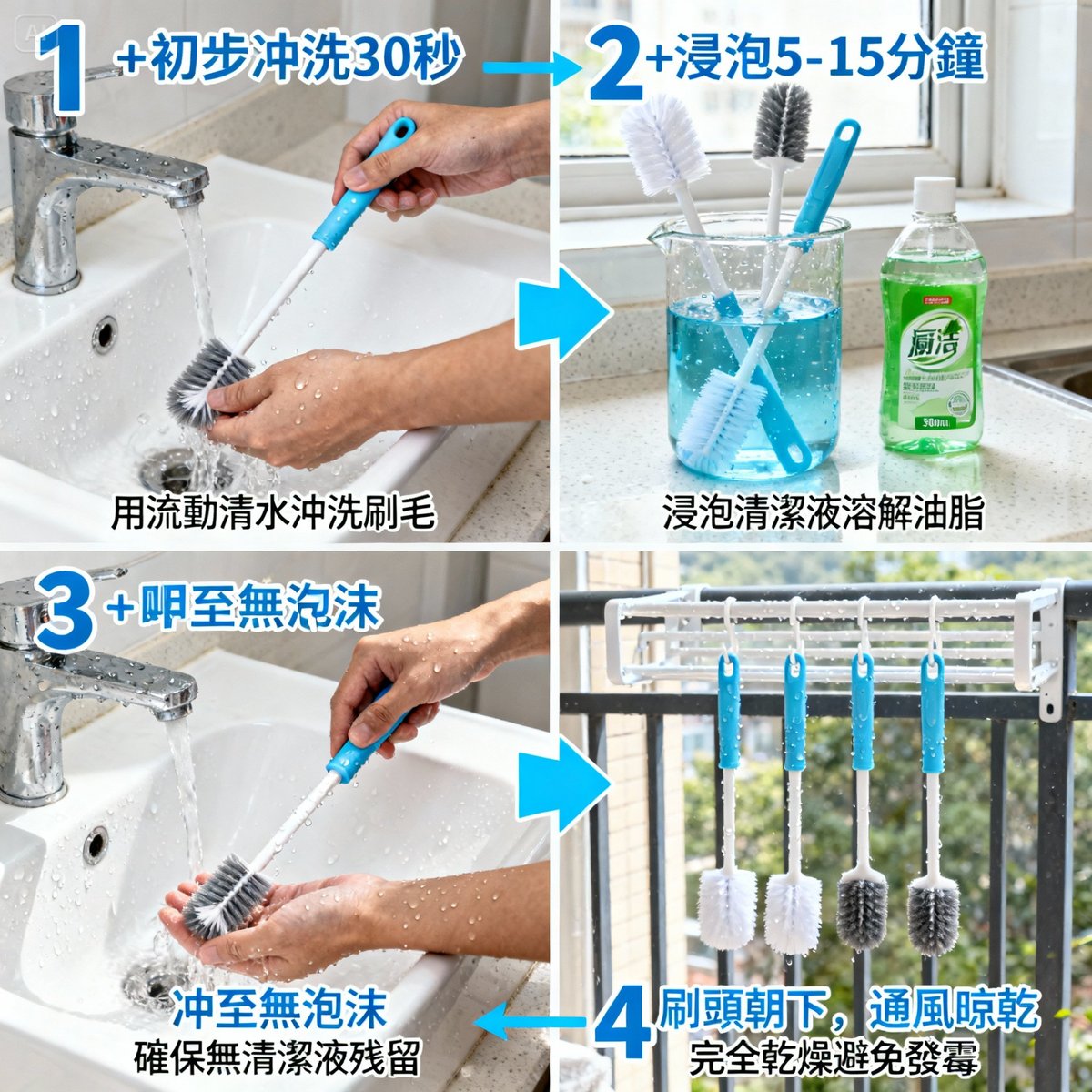
Steps:
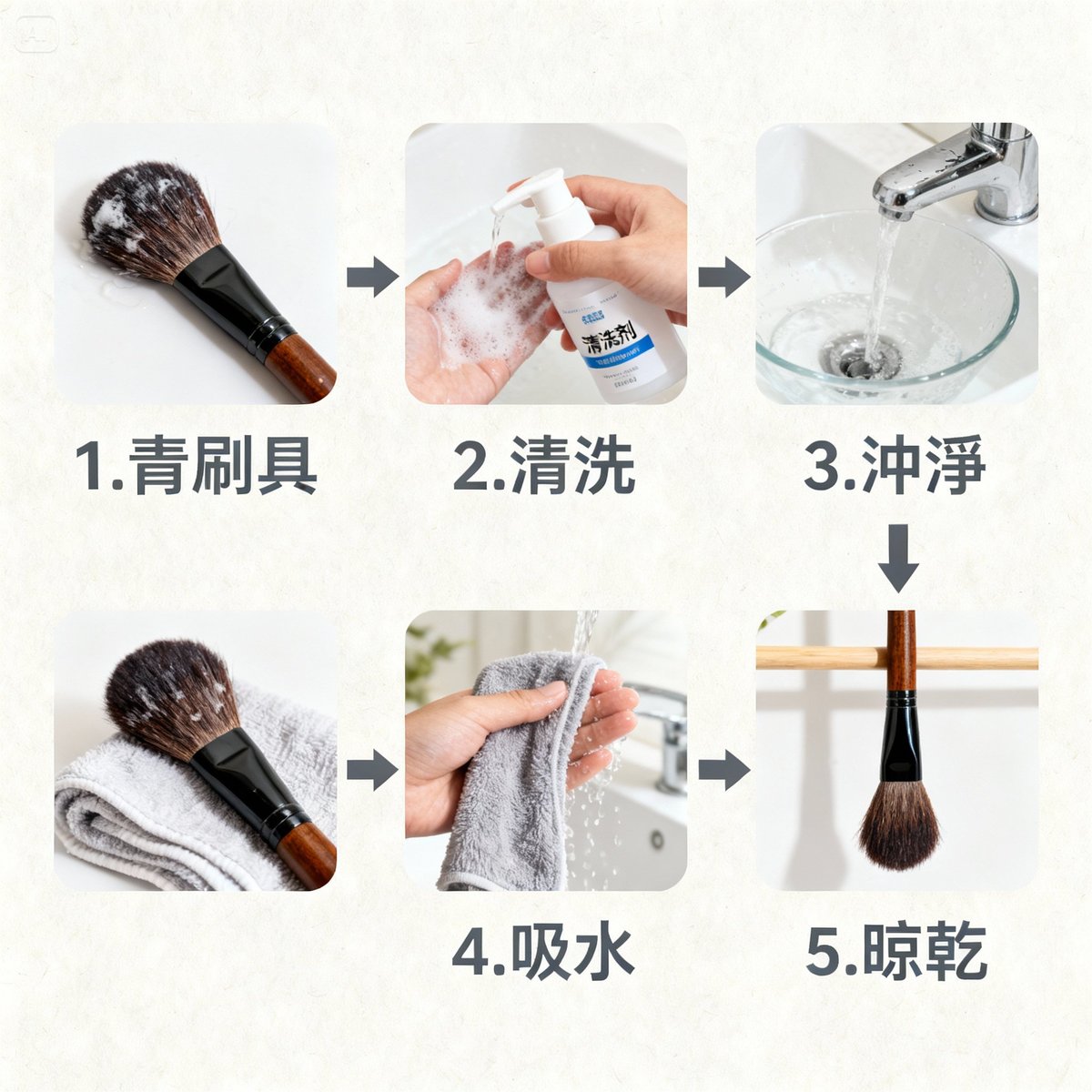
- Wet the bristles with warm water
- Squeeze a little neutral detergent into your palm (dish soap or shampoo will do)
- Swirl and rub the bristles in your palm
- Rinse until the water runs clear
- Press lightly with a towel to absorb the water
- Dry with the bristles facing down
Suitable brushes:
- Makeup brushes
- General cleaning brushes
- Soft brushes
Method 2: dedicated brush cleaner
To save time or get stronger cleaning power, you can switch to a dedicated brush cleaner.
Advantages:
- Strong cleaning power
- Contains color-protecting ingredients
- Extends brush life
- Has a sterilizing effect
Where to buy:
- Cosmed
- Daiso (has a dedicated brush cleanser)
- E-commerce platforms such as momo and Shopee
How to use:
- Follow the product instructions
- Usually sprayed on or used for soaking
- Faster than ordinary detergent
Method 3: deep cleaning with olive oil + dish soap
A deep-cleaning method for oil-based makeup such as foundation and concealer.
Steps:
- Pour olive oil into a small dish
- Swirl the bristles in the olive oil to dissolve the makeup
- Wipe off the olive oil
- Wash thoroughly with dish soap
- Rinse clean and leave to dry
How it works:
Olive oil dissolves oil-based makeup, and dish soap removes the grease.
Suitable brushes:
- Foundation brushes
- Concealer brushes
- Other brushes that touch oil-based makeup
Method 4: washing with the help of a brush cleaning mat
A small tool that helps clean deep into the bristles.
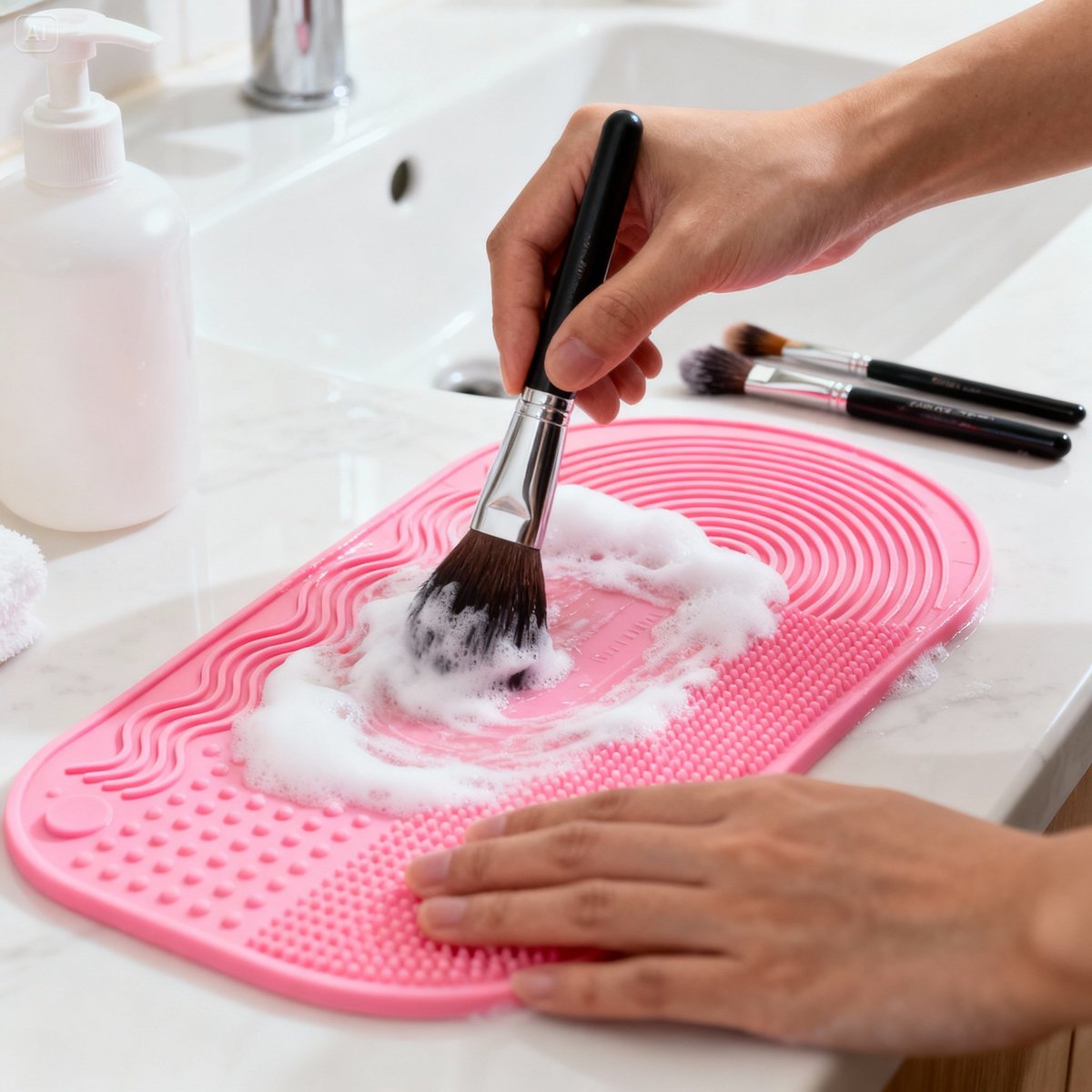
What is a brush cleaning mat:
A silicone cleaning mat with different textures on its surface.
It cleans deep into the bristles more effectively.
Where to buy:
- Cosmed (has items such as brush cleaning pads)
- Online shopping
How to use:
- Lay the cleaning mat flat in the sink
- Squeeze detergent onto the mat
- Scrub the bristles over the different textured areas
- Rinse clean and leave to dry
Where to buy brush cleaning supplies? Watsons and other channels compared
Where can you buy brush cleaning supplies?
Here are the pros and cons of each channel.
Watsons
Advantages:
- Many stores, convenient to buy
- Frequent promotions
Disadvantages:
- Higher prices
- Few brush cleaning items (the online store shows only a brush cleaning box)
Cosmed
Advantages:
- Many stores, with discounts on member points
- Several options, such as brush cleaning liquid and cleaning pads
Daiso
Advantages:
- Very cheap
- Has a cup-shaped brush cleaner (with a washing board and stand) and a dedicated brush cleanser
Disadvantages:
- Uneven quality
- Fewer choices
Online shopping (momo, Shopee, PChome)
Advantages:
- The widest choice
- Competitive prices
- Easy to compare prices
Disadvantages:
- You cannot see the actual product in person
- You have to wait for delivery
Popular products:
- Made-in-Taiwan (MIT) brush cleaners
- Cleansing soaps imported from Japan and Korea
- All kinds of cleaning mats and brush washing machines
DIY home-made cleaner
To save money, you can also mix your own from things you have at home.
Recipe 1: shampoo + baby oil
- Shampoo 70%
- Baby oil 30%
- Mix and bottle
Recipe 2: dish soap + olive oil
- Dish soap 80%
- Olive oil 20%
- Strong cleaning power

Cleaning methods for different types of brush
Brushes of different materials and uses are cleaned in different ways.
Natural-hair brushes (hog bristle, horsehair, goat hair)
Points to note when cleaning:
- Use a mild detergent
- Do not use water that is too hot (avoid going above 40°C)
- Do not rub hard
- Avoid soaking for a long time
Cleaning steps:
- Wet the bristles with warm water
- Use baby shampoo or a dedicated cleaner
- Wash gently
- Rinse thoroughly
- Press lightly with a towel to absorb the water
- Leave to dry naturally with the bristles facing down
Key to care:
Natural-hair brushes are more delicate and need to be treated gently.
Want to know more about caring for long-bristle brushes? See the care section of the complete guide to long-bristle brushes.
Synthetic-fiber brushes (nylon, synthetic hair)
Points to note when cleaning:
- Highly durable, so cleaning is less fussy
- Stronger detergents can be used
- Not affected by hot water
- Dry easily
Cleaning steps:
- Rinse with clean water
- Use dish soap or a dedicated cleaner
- Rub and wash the filaments
- Rinse clean and leave to dry
Key to care:
Synthetic-fiber brushes are durable, but they still need regular cleaning and care.
Cleaning paint brushes
Paint brushes used with water-based paint:
- Rinse with clean water immediately after use
- Rub and wash until the water runs clear
- Shake off the water
- Hang to dry with the bristles facing down
Paint brushes used with oil-based paint:
- Clean with mineral spirits or a dedicated solvent
- Remove the paint thoroughly
- Then rinse with clean water to remove the solvent
- Dry and store
Want the detailed technique for cleaning paint brushes? See the care methods in the long-bristle paint brush buying guide.
Cleaning industrial brushes
Brushes used in industrial environments need stricter cleaning.
Cleaning steps:
- Remove surface dirt
- Rinse with a pressure washer
- Soak in a dedicated cleaner
- Machine wash (if equipment is available)
- Disinfect
- Store only after drying completely
Professional equipment:
Large factories can use a brush washing machine, which is more efficient.
If you need industrial-grade brushes or advice on cleaning equipment, contact YC Brushes and our team will assess your needs.

Professional brush washing machines
When a large number of brushes have to be cleaned, a professional washing machine is a good choice.
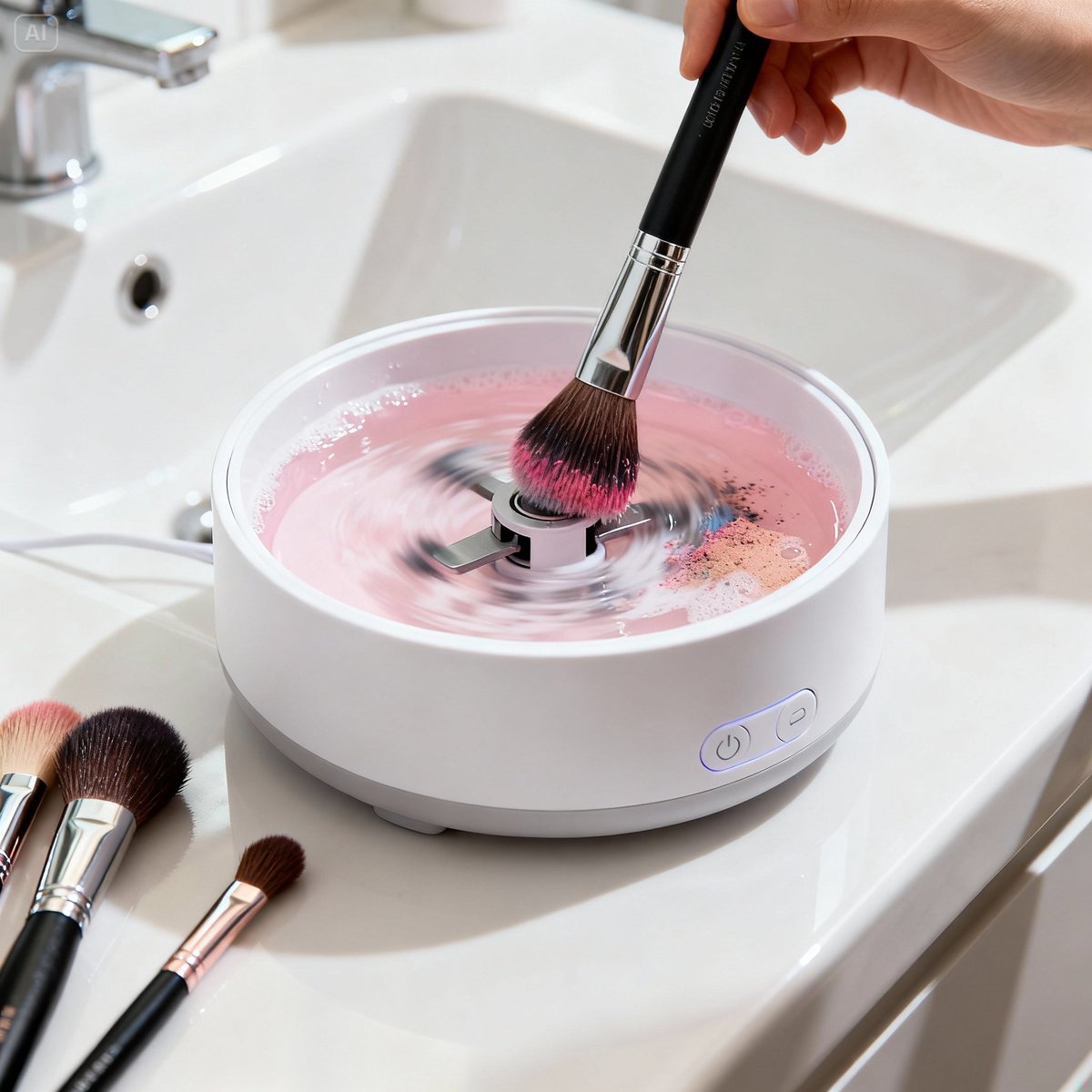
Home brush washing machines
Features:
- Compact
- Suited to cleaning makeup brushes
- Priced from mid-range to mid-high
How they work:
They use vibration or rotation to wash the bristles quickly.
Advantages:
- Save time and effort
- Clean well
- Suit people with many brushes
Disadvantages:
- An extra device has to be bought
- Natural-hair brushes may be damaged
- They need electricity
For more expensive natural-hair brushes, hand washing is still recommended.
Professional industrial washing machines
Suitable for:
- Cleaning companies
- Manufacturing plants
- Large commercial spaces
Features:
- Large capacity
- High efficiency
- Programmable washing cycles
Price:
From tens of thousands to hundreds of thousands of NT dollars, depending on scale.
The service from YC Brushes:
YC Brushes can help assess your need for professional washing equipment and advise on choosing the equipment.
DIY brush washer
To save money, you can also make a simple washer yourself.
Materials:
- Plastic cup
- Small motor (a toy motor)
- Battery box
- Clip for fixing
How to make it:
Use the vibration of the motor to make a simple home-made washer.
Care secrets that extend brush life
Besides regular cleaning, there are other care techniques.
Care secret 1: dry the right way
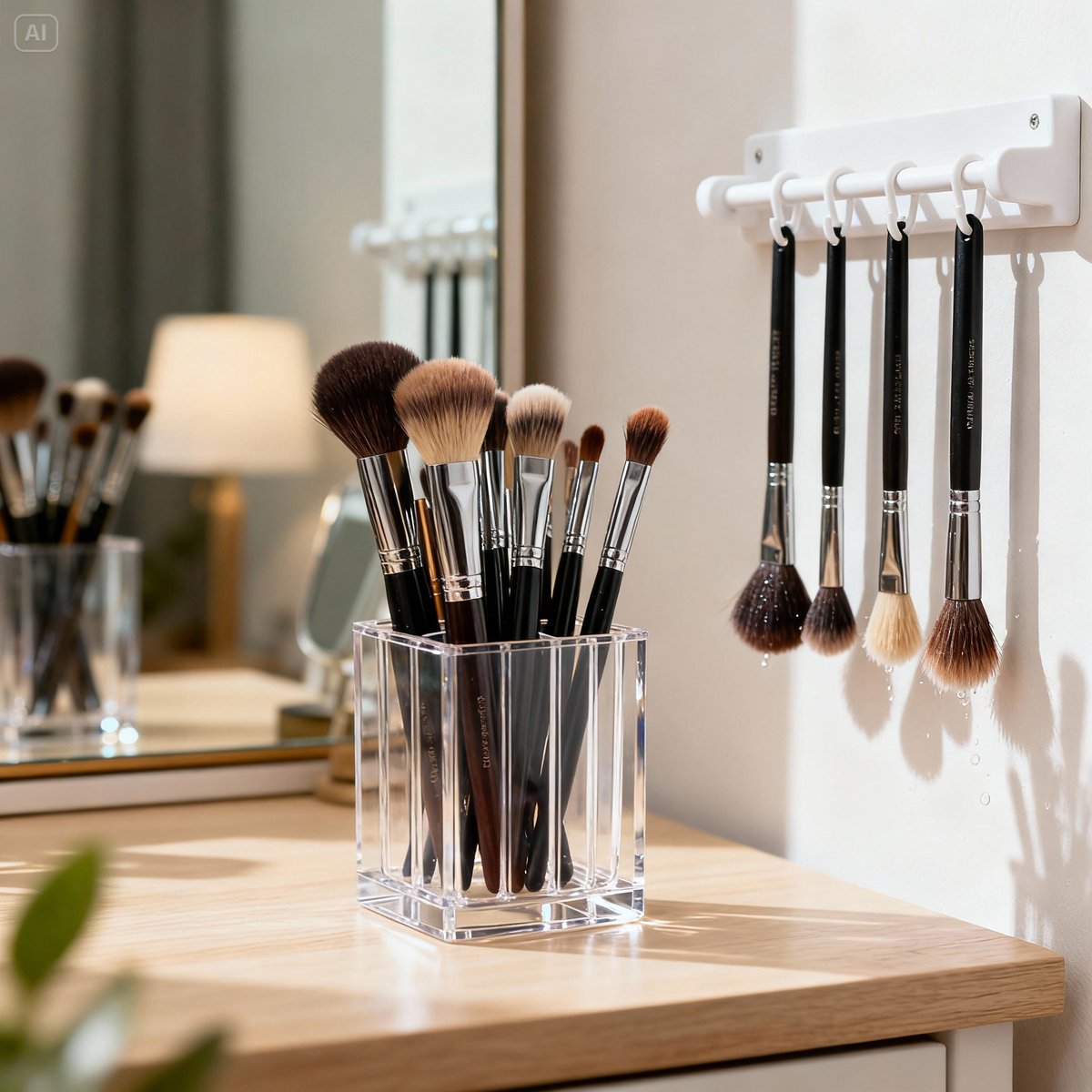
Dry with the bristles facing down:
This is the most important principle.
If the bristles face up, water runs into the handle and causes:
- The adhesive to come loose
- The bristles to shed
- The handle to go moldy
Hang to dry:
Hang the brush from a hook or a dedicated brush drying rack.
Avoid direct sunlight:
Sunlight makes the bristles stiff and faded.
Care secret 2: tidy the bristles regularly
Comb out tangles:
Comb gently with a bristle comb or a fine-toothed comb.
Trim uneven bristles:
Trim split or overlong bristles with small scissors.
Remove broken bristles:
Pull out broken bristles with tweezers.
Care secret 3: store properly
Dust-proof storage:
Protect the brushes with a brush bag or box.
Avoid squashing:
Do not cram brushes into a tight space.
Store by type:
Keep brushes for different uses apart.
Care secret 4: check regularly
Check once a month:
- Whether bristles are shedding
- Whether the handle is loose
- Whether the bristles are deformed
Deal with problems promptly:
Deal with a problem as soon as you find it, before it gets worse.
Care secret 5: choose good-quality brushes
Good-quality brushes are more durable to begin with.
What to look for:
- Bristles that are held securely
- A handle made of good material
- A manufacturer with a good reputation
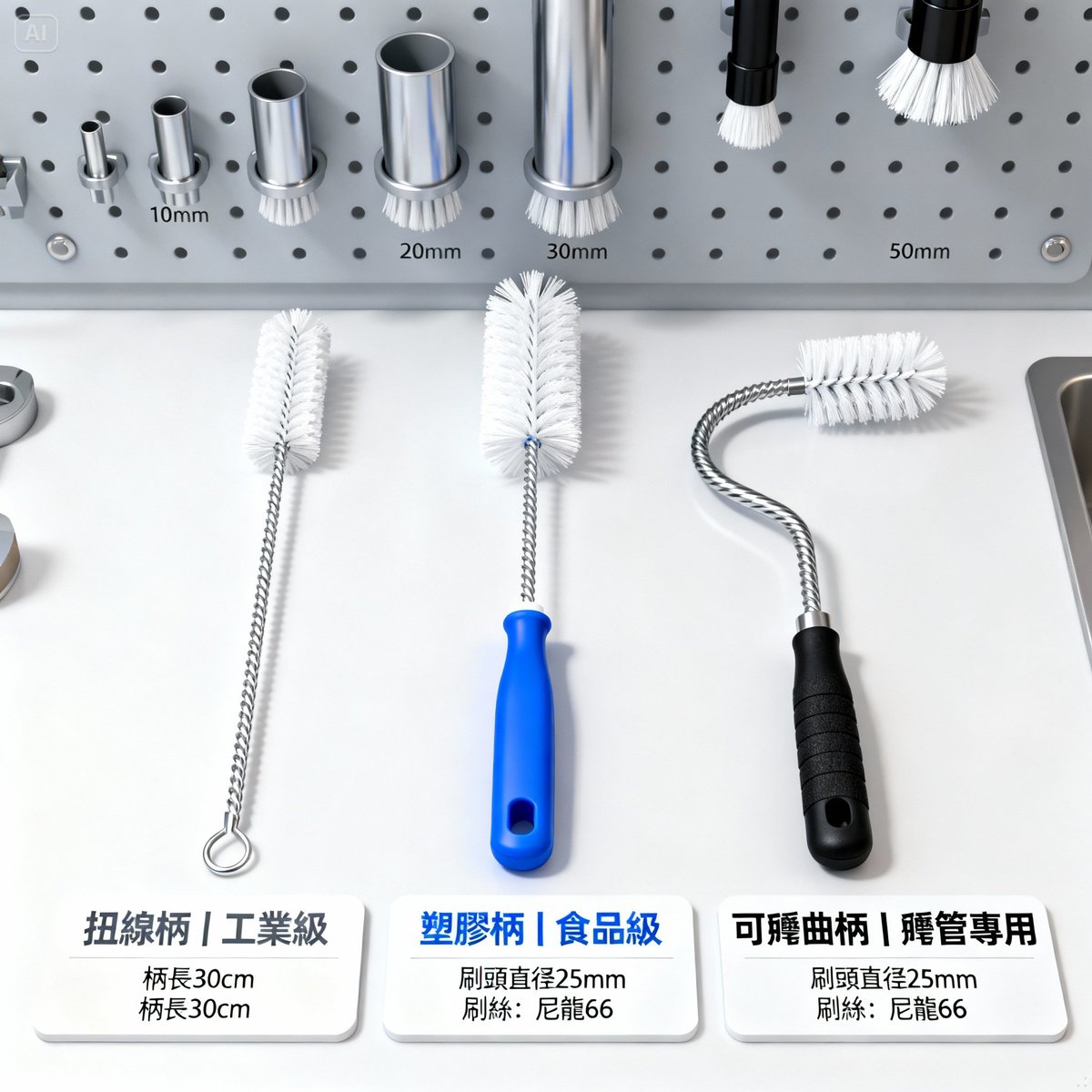
YC Brushes has over 40 years of manufacturing experience. All our brushes go through strict quality control, and the bristles are held securely and do not shed easily.
See the product quality assurance at YC Brushes.
Want to know about the applications and care of different brushes? See:
- Long-handle cleaning brush recommendations and care
- Soft cleaning brush application guide
- A complete introduction to long-bristle strip brushes
FAQ
Here are the 4 most common questions about cleaning brushes.
How often do brushes need to be cleaned?
The answer depends on the type of brush:
Makeup brushes:
- Foundation brushes: after every use, or 2-3 times a week
- Eyeshadow brushes: 1-2 times a week
- Setting powder brushes: once every 2 weeks
Cleaning brushes:
- Paint brushes: clean immediately after every use
- Floor brushes: according to how dirty they are, at least once a week
- Long-handle brushes: clean after use, deep clean every week
Industrial brushes:
- Clean at the end of every shift
- Deep maintenance every week
Does Watsons sell brush cleaning supplies?
Yes, but the choice is limited.
Searching for "brush cleaning" in the Watsons online store turns up cleaning tools such as a brush cleaning box; the actual items and prices depend on what the stores and the online store currently stock.
How long do brushes take to dry after washing?
That depends on the size of the brush and the drying environment.
In general:
Makeup brushes:
- Small (eyeshadow brush): 2-4 hours
- Medium (blush brush): 4-6 hours
- Large (setting powder brush): 6-12 hours
Cleaning brushes:
- Small brushes: 4-8 hours
- Large long-handle brushes: 12-24 hours
Ways to speed up drying:
- Press lightly with a towel to absorb the water
- Place in a ventilated spot
- Use an electric fan (do not use hot air from a hair dryer)
Note:
Do not use a brush before it is completely dry, or bacteria will grow easily.
How many years can a brush last?
With normal use and care:
Makeup brushes:
- High-end brushes: 5-10 years
- Mid-range brushes: 2-5 years
- Budget brushes: 1-2 years
Cleaning brushes:
- Household cleaning brushes: 1-3 years
- Professional-grade brushes: 3-5 years
- Industrial brushes: 6 months - 2 years (heavy use)
Ways to extend service life:
- Clean and care for them regularly
- Dry and store them correctly
- Avoid using excessive force
- Choose good-quality brushes
YC Brushes brushes are made with high-quality materials and strict quality control, and last longer than ordinary brushes.
Summary: brush cleaning and care is not difficult
Cleaning and caring for brushes may seem like a chore, but once it becomes a habit it is really very simple.
Key points again:
- Cleaning frequency: foundation brushes 2-3 times a week, eyeshadow brushes 1-2 times a week, cleaning brushes washed as soon as they are used
- Cleaning methods: the neutral detergent method is the most basic; for oil-based makeup add a deep clean with olive oil; a cleaning mat helps clean deep into the bristles
- Where to buy: Watsons, Cosmed, Daiso and online shopping all sell supplies
- Care secrets: dry with the bristles facing down, tidy regularly, store properly
- Extending service life: choose good-quality brushes, clean and care for them correctly, avoid overuse
Professional advice:
YC Brushes offers all kinds of high-quality brushes, from makeup brushes to industrial brushes.
With over 40 years of manufacturing experience, our brushes have securely held bristles and last even longer with proper care.
If you need professional brushes or care advice, contact us now and let our team help you.
Want to learn more about brushes? Visit the blog to explore more specialist articles:
- The complete guide to long-bristle brushes | A professional look from buying to care
- Long-bristle paint brush buying guide | Long or short bristles?
- The complete guide to cleaning long-pile carpets | 3 cleaning methods and a guide to professional brushes
- Long-handle cleaning brush recommendations | 5 best-value long-handle brushes compared
- Soft cleaning brush application guide | The best choice for precision cleaning
- A complete introduction to long-bristle strip brushes | Industrial sealing and cleaning applications