Need a steel or brass brush in a special size? Send a drawing or a sample. YC Brushes assesses it from the drawing or sample and finalizes the design with a 3D-printed sample before volume production → Send your inquiry
Introduction: choosing the wrong brush has serious consequences
A technician at a food processing plant cleaned stainless steel equipment with a carbon steel brush, and a week later large numbers of rust spots appeared on the surface of the equipment. Inspection found that iron particles from the carbon steel brush had embedded themselves in the stainless steel surface and caused "free iron contamination". The whole batch of equipment had to be re-treated, at a loss of more than NT$500,000.
A car repair shop, to save money, used a steel brush instead of a brass brush to clean aluminum alloy wheel rims. The rim surfaces were scratched, and the customer complained and demanded compensation. These cases all show that choosing the wrong brush material not only affects the quality of the work but can also cause serious losses.
Steel brushes and brass brushes look similar, but their material properties, suitable scenarios and prices are all very different. In this article, YC Brushes draws on over 40 years of manufacturing experience to explain in full the differences between steel brushes and brass brushes, the strengths and limitations of each, their application scenarios and a decision flow for choosing, so that you understand once and for all how to pick the right brush.
If you would like to learn the basics of wire brushes first, see: The complete guide to wire brushes
The basic differences between steel brushes and brass brushes
Understanding the basic differences is the first step toward choosing correctly.
Material composition
Steel brushes (Steel Brush / Wire Brush)
Carbon steel wire brush
- Composition: iron + carbon
- Properties: high hardness, wear resistant, low price
- Drawback: oxidizes and rusts easily
Stainless steel wire brush
- Composition: iron + chromium (chromium content ≥ 10.5%) + nickel (in some grades)
- Common grades: 304 (18% chromium + 8% nickel), 316 (16-18% chromium + 10-14% nickel + 2-3% molybdenum)
- Properties: corrosion resistant, does not rust easily
- Drawback: higher price
Brass and copper brushes (Brass Brush / Copper Brush)
Brass brush (the most common)
- Composition: copper + zinc (zinc content about 30-40%)
- Color: golden yellow
- Properties: moderate hardness, low spark
Copper brush (pure copper brush)
- Composition: pure copper (copper content above 99%)
- Color: reddish copper
- Properties: softer, extremely good electrical conductivity
- Use: special precision cleaning
Comparison of physical properties
| Property | Carbon steel brush | Stainless steel brush | Brass brush | Copper brush |
|---|---|---|---|---|
| Hardness | Highest | High | Medium | Low |
| Density (g/cm³) | 7.85 | 7.93 | 8.4 | 8.96 |
| Electrical conductivity | Low | Low | Medium | Extremely high |
| Corrosion resistance | Poor | Excellent | Good | Good |
| Sparks | May be produced | May be produced | Low spark | Low spark |
| Magnetism | Yes | In some grades | None | None |
Telling them apart by appearance
Color (the most obvious difference)
- Carbon steel wire: silver-gray, with a metallic luster
- Stainless steel wire: silvery white, with a brighter luster
- Brass wire: golden yellow, a distinct brass color
- Copper wire: reddish copper, a darker copper color
Feel
- Steel brush: stiffer, springy
- Brass brush: softer, more flexible
Magnet test
- Carbon steel brush: magnetic (attracted by a magnet)
- Stainless steel brush: magnetic in some grades (weaker in 304, stronger in 430)
- Brass brush: non-magnetic
Weight
- A brass brush is heavier than a steel brush (copper has the higher density)
Steel brushes in full
A closer look at the strengths, limitations and application scenarios of steel brushes.
Strengths of steel brushes
1. High hardness and efficient rust removal
- Mohs hardness of about 5.5-6.5
- Effectively removes stubborn rust and oxide layers
- Removes rust noticeably faster than a brass brush
2. Strong wear resistance and long service life
- Carbon steel brushes have excellent wear resistance
- Under the same conditions they last longer than brass brushes
3. Affordable
- A carbon steel brush is the most economical choice
- The price is clearly lower than that of a brass brush
- Suited to heavy use and limited budgets
4. Wide choice
- All kinds of specifications are available
- Market supply is plentiful
- Easy to purchase
Limitations of steel brushes
1. Carbon steel brushes oxidize and rust easily
- They need to be stored properly after use
- They rust easily in damp environments
- Rust affects how well they work
2. They may contaminate the workpiece
- A carbon steel brush used on stainless steel causes free iron contamination
- Iron particles embedded in the workpiece surface lead to rust
- Not suitable for food-grade or medical-grade applications
3. They may produce sparks
- Metal friction can produce sparks
- This is a safety risk in flammable environments
- Prohibited at gas stations, chemical plants and similar sites
4. They may scratch soft materials
- Their high hardness can scratch aluminum, copper and plastic
- Use with caution when treating precision surfaces
Carbon steel vs stainless steel wire brushes
Carbon steel wire brush
- Strengths: the lowest price, high hardness, fast rust removal
- Weaknesses: rusts easily, contaminates stainless steel
- Suited to: rust removal on ordinary carbon steel and cast iron
Stainless steel wire brush (304/316)
- Strengths: does not rust easily, can be used to clean stainless steel, corrosion resistant
- Weaknesses: high price (about 2.5-3 times that of carbon steel)
- Suited to: stainless steel equipment, food-grade applications, medical devices
How to choose?
- Cleaning carbon steel or cast iron → a carbon steel brush is enough
- Cleaning stainless steel → a stainless steel wire brush must be used
- Food-grade applications → a stainless steel wire brush must be used
For the key points of cleaning stainless steel in detail: Choosing brushes for cleaning stainless steel
10 application scenarios for steel brushes
1. Rust removal on carbon steel and cast iron
- The most common and most suitable application
- High efficiency, low cost
2. Treatment before and after welding
- Removing the oxide layer from the surface to be welded
- Removing slag and leveling the weld bead
3. Surface preparation before coating
- Removing old paint
- Roughening the surface to improve adhesion
4. Removing dirt from machine parts
- Removing oil and carbon deposits
- Equipment maintenance
5. Concrete surface treatment
- Removing laitance from the concrete surface
- Exposing the aggregate (roughening)
6. Brushing the grain of wood
- Strengthening the three-dimensional feel of the wood grain
- Creating an antique effect
7. Conveyor belt cleaning
- Cleaning the surface of industrial conveyor belts
- Removing material stuck to them
8. Rust removal and cleaning of floors
- Rust removal on metal floors and steel plate
- Floor maintenance in warehouses and factories
9. Maintenance of steel structures
- Rust removal on structural steel
- Maintenance of bridges and scaffolding
10. Car repair
- Treating rust spots on the body
- Removing dirt in the engine bay (non-stainless-steel parts)
See the carbon steel brush and stainless steel brush products from YC Brushes
Brass brushes in full
Brass brushes have their own distinct strengths and suit special application scenarios.
Strengths of brass brushes
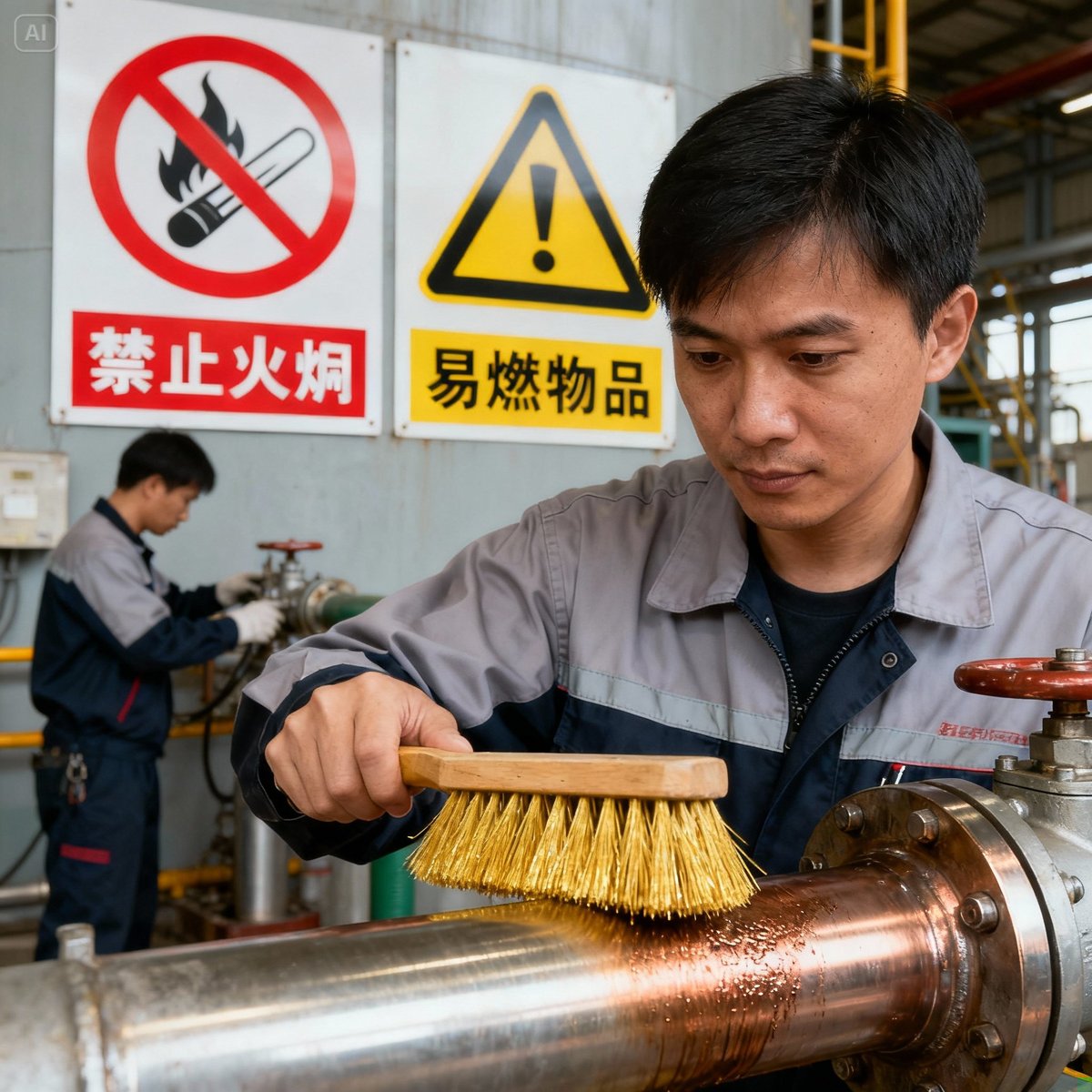
1. Low spark (the most important property)
- Copper alloys are non-sparking (low-spark) materials: the risk of sparks from friction is far lower than with steel, but it cannot be ruled out completely
- A common choice for work in flammable environments
- Meets explosion-proof safety rules
2. No contamination of stainless steel
- Brass particles do not cause stainless steel to rust
- Stainless steel equipment can be cleaned safely
- An alternative for food-grade applications (second to a stainless steel brush)
3. Softer, less likely to scratch
- Lower hardness, suited to precision surfaces
- Can be used to clean aluminum and copper
- Lowers the risk of damaging the workpiece
4. Good electrical conductivity
- Suited to cleaning electrical equipment
- Does not build up static
5. Good corrosion resistance
- Better corrosion resistance than carbon steel, but the surface oxidizes and discolors
- Suited to use in damp environments
Limitations of brass brushes
1. High price
- Copper is an expensive material
- The price is 2.5-4 times that of a carbon steel brush
- And 1.5-2 times that of a stainless steel brush
2. Lower rust removal efficiency
- Lower hardness than a steel brush
- Slower on heavy rust
- Needs a longer working time
3. Wears easily, shorter service life
- Under the same conditions its life is shorter than that of a steel brush
- Needs replacing more often
4. Smaller market supply
- Not as widespread as steel brushes
- Less convenient to purchase
- Fewer specifications to choose from
Pure copper vs brass brushes
Brass brush (the most common)
- Composition: copper + zinc (30-40%)
- Hardness: medium
- Price: more economical
- Suited to: general spark-free cleaning, stainless steel cleaning
Copper brush (pure copper brush)
- Composition: pure copper (above 99%)
- Hardness: lower
- Price: the highest
- Suited to: extremely fine cleaning, electrical equipment
How to choose?
- General applications → brass brush (good value for money)
- Extremely fine work or electrical equipment → copper brush
10 application scenarios for brass brushes
1. Work in flammable environments
- Cleaning gas station equipment
- Removing dirt from pipes in chemical plants
- Maintenance of oil tanks and oil storage vessels
- Explosives factories, fireworks factories
2. Cleaning stainless steel equipment
- Food processing equipment (second choice; a stainless steel brush is the first choice)
- Stainless steel pipes in chemical plants
- Medical devices (second choice)
3. Cleaning aluminum
- Removing dirt from aluminum window frames
- Cleaning aluminum alloy wheel rims
- Maintenance of aluminum parts
4. Cleaning copper
- Descaling copper products
- Cleaning electrical copper busbars
- Maintenance of copper pipes
5. Electrical equipment
- Cleaning switchgear cabinets
- Dusting distribution boards
- Maintenance of motor parts
6. Precision machinery
- Cleaning precision molds
- Removing dirt from optical instruments (light)
- Maintenance of precision parts
7. Food machinery
- Stainless steel conveyor belts (as a substitute when no stainless steel brush is available)
- Food processing equipment
8. Ship maintenance
- Removing dirt from decks
- Maintenance of copper hardware
- Cleaning in flammable areas
9. Restoration of cultural relics
- Removing rust from metal relics (with extremely light force)
- Restoring antique tools
- Cleaning stone surfaces
10. Protecting special coatings
- Cleaning a coated surface without damaging the coating
- Removing dirt from plated surfaces
See the brass brush product range from YC Brushes
Steel brush vs brass brush: full comparison tables
A complete comparison at a glance, to help you judge quickly.
Comparison of core properties
| Item | Carbon steel brush | Stainless steel brush | Brass brush |
|---|---|---|---|
| Hardness | ★★★★★ | ★★★★☆ | ★★☆☆☆ |
| Rust removal efficiency | ★★★★★ | ★★★★☆ | ★★★☆☆ |
| Service life | ★★★★★ | ★★★★☆ | ★★★☆☆ |
| Price | ★★★★★ (the cheapest) | ★★☆☆☆ | ★★★☆☆ |
| Corrosion resistance | ★☆☆☆☆ | ★★★★★ | ★★★★☆ |
| Spark-free | ❌ | ❌ | ✅ |
| Suitable for stainless steel | ❌ | ✅ | ✅ (second choice) |
| Flammable environments | ❌ | ❌ | ✅ |
| Precision cleaning | ❌ | ✅ | ✅ |
Comparison of price and service life
| Item | Carbon steel brush | Stainless steel brush | Brass brush |
|---|---|---|---|
| Unit price of a hand brush | Budget | Mid to high range | High range |
| Wheel brush for an angle grinder (4-inch) | Mid-range | Mid to high range | High range |
| Service life | Longest | Second | Shorter |
| Cost per hour | Lower | Medium | Higher |
Conclusion: a carbon steel brush has the lowest total cost, but in specific scenarios such as flammable environments (where non-sparking tools are needed) and stainless steel cleaning (as the second choice), a brass brush is still worth choosing.
Comparison by workpiece material
| Workpiece material | Carbon steel brush | Stainless steel brush | Brass brush | Note |
|---|---|---|---|---|
| Carbon steel / cast iron | ✅ Best | ✅ Usable | ✅ Usable | A carbon steel brush is the most economical |
| Stainless steel | ❌ Prohibited | ✅ Best | ✅ Second choice | Carbon steel contaminates it |
| Aluminum | ⚠️ Scratches easily | ⚠️ Scratches easily | ✅ Suitable | A brass brush is softer |
| Copper | ⚠️ Scratches easily | ⚠️ Scratches easily | ✅ Suitable | The same material does no damage |
| Wood | ✅ Suitable | ✅ Suitable | ✅ Usable | Brushing the grain |
| Plastic | ❌ Will scratch | ❌ Will scratch | ⚠️ With caution | A nylon brush is recommended |
Comparison by environment and safety
| Application scenario | Carbon steel brush | Stainless steel brush | Brass brush |
|---|---|---|---|
| General environments | ✅ | ✅ | ✅ |
| Flammable environments | ❌ Prohibited | ❌ Prohibited | ✅ Suitable (still assess against the site's explosion-protection rules) |
| Food grade | ❌ | ✅ Best | ✅ Second choice |
| Medical grade | ❌ | ✅ Best | ⚠️ |
| Damp environments | ⚠️ Rusts easily | ✅ | ✅ |
| Chemical plants | ⚠️ Depends on the case | ✅ | ✅ Preferred |
When should you switch to a nylon brush? Three no-go areas for metal brushes
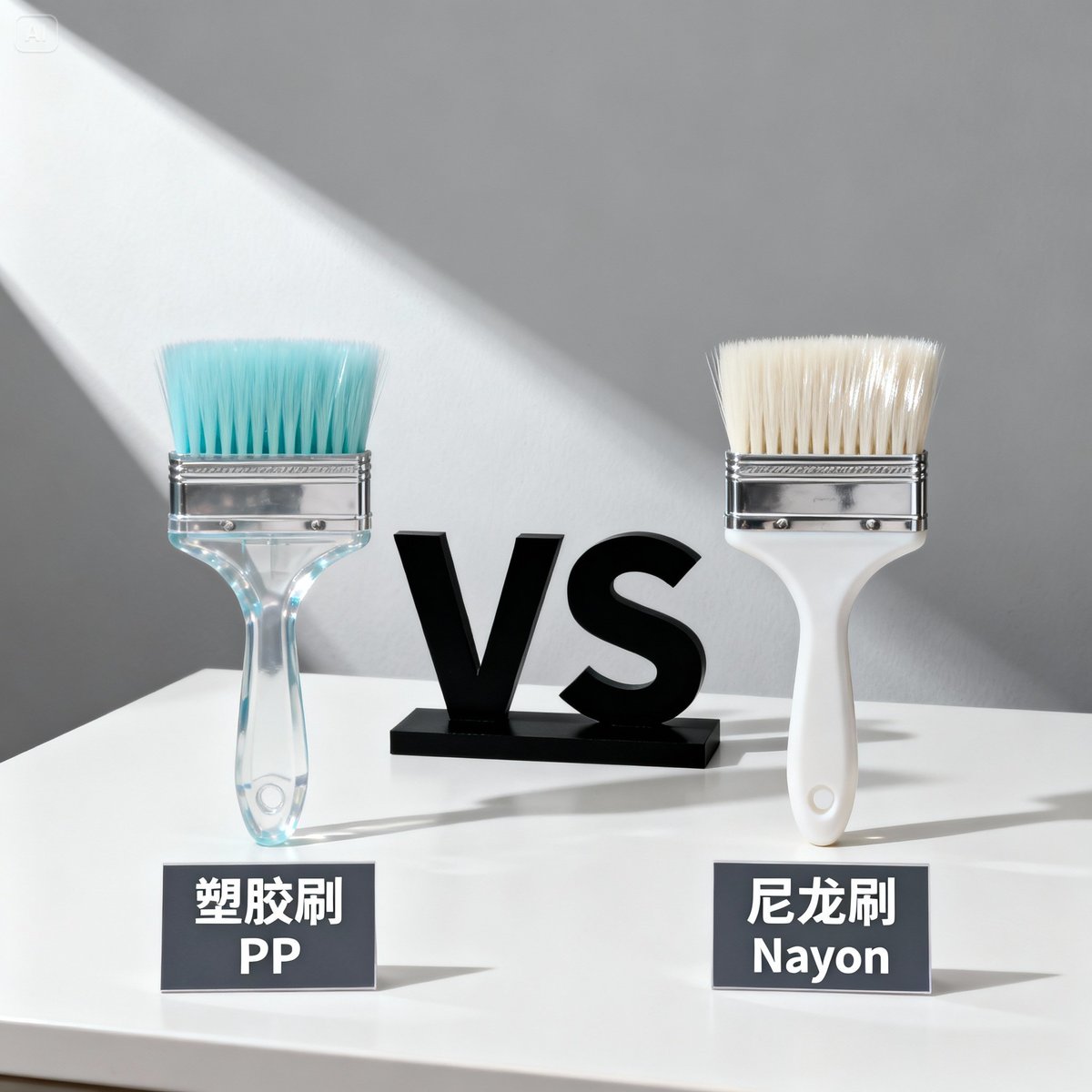
When the workpiece is plastic or a precision part, or when an aluminum or copper surface must be left with zero scratches, metal brushes are not suitable. A nylon brush is far softer than a steel brush and is the safer option when zero scratches are required (for general cleaning of aluminum and copper, a brass brush is still the first choice). PCBs and optical components in the electronics industry, and food processing equipment, in practice all go with nylon and not with metal brushes.
Four nylon materials and the processes they suit
| Type of nylon | Upper temperature limit | Key property | Typical applications |
|---|---|---|---|
| Ordinary nylon (PA6/PA66) | 60–80°C | Springs back quickly, does not easily take a permanent set | General cleaning, dust removal, product guiding |
| Anti-static nylon | 60–80°C | Eliminates static, prevents dust from being attracted | Electronics, printing, plastics |
| Food-grade nylon | 60–80°C | Meets FDA standards, may touch food | Food processing, pharmaceutical equipment |
| High-temperature nylon | 120–150°C | Does not soften or deform in high-temperature processes | Baking equipment, high-temperature production lines |
Nylon can be used wet or dry and suits general chemical environments.
Quick reference for steel, brass and nylon brushes
| Condition | Choose |
|---|---|
| Heavy rust removal on carbon steel and cast iron | Carbon steel brush |
| Stainless steel workpieces | Stainless steel wire brush |
| Flammable environments (spark-free) | Brass brushes or other non-sparking materials (still assess against the site's explosion-protection rules) |
| Surface treatment of aluminum and copper | Brass brush or nylon brush |
| Plastic, wood, glass | Nylon brush |
| Precision parts such as PCBs and optical components | Anti-static nylon brush |
| Food-contact surfaces | Food-grade nylon or a 304/316 stainless steel brush |
Four limitations of nylon brushes
Nylon is not a cure-all. It fails in the following cases:
- Not enough for heavy rust removal: thick rust, oxide layers and welding slag still need a metal brush.
- Ordinary nylon is not heat resistant: above 60–80°C it softens and deforms, so high-temperature processes must use a high-temperature grade.
- Long-term ultraviolet exposure ages it: outdoor use or long exposure to the sun makes the filament brittle.
- Poor-quality products shed: filament falling out and getting into the product is a real risk in the food and electronics industries, so you must confirm the supplier's standard for tuft pull strength.
🤔 Finding it hard to choose? Let YC Brushes help!
A real case: a chemical plant had been cleaning equipment with carbon steel brushes, but working in flammable areas raised safety concerns. After helping with an assessment, YC Brushes recommended switching to brass brushes, which greatly reduced the spark risk.
How can YC Brushes help you choose the right brush?
✅ Free selection advice: we analyze the workpiece material and working environment and recommend the most suitable brush ✅ Professional technical support: a team with over 40 years of experience answers all your questions ✅ A complete product line: carbon steel, stainless steel and brass brushes, all from one source ✅ Custom service: special specifications developed to meet unique requirements ✅ Quality assurance: ISO certified, with every batch strictly inspected
💡 Why choose YC Brushes?
- Over 40 years of manufacturing experience: a thorough understanding of the properties and applications of all kinds of materials
- Factory-direct: affordable prices, stable quality
- Professional advice: we do not just sell products; we care that customers choose the right one
Contact us now for a free material selection analysis!
👉 Contact YC Brushes now and let a professional team help you choose the right brush!
How to choose? A 3-step decision flow
Follow the flow below to choose the right brush with ease.
Step 1: confirm the workpiece material
This is the most important first step.
Carbon steel, cast iron, ordinary steel → Carbon steel brush (the best choice, economical)
Stainless steel → Stainless steel wire brush (required) → Brass brush (second choice, when the budget is limited) → ❌ Never use a carbon steel brush
Aluminum, copper → Brass brush (the best choice) → Stainless steel brush (use with caution, with light force) → ❌ Avoid carbon steel brushes
Wood → Carbon steel brush (gives a good brushed grain) → Stainless steel brush (usable)
Not sure of the material? → Contact YC Brushes for free advice on identifying the material
Step 2: assess the working environment
Environmental conditions decide the safe choice.
General environments (no special restrictions) → Choose by material
Flammable environments (gas stations, chemical plants, paint rooms and so on) → Use a brush made of a non-sparking material such as brass (still assess against the site's explosion-protection rules) → ❌ Steel brushes are strictly prohibited (they may produce sparks)
Food-grade environments (food processing plants) → First choice: stainless steel wire brush (304/316) → Second choice: brass brush → ❌ Carbon steel brushes are prohibited
Damp environments → First choice: stainless steel brush, brass brush → Avoid: carbon steel brush (rusts easily)
Precision cleaning → First choice: brass brush, stainless steel brush → Avoid: carbon steel brush (may scratch)
Step 3: consider the budget and frequency of use
Ample budget + frequent use → Choose the brush that best suits the material, with no compromise
Limited budget + infrequent use → Choose the economical option as far as safety and the material allow → For example: for cleaning stainless steel, if the budget does not stretch to a stainless steel brush, a brass brush can be used (second choice, but acceptable)
Limited budget + frequent use → Calculate the "total cost" (unit price × replacement frequency) → The lowest unit price is not necessarily the best deal; you also have to check whether the material is suitable (for example, a carbon steel brush cannot be used on stainless steel)
Example cost calculation
Scenario: a factory needs to clean stainless steel equipment frequently over the long term
Option 1: stainless steel brush
- Unit price: mid to high range, longer life than a brass brush
- Replacement frequency: lower
- Monthly cost: relatively low
Option 2: brass brush
- Unit price: high range, shorter life
- Replacement frequency: higher
- Monthly cost: slightly higher than the stainless steel brush
Option 3: carbon steel brush
- ❌ Prohibited (it contaminates stainless steel)
- Saves money in the short term, causes heavy losses in the long term
Conclusion: the stainless steel brush is the best choice.
Decision flow chart
Start
  ↓
Workpiece material?
  ├─ Stainless steel → stainless steel brush (first choice) / brass brush (second choice)
  ├─ Carbon steel / cast iron → check the environment ↓
  ├─ Aluminum / copper → brass brush
  └─ Wood → carbon steel brush / stainless steel brush

Environmental conditions?
  ├─ Flammable environment → brass brush or other non-sparking material (still assess against the site's explosion-protection rules)
  ├─ Food grade → stainless steel brush (first choice) / brass brush (second choice)
  └─ General environment → choose by material

Budget and frequency?
  ├─ Ample budget → choose what best suits the material
  ├─ Limited budget + infrequent use → economical option
  └─ Limited budget + frequent use → calculate the total cost

Selection complete
Still not sure? Contact YC Brushes now for free selection advice.
Cleaning guide for special materials
Detailed cleaning advice for common special materials.
How to clean stainless steel
Why can a carbon steel brush not be used?
- Iron particles from a carbon steel brush embed themselves in the stainless steel surface
- The iron particles oxidize and rust, causing "free iron contamination"
- Rust spots appear on the stainless steel surface, and it loses its rust resistance
The right way to clean
First choice: stainless steel wire brush
- 304 stainless steel brush: suited to ordinary stainless steel (200 series, 300 series)
- 316 stainless steel brush: suited to high corrosion resistance requirements (marine environments, chemical plants)
Second choice: brass brush
- An alternative when the budget is limited
- Slightly less effective than a stainless steel brush, but acceptable
- The brass brush must be clean (not contaminated with iron particles)
Other methods
- Nylon brush: light cleaning
- Stainless steel felt pad: for polishing
Read more: Choosing brushes for cleaning stainless steel
How to clean aluminum
Why is caution needed?
- Aluminum is softer
- A steel brush scratches the surface easily
- Scratches spoil the appearance and lower corrosion resistance
The right way to clean
First choice: brass brush
- A brass brush has moderate hardness
- It cleans effectively and is less likely to scratch
- Suited to aluminum windows, aluminum wheel rims and aluminum parts
Second choice: nylon brush
- Gentler, does not damage aluminum at all
- Suited to light cleaning
- Less effective on heavy dirt
Avoid: steel brush
- May scratch the aluminum surface
- If one must be used, use extremely light force
Key points of operation
- Use light force even with a brass brush
- Brush along the grain of the aluminum
- Test on an inconspicuous spot to confirm the surface is not damaged
How to clean copper
Properties of copper
- Lower hardness (varies with purity and alloy)
- Oxidizes and discolors easily (verdigris, copper tarnish)
- Needs regular maintenance
The right way to clean
First choice: brass brush
- The same material does not damage the surface
- Removes the oxide layer effectively
- A brass brush suits ordinary copper materials
Second choice: nylon brush
- Light cleaning and polishing
- Does not damage the surface at all
Avoid: steel brush
- May scratch the copper
- Iron particles contaminate the copper (affecting conductivity)
Tips for removing tarnish from copper
- First soften the oxide layer with a chemical rust remover
- Then brush lightly with a brass brush
- Wipe dry immediately after cleaning and apply a protective oil
Professional application cases
Real cases help you understand better how to choose.
Case 1: cleaning food machinery
Customer: a food processing plant
Requirement: cleaning stainless steel conveyor belts and mixing equipment
Original approach: carbon steel brushes (for cost reasons)
Problems:
- Rust spots appeared on the equipment surface
- Inspection found free iron contamination
- It did not comply with food safety rules
YC Brushes recommended:
- Switching to 304 stainless steel wire brushes
- Establishing a dedicated-brush system (brushes reserved for stainless steel equipment)
Results:
- The contamination problem was solved completely
- The plant passed its food safety inspection
- The cost went up, but a far greater loss was avoided
Case 2: maintenance in a flammable environment
Customer: a chemical plant
Requirement: cleaning the inside of oil tanks and pipes
Original approach: carbon steel brushes
Risks:
- Metal friction may produce sparks
- There is a risk of explosion in an environment with flammable gases
- It did not comply with Taiwan's Occupational Safety and Health Act
YC Brushes recommended:
- Switching entirely to brass brushes
- Establishing a management system for explosion-proof tools
- Training to strengthen safety awareness
Results:
- The spark risk was greatly reduced
- The plant passed its labor inspection safety check
- Employee safety is protected
Case 3: rust removal on steel
Customer: a metalworking plant
Requirement: rust removal on large quantities of steel parts
Original approach: carbon steel brushes
Assessment:
- The workpieces are carbon steel ✅
- A general environment with no flammable risk ✅
- Heavy use, cost sensitive ✅
YC Brushes recommended:
- Using carbon steel brushes (the most economical option)
- Choosing high-quality carbon steel brushes (made by YC Brushes)
- Buying in quantity at wholesale prices
Results:
- Efficient rust removal
- Costs well under control
- A long-term relationship with stable supply
Case 4: cleaning precision parts
Customer: a precision mold factory
Requirement: cleaning residue off the surface of precision molds
Original approach: scraping by hand (slow and laborious)
Problems:
- Low efficiency
- The molds were easily scratched
YC Brushes recommended:
- Using copper brushes (pure copper, the softest)
- With a dedicated cleaning agent
- Brushing off by hand with light force
Results:
- Cleaning efficiency up 50%
- No damage to the mold surface
- Longer mold life
See more industrial application cases from YC Brushes
FAQ
Why are brass brushes more expensive than steel brushes?
The main reasons for the higher price of brass brushes:
1. Difference in raw material cost
- The market price of copper is clearly higher than that of steel
- Brass (copper + zinc) also costs more than carbon steel
- Pure copper costs even more
2. Difficulty of processing
- Copper-based material is softer and deforms easily during processing
- It needs a more precise manufacturing process
- The defect rate is higher
3. Market supply
- Demand for steel brushes is large, giving economies of scale
- Demand for brass brushes is smaller, and output is low
- Supply chain costs are higher
Price comparison (hand brushes)
- Carbon steel brush: budget
- Brass brush: mid to high range
- Copper brush: high range
Is it worth it?
- Flammable environments: a common choice where non-sparking tools are needed (other non-sparking materials can also be chosen)
- Stainless steel cleaning: an alternative when the budget is limited
- Precision cleaning: a necessary investment to prevent scratches
Ways to save money
- Use brass brushes only where they are necessary
- Use carbon steel brushes for general rust removal
- Buy factory-direct for better prices (for example from YC Brushes)
Can a steel brush be used in place of a brass brush?
It depends on the application. In some cases it can; in others it absolutely cannot.
✅ When it can be substituted
Cleaning carbon steel and cast iron in a general environment
- A carbon steel brush works better
- The cost is lower
- There are no safety concerns
Brushing the grain of wood
- A carbon steel brush works well
- It is more economical
❌ When it must never be substituted
Work in flammable environments
- Friction from a steel brush may produce sparks
- There is a risk of explosion
- It violates Taiwan's Occupational Safety and Health Act
- Switch to a brush made of a non-sparking material such as brass (still assess against the site's explosion-protection rules)
Cleaning stainless steel (when no stainless steel brush is available)
- A carbon steel brush causes free iron contamination
- It makes the stainless steel surface rust
- Carbon steel brushes are strictly prohibited in food-grade applications
- A stainless steel brush or a brass brush must be used
⚠️ When careful assessment is needed
Cleaning aluminum
- A steel brush may scratch
- If one must be used, use extremely light force
- A brass brush or a nylon brush is recommended
Cleaning copper
- A steel brush may contaminate the copper
- This affects conductivity
- A brass brush is recommended
Conclusion:
- Safety-related (flammable environments): must never be substituted
- Material-related (stainless steel, aluminum): strongly discouraged
- General applications (rust removal on carbon steel): can be substituted, and works better
Is a stainless steel wire brush a steel brush or a special category?
A stainless steel wire brush is a kind of steel brush, but a special one.
Classification by material
- Carbon steel brush: the ordinary steel brush
- Stainless steel brush: a special steel brush
- Both are steel (iron-based alloys), but their properties differ
Main differences
| Property | Carbon steel brush | Stainless steel brush |
|---|---|---|
| Composition | Iron + carbon | Iron + chromium + nickel |
| Rust resistance | Poor, rusts easily | Excellent, does not rust easily |
| Price | Low | High (2.5-3 times) |
| Suitable for | Carbon steel, cast iron | Stainless steel, food grade |
| Contamination risk | Contaminates stainless steel | None |
Why does the distinction matter?
- "Steel brush" usually means a carbon steel brush
- For cleaning stainless steel you must ask specifically for a "stainless steel wire brush"
- When purchasing, always confirm whether it is carbon steel or stainless steel
Purchasing advice
- State clearly when buying: "stainless steel wire brush" or "carbon steel brush"
- Check the product label (304 stainless steel, 316 stainless steel, carbon steel)
- Stainless steel brushes are usually specially marked "Stainless Steel" or "SUS304/316"
See the stainless steel wire brush products from YC Brushes
How do I judge which brush my workpiece needs?
Here are some simple ways to judge:
Method 1: confirm the workpiece material
Test with a magnet
- Magnetic → carbon steel or cast iron → use a carbon steel brush
- Non-magnetic → may be stainless steel, aluminum or copper → further judgment needed
Look at the color
- Silver-gray, rusts easily → carbon steel → use a carbon steel brush
- Silvery white, does not rust easily → stainless steel → use a stainless steel brush or a brass brush
- Silvery white, very light → aluminum → use a brass brush or a nylon brush
- Reddish copper or brass colored → copper → use a brass brush
Method 2: confirm the working environment
Are there flammable gases or liquids?
- Yes → use a brush made of a non-sparking material such as brass (still assess against the site's explosion-protection rules)
- No → choose by material
Is it a food-grade or medical-grade application?
- Yes → use a stainless steel brush (first choice) or a brass brush (second choice)
- No → choose by material
Method 3: test to confirm
When you are not sure of the material
- Test on a small area in an inconspicuous spot
- Look for scratches or discoloration
- Use on a large area only after confirming there is no problem
Still not sure?
- Send photos of the workpiece to YC Brushes
- Our professional team will help you judge, free of charge
- Contact us now for advice
Quick reference table
| Workpiece characteristics | Result | Recommended brush |
|---|---|---|
| Magnetic + rusts easily | Carbon steel / cast iron | Carbon steel brush |
| Non-magnetic + does not rust easily + silvery white | Stainless steel | Stainless steel brush / brass brush |
| Non-magnetic + very light + silvery white | Aluminum | Brass brush / nylon brush |
| Copper colored + non-magnetic | Copper | Brass brush |
| Flammable environment | Any material | Brass brush or other non-sparking material (still assess against the site's explosion-protection rules) |
Conclusion: the right brush gets twice the result for half the effort
Steel brushes and brass brushes each have their strengths and suitable scenarios. Neither is absolutely better or worse; it is only a question of which is suitable.
Summary of the key points for choosing
Material is the key
- Carbon steel / cast iron → carbon steel brush
- Stainless steel → stainless steel brush or brass brush
- Aluminum / copper → brass brush
The environment decides safety
- Flammable environments → a brush made of a non-sparking material such as brass (still assess against the site's explosion-protection rules)
- Food grade → a stainless steel brush comes first
- General environments → choose by material
Balance cost and benefit
- Calculate the total cost (unit price × replacement frequency)
- Do not look only at the purchase price
- Choosing the right brush is what really saves money
YC Brushes: your brush specialist
YC Brushes has been making industrial brushes for over 40 years and offers:
A complete product line
- Carbon steel brushes, stainless steel brushes, brass brushes, copper brushes
- All kinds of specifications
- One-stop purchasing
Professional services
- Free selection advice
- Advice on identifying materials
- Custom development
- Complete technical support
Quality assurance
- ISO 9001 certification
- A strict quality control process
- Over 40 years of manufacturing experience
- Factory-direct prices
If you need professional advice on brush selection, contact YC Brushes now. We provide:
- Free material analysis and brush selection
- Advice on testing with your workpiece
- Assessment of custom solutions
- The best factory-direct prices
Or see the full range of brush products and choose the brush that suits you best.
📚 Further reading
Want to learn more about wire brushes? We recommend:
- Wire brush price comparison | 2026 latest quotes and purchasing guide - the price differences between steel and brass brushes and purchasing tips
- Guide to using angle grinder wire brushes safely - safety notes for using steel and brass brushes
Want to learn more about brushes? Visit the blog to explore more specialist articles.
Remember: choosing the right brush, protecting the workpiece and ensuring safety is the wisest choice.