The advantage of a bristle hairbrush is that it carries the oil of the scalp along the hair and makes the hair smoother; the drawbacks are that it will not get through tangles and is more of a chore to clean. Is a bristle hairbrush worth buying? This article sets out the common pros and cons of bristle hairbrushes, who they suit, how to use them and what to look for when buying, to help you make a sound decision.
What is a bristle hairbrush? How it differs from a bristle brush
Definition of a bristle hairbrush
A bristle hairbrush (boar bristle brush) is a hair grooming tool made of natural hog bristle, used mainly for brushing the hair and caring for the scalp. The protein structure of hog bristle is similar to that of human hair, so brushing spreads the oil of the scalp evenly along the hair and conditions it naturally.
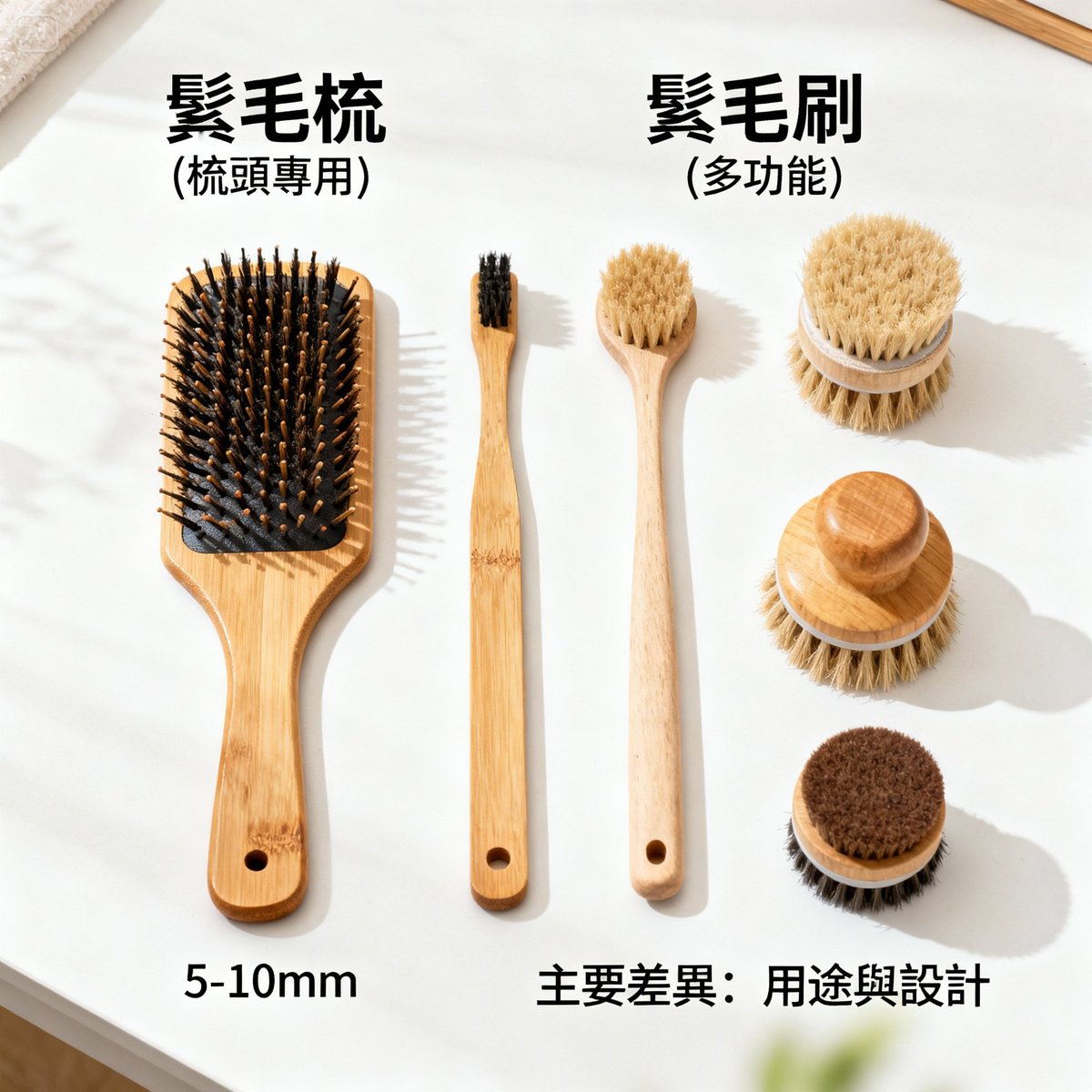
Bristle hairbrush vs bristle brush: 3 key differences
| Item compared | Bristle hairbrush | Bristle brush |
|---|---|---|
| Main use | Brushing hair, massaging the scalp | Body exfoliation, cleaning cast iron cookware, painting |
| Bristle length | Shorter (5-10 mm), densely packed | Longer (10-30 mm), adjusted to the purpose |
| Handle design | Flat or cushioned, made to be held in one hand | Long or round handle, suited to working on large areas |
| Product form | Shaped like a hairbrush | Shaped like a brush (round brush, long-handled brush and so on) |
| Price range | Budget to high-priced | Budget to mid-range |
A simple way to tell them apart:
- Bristle hairbrush = for brushing hair only
- Bristle brush = a multi-purpose tool (body care, cleaning, industrial uses)
The common pros and cons of bristle hairbrushes
8 advantages
1. Hair becomes smooth and glossy
How it works: hog bristle carries the sebum of the scalp evenly along the hair, forming a natural protective film.
2. Carries scalp oil to dry ends
How it works: brushing carries the oil on the surface of the scalp along the hair, so oily roots and dry ends become more even. This is not the same as regulating sebum secretion; an oily scalp is still dealt with by regular shampooing.
3. Less static and frizz
How it works: the natural material does not generate static, unlike a plastic comb, which makes hair frizzier the more you comb.
4. Gentler, no pulling on the hair
How it works: the bristles are softer and do not pull hard, which suits fragile hair.
5. Scalp massage, stress relief and relaxation
How it works: the bristles stimulate acupressure points on the scalp, promoting relaxation and blood circulation.
6. Natural and environmentally friendly, no chemicals
Advantage: a purely natural material that is biodegradable and in line with sustainability.
7. Styles last longer, more volume at the roots
How it works: the bristles grip the hair at the roots, and the effect is better still with a hair dryer.
8. Clear improvement in hair quality over the long term
The key: it takes continued use over a period of time to see a clear effect.
7 drawbacks and difficulties
1. It will not get through tangled hair
The reason: a bristle hairbrush is for hair that has "already been smoothed out", not for tangled or curly hair.
The solution: detangle with a wide-tooth comb first, then brush with the bristle hairbrush.
2. Cleaning is a real chore
The reason: densely packed bristles trap dirt easily and need a special tool to clean.
The solution: clean every week with a toothbrush or a brush-cleaning comb, and deep wash regularly (see the care section below).
3. Long hair takes time and effort
The reason: a bristle hairbrush has to be worked through the hair in sections, and long hair really does take time.
Who it suits: short to medium hair, or people with long hair who are willing to spend time on hair care.
4. A higher price, and opinions differ on value for money
Price bands:
- Entry level: budget
- Mid-range: mid-priced
- High end: high-priced
Advice: buy an entry-level model to try first, and upgrade once you are sure it suits you.
5. Not suitable for fine, soft hair or curly hair
The reason: a bristle hairbrush suits straight or slightly wavy hair, and fine, soft hair is easily caught by the bristles.
Advice: if you have fine, soft hair or curly hair, first consider whether your hair type is suitable.
6. An adjustment period is needed, and the effect is not obvious at first
The reason: a bristle hairbrush needs an adjustment period, and the effect appears gradually.
Advice: use it for at least 1 month before judging the effect.
7. Bristles fall out, and quality is uneven
The reason: quality on the market is uneven, and poor products shed easily.
Buying advice: choose a manufacturer with a good reputation and avoid products that are too cheap.
Who does a bristle hairbrush suit, and who does it not suit?
✅ 6 types of people a bristle hairbrush suits
- Straight or slightly wavy hair: the hair is smooth and straight and easy to brush
- Oily roots and dry ends: you want the scalp's oil spread to the ends
- Frizzy hair that lacks shine: it needs natural conditioning
- People who want something natural and eco-friendly: they prefer tools made of natural materials
- People with time for hair care: willing to brush for 5-10 minutes every day
- Short to medium length: from above the shoulders to just below them is best
❌ 4 types of people a bristle hairbrush does not suit
- Naturally curly hair or big curls: the brush tends not to get through, and the hair gets frizzier the more it is brushed
- Fine, soft hair or thin hair: easily pulled by the bristles
- Hair that tangles easily: a bristle hairbrush cannot get through serious tangles
- People in a hurry: brushing takes time and does not suit quick styling
How to use a bristle hairbrush | 5 steps to brushing correctly
Step 1: Brush at the right time
The best times:
- ✅ When the hair is half dry to fully dry (never on wet hair!)
- ✅ In the morning after getting up (to spread the scalp's oil)
- ✅ Before bed (massage, relaxation, better sleep)
- ❌ When the hair is completely wet (it is easily pulled and broken)
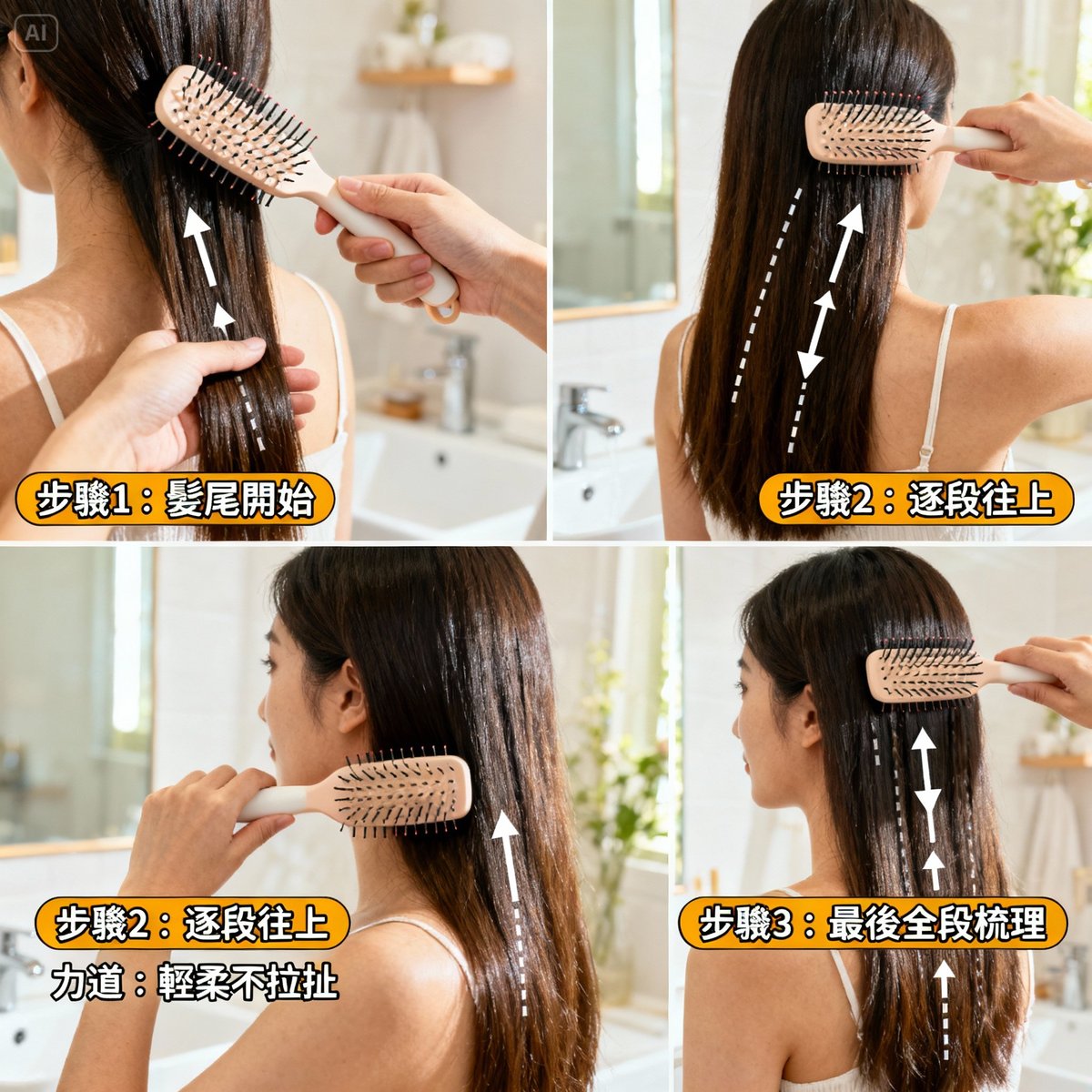
Step 2: Brush in sections, starting from the ends
The correct order:
- Detangle with a wide-tooth comb first (if there are tangles)
- Start brushing with the bristle hairbrush from the ends (sections of about 10 cm)
- Work gradually upward to the roots
- Finally brush from the roots to the ends (a full stroke)
A common mistake: brushing straight from the roots to the ends → tangles and pulling
Step 3: Suitable pressure, slow strokes
Getting the pressure right:
- On the scalp: press slightly, to give a massaging effect
- On the hair: brush gently, to avoid pulling
- Speed: slow and even, without rushing
Step 4: 20-30 strokes for each area
Number of strokes:
- Roots to ends: 20-30 strokes for each area
- Scalp massage: stay on each area for 3-5 seconds
- Total time: 5-10 minutes
Step 5: Clean the bristle hairbrush regularly
Cleaning frequency:
- Quick clean: 1-2 times a week (removing hair)
- Deep wash: once a month (washing with water to remove oil)
Cleaning and caring for a bristle hairbrush | Tips for a longer service life
Quick clean (1-2 times a week)
What to prepare:
- A brush-cleaning comb or a toothbrush
- Warm water
- A dry towel
Steps:
- Use the cleaning comb or your fingers to remove the hair caught between the bristles
- Brush off surface dust and grease with a dry toothbrush
- Wipe the brush face with a slightly damp towel
- Leave to dry in a ventilated place (bristles facing down)
Deep wash (once a month)
Washing steps:
- Prepare warm water (40°C or below) + a small amount of neutral shampoo
- Dip a soft toothbrush in the cleaning solution and brush the bristles gently
- Rinse clean with water (do not leave the wooden back in water for long)
- Press with a towel to soak up the water
- Leave in a ventilated place with the bristles facing down and let it air dry (24-48 hours)
Points to note:
- ❌ Do not soak it in water (the wooden back will warp)
- ❌ Do not wash it in hot water (it destroys the protein structure)
- ❌ Do not dry it with a hair dryer (high temperature damages the bristles)
- ✅ Always let it dry completely before using it again
3 principles of everyday care
- Storage environment: keep it in a dry, ventilated place, away from dampness
- Avoid high temperatures: do not keep it in the bathroom or in direct sunlight
- Remove dust regularly: even if you seldom use it, clean off the dust regularly
Want the full care method for natural bristle brushes? See The complete guide to caring for and cleaning natural bristle brushes | Tips for a longer service life.
Buying advice for bristle hairbrushes | 5 things to look for
1. Bristle material: pure bristle vs blended
| Type | Advantages | Disadvantages | Who it suits |
|---|---|---|---|
| 100% pure bristle | The most natural, the best results, a soft feel | A higher price, more effort to brush | Fine, soft hair; those who want something natural |
| Bristle + nylon blend | Gets through hair easily, an affordable price | More static, not as natural | Thick, coarse hair; a limited budget |
Advice: for a first purchase you can choose a blend, and upgrade to pure bristle once you are sure it suits you.
2. Bristle density and length
- Dense, short bristles: suit fine, soft hair and thin hair
- Sparse, long bristles: suit thick, coarse hair and heavy hair
- Medium density: the all-purpose type, suitable for most people
3. Material of the back
- Wooden back: natural and eco-friendly, durable, a good look and feel (recommended)
- Bamboo back: light, sustainable, an affordable price
- Plastic back: cheap, but not eco-friendly and prone to static (not recommended)
4. Cushioned vs non-cushioned
- Cushioned: a good massage effect, gentler, suits a sensitive scalp
- Non-cushioned: a firmer brushing action, good for styling
5. Brand reputation and price
Price bands for reference:
- Entry level: budget (blended bristle, a plastic or bamboo back)
- Mid-range: mid-priced (pure bristle, a wooden back, a cushioned design)
- High end: high-priced (top-grade hog bristle, handmade, well-known brands)
Buying advice:
- Beginners should buy a budget entry-level model to try first
- Invest in a mid-range or high-end product once you are sure it suits you
- Choose a brand or manufacturer with good reviews
FAQ
Can a bristle hairbrush really improve hair quality?
Yes, but it takes time. After continued use over a period of time, hair may become smoother and shinier. The keys are "continued use" and "the correct method".
Can a bristle hairbrush be used every day?
Yes. We suggest brushing for 5-10 minutes every day (once in the morning and once in the evening). Regular brushing promotes blood circulation in the scalp and spreads the sebum, so the effect is more noticeable.
Can a bristle hairbrush be used on wet hair?
It is not recommended. When hair is wet the cuticle is open, and a bristle hairbrush easily pulls and breaks it. Wait until the hair is half dry to fully dry before brushing.
Can a bristle hairbrush be used together with hair oil?
Yes, but we suggest using only a little. After applying a small amount of hair oil to the ends, brushing with a bristle hairbrush helps spread the oil evenly. Too much makes the hair greasy and the bristles hard to clean.
How do I judge the quality of a bristle hairbrush?
Look at 3 things:
- Whether the bristles are even, firm and not easily shed
- Whether the back is smooth, with no burrs
- Whether it brushes smoothly without catching the hair
Does a bristle hairbrush suit an oily scalp?
It can be used, but with the right expectations. A bristle hairbrush carries the scalp's oil onto the hair, which is not the same as reducing scalp oil. On an oily scalp the brush picks up oil faster, so it needs cleaning more often, and an oily scalp is still dealt with by regular shampooing.
Will a bristle hairbrush make my hair oilier?
It can. A bristle hairbrush carries the scalp's oil onto the hair, so if the scalp itself is on the oily side or you brush too often, the hair may look oilier. Brush less often, and clean the bristle hairbrush regularly so that grease does not build up.
Can children use a bristle hairbrush?
Yes. Choose a cushioned model with softer bristles, and brush with gentle pressure.
How long does a bristle hairbrush last?
Its service life depends on how often it is used and how well it is cared for; there is no fixed number of years. If it sheds heavily, the back cracks or the bristles go out of shape, it needs replacing.
Which is better, a bristle hairbrush or a cushion brush?
Each has its strengths; choose according to your needs:
- Bristle hairbrush: suits hair care, adding shine and natural conditioning
- Cushion brush: suits quick brushing, scalp massage and less pulling
The two can be used together: the cushion brush for quick everyday brushing, the bristle hairbrush for deeper care.
Summary | Is a bristle hairbrush worth buying?
3 situations in which it is worth buying
- You want to improve your hair naturally: you are willing to spend time on hair care and are looking for long-term results
- Oily roots and dry ends: you want the scalp's oil spread to the ends
- You care about the environment: you prefer natural materials and sustainable products
3 situations in which we do not recommend buying
- You are always in a hurry: you do not have 5-10 minutes a day to brush
- Curly hair or fine, soft hair: the hair type is unsuitable and tends to get frizzier the more it is brushed
- A limited budget and you are not sure: we suggest borrowing a friend's to try first, and then deciding whether to buy
Professional advice from YC Brushes
A bristle hairbrush really is an excellent hair care tool, but "whether it suits you" matters more than "whether it is good". We suggest assessing your own hair type, lifestyle and budget before deciding.
If you have more questions about natural bristle products, or want to learn about professional applications of industrial-grade bristle brushes (such as body care brushes and cast iron cleaning brushes), you are welcome to read our complete guide to bristle brushes or contact the YC Brushes team directly.
Further reading
- The complete guide to bristle brushes | The properties and many uses of natural hog bristle brushes
- The complete guide to bristle brushes for body care
- Where to buy a bristle brush? 5 purchase channels compared on price and quality
- The complete guide to caring for and cleaning natural bristle brushes | Tips for a longer service life
About YC Brushes
YC Brushes has over 40 years of professional brush-making experience and focuses on developing and manufacturing natural bristle brushes. We offer:
✅ A range of natural bristle products (body care brushes, cleaning brushes, industrial brushes) ✅ Custom brush design and manufacturing ✅ Professional buying advice and after-sales service
📞 Contact us: +886-2-2988-2721 📧 Email: [email protected] 🌐 Official website: YC Brushes