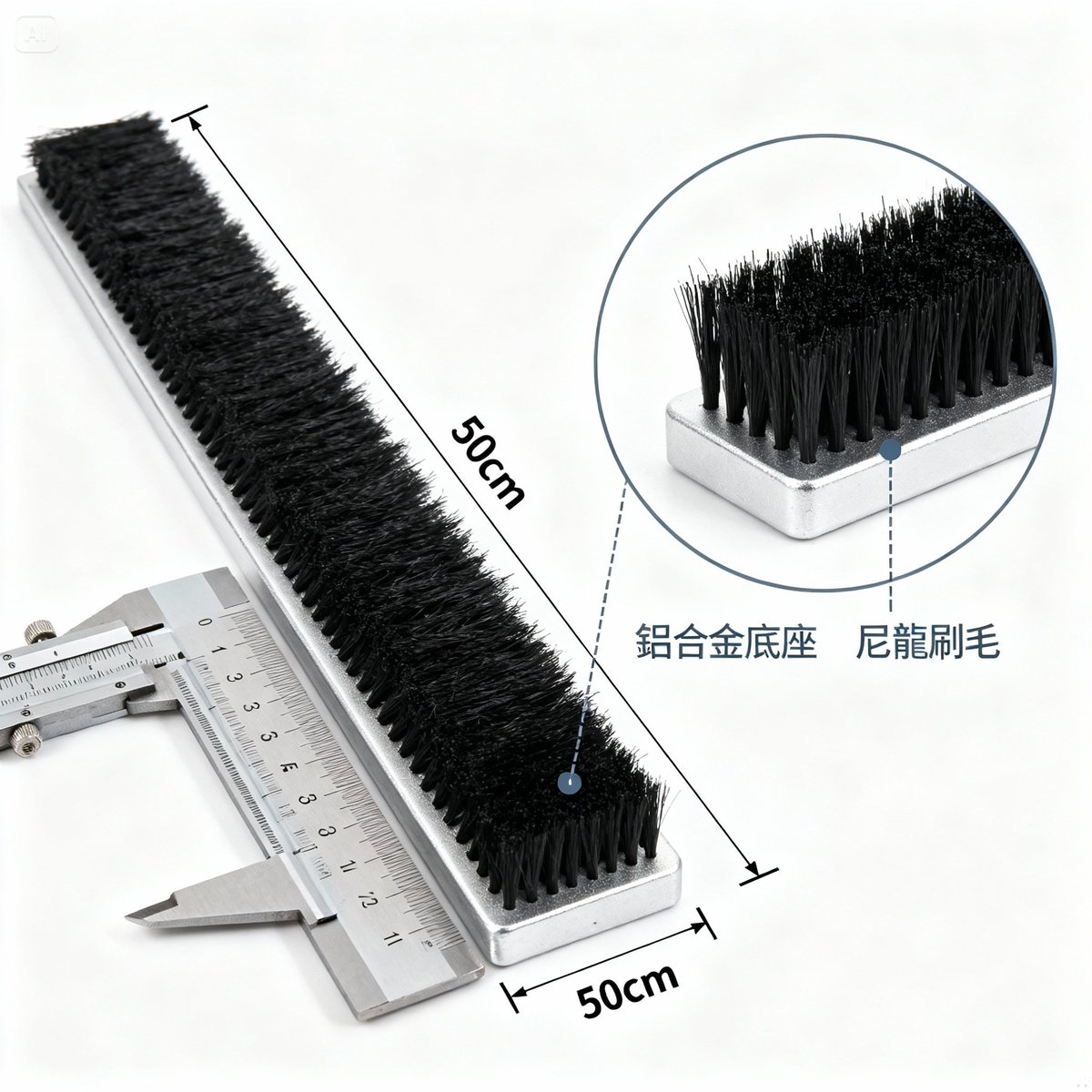
Did you know? For the same industrial roller brush, buying factory-direct from a brush factory saves 30-50% of the cost on average. Many business owners spend hundreds of thousands of NT dollars a year on brushes without realizing they may be paying double. Worse still, buying through layers of distributors not only means high prices but can also bring problems such as specifications that do not match, late deliveries and difficulty with custom work.
Choosing the right brush factory is about more than saving money.
This guide gives you a complete picture of the advantages of buying factory-direct, how to evaluate a reliable manufacturer, the custom process and how to avoid common purchasing traps. Whether you are buying industrial brushes for the first time or want to improve your existing supply chain, this article gives you a practical basis for your decision.
What is factory-direct? 3 major differences from an ordinary distributor
What factory-direct means
Factory-direct means that the manufacturer deals directly with the customer, with no distributor or wholesaler in between.
The customer can place orders with the factory directly, discuss specification requirements, get quotes and even visit the production line in person. This model makes the purchasing process more transparent and also brings better prices and technical support.
Factory-direct vs distributor comparison table
| Item | Factory-direct | Distributor |
|---|---|---|
| Price | Original factory price, 30-50% cheaper | Includes the distributor's margin, higher |
| MOQ (minimum order quantity) | Flexible, negotiable | Fixed, harder to adjust |
| Custom capability | Full support, direct communication | Has to be relayed to the factory, slower |
| Technical support | Engineers help directly | Depends on the distributor's expertise |
| Lead time | Produced directly, faster | Orders have to be passed on, may be slower |
| Product choice | All of the factory's product lines | Only what the distributor chooses to carry |
| Quality control | Direct control of the process | Relies on the factory's quality |
| After-sales service | Handled directly by the original factory | Handled by the distributor |
See the brush products and transparent quotes of YC Brushes, factory-direct.
When is factory-direct the right choice?
5 situations suited to factory-direct:
- Stable long-term demand - brushes are purchased every month or every quarter
- Large purchases - a single order of more than 100 pieces
- Custom needs - special specifications, materials or designs are required
- Strict quality requirements - high-standard applications such as food grade or medical grade
- Technical advice is needed - professional advice is needed to choose the most suitable brush solution
If your purchasing situation matches any one of the above, going factory-direct is the wiser choice.
The state of brush manufacturing in Taiwan
Characteristics of Taiwan's brush industry
Taiwan's brush manufacturing industry has a history of more than 60 years and is concentrated mainly in industrial centers such as Taichung, Changhua, Tainan and Kaohsiung.
These areas have formed complete industry clusters, and the whole supply chain, from raw material supply and tooling to finished-product processing, is highly integrated. Taiwan's brush factories are known for flexible custom capability and stable quality. They supply the local market and also export in large quantities to Japan, Europe, the United States and elsewhere.
In recent years, Taiwan's brush manufacturers have been actively introducing automated equipment to raise capacity and precision. They have also developed functional brushes such as food-grade, anti-static and antibacterial brushes to meet the specialist needs of different industries.
The 3 core capabilities of a brush factory
A professional brush manufacturer must have the following three core capabilities:
1. Design and development capability
- Preparing technical drawings from the customer's requirements
- Advising on material selection
- 3D sampling and testing
2. Manufacturing capability
- Complete production equipment
- Command of the various tufting processes
- A sound quality control system
3. Volume production management capability
- Stable capacity planning
- Flexible lead time management
- Good inventory control
Learn more about the full range of services at YC Brushes.
The factory-direct advantages of YC Brushes
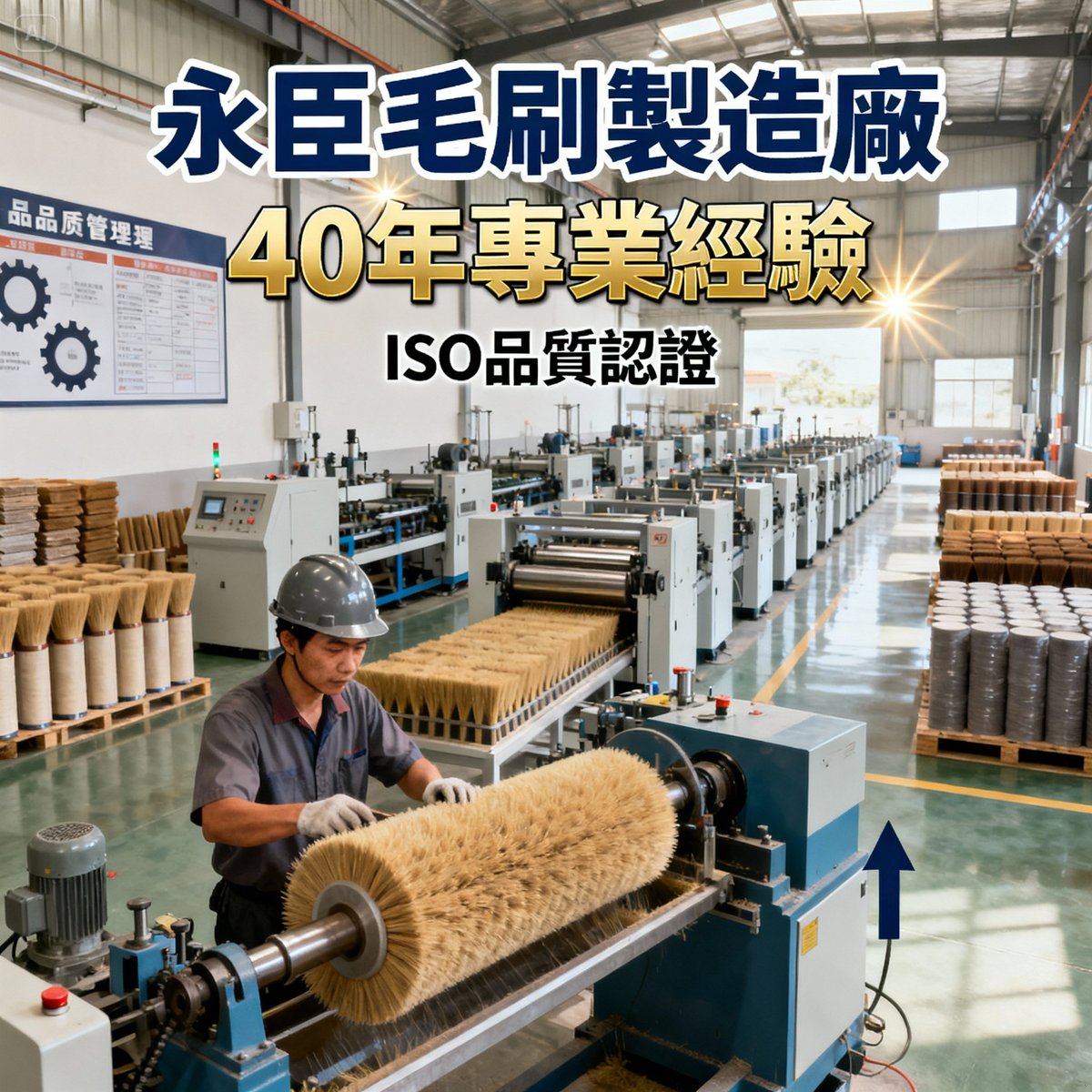
YC Brushes was founded in 1985 and is one of the few professional manufacturers in Taiwan that still insists on selling factory-direct.
Our advantages:
- Over 40 years of manufacturing experience - more than 10,000 brush development cases accumulated
- Control of the whole production line - design, tooling, tufting and inspection under one roof
- Transparent prices - original factory prices, with no middleman margin
- Rapid sampling - sample timing is quoted per specification; please email us with your requirements
- Flexible MOQ - we can handle both small trial runs and large-volume production
- Technical support - senior engineers give professional advice
- Service throughout Taiwan - fast delivery to Taipei, Taichung and Tainan
Want to know more about brush factories in different parts of Taiwan? See our Taichung brush factory guide and our comparison of Tainan brush factories.
5 advantages of buying factory-direct from a brush factory
Transparent prices, with cost savings of 30-50%
This is the most direct benefit of factory-direct.
When you skip the distributor and buy directly from the factory, you save the distributor's margin, warehousing costs and logistics costs. Real cases show that for an industrial roller brush of the same specification, the factory-direct price may be 50-70% of the distributor's price.
A real case:
- A food plant bought 300 cleaning brushes
- Distributor's quote: NT$180 each, NT$54,000 in total
- Factory-direct price: NT$105 each, NT$31,500 in total
- Amount saved: NT$22,500 (42%)
Custom flexibility, one-stop from design to volume production
The greatest value of factory-direct lies in complete custom capability.
You can discuss your requirements with the engineer directly, without having them relayed by a salesperson. The factory can give professional advice and sample quickly, based on your application, material preference and budget range.
Custom advantages:
- Direct communication, with less information lost
- Fast design changes
- Flexible adjustment of specifications and materials
- Professional technical advice
- 3D sampling to confirm the result
Want to know the full custom process and its costs? See The complete guide to custom brushes.
If you already have brush handles and only need tufting, you can also consider our contract tufting service.
Quality assurance, with a transparent and traceable process
Factory-direct lets you keep a direct hold on product quality.
Many factories are open to customer visits, so you can see the raw material sources, the production equipment and the quality control process with your own eyes. You can even come to the factory to inspect during production, to make sure the product meets the specification.
This kind of transparency is something a distributor cannot offer.
Quality assurance mechanisms:
- Raw material inspection reports
- Traceable process records
- Quality inspection before shipment
- Customer acceptance criteria
- Return, exchange and warranty for defective products
How do you make sure of brush quality? See The brush quality inspection guide.
Technical support that solves brush application problems
A factory's technical team can provide in-depth support that a distributor cannot.
When a problem arises in using a brush, the factory's engineers can analyze the cause from several angles, such as material properties, structural design and manufacturing process, and propose an improvement. This kind of technical support is especially important for special applications.
Scope of technical support:
- Advice on material selection
- Service life assessment
- Analysis of heat and chemical resistance
- Optimization of the design and structure
- Cost-benefit assessment
Not sure which material to choose? See Brush materials explained.
Stable lead times and flexible inventory management
Ordering directly from the factory cuts out the time spent passing orders along.
The factory can arrange its production schedule around your needs and give a more accurate lead time estimate. For long-term customers, the factory can also help set up a safety stock to make sure goods are always available.
Lead time advantages:
- Less time spent passing orders along
- Flexible adjustment of the production schedule
- Rush orders handled first
- Help with inventory management
- Flexible delivery in batches
How to choose a reliable brush factory: 7 evaluation criteria
You cannot choose a brush factory on price alone.
A reliable manufacturing partner saves you more than purchasing cost. More importantly, it saves the cost of time, the cost of trial and error, and the cost of risk. The following 7 evaluation criteria help you make the right choice.
Criterion 1: Manufacturing experience and industry expertise
Look at the year the factory was founded and the main industries it serves.
An experienced factory has built up a large number of development cases and problem-solving experience. If the factory has served your industry before, it will understand your needs and pain points better.
What to check:
- Year founded (10 years or more is recommended)
- Industries served
- Representative customer cases
- Whether it has experience developing similar products
Criterion 2: Technical capability and standard of equipment
Visit the factory and observe its production equipment and technical capability.
Modern equipment shows that the factory is willing to invest in upgrading, and it also delivers more stable quality and capacity. At the same time, ask whether the factory has design capability, sampling capability and tooling capability.
What to check:
- How new or old the production equipment is
- Whether there is automated equipment
- Design and drawing capability
- 3D sampling technology
- Tooling capability
Criterion 3: Quality management system
Ask about the factory's quality management process and certifications.
A professional factory should have a complete quality control mechanism, with standard procedures from incoming raw material inspection and process control through to finished-product testing. If your application has special regulatory requirements (for example, food-grade materials must comply with the FDA food contact material regulations (21 CFR 177)), it is all the more important to confirm that the factory can provide the relevant documents.
What to check:
- ISO quality certification
- Raw material inspection system
- In-process quality control procedure
- Finished-product testing standard
- Documents for special requirements (such as a material declaration of compliance with the FDA food contact material regulations (21 CFR 177), or an SGS test report)
Users in the food industry should look especially at The food-grade brush selection guide.
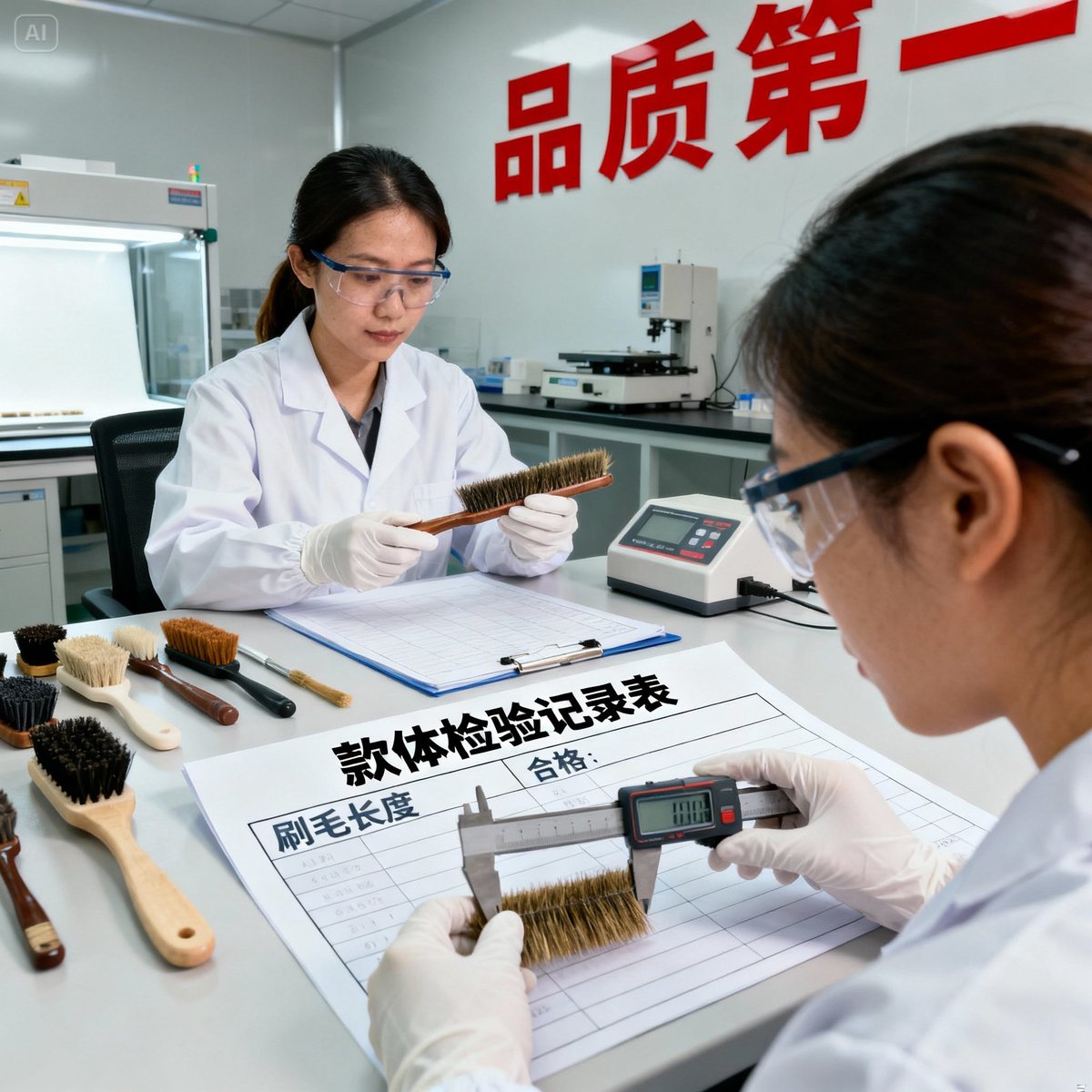
What to look at on a factory visit: 10 things to observe on site
What a paper evaluation cannot show becomes clear after 30 minutes walking around the factory. The points below are ranked by "how well they predict stable quality":
| Observation point | What to look at | What it tells you |
|---|---|---|
| Inspection area and equipment | Is there a separate inspection area? Are a pull tester, precision measuring tools and a microscope all present? Are the record sheets complete? | The most direct indicator of quality capability |
| Material management | Whether raw materials are sorted and labeled, and whether stock is in order | Loose management makes it easy to use the wrong material, the main cause of unstable quality between batches |
| Production equipment | How new or old the equipment is, whether there are regular maintenance records, the degree of automation | Old equipment directly affects dimensional accuracy |
| Cleanliness | The floor, how materials are placed, whether 5S management is in place | Tidiness is closely related to stable quality |
| Employees | Skill level, how orderly the work is, whether there is a training system | A factory with frequent staff turnover has unstable quality |
| Finished goods storage | Packaging method, whether there is dust protection | Shows whether delivery quality is taken seriously |
| Smoothness of the flow | Line layout, whether there are obvious bottlenecks | Decides whether lead times can be stable |
| Safety measures | Safety signs, fire equipment, protective gear | Loose safety usually means loose management overall |
| Certificates and awards | ISO certification, patent certificates | Third-party verification is more credible |
| Talking to employees | Years of service, their view of the company | Staff stability reflects how reliable a long-term relationship will be |
Questions you must ask on a factory visit
Monthly capacity and current capacity utilization (to confirm whether there is room to take your order), the main industries served and representative customers (whether there is experience in your industry), the custom development process and schedule, the inspection standard and defect rate, the rate of late deliveries and how delays are handled, and the warranty policy and complaint procedure.
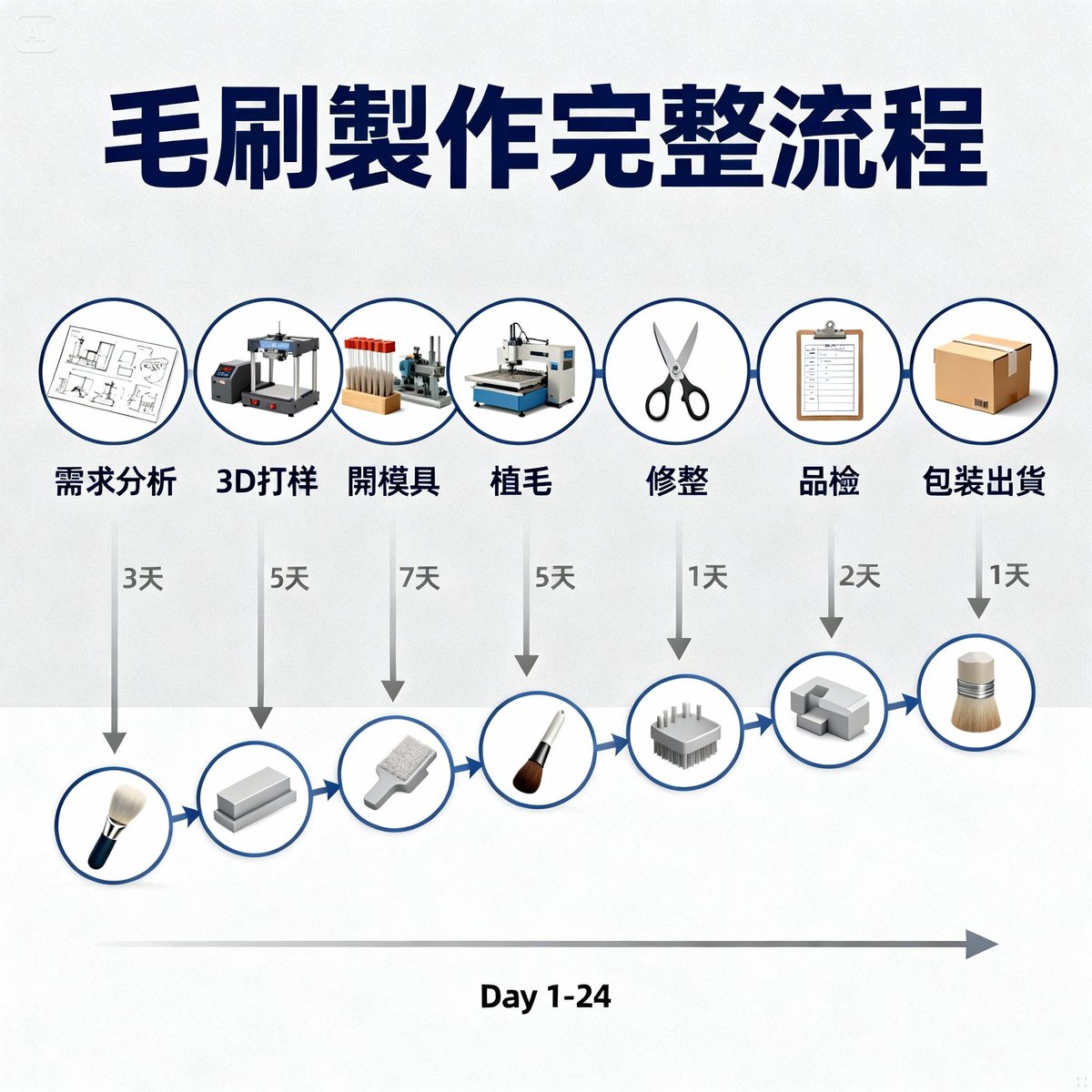
The complete custom service process at a brush factory
A custom brush cannot be produced from a casual sketch.
A professional custom process goes through several rounds of communication, testing and revision to make sure the final product meets the need. Below is the standard 5-stage process.
Stage 1: Requirements consultation and analysis
What the factory will find out:
- The application and purpose of the brush
- The operating environment (temperature, humidity, chemicals)
- The expected service life
- The budget range and target quantity
- Whether there is a reference sample or drawing
What you need to prepare:
- A clear explanation of how the brush will be used
- An existing sample or photos
- A description of the problems you have run into
- Your budget and quantity plan
Stage 2: Design, sampling and quotation
The factory prepares technical drawings from the requirements and advises on materials.
If tooling is needed, the tooling cost is assessed. A detailed quote is given at this stage, including the sampling fee, the tooling fee (if needed) and the unit price.
What is produced:
- Technical design drawings
- Recommended material options
- A detailed quotation
- A development schedule
Stage 3: Sample making and testing
The factory makes physical samples for the customer to test.
You can test the performance of the samples in the actual environment and confirm whether they meet the need. If there is a problem, you can ask for the specification or material to be adjusted, and the factory will revise and sample again.
What to test:
- Whether the dimensions are correct
- Whether the hardness of the material is suitable
- Whether it performs as expected
- A preliminary assessment of durability
Stage 4: Tooling and trial production
After the sample is approved, the tooling is made.
When the tooling is finished, a small quantity is produced first as a trial to confirm again that volume production quality is stable. This stage is critical: it finds and solves the problems that volume production might run into.
What to check:
- Tooling quality
- Consistency of trial production quality
- Assessment of feasibility for volume production
Stage 5: Volume production and delivery (depending on quantity)
Volume production formally begins.
The factory produces to the agreed quantity and lead time and carries out inspection before shipment. At delivery you can do an acceptance check to confirm the product meets the specification.
Quality confirmation:
- Correct quantity
- Specification met
- Appearance quality
- Packaging intact
For more detail on custom work, see The complete guide to custom brushes.
💡 Ready to start a custom brush project?
Contact YC Brushes now and let over 40 years of manufacturing experience help you find the brush solution that suits you best. Requirements assessment and quotation are free. 📞 +886-2-2988-2721
Common product types at a brush factory
A professional brush factory can usually produce many types of brush.
Knowing the different product types helps you judge the range of a factory's technical capability.
Industrial brushes
Industrial brushes are the main product line of a brush factory.
Common types:
- Roller brush - for conveyor cleaning, polishing and abrasive finishing
- Strip brush - for sealing, cleaning and guiding material
- Disc brush - for machine polishing and deburring
- Tube brush - for cleaning pipes
- Special industrial brush - custom made to the machine design
Learn more about the types and applications of industrial brushes.
Brushes for food processing
The food industry has strict hygiene and certification requirements for brushes.
Where they are used:
- Brushes for fruit and vegetable washing lines
- Conveyor cleaning brushes
- Brushes for bottle and can washing machines
- Cleaning brushes for baking equipment
Essential properties:
- Materials that comply with the FDA food contact material regulations (21 CFR 177) (or for which an SGS test report can be provided)
- Resistant to high temperatures, acids and alkalis
- Easy to clean, does not trap dirt
- Does not shed, does not rust
A must-read for the food industry: The food-grade brush selection guide.
Household and commercial cleaning brushes
This covers brushes for all kinds of everyday cleaning.
Product range:
- Toilet brushes, dish brushes
- Floor brushes, shoe brushes
- Car cleaning brushes
- Commercial cleaning brushes
Learn about the key points in buying cleaning brushes.
Brushes for special applications
Specialist brushes developed for particular industries or functions.
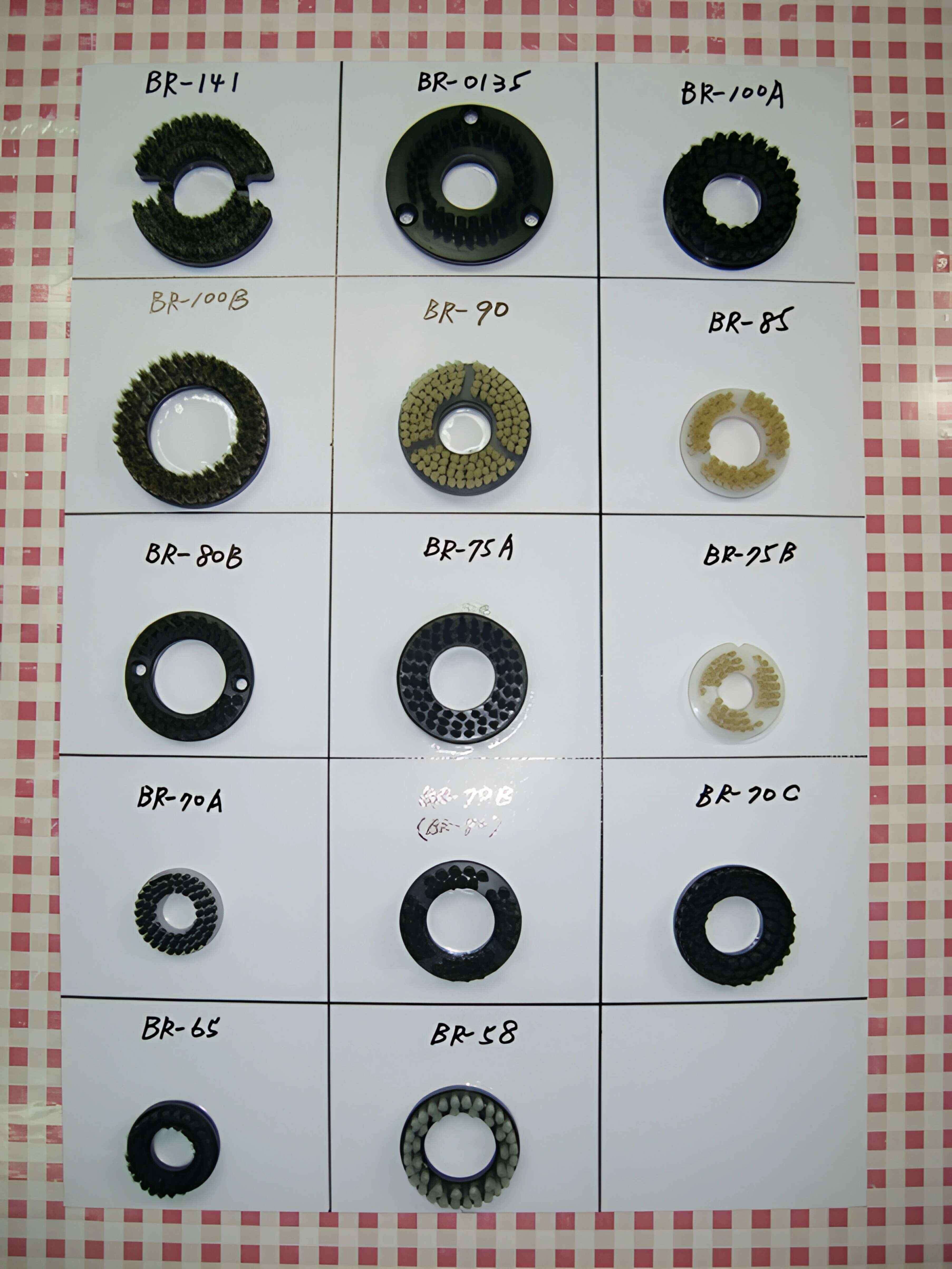
Fields of application:
- Anti-static brushes (electronics industry)
- Antibacterial brushes (medical industry)
- High-temperature brushes (metalworking)
- Microfiber brushes (precision cleaning)
See the full product catalog of YC Brushes.
FAQ
What is the usual MOQ at a brush factory?
The MOQ (minimum order quantity) varies a great deal with the product type and the degree of customization.
Typical figures:
- Volume-production brushes in standard specifications: 50-100 pieces
- Custom products that need tooling: 300-500 pieces (the tooling cost has to be shared)
- Contract tufting service: 100-200 pieces
However, many factories are flexible about trial production or test orders. For customers who intend to cooperate long term, YC Brushes can negotiate a lower first order quantity.
We suggest discussing your needs directly with the factory. There is usually room to negotiate.
How long does a custom brush take from design to delivery?
There is no single figure: the schedule for the full custom process depends on the project.
Schedule
- Lead times are quoted per specification. Please email us with your requirements.
The actual schedule depends on whether there are drawings and whether tooling is needed; for details, see The brush manufacturing process.
For a rush order you can discuss expedited production with the factory, but it may cost more.
Is the factory-direct price really cheaper?
Yes, the saving is 30-50% of the cost on average.
Where the price difference comes from:
- The distributor's margin (usually 20-40%)
- Intermediate logistics costs
- Inventory management costs
- Markups at several levels
A real case: A machinery plant buying industrial roller brushes:
- Distributor's quote: NT$1,200 each
- Factory-direct price: NT$750 each
- A saving of 37.5%
Note, however, that the price advantage of factory-direct is clearer for large or long-term purchases. If you only buy a few pieces occasionally, the convenience of a distributor may matter more.
Learn more about the factors that affect brush prices.
How can I judge whether a brush factory's quality is reliable?
5 quick ways to judge:
- Check the certifications and test documents - ISO quality certification, a material declaration of compliance with the FDA food contact material regulations (21 CFR 177), SGS test reports and so on
- Visit in person - see the production environment and equipment with your own eyes
- Ask for samples - test the product quality in practice
- Customer reviews - ask existing customers about their experience
- A small trial run - test in a small quantity first, and place a large order once the quality is confirmed
A professional factory should be willing to provide production records and inspection reports, and even let customers come to the factory to inspect the goods.
If a factory is secretive about quality information or unwilling to provide samples, be especially careful.
For more ways to assess quality, see The brush quality inspection guide.
Contact YC Brushes now for free sample testing.
How should I choose the brush material?
The choice of material depends on the operating environment and the purpose.
Properties of common materials:
| Material | Properties | Suitable for |
|---|---|---|
| Hog bristle | Natural, soft, good water absorption | Precision cleaning, polishing |
| Nylon | Wear resistant, good resilience, chemical resistant | General industrial use |
| PP plastic | Resistant to acids and alkalis, food grade, inexpensive | Food processing, chemical industry |
| Steel wire | High hardness, heat resistant | Rust removal, deburring |
| Stainless steel | Rust-proof, corrosion resistant | Food, medical, marine |
How to choose:
- Food industry → PP or nylon (must comply with the FDA food contact material regulations (21 CFR 177))
- High-temperature environments → steel wire or stainless steel
- Precision cleaning → hog bristle or soft nylon
- General industry → nylon
For a detailed analysis of materials, see Brush materials explained.
Factory-direct or distributor: which has better after-sales service?
There is no absolute answer to this question. It depends on the specific factory or distributor.
Advantages of factory-direct:
- Directly responsible, so problems are solved quickly
- Professional technical support
- Can adjust production directly to make improvements
Advantages of a distributor:
- May have more service locations
- More systematic handling procedures
- May have dedicated customer service staff
Recommendation:
- Large or long-term purchases → factory-direct (build a direct relationship)
- Small quantities of many kinds → distributor (more convenient)
The key is to choose a supplier that values the customer relationship and is willing to take responsibility, whether it is a factory or a distributor.
For an in-depth analysis, see Factory-direct vs distributor compared.
Which parts of Taiwan have the most brush factories?
Taiwan's brush manufacturing industry is concentrated mainly in the following areas:
Central Taiwan:
- Taichung (Tanzi, Daya, Shengang) - the largest cluster
- Changhua - a traditional center for brushes
Southern Taiwan:
- Tainan (Yongkang, Xinshi)
- Kaohsiung (Daliao, Renwu)
Characteristics:
- Central Taiwan has the most factories and a complete industry chain
- Southern Taiwan is mainly large manufacturers
- Northern Taiwan has fewer factories, and most companies there are trading companies
That said, location is only one factor to consider. Modern logistics are well developed and delivery anywhere in Taiwan is fast. What matters most is still the factory's professional capability and quality of service.
If you prefer a local factory, see:
- Taichung brush factory guide
- Comparison of Tainan brush factories
What should I watch for when buying brushes for the first time?
5 things for first-time buyers to watch:
1. Be clear about your needs
- Purpose and environment of use
- The result you expect
- Budget range
2. Compare several sources
- Ask at least 2-3 factories
- Compare price, lead time and service
- Ask for samples to test
3. Start with a small trial run
- Do not place a large order the first time
- Test the actual result with a small batch first
- Increase the quantity once the quality is confirmed
4. Confirm the details
- Confirm the specification drawings
- Get the lead time committed in writing
- Payment terms and warranty
5. Build a long-term relationship
- Find a reliable supplier
- Build mutual trust
- Long-term cooperation brings better terms
What is the difference between contract tufting and a custom brush?
Both are custom services, but the scope is different.
Contract tufting:
- The customer supplies the brush handle (tooling already exists, or the customer makes it)
- The factory is responsible only for the tufting operation
- Lower cost (no tooling fee)
- Suited to customers who already have handles, or handles in special materials
Custom brush:
- Starts from the design and includes both the handle and the filament
- Tooling is needed
- Higher cost (includes design and tooling)
- Suited to developing an entirely new product
How to choose:
- You already have handles → contract tufting
- Entirely new development → custom brush
For details, see The contract tufting service guide.
How long does a brush generally last? How often should it be replaced?
The service life of a brush depends on the material, the intensity of use and the state of maintenance.
Typical service life:
- Industrial roller brushes: 3-12 months
- Cleaning brushes: 1-6 months
- Polishing brushes: 1-3 months (heavy use)
- Food-grade brushes: regular replacement every 3-6 months is recommended (for hygiene)
How to judge when to replace:
- The filament is clearly worn or deformed
- Heavy shedding
- Cleaning performance has declined
- Odor or stains appear
Ways to extend service life:
- Clean and maintain regularly
- Avoid temperatures or chemical environments beyond what the brush can withstand
- Use appropriate force
- Inspect and maintain regularly
How do I make sure food-grade brushes meet hygiene standards?
With food-grade brushes, special attention must be paid to material regulations and to cleaning and maintenance.
Regulatory and documentation requirements:
- Materials that comply with the FDA food contact material regulations (21 CFR 177)
- Passed SGS testing
- Compliance with food hygiene regulations
Material choice:
- PP plastic (food grade)
- Nylon (food grade)
- Stainless steel (304 or 316)
Cleaning and maintenance:
- Wash thoroughly after use every day
- Disinfect regularly
- Do not let dirt build up
- Replace regularly (every 3-6 months is recommended)
Acceptance criteria:
- Ask for material certificates
- Confirm there is no odor
- Check how securely the filament is fixed
- Test heat and chemical resistance
For a detailed guide, see The key points in choosing food-grade brushes.
How is YC Brushes different from other factories?
What sets YC Brushes apart:
1. Genuinely factory-direct
- Not a trading company but a manufacturer
- Direct, transparent prices
- Quality under our own control
2. Over 40 years of experience handed down
- From our founding in 1985 to today
- 10,000 development cases accumulated
- Deep technical experience
3. Control of the whole production line
- Design, tooling, tufting and inspection under one roof
- No outsourcing, stable quality
- Quick, flexible adjustment
4. Professional technical support
- Senior engineers provide consultation
- Help with material selection and design optimization
- Solving real application problems
5. Flexible service
- Negotiable MOQ
- Support for small trial runs
- Rush processing accommodated
6. Service throughout Taiwan
- Fast delivery to Taipei, Taichung and Tainan
- The same quality of service for customers across Taiwan
7. Transparent prices
- Original factory quotes, with no middleman margin
- A detailed cost breakdown is provided
- Better prices for long-term cooperation
Contact us now to learn about the professional services of YC Brushes.
When buying brushes, how do I balance price and quality?
This is the most common dilemma.
Strategies for balance:
1. Set clear priorities for your requirements
- Which specifications are essential?
- Which can be compromised?
- What service life is required?
2. Understand the cost structure
- The share of material cost
- The effect of process complexity
- Economies of scale in quantity
3. Buy in stages
- First batch: standard quality, to test the result
- After confirming the result: assess whether the specification needs upgrading
- Once stable over the long term: negotiate a better price
4. Think long term
- Do not look only at the unit price
- Calculate the total cost of ownership
- This includes: purchase cost + transport + replacement frequency + downtime losses
Recommendation: Do not simply chase the lowest price. Poor-quality brushes may lead to:
- Frequent replacement (cost of time)
- Production line downtime (cost of losses)
- Product quality problems (cost to reputation)
Choosing a supplier with reasonable prices and stable quality is what pays off in the long run.
Learn more in Brush prices explained.
How do I build a long-term relationship with a brush factory?
A stable long-term supplier relationship benefits both sides.
Ways to build mutual trust:
Toward the factory:
- Stable orders - buy regularly so the factory can plan capacity
- Pay on time - build credit and win better terms
- Clear requirements - lower communication costs and fewer errors
- Reasonable expectations - understand the limits and timelines of manufacturing
- A mutual-benefit mindset - do not only push the price down; understand the factory's costs too
What the factory gives in return:
- Better price terms
- Priority in the production schedule
- Flexible MOQ and lead times
- Technical support and advisory service
- Help with inventory management
In practice:
- Sign an annual cooperation agreement
- Share demand forecasts regularly
- Solve quality problems together
- Take part in factory events or visits
A good supplier relationship is an important business asset.
YC Brushes | The professional commitment of over 40 years of factory-direct service
YC Brushes was founded in 1985, and for over 40 years has always insisted on selling factory-direct and serving customers directly.
We are not a trading company and not a distributor, but a manufacturer that really owns its production line. From design, tooling and tufting to inspection, every stage is completed inside our factory. This is the fundamental reason we can offer stable quality and transparent prices.
Our professional commitments:
Quality commitment
- Carefully selected raw materials, with every incoming batch inspected
- ISO quality management system
- 100% inspection before shipment
- Unconditional return or exchange of defective products
Price commitment
- Quotes direct from the original factory, with no middleman margin
- A detailed cost breakdown is provided
- Favorable prices for long-term customers
- No price gouging, ever
Service commitment
- Inquiries answered within 3 working days
- Free technical consultation
- Flexibility on MOQ and lead time
- Fast delivery throughout Taiwan
Technical commitment
- A team of senior engineers
- Free help with design optimization
- Rapid sampling, with timing quoted per specification (email us)
- Continued follow-up on performance in use
Industries we serve:
- Machinery manufacturing
- Food processing
- Electronics and technology
- Textiles and printing
- Chemicals and pharmaceuticals
- Cleaning services
- All kinds of special applications
Whether you need volume-production brushes in standard specifications, a newly developed custom product, or simply a tufting service, YC Brushes can provide professional help.
Contact information:
- Phone: +886-2-2988-2721
- Email: [email protected]
- Online inquiry: Contact form
Click to learn about the full range of services at YC Brushes
See the YC Brushes product catalog
Conclusion: the right brush factory creates long-term value for your business
Choosing to buy factory-direct from a brush factory is not only about saving money.
More importantly, it is about building a stable, reliable and professional supply chain partnership. Through factory-direct you get more transparent prices, more flexible custom service, more professional technical support and faster problem solving.
The core considerations in choosing a factory
Look at value, not only at price:
- Stable quality (fewer production problems)
- Technical support (solving application problems)
- Flexible service (keeping up with changing needs)
- A long-term relationship (continuous cost improvement)
3 steps to get started
Step 1: Be clear about your needs
- Work out how the brush will be used
- List the essential specifications and your expectations
- Set a reasonable budget range
Step 2: Find and evaluate factories
- Use the 7 evaluation criteria in this article
- Compare at least 2-3 factories
- Visit in person or ask for samples
Step 3: Build the relationship with a small trial run
- Do not place a large order the first time
- Test the product quality and the factory's service
- Increase the order quantity step by step once you are satisfied
Recommended further reading
Want to learn more about brushes? We recommend:
- The complete guide to industrial brushes - the types and applications of industrial brushes
- The food-grade brush selection guide - the certification and buying knowledge the food industry needs
- Brush materials explained - a closer look at the properties of each material
- The complete guide to custom brushes - the full custom process and a cost analysis
- The contract tufting service guide - the professional tufting service explained
- Factory-direct vs distributor compared - a full analysis of the pros and cons of each purchasing channel
- Brush prices explained - the factors behind prices and negotiation tips
- The brush quality inspection guide - how to judge brush quality
- The cleaning brush purchasing guide - key points in choosing household and commercial cleaning brushes
- Taichung brush factory guide - a comparison of factories in central Taiwan
- Tainan brush factory guide - a comparison of factories in southern Taiwan
Start your brush purchasing project
If you are looking for a professional brush manufacturing partner, YC Brushes offers a complete factory-direct service, backed by over 40 years of experience you can rely on.
Contact us now to discuss your needs, or see our full range of services to find the solution that suits you best.
Want to learn more about brushes? Go to the blog to explore more specialist articles.
References
- Ministry of Health and Welfare (Taiwan), "Sanitation Standard for Food Utensils, Containers and Packages" (amended January 11, 2023)
- ISO 9001 quality management system standard (2026 edition)