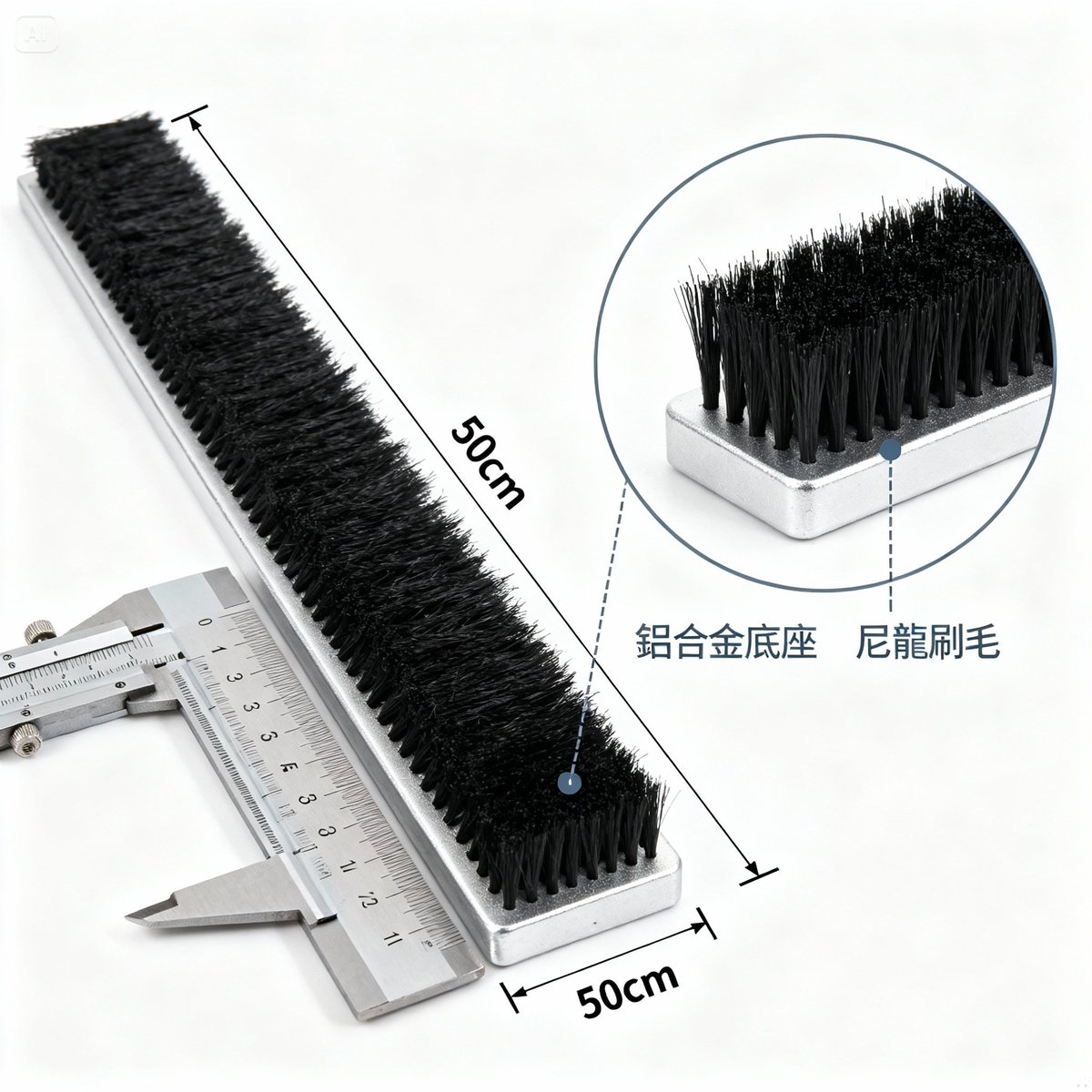
Two cleaning brushes look alike, so why does one deform after a few weeks while the other lasts a year?
The key is the material. Many people look only at price and appearance when buying brushes and overlook the decisive effect the material has on performance and service life. Choosing the wrong material does not just waste money. It can damage equipment, contaminate products and even cause safety problems.
The filament material decides every key property: stiffness, resilience, heat resistance, chemical resistance and service life.
This guide explains the properties, strengths and weaknesses, price ranges and suitable uses of the 6 mainstream brush materials, and gives a practical decision process for choosing a material, to help you make the right choice.
Overview of brush material categories | Natural vs synthetic
Brush materials fall into two broad categories: natural and synthetic.
Natural materials
Main types:
- Hog bristle (the most common)
- Horsehair
- Goat hair
- Plant fiber (palm, sisal and so on)
Common characteristics:
- Soft texture
- Good water absorption
- Natural and environmentally friendly
- Higher price
- Lower durability
- Must be stored properly (prone to mold)
Suitable uses:
- Precision polishing
- Care of fine wood
- Leather cleaning
- Artistic use
Synthetic materials
Main types:
- Nylon
- PP (polypropylene)
- PBT polyester
- Steel wire / stainless steel
- Brass wire
- Carbon fiber (special applications)
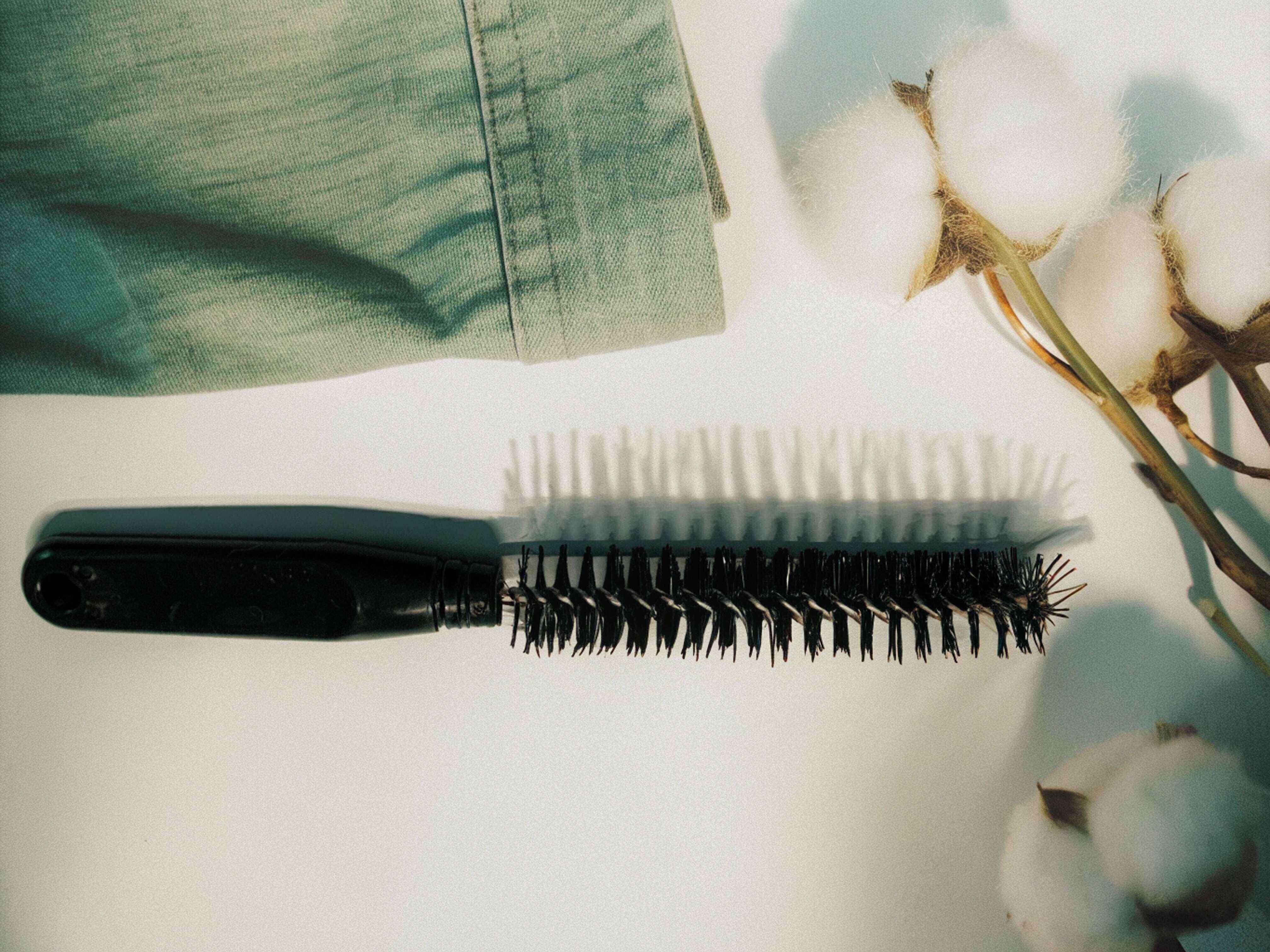
Common characteristics:
- High durability
- Easy to clean and maintain
- Relatively stable prices
- Controllable performance
- Consistent quality
Suitable uses:
- Industrial production
- Commercial cleaning
- Food processing
- Heavy-duty cleaning
For the full range of brush applications, see The complete guide to industrial brushes.
Natural hog bristle in depth
Hog bristle is the most traditional natural brush material.
Properties of hog bristle
Physical properties:
- Stiffness: medium to soft (depending on the part of the animal)
- Resilience: good
- Water absorption: high (up to 20-30%)
- Heat resistance: about 80°C
- Diameter: 0.05-0.5mm
Chemical properties:
- Main component: keratin
- Acid and alkali resistance: poor (it breaks down)
- Resistance to organic solvents: medium
- Not resistant to strong oxidizers
Advantages of hog bristle
1. Soft and fine
- Does not scratch precision surfaces
- Gentle to the touch
- Suited to polishing work
2. Good water absorption
- Suited to wet cleaning
- Can be used with cleaning agents
- Ideal for washing cars and cleaning wooden floors
3. Natural and environmentally friendly
- Biodegradable
- Kind to the environment
- No chemical additives
4. Polishes well
- The first choice for precision polishing
- Treatment of fine wood
- Leather shoe care
Disadvantages of hog bristle
1. Expensive
- A limited natural resource
- High processing cost
- Clearly more expensive than synthetic materials
2. Prone to mold
- Must be dried completely after absorbing water
- Deteriorates easily in damp environments
- Not easy to store
3. Low durability
- Service life of about 3-6 months
- Wears easily
- Not resistant to chemicals
4. Unstable quality
- As a natural material, it varies a great deal from one piece to the next
- Difficult to process
Where hog bristle is suitable
Best suited to:
- Polishing precision instruments
- Care of fine furniture
- Cleaning leather goods
- Cleaning wooden floors
- Brushes for art and painting
Not suited to:
- Heavy industrial cleaning
- Chemical environments
- High-temperature environments
- Long periods of soaking in water
- Food processing (it traps dirt easily)
Price range:
- Small hand brush: mid-range
- Medium-sized brush: upper mid-range
- Large industrial brush: high (the actual selling price is as marked by each sales channel)
Synthetic fibers in depth | Nylon vs PP vs PBT
Synthetic fiber is the mainstream material of the modern brush.
Nylon
The most commonly used synthetic filament material.
Properties:
- Stiffness: medium to high (adjustable)
- Heat resistance: medium (Nylon 66 is generally higher than Nylon 6; the actual upper limit varies with the formulation, so go by the supplier's material data sheet)
- Wear resistance: excellent
- Resilience: excellent
- Water absorption: 3-9% (a drawback)
Advantages:
- ✅ Wear resistant, long service life
- ✅ Good resilience, does not deform easily
- ✅ Resistant to ordinary chemicals
- ✅ Moderate cost
- ✅ Stable quality
Disadvantages:
- ❌ Absorbs water (which affects dimensions)
- ❌ Poorer resistance to strong acids and alkalis
- ❌ Must be stored dry
Suitable for:
- General industrial cleaning
- Conveyor cleaning
- Removing dirt from machine parts
- Household cleaning brushes
Price:
- Clearly lower than hog bristle
- Small brush: budget
- Industrial brush: mid-range
PP (polypropylene)
The favorite of the food industry.
Properties:
- Stiffness: medium to hard
- Heat resistance: lower (on the low side among common synthetic filaments; go by the supplier's material data sheet for the actual upper limit)
- Wear resistance: medium
- Resilience: poorer (rather stiff and straight)
- Water absorption: absorbs almost no water
Advantages:
- ✅ Resistant to strong acids and strong alkalis (pH 1-14)
- ✅ Does not absorb water, easy to clean
- ✅ Common in food-grade applications
- ✅ The cheapest
- ✅ Many color options
Disadvantages:
- ❌ Lower heat resistance
- ❌ Becomes brittle easily
- ❌ Not as wear resistant as nylon
- ❌ Poorer resilience
Suitable for:
- Food processing lines
- Chemical environments
- Washing fruit and vegetables
- Wet cleaning
- Situations with a limited budget
Price:
- The cheapest synthetic material
- Small brush: budget
- Industrial brush: low to mid-range
Want a closer look at the material requirements of the food industry? See The food-grade brush selection guide.
PBT polyester (polybutylene terephthalate)
A high-grade synthetic fiber.
Properties:
- Stiffness: adjustable over a wide range
- Heat resistance: about 150°C
- Wear resistance: excellent
- Resilience: excellent
- Water absorption: extremely low
Advantages:
- ✅ Absorbs almost no water
- ✅ Heat resistant
- ✅ Outstanding recovery
- ✅ Strong chemical resistance
- ✅ Dimensionally stable
Disadvantages:
- ❌ Higher price
- ❌ Difficult to process
Suitable for:
- High-grade cleaning brushes
- Precision industrial applications
- Situations that need high recovery
- High-temperature environments
Price:
- Clearly higher than nylon
- Industrial brush: upper mid-range
Synthetic fiber comparison table
| Property | Nylon | PP | PBT |
|---|---|---|---|
| Price | Medium | Cheap | More expensive |
| Heat resistance | Medium | Lower | Higher |
| Acid and alkali resistance | Medium | Excellent | Good |
| Water absorption | 3-9% | Almost 0 | Almost 0 |
| Wear resistance | Excellent | Medium | Excellent |
| Resilience | Very good | Medium | Outstanding |
| Service life | 6-12 months | 3-6 months | 12 months or more |
| Food grade | Food-grade grades available | Commonly used for food grade | Food-grade grades available |
Metal materials in depth | Steel wire vs stainless steel vs brass wire
Metal filaments are used for heavy-duty cleaning.
Steel wire
The hardest brush filament material.
Properties:
- Hardness: extremely high
- Heat resistance: 300°C or more
- Wear resistance: extremely strong
- Resilience: low (stiff and straight)
- Diameter: 0.1-0.5mm
Advantages:
- ✅ The strongest dirt removal
- ✅ Heat resistant
- ✅ Inexpensive
- ✅ Suited to heavy abrasive work
Disadvantages:
- ❌ Rusts
- ❌ May scratch the surface
- ❌ Breaks easily
Suitable for:
- Removing rust from metal
- Removing weld slag
- Coarse grinding
- Treating concrete surfaces
Not suitable for:
- Precision surfaces
- Food contact
- Damp environments
Price:
- Small wire brush: budget
- Industrial wire brush: low to mid-range
Stainless steel
The rust-proof metal brush.
Properties:
- Hardness: extremely high
- Heat resistance: 300°C or more
- Corrosion resistance: excellent (304/316)
- Resilience: low
Advantages:
- ✅ Does not rust
- ✅ Corrosion resistant
- ✅ Can be used in the food industry
- ✅ Extremely long service life
- ✅ Easy to clean and disinfect
Disadvantages:
- ❌ Clearly more expensive than steel wire
- ❌ May scratch the surface
Suitable for:
- Cleaning food equipment
- Marine environments
- Medical devices
- Situations that need high-temperature sterilization
Price:
- Hand brush: mid-range
- Industrial brush: upper mid-range
Copper wire / brass wire
A metal brush for special purposes.
Properties:
- Hardness: high (but softer than steel wire)
- Heat resistance: about 200°C
- Conductivity: very good (anti-static)
- Does not produce sparks
Advantages:
- ✅ Anti-static
- ✅ Does not produce sparks
- ✅ Gentler than steel wire
- ✅ Does not scratch easily
Disadvantages:
- ❌ High price
- ❌ Oxidizes and discolors
- ❌ Not as strong as steel wire
Suitable for:
- Cleaning in flammable environments
- Cleaning electronic products
- Explosion-proof areas
- Treating precision metal
Price:
- Slightly lower than stainless steel
- Special industrial brush: upper mid-range
Special functional materials | Anti-static, antibacterial, heat resistant
Many functional materials have been developed for modern brushes.
Anti-static filament
Material composition:
- Nylon + carbon fiber
- Or with conductive material added
Properties:
- Surface resistance below 10^9 Ω
- Dissipates static effectively
- Keeps the durability of the base material
Applications:
- Electronics industry
- PCB cleaning
- Wafer processes
- Optoelectronics industry
Price:
- Clearly higher than ordinary nylon
Antibacterial filament
Material composition:
- Nylon / PP + silver ions
- Or other antibacterial agents
Properties:
- Inhibits bacterial growth
- Reduces odor
- Extends the hygiene cycle
Applications:
- Cleaning medical devices
- Food processing
- Household hygiene brushes
- Public places
Note:
- Must be replaced regularly
- Cannot replace cleaning and disinfection
Heat-resistant filament
Material types:
- PPS (polyphenylene sulfide): about 200°C
- PEEK (polyether ether ketone): about 250°C
- Stainless steel: 300°C or more
Applications:
- Oven cleaning
- High-temperature processes
- Heat treatment of metal
- Glass industry
Price:
- Clearly higher than ordinary materials
See the special functional brush products of YC Brushes.
Decision flow for choosing a brush material
How do you choose the right material quickly?
Decision step 1: Confirm the purpose
Cleaning:
- Precision polishing → hog bristle, soft nylon
- General cleaning → nylon, PP
- Heavy dirt removal → steel wire, hard nylon
Industrial use:
- Conveyor cleaning → nylon
- Dust removal → soft materials
- Abrasive deburring → steel wire
Special use:
- Food contact → PP, food-grade nylon
- Anti-static → anti-static nylon
- High-temperature environments → stainless steel, PBT
Decision step 2: Assess the operating environment
Temperature:
- Room temperature → all materials can be used
- Elevated temperature → nylon, PBT, metal (PP has lower heat resistance and is not recommended)
- High temperature → PBT, stainless steel
- Very high temperature → stainless steel, special materials
- The actual heat resistance limit of each material varies with the formulation, so ask the supplier for the material data sheet to confirm before choosing
Chemical environment:
- Strong acids and strong alkalis → PP, stainless steel
- Organic solvents → nylon, PP
- Ordinary cleaning agents → any material
- Oxidizers → stainless steel
Humidity:
- Long-term soaking in water → PP, stainless steel
- Damp environments → stainless steel, PP
- Dry environments → any material
Decision step 3: Consider what is being cleaned
Material:
- Precision surfaces → hog bristle, soft nylon
- Metal → nylon, steel wire
- Plastic → nylon, PP
- Glass → hog bristle, soft materials
Value:
- High-value products → choose a gentle material
- Ordinary products → balance cleaning power and gentleness
- Consumables / scrap → strong materials can be used
Decision step 4: Budget and service life
Ample budget:
- Choose hog bristle (polishing)
- Choose PBT (durable)
- Choose stainless steel (permanent)
Limited budget:
- Choose PP (cheap)
- Choose nylon (good value for money)
- Choose steel wire (cheap and durable)
Calculate the total cost of ownership: Do not look only at the unit price. Work out:
- Purchase cost
- Replacement frequency
- Performance in use
- Cost of time
Example:
- Material A: a lower unit price, but a shorter service life, so it has to be replaced more often
- Material B: a higher unit price, but a long service life, so it works out better value over the long term
- Once the cost of use per month is calculated, the total cost of Material B may be lower
To see how material affects price, see Brush prices explained.
Material recommendations for different industries
Each industry has different material needs.
Food processing
Preferred materials:
- PP polypropylene (compliant with the FDA food-contact material regulations, 21 CFR 177)
- Food-grade nylon
- Stainless steel 304/316
Selection principles:
- Must comply with Taiwan's Sanitation Standard for Food Utensils, Containers and Packages (exports to the US must also comply with FDA 21 CFR 177); SGS test reports can be requested
- Resistant to acids, alkalis and cleaning agents
- Does not absorb water, easy to clean
- White or light colored (contamination is easy to spot)
Application examples:
- Washing fruit and vegetables → white PP roller brush
- Conveyor cleaning → PP strip brush
- Washing bottles and cans → nylon tube brush
- Oven cleaning → stainless steel brush
For the full food industry guide, see The food-grade brush selection guide.
Machinery manufacturing
Preferred materials:
- Steel wire / stainless steel (deburring)
- Nylon (general cleaning)
- Hog bristle (precision polishing)
Selection principles:
- Choose the stiffness by operation
- Consider the cutting oil environment
- Durability matters
Application examples:
- CNC deburring → steel wire disc brush
- Polishing parts → hog bristle / soft nylon
- Conveyor cleaning → nylon roller brush
- Removing iron chips → hard nylon brush
Electronics industry
Preferred materials:
- Anti-static nylon
- Microfiber
- Soft nylon
Selection principles:
- Must be anti-static
- Must not shed
- Must not scratch
- High precision
Application examples:
- Removing dust from PCBs → anti-static nylon
- Wafer cleaning → microfiber
- Precision parts → soft nylon
Chemicals and pharmaceuticals
Preferred materials:
- PP polypropylene
- Stainless steel 316
- PBT
Selection principles:
- Resistant to strong acids and strong alkalis
- Resistant to organic solvents
- Easy to clean and disinfect
- Meets GMP requirements
Application examples:
- Cleaning chemical tanks → PP or stainless steel
- Cleaning pipes → PP tube brush
- Equipment maintenance → chemical-resistant nylon
Cleaning services
Preferred materials:
- Nylon (durable)
- PP (economical)
- Hog bristle (high-end premises)
Selection principles:
- Durability comes first
- Consider the replacement cost
- Cleaning performance has to be good
Application examples:
- Commercial toilet brush → nylon
- Floor brush → nylon or PP
- High-end premises → hog bristle brush
For the full guide to buying cleaning brushes, see The cleaning brush purchasing guide.
💡 Not sure which material to choose?
Contact YC Brushes now and let our professional team recommend the most suitable material for the way you will use the brush. 📞 +886-2-2988-2721
Innovative applications that combine materials
Modern brushes often combine several materials.
Two-material filament
Common combinations:
- Hard nylon + soft nylon
- Steel wire + nylon
- PP + hog bristle
Advantages:
- Combines cleaning power with gentleness
- Adapts to different surfaces
- Improves cleaning efficiency
Applications:
- Shoe brushes (hard filament for the sole, soft filament for the upper)
- Kitchen brushes (hard filament for stubborn dirt, soft filament for everyday cleaning)
- Industrial brushes (coarse and fine combined)
Three-material combinations
Innovative design:
- Hard nylon in the outer ring + medium nylon in the middle ring + soft nylon in the inner ring
- The cleaning force adjusts automatically with the contact pressure
Advantages:
- Highly adaptable
- Less damage
- Longer service life
Layered material design
Structure:
- Surface layer: wear-resistant material
- Middle layer: resilient support
- Bottom layer: securely fixed
Advantages:
- A durable surface
- Good overall resilience
- Does not deform easily
Material options and quality assurance at YC Brushes
YC Brushes offers a wide choice of materials together with professional advice.
Our range of materials:
Natural materials:
- Premium hog bristle (strictly graded)
- Imported horsehair
- Plant fiber
Synthetic materials:
- Nylon 6, Nylon 66
- PP polypropylene (food grade / industrial grade)
- PBT polyester
- Anti-static nylon
Metal materials:
- Steel wire (carbon steel)
- Stainless steel 304/316
- Copper wire / brass wire
Quality assurance:
- Carefully selected raw materials, with every batch inspected
- FDA/SGS certificates provided for food-grade materials
- Formulations adjusted on the basis of over 40 years of experience
- Stable, consistent quality
Professional service:
- Free consultation on material selection
- Samples provided for testing
- Formulations customized to your needs
- Technical support
Industries served:
- Food processing: PP and nylon compliant with the FDA food-contact material regulations (21 CFR 177)
- Machinery manufacturing: nylon in every stiffness, steel wire
- Electronics industry: anti-static materials
- Chemicals and pharmaceuticals: chemical-resistant PP, stainless steel
- Cleaning services: durable nylon, economical PP
See YC Brushes products and material options.
Learn more about the professional services of YC Brushes.
FAQ
Which is better, nylon or PP?
Neither is absolutely better. Choose according to your needs.
Choose nylon when:
- You need wear resistance and durability
- The environment is relatively hot (better heat resistance than PP)
- High resilience is required
- The budget is ample
Choose PP when:
- The environment involves strong acids or strong alkalis
- You are in the food industry (food-grade material is easy to obtain)
- You do not want water absorption
- The budget is limited
Comparison by situation:
- Industrial conveyor cleaning → nylon (durable)
- Washing fruit and vegetables for food → PP (commonly used for food grade)
- General household cleaning → PP (cheap)
- High-frequency commercial cleaning → nylon (durable)
For more on applications, see The complete guide to industrial brushes.
Why are hog bristle brushes more expensive?
Both the cost of the natural material and the difficulty of processing are high.
Reasons for the high price:
- Limited raw material (the output of natural hog bristle)
- Grading and sorting are needed (quality varies widely)
- Washing and disinfection are costly
- Processing demands a high level of skill
- Shorter service life (more frequent replacement)
Is it worth it?
- Precision polishing: yes (nothing can replace it)
- Care of fine wood: yes
- Leather cleaning: yes
- General cleaning: no (nylon is enough)
Alternatives:
- Soft nylon can replace hog bristle in some applications
- PBT high-grade synthetic fiber
- Choose according to the actual need
Does the food industry have to use food-grade materials?
Yes. It is both a regulatory requirement and a food safety responsibility.
Regulatory requirements (Taiwan):
- The "Sanitation Standard for Food Utensils, Containers and Packages"
- All utensils in direct contact with food must comply
- Failing to meet the sanitation standard and not correcting it within the set deadline can be fined NT$30,000 to NT$3 million; utensils that are toxic or harmful to health can be fined NT$60,000 to NT$200 million (Articles 48 and 44 of Taiwan's Act Governing Food Safety and Sanitation)
Food-grade materials:
- PP or nylon compliant with FDA 21 CFR 177 (you can ask the supplier for a declaration of compliance or an SGS test report)
- Releases no harmful substances
Common mistakes:
- ❌ Using ordinary industrial-grade brushes
- ❌ Assuming that white means food grade
- ❌ Using products without test reports to save cost
The right approach:
- ✅ Ask for a declaration of compliance or an SGS test report
- ✅ Choose food-grade PP or nylon
- ✅ Inspect and replace regularly
For the full food industry guide, see The food-grade brush selection guide.
How can I judge the quality of a brush material?
5 ways to check:
1. Appearance check
- The filament color is even
- No impurities, no breakage
- Securely fixed
2. Pull test
- Pull on the filament by hand
- It should not come out easily
- On a high-quality brush it is extremely hard to pull out
3. Resilience test
- Bend the filament
- It should spring back quickly
- It should not deform permanently
4. Smell check
- A good material has no odor
- A pungent smell may mean recycled material
- Natural materials have a faint smell of their own
5. Ask for proof
- Ask for material certificates
- A declaration of compliance or an SGS test report (if needed)
- Test reports
For more on judging quality, see The brush quality inspection guide.
How much does brush service life differ between materials?
It varies a great deal with the material, the intensity of use and the maintenance.
Typical service life for reference (medium intensity of use):
- Hog bristle: 3-6 months
- PP: 3-6 months
- Nylon: 6-12 months
- PBT: 12 months or more
- Steel wire: 6-12 months
- Stainless steel: 12 months or more
Factors that affect it:
- Frequency of use (every day vs every week)
- Force used (heavy pressure vs light contact)
- Operating environment (chemicals, high temperature)
- Maintenance (cleaning, drying)
Ways to extend service life:
- Use correctly (do not press too hard)
- Clean after use
- Dry completely before storing
- Inspect and replace regularly
Calculating the total cost: Do not look only at the unit price. Work out the cost per unit of time:
- A cheap but short-lived material may have a higher total cost
- An expensive but durable material may be better value
Conclusion: choosing the right material is the first step to success
The brush material decides 90% of the performance and service life.
Choosing the wrong material does not just waste money. It can damage equipment, affect product quality and cause safety problems.
The core principles of material selection
Be clear about your needs
- Understand the purpose
- Assess the operating environment
- Consider the properties of what is being cleaned
Choose the right material
- Natural vs synthetic
- Stiffness and resilience
- Heat resistance and chemical resistance
Calculate the total cost
- Do not look only at the unit price
- Work out the service life
- Assess the performance
Seek professional advice
- Ask for professional advice when you are unsure
- Ask for samples and test them in practice
- Work with a reliable supplier
Recommended further reading
Want to learn more about brushes? Recommended reading:
- The complete guide to buying factory-direct from a brush factory - how to choose a reliable brush factory
- The complete guide to industrial brushes - the various applications of industrial brushes
- The food-grade brush selection guide - the material requirements the food industry needs to know
- How to choose the base plate for a tufted plate brush: fiberglass board, Bakelite board and PE board compared - how to pick the base plate material for a plate brush
If you need professional advice on material selection, YC Brushes offers technical consultation backed by over 40 years of experience and a complete range of material options.
Contact us now to discuss your brush needs, or see the full product catalog to find the material solution that suits you best.