Many food businesses do not know that brushes used in contact with food must meet strict hygiene standards and material certifications. Using the wrong brush can lead to food safety risks such as chemical migration, bacterial growth and foreign matter contamination.
The choice of a food-grade brush affects a company's reputation, consumers' health and even legal liability.
This guide explains the certification requirements, material selection, cleaning and maintenance, and common misconceptions about food-grade brushes, to help food businesses make purchasing decisions that are correct and safe.
What is a food-grade brush? Definition and regulatory requirements
A food-grade brush is a brush that complies with food safety regulations and may come into direct or indirect contact with food.
The biggest difference from an ordinary industrial brush is that the material must pass food-contact certification and must not release harmful substances into food.
Definition of a food-grade brush
A brush can only be called food grade if it meets the following conditions:
-
Material compliance
- Complies with Taiwan's Sanitation Standard for Food Utensils, Containers and Packages
- For export to the U.S., complies with the FDA (the U.S. Food and Drug Administration) regulations on food-contact materials (21 CFR 177)
- An SGS (the Swiss inspection and certification company) food-contact test report can be provided
-
Non-toxic and harmless
- Does not release harmful substances such as plasticizers or heavy metals
- Contains no carcinogens
- Does not degrade under heat
-
Easy to clean
- A smooth surface that does not trap dirt
- Does not absorb water or grease
- Does not breed bacteria
-
Stability
- Resistant to acid and alkaline cleaning agents
- Withstands high-temperature disinfection
- Does not shed filament or deform
Relevant regulations and standards
Taiwan:
- Sanitation Standard for Food Utensils, Containers and Packages
- Regulations of the Taiwan Food and Drug Administration
- Regular testing with passing results is required
International:
- FDA 21 CFR (U.S. regulations on food-contact materials)
- EU 10/2011 (EU regulation on food-contact plastics)
- ISO 22000 food safety management system
Consequences of a violation:
- Products pulled from shelves and recalled
- Fines (NT$30,000 to NT$3 million if a failure to meet the hygiene standard is not corrected by the deadline; NT$60,000 to NT$200 million if the utensil is toxic or can harm health) (Articles 48 and 44 of the Act Governing Food Safety and Sanitation)
- Criminal liability
- Serious damage to the company's reputation
To learn about the full manufacturing standards for brushes, see The complete guide to buying factory-direct from a brush factory.
Regulations a food-grade brush must meet | FDA and SGS
The first step in buying a food-grade brush is to confirm its certification.
A brush without certification must never be used where it touches food.
FDA regulations on food-contact materials (U.S. Food and Drug Administration)
The FDA is one of the strictest food safety agencies in the world.
Key points of the FDA regulations:
- The material must comply with FDA 21 CFR
- Part 177: indirect food additives (plastic materials)
- It must not release harmful substances into food
- It must pass a migration test
Common food-contact materials:
- PP polypropylene (food grade)
- PE polyethylene (food grade)
- Nylon (food grade)
- Stainless steel 304 and 316
How to confirm compliance with the FDA regulations:
- Ask the supplier for a declaration that the material complies with 21 CFR 177
- The document should state the material number
- Back it up with a third-party test report (such as SGS)
- Do not rely on a verbal assurance alone
SGS certification (the Swiss inspection and certification company)
SGS is an internationally known third-party testing organization.
SGS food-contact test items:
- Heavy metal migration test (lead, cadmium, mercury and so on)
- Plasticizer testing (DEHP, DBP and so on)
- Heat resistance test
- Material composition analysis
- Microbiological testing
Why an SGS certificate matters:
- Impartial third-party testing
- Internationally recognized
- Regular testing ensures quality
- Essential for export
Taiwan's hygiene standard for food utensils
According to Taiwan's Sanitation Standard for Food Utensils, Containers and Packages:
Requirements for plastic materials:
- Potassium permanganate consumption must not exceed 10 ppm
- In the material test, lead and cadmium must each not exceed 100 ppm; in the migration test, heavy metals must not exceed 1 ppm (as lead)
- A limit on evaporation residue (varies by material)
Regular testing:
- Food businesses should send items for testing regularly
- At least once a year is recommended
- Testing must be repeated when changing suppliers
- Keep the test reports on file for inspection
Contact YC Brushes to request an FDA compliance declaration and SGS test reports.
Choosing the material for a food-grade brush | PP vs nylon
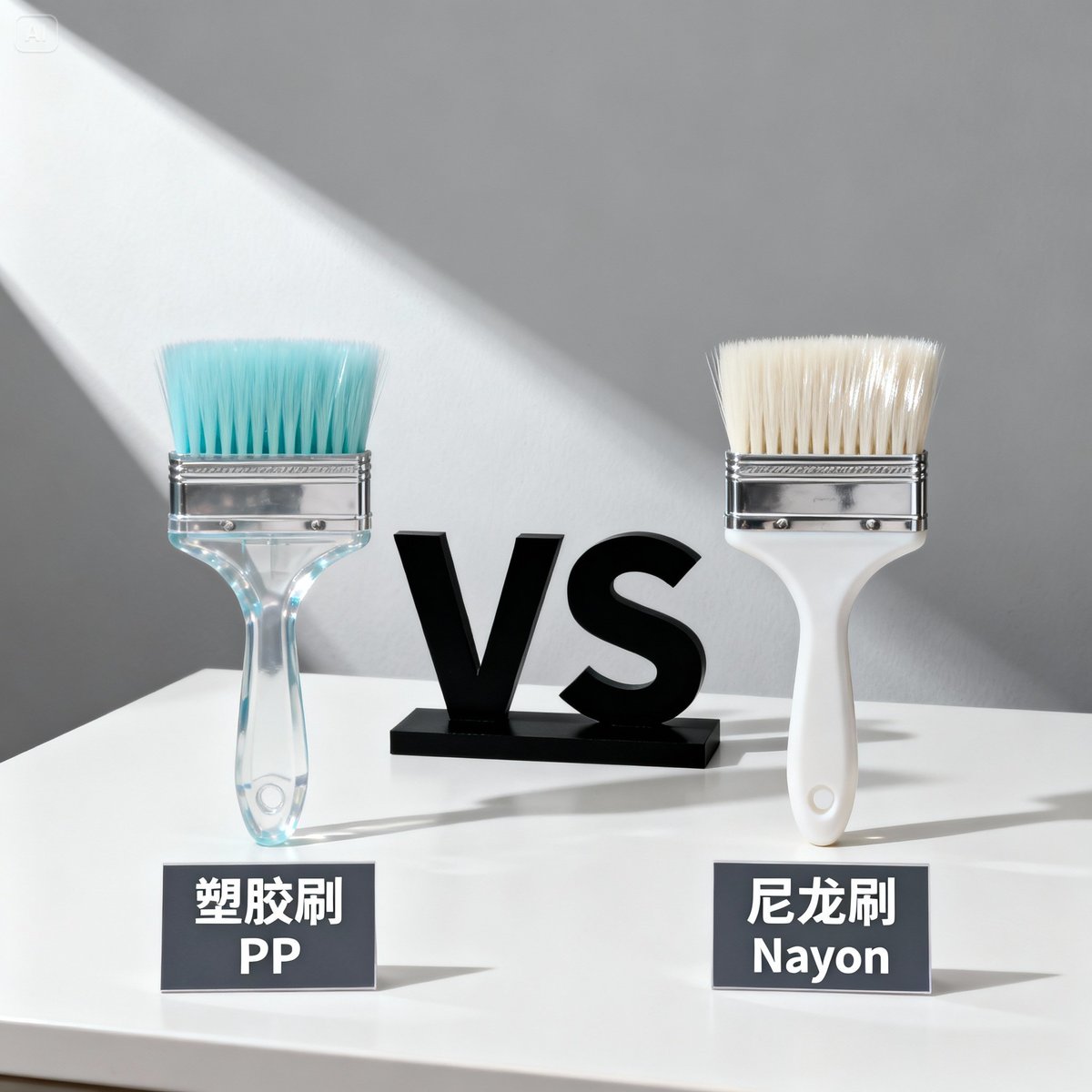
The two materials used most often for food-grade brushes are PP and nylon.
Understanding how they differ is the only way to make the right choice.
PP (polypropylene)
The material used most often in the food industry.
Advantages of PP:
- ✅ Food-grade resin is easy to obtain
- ✅ Resistant to strong acids and strong alkalis (pH 1-14)
- ✅ Does not absorb water, easy to clean
- ✅ Inexpensive
- ✅ Many color options (white is the most common)
Disadvantages of PP:
- ❌ Lower heat resistance (about 90°C)
- ❌ Lower hardness than nylon
- ❌ Poorer wear resistance
- ❌ Becomes brittle easily
Where PP fits:
- Washing fruit and vegetables (at room temperature or in warm water)
- Conveyor belt cleaning
- General food contact
- Environments with chemical cleaning agents
- A limited budget
Nylon
A high-strength food-grade option.
Advantages of nylon:
- ✅ High heat resistance (about 120°C)
- ✅ Excellent wear resistance
- ✅ Good resilience, does not deform easily
- ✅ Long service life
- ✅ Resistant to common chemicals
Disadvantages of nylon:
- ❌ More expensive than PP
- ❌ Absorbs water (about 3-9%)
- ❌ Food-grade certification has to be confirmed
- ❌ Fewer color options
Where nylon fits:
- Situations that need high heat resistance
- High-intensity washing
- Long hours of continuous operation
- High durability requirements
- An ample budget
PP vs nylon comparison table
| Item | PP (polypropylene) | Nylon |
|---|---|---|
| Price | Inexpensive | More expensive (about 1.5-2 times) |
| Heat resistance | 90°C | 120°C |
| Acid and alkali resistance | Excellent | Good |
| Water absorption | Almost none | Absorbs 3-9% |
| Wear resistance | Medium | Excellent |
| Hardness | Softer | Harder |
| Service life | 3-6 months | 6-12 months |
| Food-grade resin compliant with FDA regulations | Easy to obtain | The grade must be confirmed |
| Cleaning difficulty | Easy | Harder (absorbs water) |
| Common colors | White, blue | White, black |
Stainless steel
The choice for special requirements.
Advantages of stainless steel:
- Does not rust at all (grades 304/316)
- High heat resistance (300°C and above)
- Does not absorb water, easy to disinfect
- Extremely long service life
- Suited to heavy abrasive work
Disadvantages of stainless steel:
- The most expensive
- May scratch food or equipment
- Too hard for precision cleaning
Where it fits:
- The seafood and aquatic products industry
- Where high-temperature disinfection is needed
- Heavy soil removal
- Medical-grade food
Want to learn more about the various brush materials? See Brush materials fully explained.
Applications of food-grade brushes and how to choose
Different stages of food processing need different types of brush.
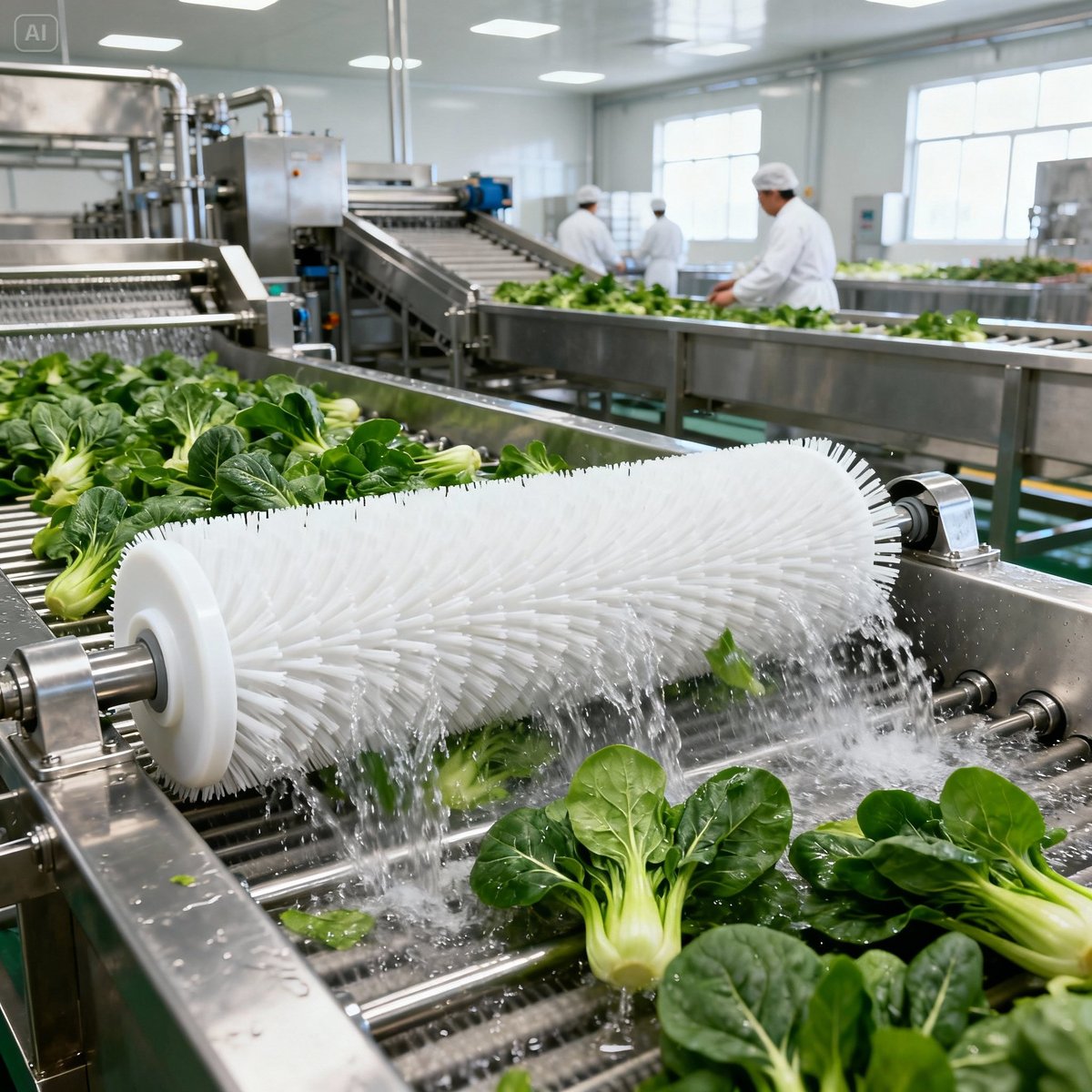
Fruit and vegetable washing lines
The most common application of food-grade brushes.
Characteristics of the requirement:
- Washing off soil and pesticide residue
- Must not damage the surface of the produce
- Needs a large flow of water alongside
- Long hours of continuous operation
Recommended choice:
- Material: white PP or soft nylon
- Form: roller brush
- Filament: medium stiffness, moderate density
- Compliance: meets FDA 21 CFR 177 or has an SGS test report
Actual applications:
- Washing leafy vegetables (spinach, bok choy)
- Washing root vegetables (carrots, potatoes)
- Washing fruit (apples, citrus)
Conveyor belt cleaning
Keeping the conveyor belt clean is important.
Characteristics of the requirement:
- Removing food residue
- Avoiding cross-contamination
- Cleaning at set intervals
- Resistance to chemical cleaning agents
Recommended choice:
- Material: PP or nylon (acid and alkali resistant)
- Form: strip brush or roller brush
- Filament: medium-hard
- Compliance: food grade
Cleaning methods:
- Dry brushing to remove solid residue
- Wet brushing with a cleaning agent
- Regular replacement
Bottle and can washing
Essential in the beverage and canning industries.
Characteristics of the requirement:
- Washing the inner walls of bottles and cans
- Removing residue and label adhesive
- Must not scratch the container
- Needs a high rotation speed
Recommended choice:
- Material: PP or soft nylon
- Form: tube brush, rotary brush
- Filament: soft and non-scratching
- Compliance: meets FDA 21 CFR 177
Products it is used on:
- Beverage bottles
- Cans and canning containers
- Seasoning bottles
- Baby bottle washing
Cleaning bakery equipment
The cleaning needs of the baking industry.
Characteristics of the requirement:
- Removing batter and grease
- Withstanding the high-temperature oven environment
- Reaching into gaps to clean
- No filament shedding
Recommended choice:
- Material: nylon or stainless steel (heat resistant)
- Form: hand brush, tube brush
- Filament: stiffness chosen according to what is being cleaned
- Compliance: meets FDA 21 CFR 177
See the YC Brushes food-grade brush catalog.
💡 Not sure which food-grade brush to choose?
Contact YC Brushes now and let our team recommend the most suitable product for your food processing needs and provide documents showing compliance with the FDA regulations on food-contact materials (21 CFR 177). 📞 +886-2-2988-2721
Cleaning and disinfection SOP for food-grade brushes
Food-grade brushes themselves also need strict cleaning management.
A dirty brush becomes a source of contamination instead, and this is a problem many food factories overlook.
Daily cleaning procedure
Clean immediately after use:
-
Initial rinse (within 5 minutes after use)
- Rinse off food residue with clean water
- Do not let residue dry and stick
- Check whether any foreign matter is caught in the filament
-
Washing with a cleaning agent
- Use a food-grade cleaning agent
- Scrub the gaps between the filaments with a brush
- Make sure grease and dirt are completely removed
- Rinse clean with no residue left
-
Disinfection
- Soak in hypochlorous acid water (50-200 ppm)
- Or use steam disinfection
- Disinfect for 5-10 minutes
- Rinse again with clean water
-
Drain and store
- Drain off all the water
- Store upright or hanging
- Keep it ventilated
- Use a dedicated storage area to avoid contamination
Weekly deep cleaning
Full disinfection procedure:
-
Disassemble and inspect
- Take apart every part that can be removed
- Check whether dirt is hidden at the root of the filament
- Check whether the fixing points are loose
-
Soak and clean
- Soak in hot water (80°C or above)
- Add a cleaning agent and soak for 30 minutes
- Scrub thoroughly with a brush
- Rinse several times to make sure no residue is left
-
High-temperature disinfection
- Boil for 10-15 minutes
- Or steam disinfect for 20 minutes
- Or dry in an oven at 80°C for 30 minutes
-
Record keeping
- Record the cleaning date and the person responsible
- Build a cleaning history
- This makes traceability easier
Points to note when cleaning
What not to do:
- ❌ Use a non-food-grade cleaning agent
- ❌ Wash together with general tools
- ❌ Leave the brush not fully drained after washing
- ❌ Store it in a damp or unclean environment
The right way:
- ✅ Use a food-grade cleaning agent
- ✅ Dedicate each brush to one use to avoid cross-contamination
- ✅ Store only after it is completely dry
- ✅ Check the condition of the filament regularly
Choosing a cleaning agent:
- Food-grade neutral cleaning agent
- Hypochlorous acid water (for disinfection)
- Food-grade alcohol
- Avoid strong acids and strong alkalis (PP is corrosion resistant, but long-term use is not recommended)
Replacement cycle and cost control for food-grade brushes
Even with good cleaning and maintenance, a brush has a service life.
Regular replacement is part of food safety management.
Recommended replacement cycle
By intensity of use:
- High-intensity use (8 hours or more a day): 3 months
- Medium use (4-8 hours a day): 4-6 months
- Low-intensity use (4 hours or less a day): 6 months
Food safety considerations:
- We recommend no longer than 6 months at most
- Replace regularly even if the brush looks intact
- This avoids bacterial growth and material aging
When a brush must be replaced immediately
Replace immediately if any of the following occurs:
- The filament length has worn down by more than 30%
- The filament is shedding in large amounts
- The filament is deformed or bent
- Cracks or damage appear
- Discoloration or an odor
- Cleaning performance has clearly declined
- The brush can no longer be cleaned thoroughly
Cost control strategies
Ways to lower costs:
1. Choose the right material
- PP is enough for general washing (and cheaper)
- Do not use nylon where it is not needed
- Choose according to the actual requirement
2. Set up a maintenance system
- Follow the cleaning SOP strictly
- Extend the service life
- Reduce how often brushes are replaced
3. Volume purchase discounts
- Buy 3-6 months of supply at a time
- Negotiate a quantity discount
- Build a long-term relationship with the factory
4. Regular stock checks
- Record how long each brush has been in use
- Replace on a planned basis
- Avoid emergency purchases
Calculating the total cost: Do not look only at the unit price. Calculate the "cost per unit of time":
Example:
- Brush A: NT$500, used for 3 months → NT$167 per month
- Brush B: NT$700, used for 6 months → NT$117 per month
- Brush B has the lower total cost
To understand how brush prices are structured, see Brush prices fully explained.
Want a custom food-grade brush? See The complete guide to custom brushes.
Common misconceptions when buying food-grade brushes
Many food businesses make the following mistakes when buying.
Misconception 1: If it is white, it is food grade
The mistaken idea: A white brush is a food-grade brush
The correct understanding:
- Color has nothing to do with being food grade
- It must comply with the Sanitation Standard for Food Utensils, Containers and Packages, backed by a test report
- A cheap white brush may be ordinary PP with no test report
- Always ask for the test documents
Misconception 2: Cheap is good enough
The mistaken idea: They have to be replaced regularly anyway, so just buy the cheap ones
The correct understanding:
- A cheap uncertified brush can create a food safety risk
- It may release harmful substances
- The fine for violating the food safety law far exceeds the money saved
- Poor quality brushes shed filament easily and contaminate food
Misconception 3: An ordinary industrial brush will also do
The mistaken idea: An industrial brush can be used on food once it has been washed clean
The correct understanding:
- The material of an industrial brush does not necessarily meet food standards
- It may contain harmful additives
- Even trace migration can exceed the limit
- The two must never be mixed
Misconception 4: Cleaning and maintenance are not important
The mistaken idea: A brush is for cleaning, so it stays clean by itself
The correct understanding:
- The brush itself traps dirt and grime
- If it is not cleaned, bacteria will grow
- It becomes a source of food contamination
- A cleaning SOP must be established
Misconception 5: If it is not broken, there is no need to replace it
The mistaken idea: Keep using the brush as long as it still works
The correct understanding:
- Material aging cannot be seen with the naked eye
- It may release harmful substances
- Bacterial growth is hard to detect
- We recommend replacing after 6 months at most
Contact YC Brushes for the right advice on buying food-grade brushes.
Quality assurance for YC Brushes food-grade brushes
YC Brushes supplies professional food-grade brushes that meet food safety standards.
The advantages of our food-grade brushes:
Complete documentation
- Materials that comply with the FDA regulations on food-contact materials (21 CFR 177)
- Passed SGS testing
- Complete test documents provided
- Regular testing ensures quality
Material assurance
- Food-grade PP polypropylene
- Food-grade nylon
- Stainless steel 304/316
- Uncertified materials are never used
Hygienic design
- White or light colors (contamination is easy to spot)
- Designed not to trap dirt
- Easy to clean, easy to disinfect
- Filament held securely with no shedding
Professional service
- Over 40 years of experience serving the food industry
- Advice on material selection
- Help with planning a cleaning and maintenance system
- Regular reminders of the replacement cycle
Flexible purchasing
- Standard items available from stock
- Custom specifications developed
- Small trial quantities can also be arranged
- Discounted prices for volume purchases
Industries served:
- Fruit and vegetable processing plants
- Beverage manufacturing
- Bakery and baked goods
- Meat and seafood processing
- Central kitchens
- Group catering and food service
See the YC Brushes food-grade brush catalog.
Learn more about the services YC Brushes offers.
FAQ
Does a food-grade brush have to comply with FDA regulations?
Not necessarily in Taiwan, but compliance is strongly recommended.
Taiwan regulations:
- It must comply with the Sanitation Standard for Food Utensils, Containers and Packages
- Testing by SGS or another certification body is acceptable
Why compliance with FDA regulations is recommended:
- The FDA standard is the strictest in the world
- It is widely recognized internationally
- Many large food factories require it
- It is essential for export
The minimum requirement:
- At least an SGS food-contact test report
- The supplier can provide proof of the material
A brush without any certification must never be used.
Which is better, PP or nylon?
Neither is better in absolute terms. Choose according to the requirement.
When to choose PP:
- A limited budget
- The washing temperature does not exceed 80°C
- Resistance to strong acids and strong alkalis is needed
- You do not want the brush to absorb water
When to choose nylon:
- High heat resistance is needed (90°C or above)
- High durability requirements
- High-intensity continuous use
- An ample budget
In most cases: For general fruit and vegetable washing and conveyor belt cleaning, PP is enough.
Want to learn more about the differences between materials? See Brush materials fully explained.
How often should a food-grade brush be replaced?
Every 3-6 months is recommended, and no longer than 6 months at most.
What the replacement cycle depends on:
- Frequency and intensity of use
- How well it is cleaned and maintained
- Food safety considerations
When to replace immediately:
- The filament has worn down by more than 30%
- Heavy shedding
- Deformation or damage
- It cannot be cleaned thoroughly
- Discoloration or an odor
Food safety advice: Even if the brush looks intact, we recommend replacing it every 6 months to avoid material aging and bacterial growth.
How do I clean and disinfect a food-grade brush?
Daily cleaning plus a weekly deep clean.
Daily procedure:
- Rinse with clean water immediately after use
- Wash with a food-grade cleaning agent
- Disinfect (hypochlorous acid water or steam)
- Drain completely before storing
Weekly deep clean:
- Disassemble and inspect
- Soak in hot water plus a cleaning agent
- High-temperature disinfection (boiling or steam)
- Record the cleaning date
Points to note:
- Use a food-grade cleaning agent
- Dry completely before storing
- Do not mix with general tools
- Check the condition of the filament regularly
Roughly how much does a food-grade brush cost?
It varies a great deal with size, material and quantity.
Reference prices:
- Small hand brush: NT$80-300
- Medium roller brush: NT$500-2,000
- Large roller brush: NT$2,000-6,000
- Custom: development costs are added
Factors that affect the price:
- PP is about 30-50% cheaper than nylon
- The larger the size, the higher the price
- Certified brushes cost more than uncertified ones
- The larger the quantity, the lower the unit price
Recommendation: Do not look only at the price. Cheap goods without certification can create a food safety risk. Choose a reputable supplier that can provide an FDA compliance declaration or an SGS test report.
For more on prices, see Brush prices fully explained.
Contact YC Brushes now for a food-grade brush quote.
Conclusion: food-grade brushes are an important part of food safety management
A food-grade brush may look insignificant, but it is a key link in food safety management.
Choosing the wrong brush can lead to food safety problems such as the migration of harmful substances, bacterial contamination and foreign matter in the product, resulting in recalls, fines and even harm to consumers' health.
Core principles for buying food-grade brushes
Compliance first
- It must comply with the Sanitation Standard for Food Utensils, Containers and Packages; an FDA compliance declaration or an SGS test report is also recommended
- Request the test documents and keep them
- Regular testing ensures quality
The right material
- Choose PP or nylon according to the operating environment
- Confirm heat resistance and chemical resistance
- Ordinary industrial grade must not be used
Cleaning management
- Establish a strict cleaning SOP
- Daily cleaning plus regular disinfection
- Keep a cleaning history
Regular replacement
- Replacement every 3-6 months is recommended
- Do not wait until the brush fails
- Manage purchasing on a planned basis
Recommended further reading
Want to learn more about brushes? We recommend:
- The complete guide to buying factory-direct from a brush factory - how to choose a reliable brush factory
- The complete guide to industrial brushes - the applications of the various industrial brushes
- Brush materials fully explained - a closer look at the properties of PP, nylon and other materials
- Brush quality inspection guide - how to inspect brush quality
- Cleaning brush purchasing guide - what to look for when buying the various cleaning brushes
If you need professional food-grade brushes that meet food safety standards, YC Brushes offers products that comply with the FDA regulations on food-contact materials (21 CFR 177) and over 40 years of experience serving the food industry.
Contact us now to discuss your food-grade brush requirements, or see the full product catalog to find the safest and most reliable food-grade brush solution.
References
- Taiwan Food and Drug Administration, "Sanitation Standard for Food Utensils, Containers and Packages" (amended January 2023)
- European Union, "Commission Regulation (EU) No 10/2011 on plastic materials and articles intended to come into contact with food" (2011)